Understanding Sequences Adding up to 100 Misc Worksheets
4 filtered results
-
From - To
Welcome to our "Understanding Sequences Adding up to 100 Misc Worksheets" page! Here, you'll find an engaging collection of resources designed to help early learners grasp the concept of numerical sequences. Our worksheets focus on addition up to 100, promoting essential math skills through fun and interactive activities. Students will practice identifying patterns, exploring number sequences, and enhancing their problem-solving abilities. Perfect for classroom use or at-home learning, these worksheets cater to diverse learning styles while making math both enjoyable and accessible. Dive into the world of numbers and help your child build a strong foundation for future mathematical success!
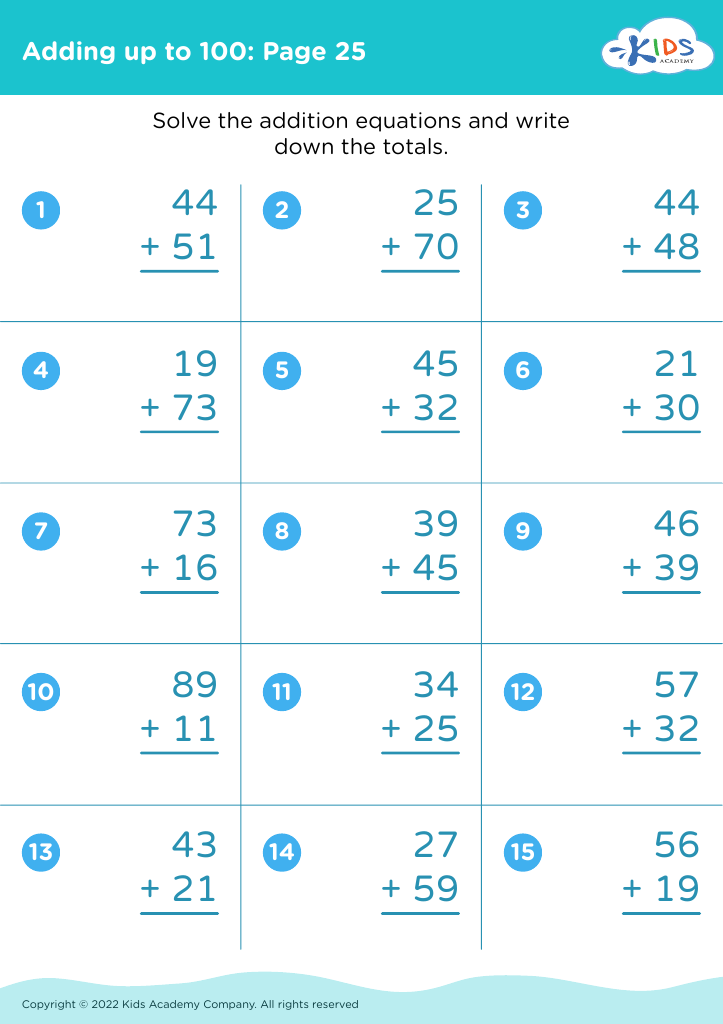
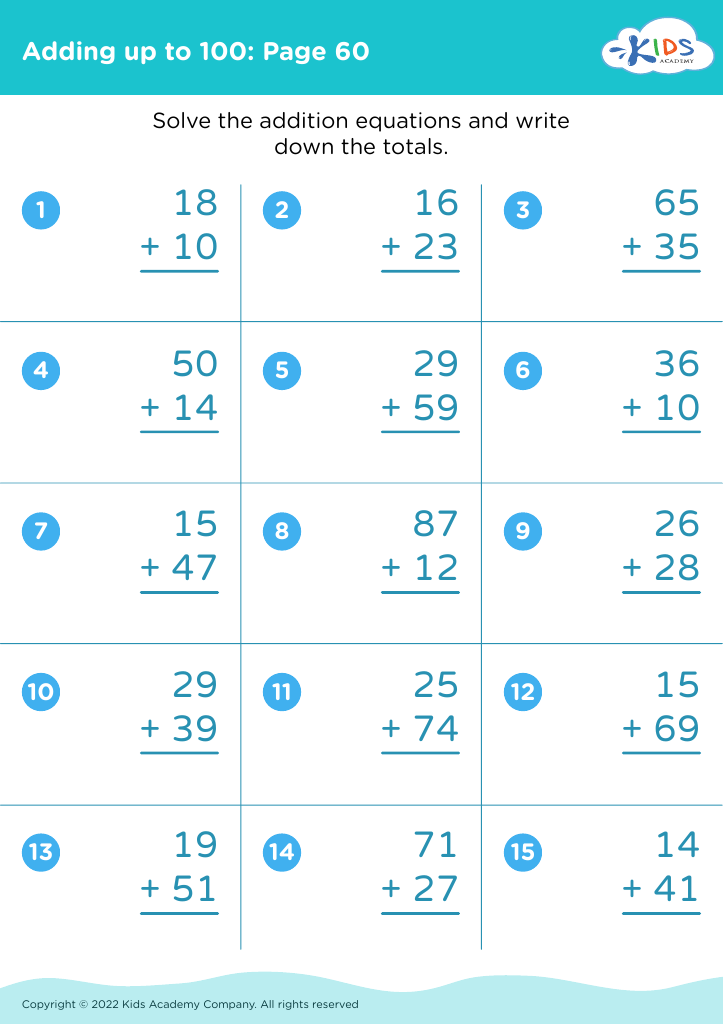
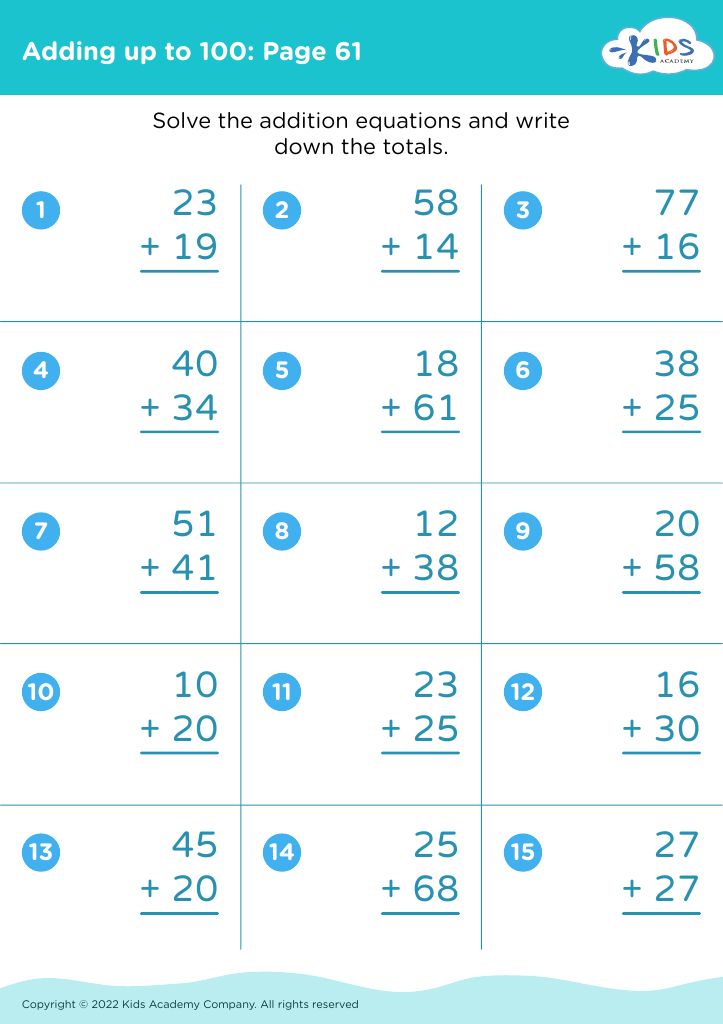
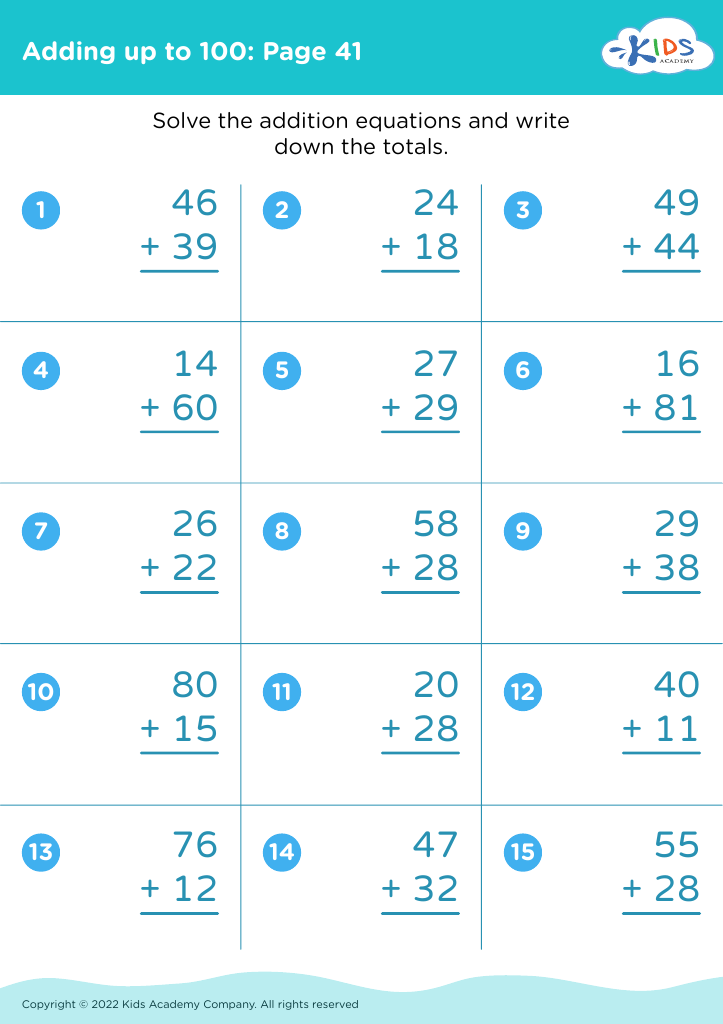


Understanding sequences, especially adding up to 100, is crucial for young learners as it lays the foundation for more complex mathematical concepts. For parents and teachers, mastering this skill is essential because it nurtures a child’s numerical fluency and problem-solving abilities.
When students recognize patterns in sequences, they develop critical thinking skills. Engaging with sequences helps them understand the relationship between numbers, promoting mental math skills. For instance, identifying patterns like odd and even numbers or skip-counting by fives can simplify calculations, making it easier for children to reach sums of 100 and beyond.
Additionally, understanding sequences fosters a positive attitude towards math. It encourages exploration and can turn math into a fun, engaging activity rather than a daunting task. Parents and teachers play a vital role in this process by incorporating games and everyday experiences that highlight sequences, reinforcing their relevance in real life.
Moreover, as children grasp adding sequences that lead up to 100, they build confidence, which is crucial for future learning. This confidence influences their willingness to tackle more advanced math topics, ensuring that they are well-prepared for future academic challenges. Supporting children in understanding sequences ultimately cultivates a lifelong love for learning and mathematical reasoning.