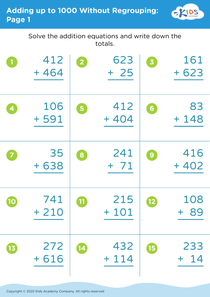
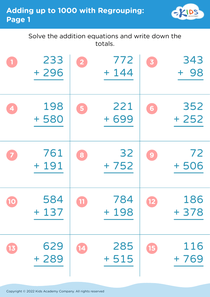
Comparing Fractions Adding up to 1000 Misc Worksheets
5 filtered results
-
From - To
Explore our "Comparing Fractions Adding Up to 1000 Misc Worksheets" designed to enhance students' understanding of fractions in an engaging way. These worksheets offer a variety of exercises for young learners to practice comparing fractions effectively, helping to build foundational math skills. Aligned with educational standards, they feature varied problems that encourage critical thinking and develop problem-solving techniques. Perfect for classroom activities or at-home use, these materials provide ample opportunity for students to master fraction concepts while reinforcing their addition skills. Discover the joy of learning through fun and interactive worksheets that make math accessible and enjoyable for children!
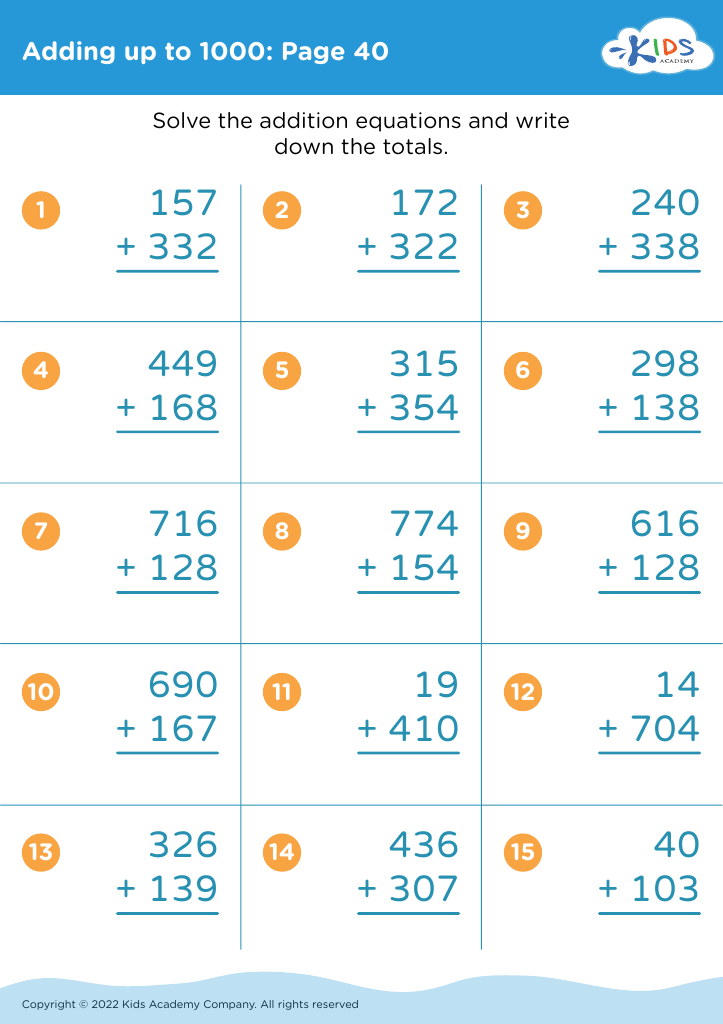
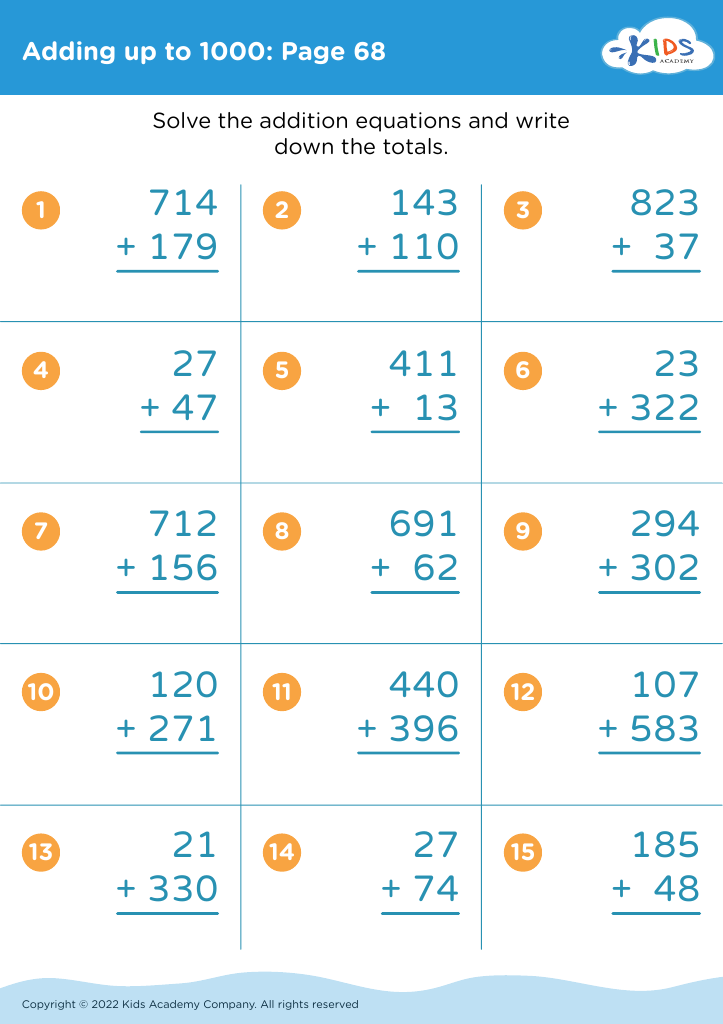
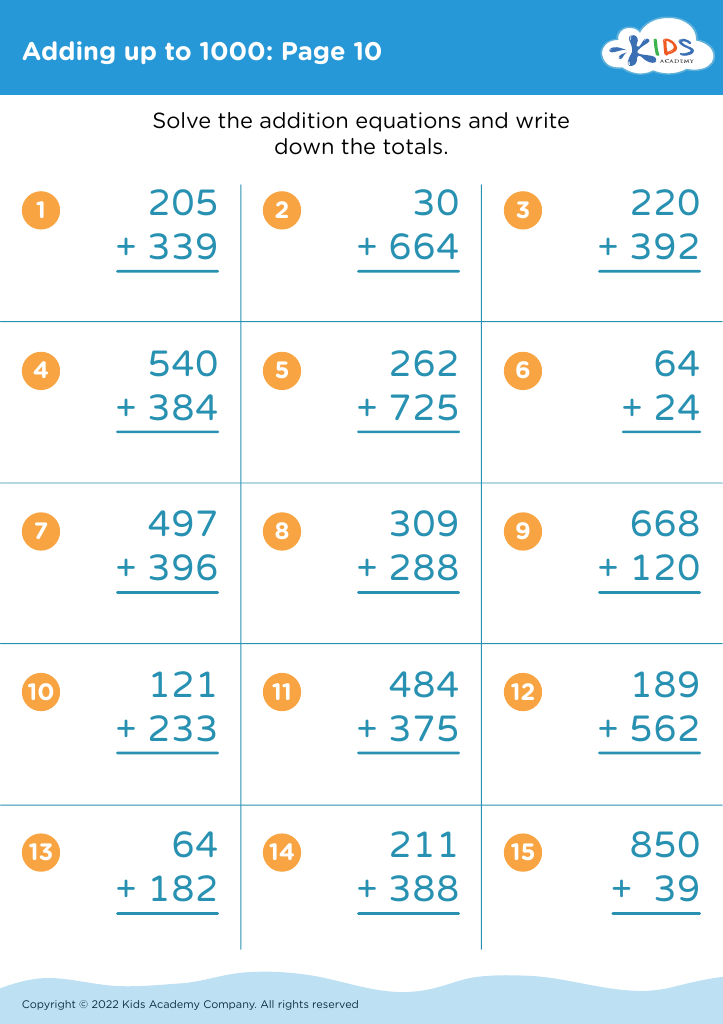
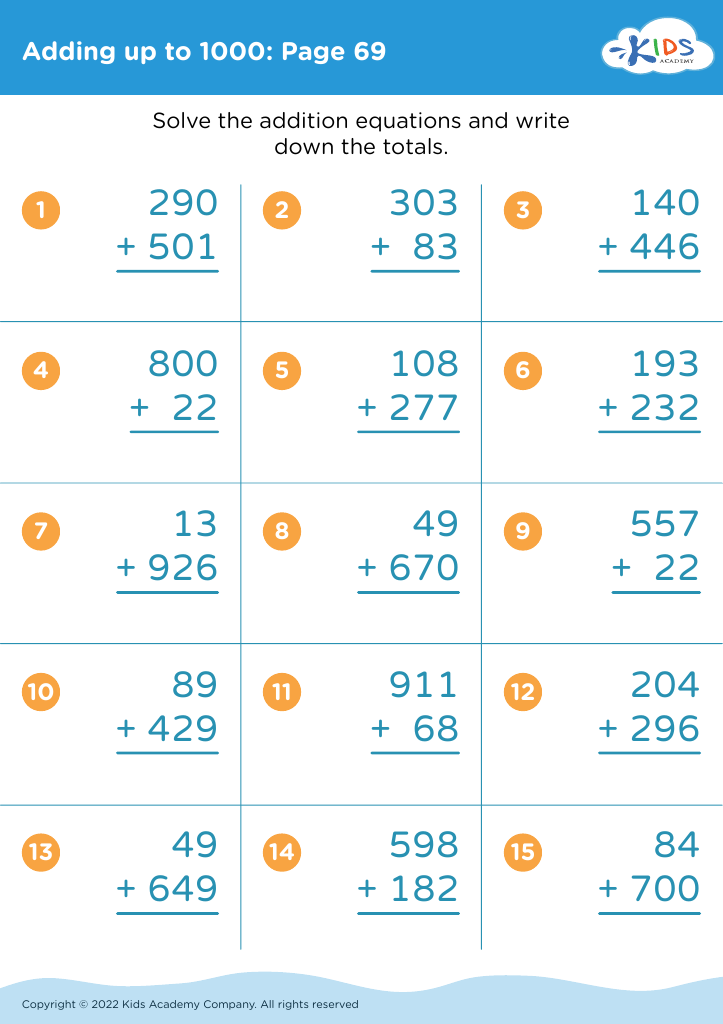
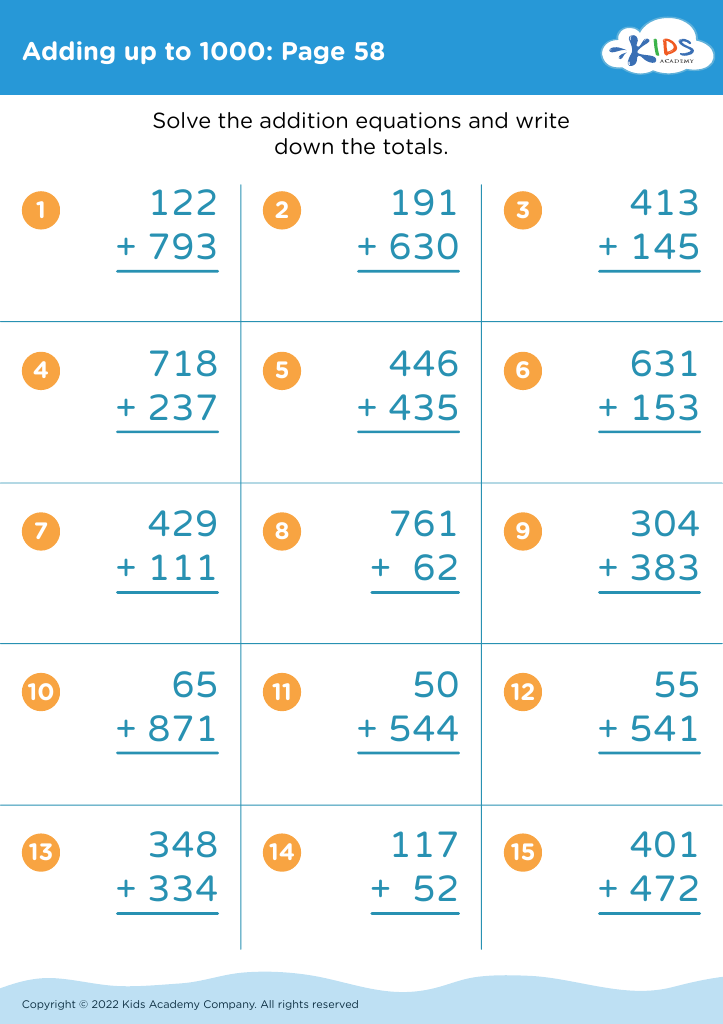


Comparing fractions that add up to a whole, such as 1000, is essential for children’s mathematical understanding. Both parents and teachers should care about this skill because it fosters critical thinking and cognitive development. When students learn to compare fractions, they gain a deeper understanding of concepts like equivalency, proportion, and the significance of the whole, which serves as a foundation for more advanced mathematics.
Engaging with comparing fractions helps students strengthen their problem-solving abilities, as they often encounter real-life situations involving ratios, ingredients in recipes, or dividing resources. Additionally, it encourages precision and attention to detail, essential skills regardless of their future academic or career paths.
For parents, understanding fractions aids in supporting their children’s homework and builds a cooperative learning environment at home. Teachers can develop curriculum activities that not only teach these concepts but also make learning engaging, enhancing overall student interest in mathematics. Ultimately, nurturing proficiency in comparing fractions can elevate a child's confidence and competency in math, setting the tone for their lifelong journey in education. Consequently, both parents and teachers play a critical role in cultivating these foundational skills in children.