Critical Thinking Adding up to 1000 Misc Worksheets
3 filtered results
-
From - To
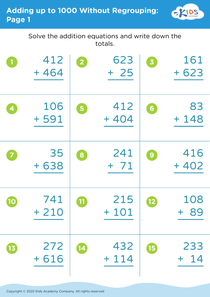
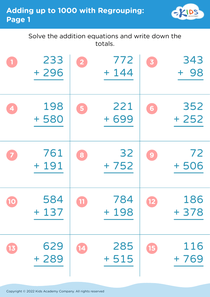
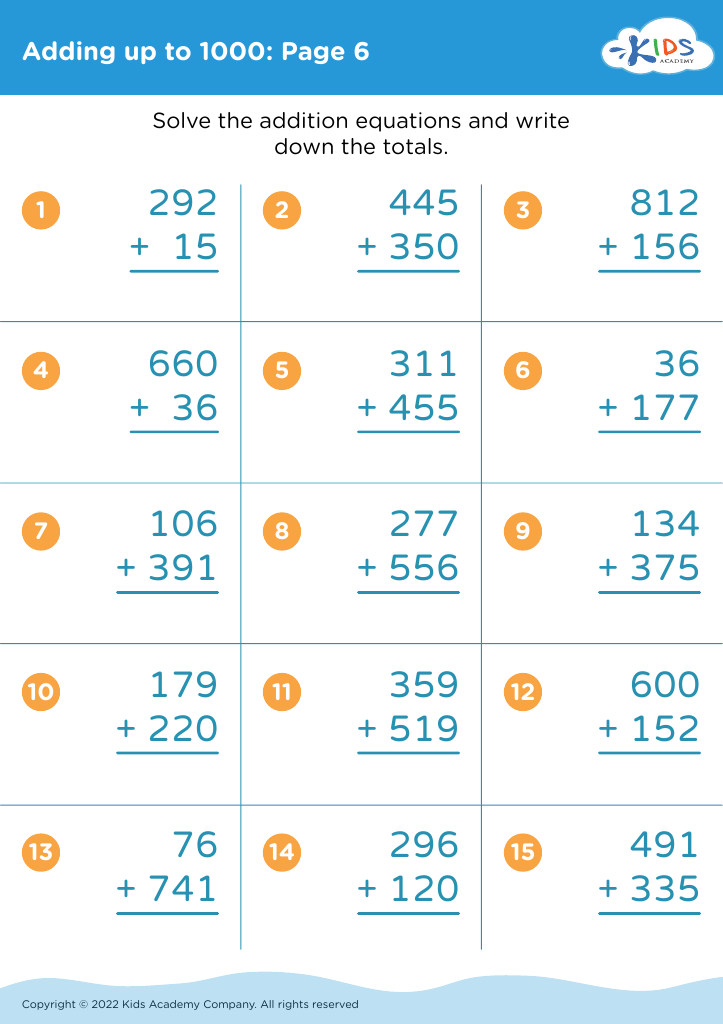
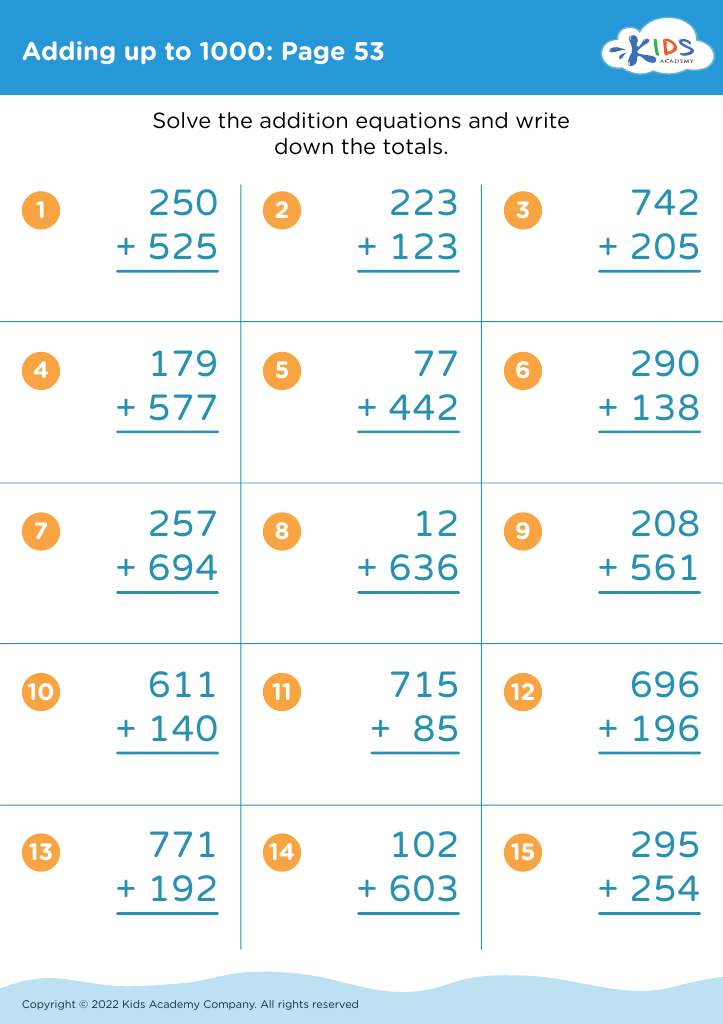
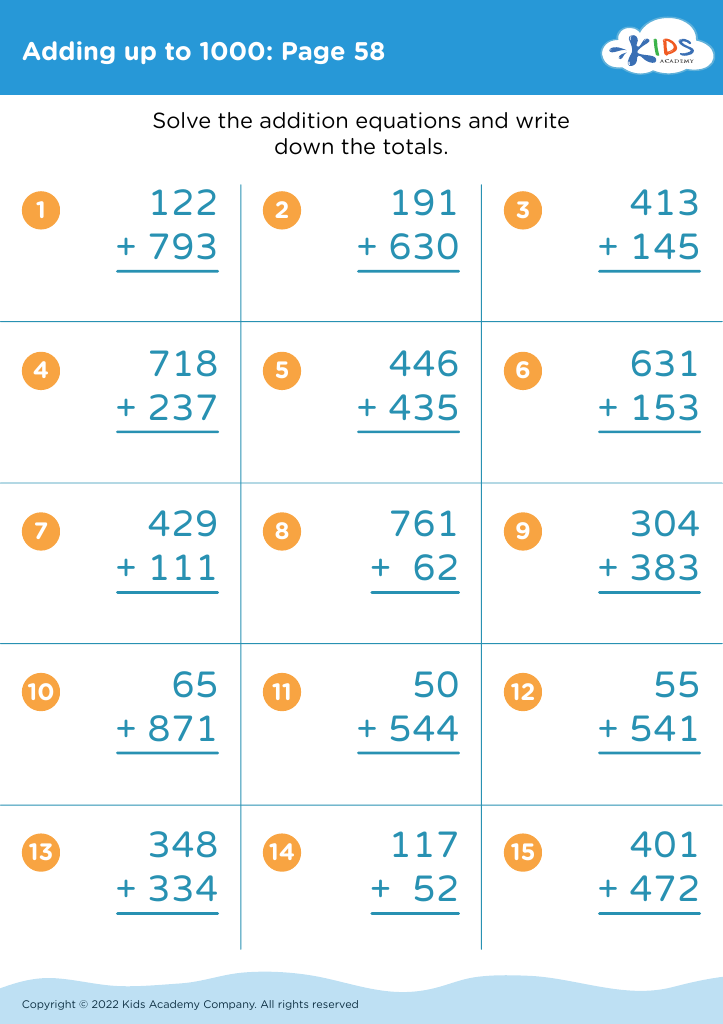
Unlock your child's potential with our "Critical Thinking Adding up to 1000 Misc Worksheets"! These engaging resources are designed to promote critical thinking skills while mastering addition up to 1000. Each worksheet provides a variety of challenges, encouraging students to analyze, problem-solve, and think creatively. By incorporating fun activities that align with educational standards, we make learning math enjoyable and effective. Great for classroom use or at home, these versatile worksheets enhance comprehension and build confidence in young learners. Explore our collection today and give your child the tools they need to excel in mathematics and beyond!


Critical thinking is essential for young learners as it lays the foundation for lifelong learning and problem-solving skills. Parents and teachers should care about promoting critical thinking because it empowers students to analyze information, evaluate arguments, and make reasoned decisions. In an age where information is abundant and often misleading, critical thinkers are better equipped to discern fact from opinion, enabling them to navigate complex issues present in society.
Engaging learners in activities that foster critical thinking encourages curiosity and creativity, which enhances their academic performance across subjects. By questioning assumptions and exploring multiple perspectives, students become more adept at understanding diverse viewpoints and collaborating effectively.
Moreover, fostering critical thinking skills helps develop resilience. When students encounter challenges, they learn to approach problems systematically, breaking them down into manageable parts and assessing possible solutions. This persevere-ance and adaptability are vital traits in our ever-changing world.
Involving parents in this process further strengthens the home-school connection, as they reinforce critical thinking methodologies outside of the classroom. When parents actively engage in discussions that promote inquiry, they model and support these vital skills, creating a supportive environment that encourages young minds to think critically and become informed, active citizens.