Fine Motor Skills Adding up to 1000 Misc Worksheets
5 filtered results
-
From - To
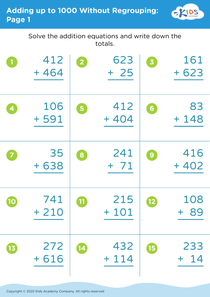
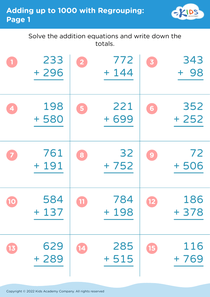
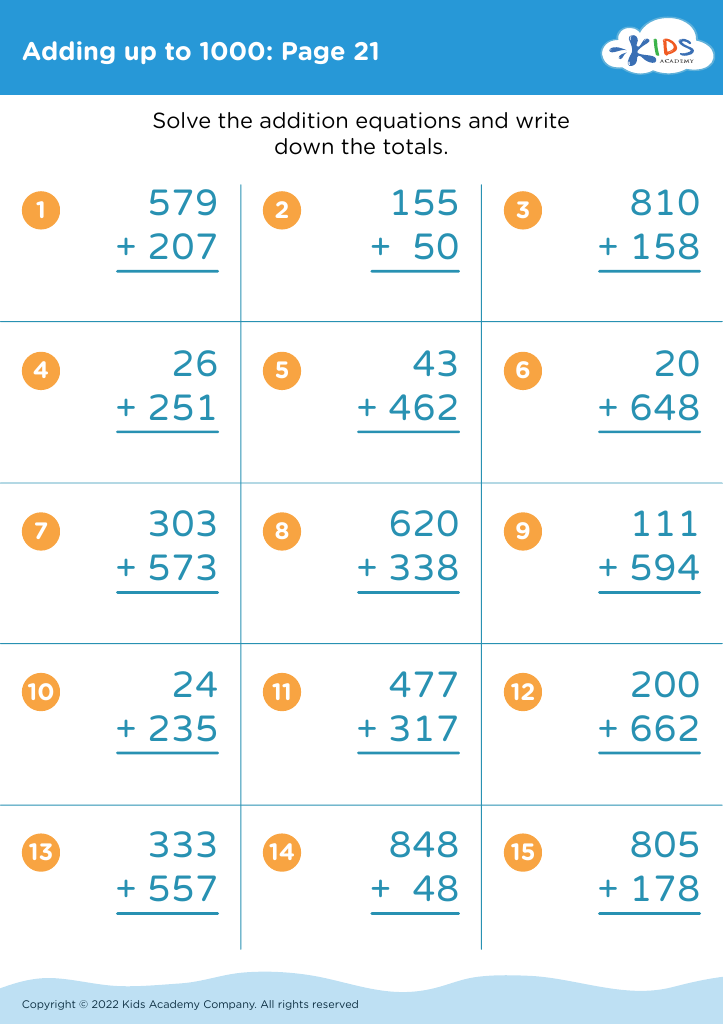
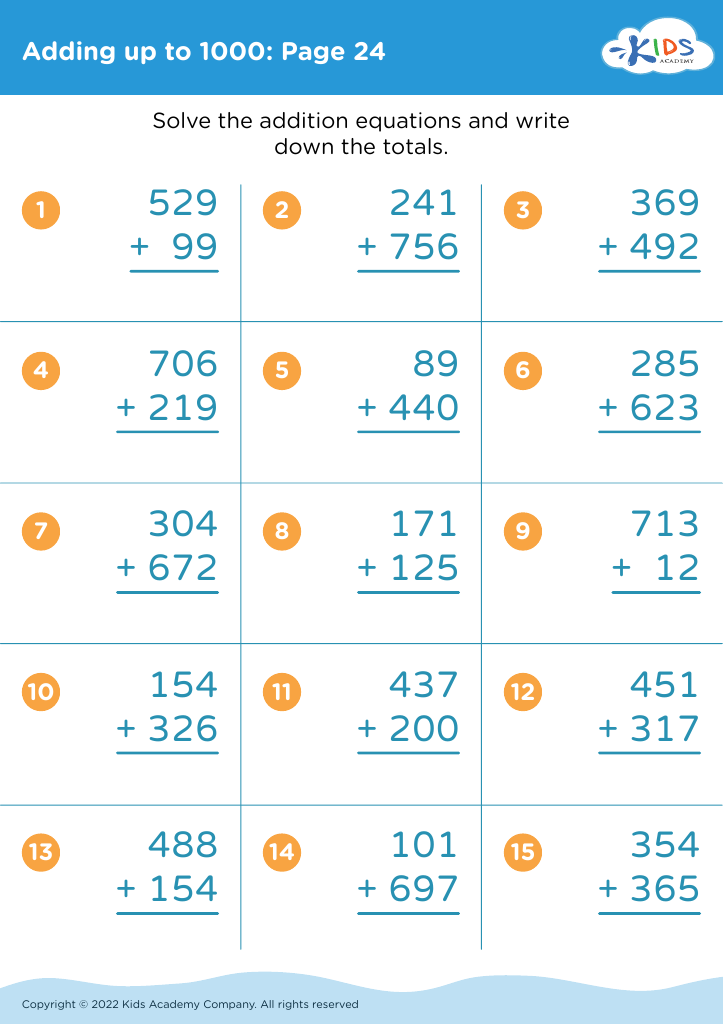
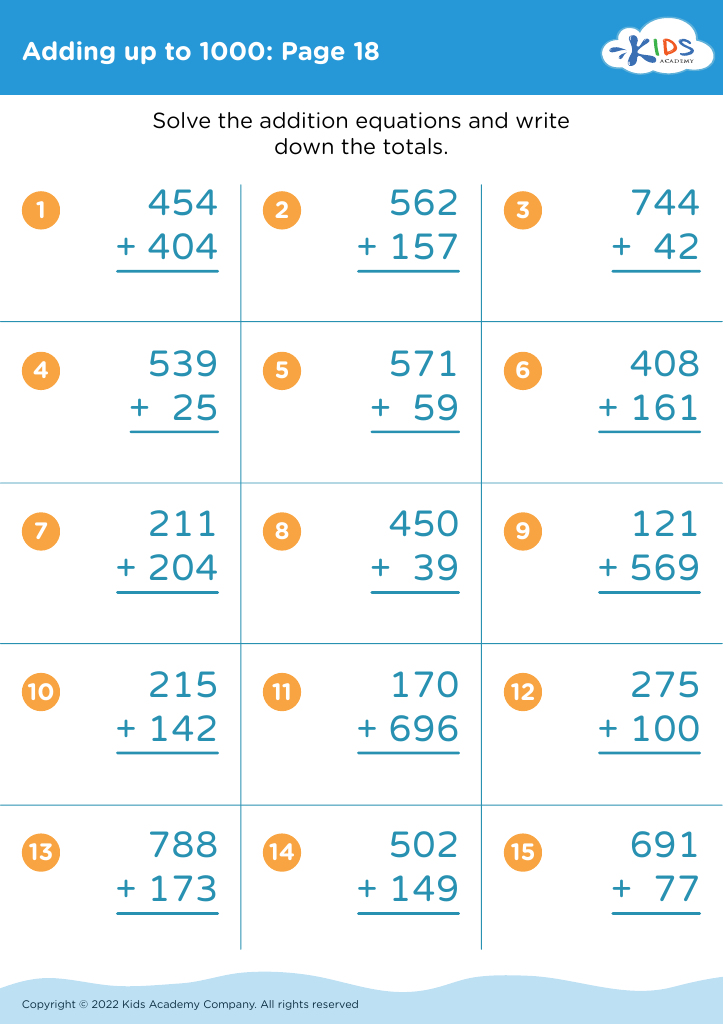
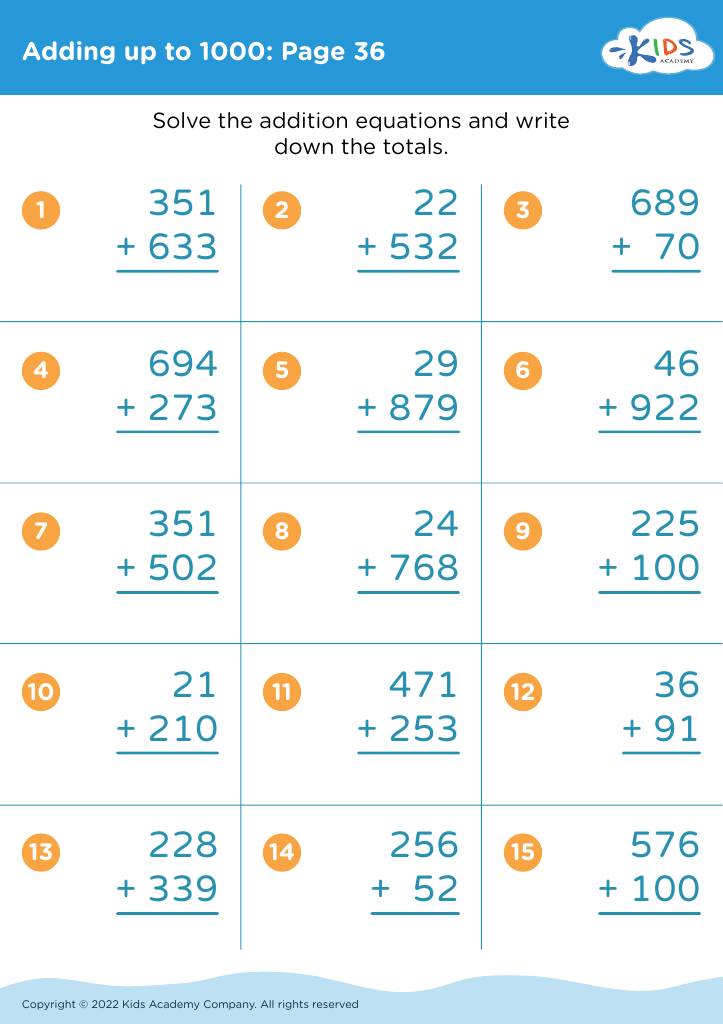
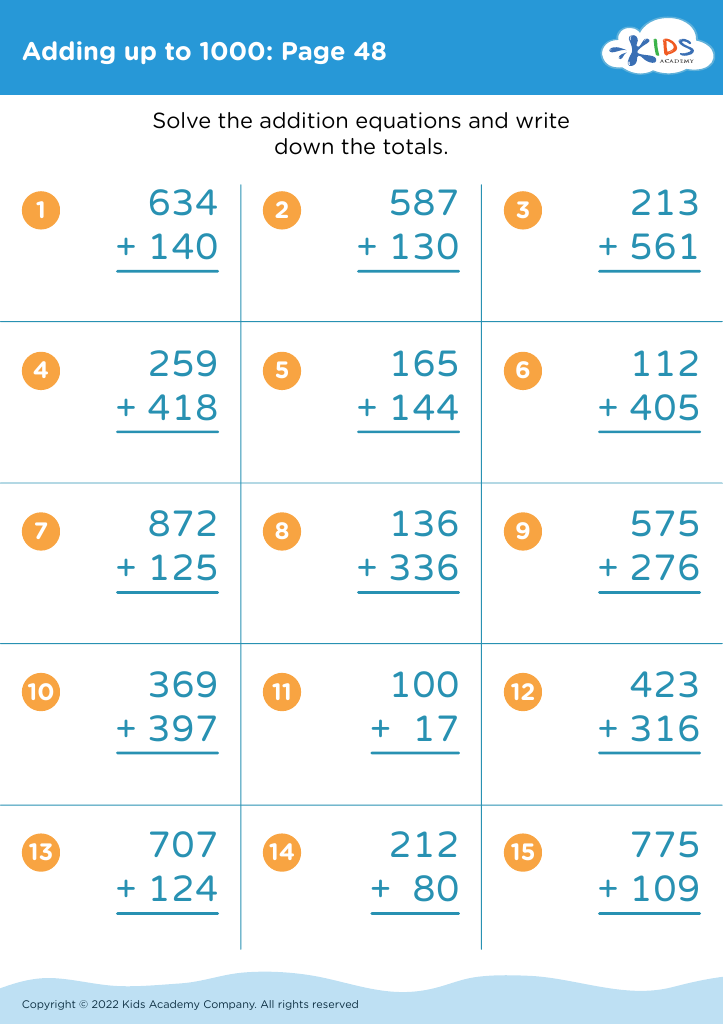
Enhance your child's fine motor skills with our collection of "Fine Motor Skills Adding up to 1000 Misc Worksheets." Designed for early learners, these engaging worksheets combine math practice with fun activities. Children will develop essential hand-eye coordination while solving various addition problems that sum up to 1000. From tracing numbers to cutting and pasting, each activity supports skill-building in an enjoyable way. Perfect for homeschooling, classrooms, or extra practice at home, these worksheets foster both mathematical understanding and fine motor proficiency. Unlock your child's potential with our thoughtfully crafted resources that make learning an exciting, hands-on experience!


Fine motor skills are essential for children's overall development and play a crucial role in their academic and daily success. These skills involve the coordinated use of small muscles in the hands and fingers and are vital for tasks like writing, drawing, cutting, and manipulating small objects.
When parents and teachers emphasize the development of fine motor skills, they equip children with the ability to fine-tune their grasp, hand-eye coordination, and dexterity. Activities that promote these skills enhance cognitive development, as they often require focus, patience, and problem-solving.
Moreover, sound fine motor skills help foster independence in children, enabling them to manage daily tasks such as dressing, eating, and personal hygiene. As children advance in their education, strong fine motor skills become increasingly important in ensuring they can engage with schoolwork confidently, particularly in subjects like writing and art.
Supporting fine motor skill development in early education not only improves children's physical abilities but also boosts their self-esteem and social interactions, as they are more likely to participate in activities with peers. In essence, nurturing fine motor skills lays a foundation for lifelong learning and personal growth, making it a vital focus for parents and teachers alike.