Fine Motor Skills Adding up to 1000 with Regrouping Worksheets
4 filtered results
-
From - To
Enhance your child's learning experience with our "Fine Motor Skills Adding up to 1000 with Regrouping Worksheets." These engaging resources are designed to reinforce addition skills while simultaneously promoting fine motor development. Each worksheet incorporates colorful visuals and interactive exercises, making math practice both fun and effective. Through regrouping techniques, children will master addition up to 1000, improving their confidence and proficiency in mathematics. The activities require tracing, drawing, and manipulating objects, ensuring children refine their hand-eye coordination as they learn. Perfect for classroom use or at-home practice, these worksheets foster a well-rounded approach to essential early math skills. Download today!
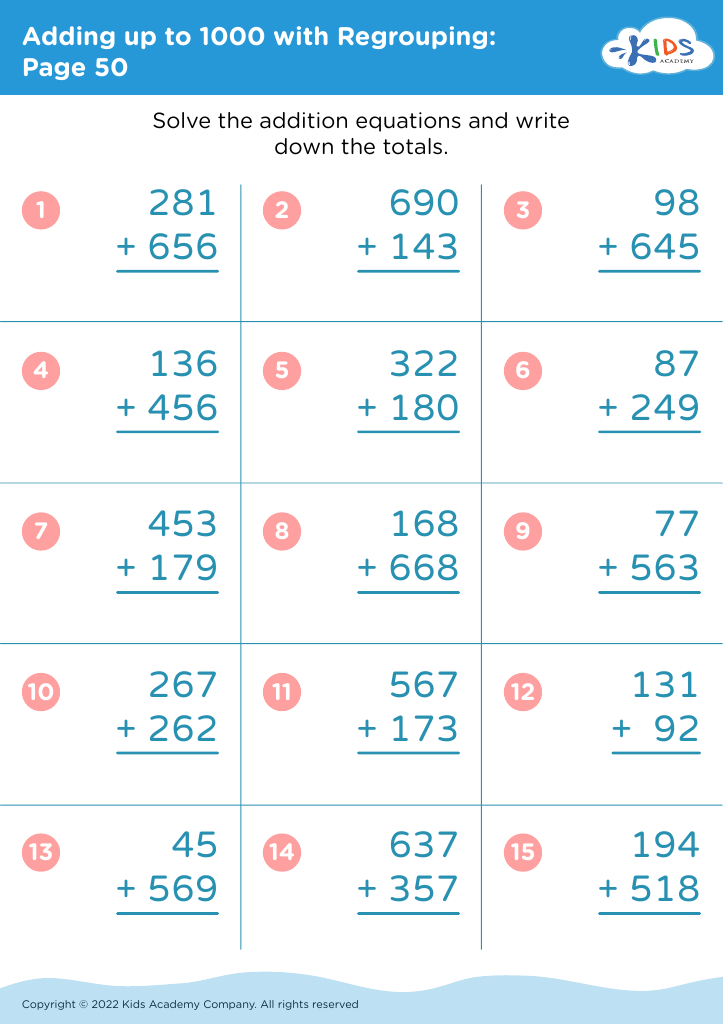
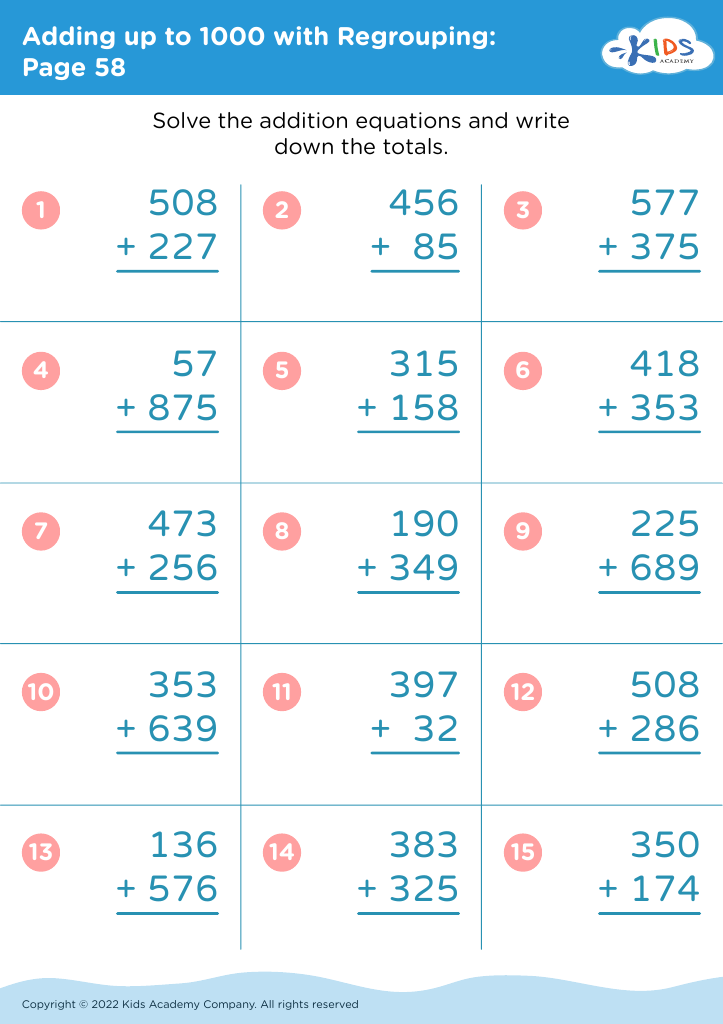
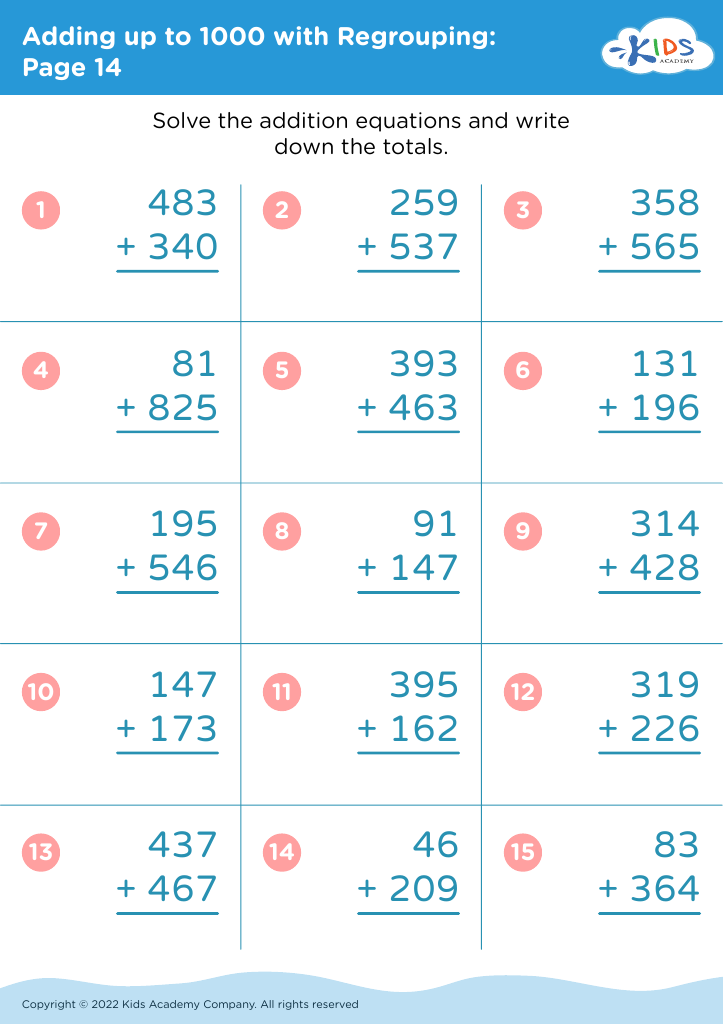
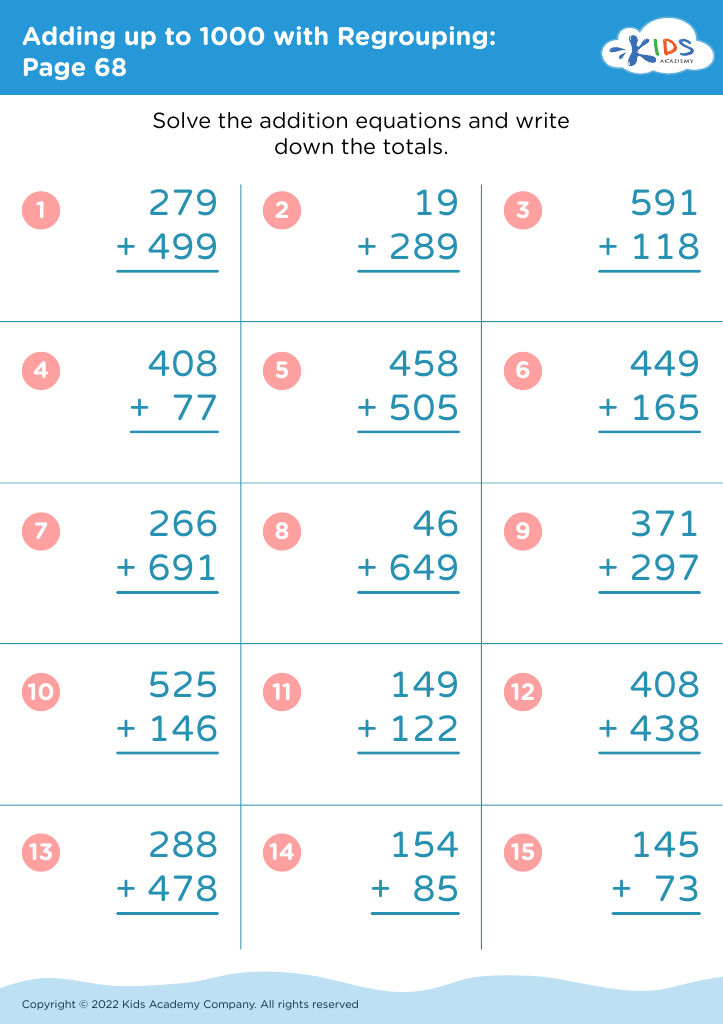


Fine motor skills are essential for young learners because they serve as the foundation for proficient handwriting, accurate drawing, and effective manipulation of classroom materials. Parents and teachers should prioritize the development of these skills, particularly as students approach more complex math concepts, such as adding up to 1000 with regrouping.
When children grasp fine motor skills, they can effectively manage writing down mathematical problems, laying out numbers neatly, and performing regrouping operations without frustration. Proficient fine motor coordination helps students understand the importance of aligning numbers correctly, which is crucial in avoiding errors during addition. Furthermore, as students become more confident in their fine motor abilities, they can focus on problem-solving strategies rather than being overwhelmed by the mechanics of writing.
Incorporating fine motor activities—like cutting, drawing, and building—within math lessons reinforces these essential skills and enhances cognitive development. By supporting fine motor development, parents and teachers help bridge the gap between physical skills necessary for written tasks and mental processes required for complex math operations, ultimately fostering a positive learning experience that nurtures a child's or student’s confidence in both math and other academic areas.