Number Recognition Adding up to 1000 with Regrouping Worksheets
11 filtered results
-
From - To
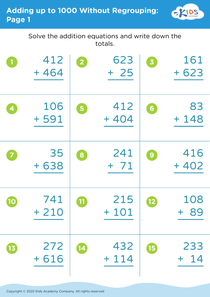
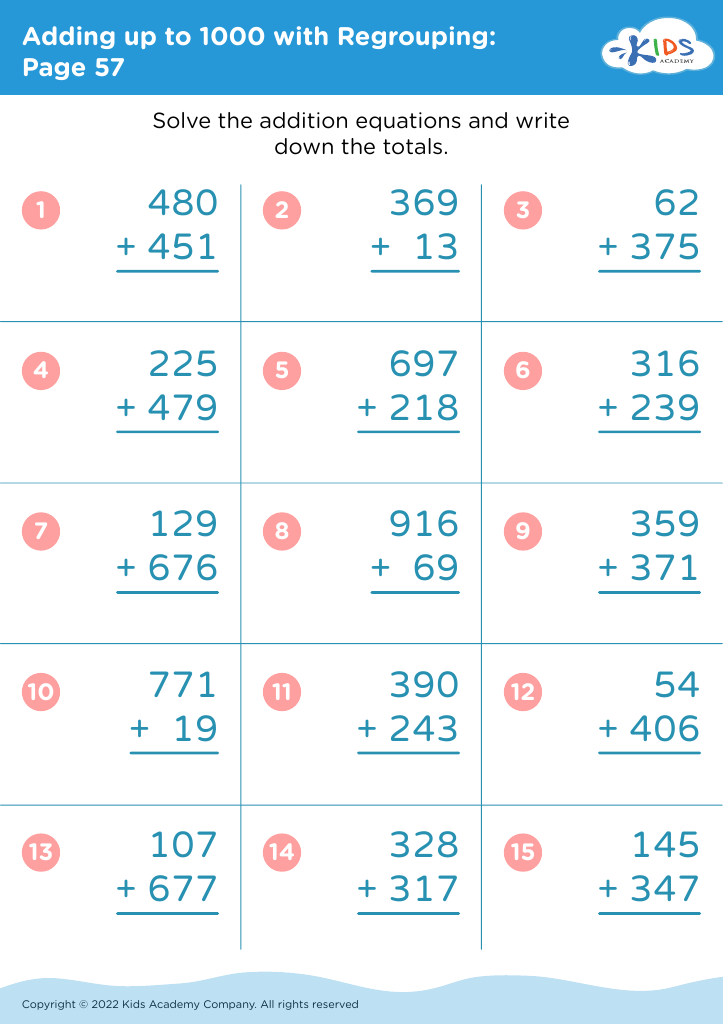
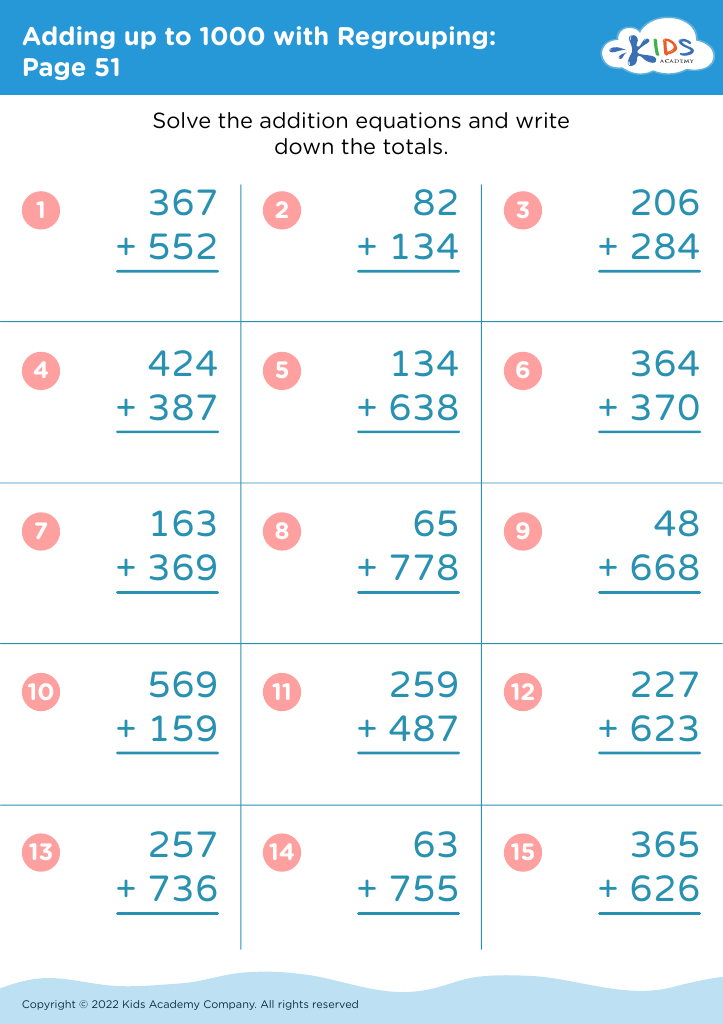
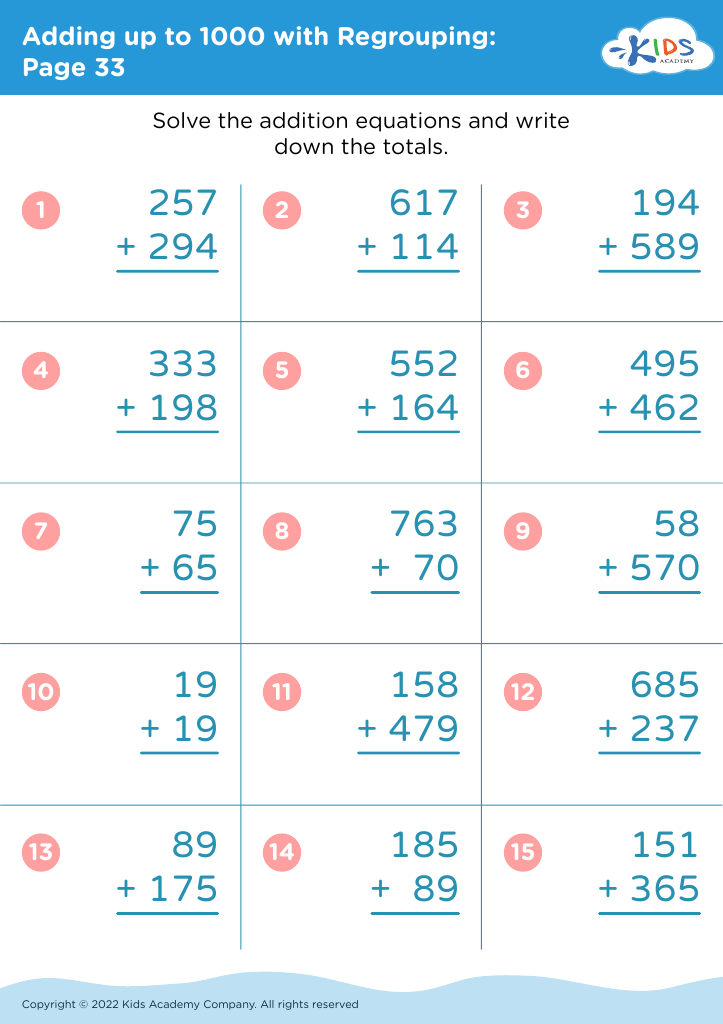
Boost your child's number sense with our "Number Recognition Adding up to 1000 with Regrouping Worksheets"! These engaging and educational worksheets are designed for young learners to build confidence in handling large numbers. With a focus on number recognition and regrouping techniques, kids will enhance their addition skills while having fun. Perfect for classroom use or extra practice at home, our worksheets feature clear instructions, colorful visuals, and diverse problems to solve. Ideal for strengthening foundational math skills, these worksheets make mastering the concept of adding up to 1000 a seamless and enjoyable journey. Start exploring today!
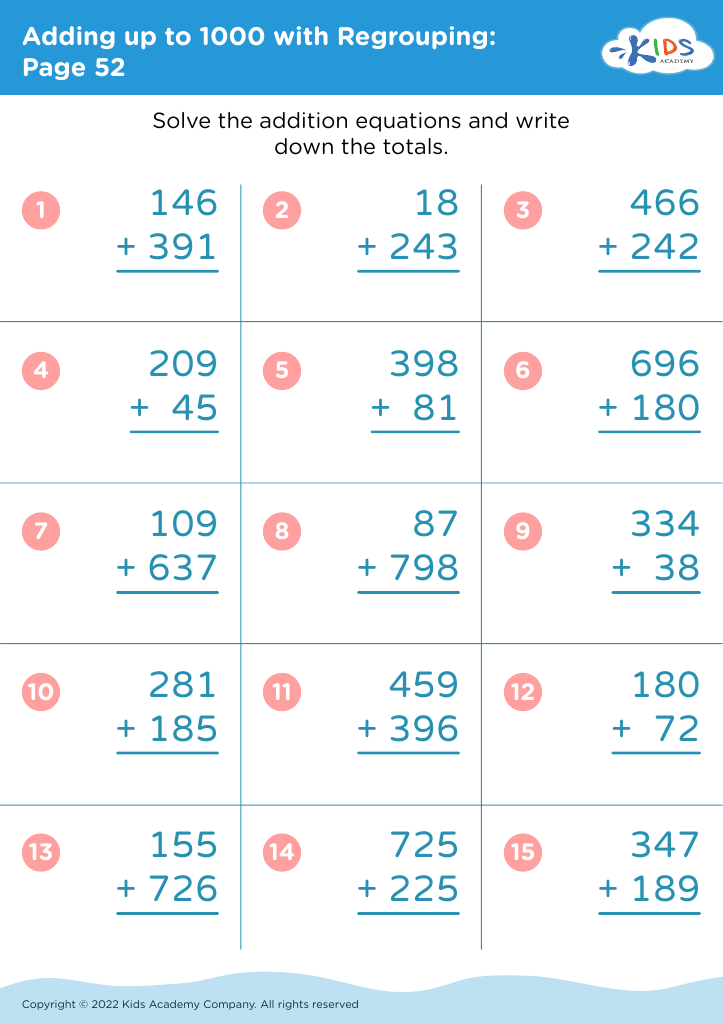
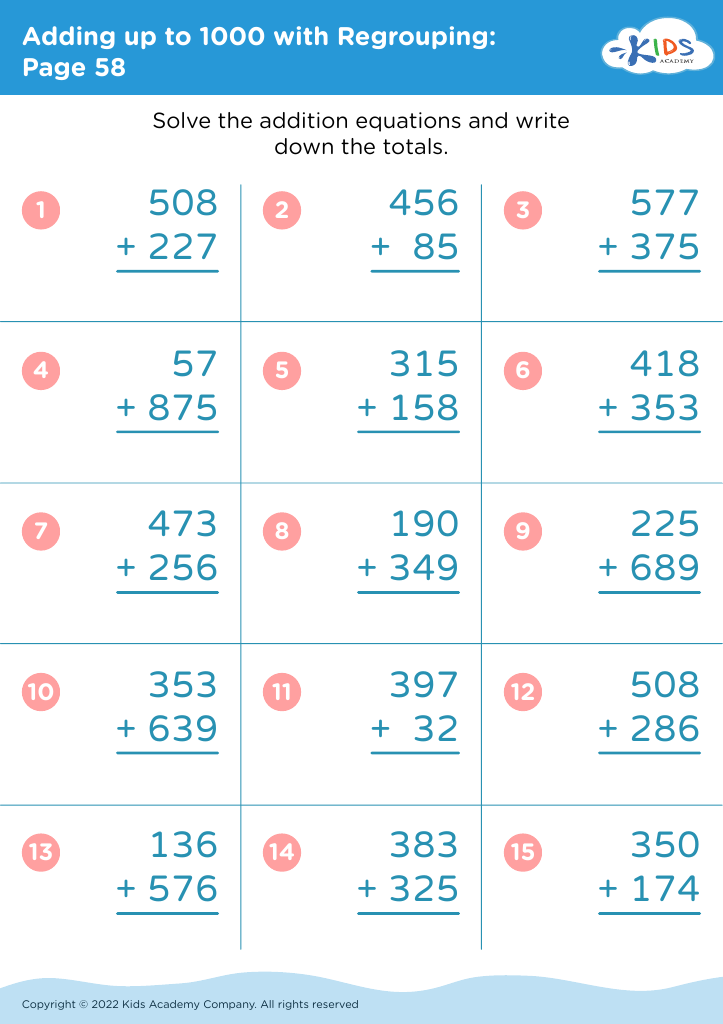
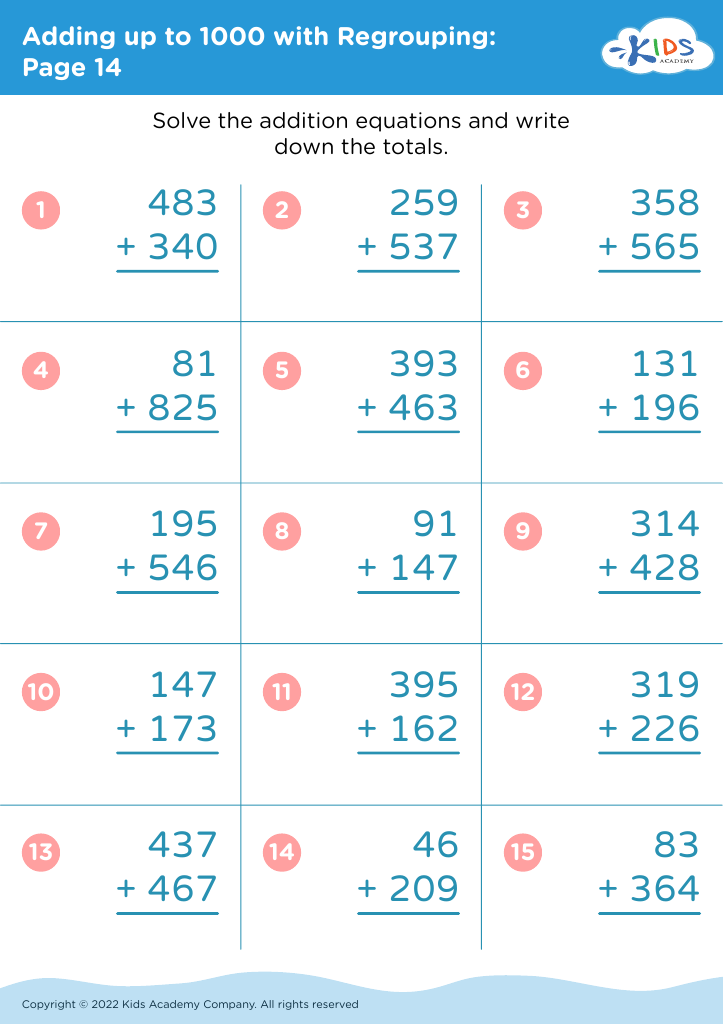
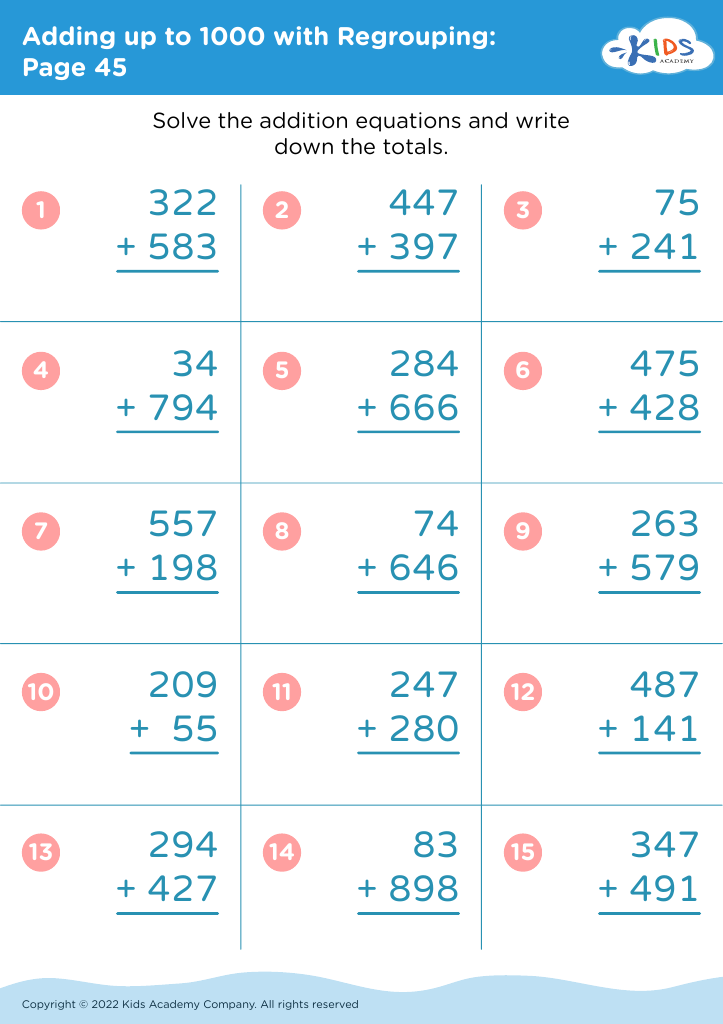
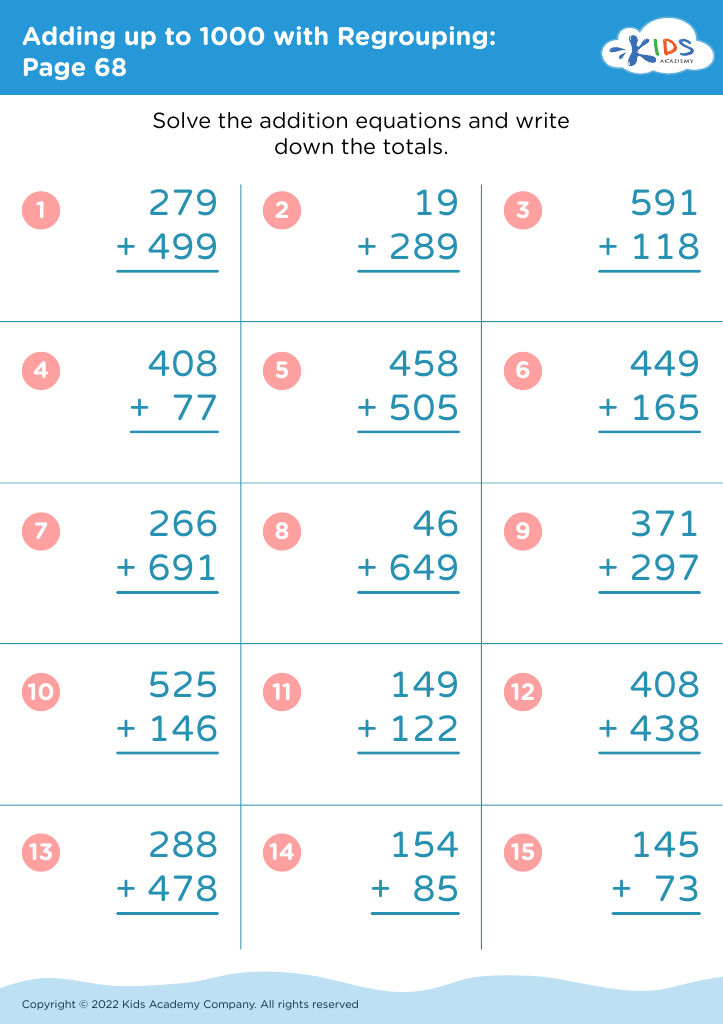
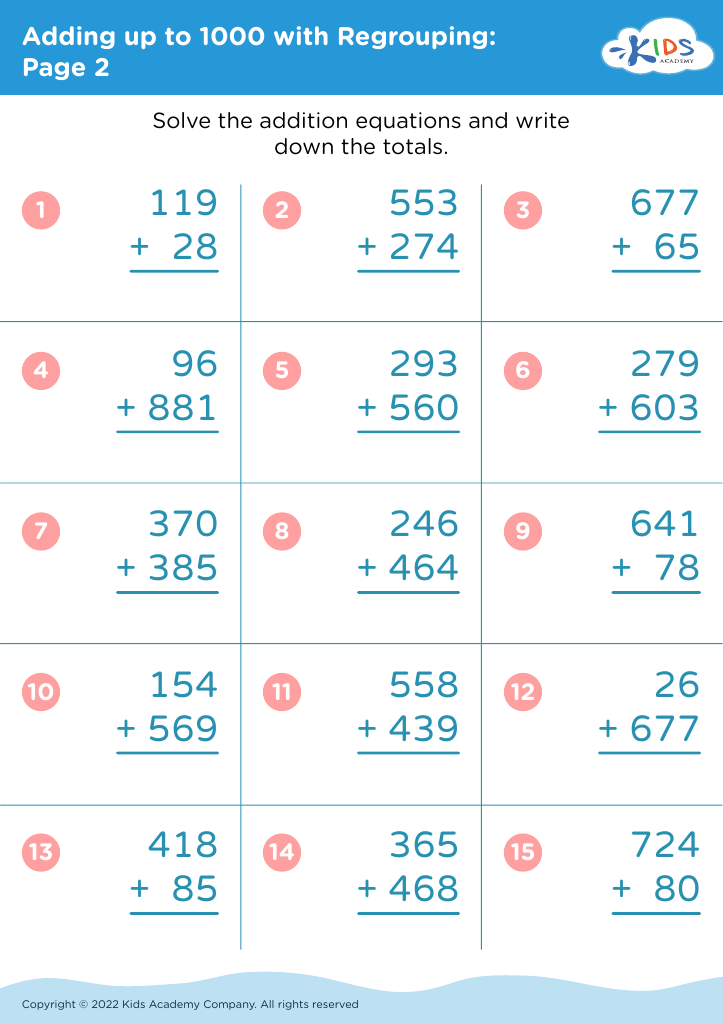
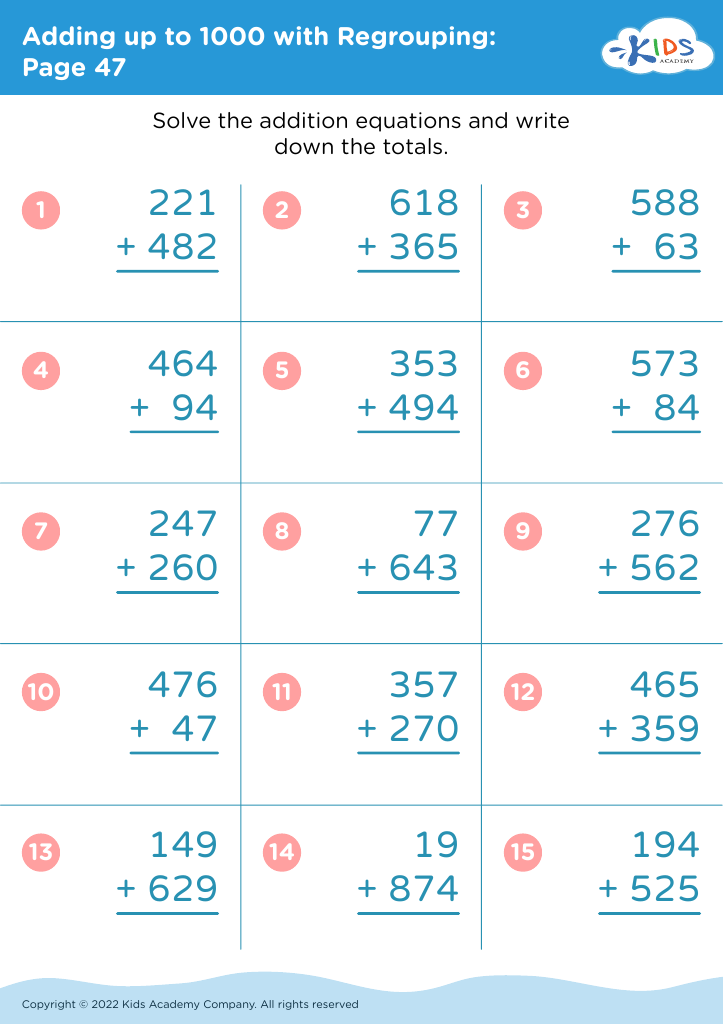
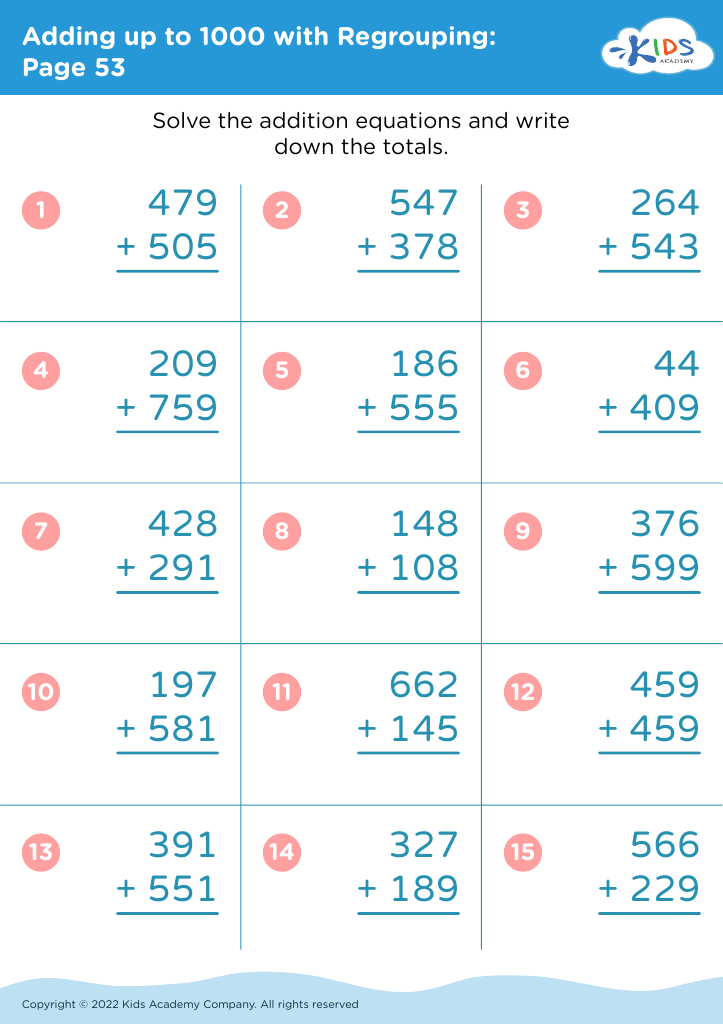


Number recognition and adding up to 1,000 with regrouping are fundamental skills that form the cornerstone of a child’s mathematical development. Here's why parents and teachers should care:
Firstly, mastering number recognition up to 1,000 hones a child’s ability to understand and work with larger quantities. This understanding lays the groundwork for future math topics, such as place value, which is crucial for operations like addition, subtraction, multiplication, and division.
Regrouping, often referred to as carrying or borrowing, is essential in addition and subtraction. Learning to add by regrouping strengthens a child's comprehension of how numbers can be broken down and reassembled in different ways, a concept that is intrinsic to more advanced mathematics. For example, understanding that when numbers surpass a certain value, they spill into a new column (like units to tens, tens to hundreds) introduces them to multi-digit arithmetic and the notion of base-10, which is foundational in our number system.
Moreover, these capabilities boost a child's confidence in math, promoting a positive attitude toward learning and problem-solving. This confidence can lead to greater academic success not only in math but in other subjects that require logical thinking and analytical skills.
Thus, parents and teachers should prioritize these skills to ensure children's long-term mathematical proficiency and overall cognitive development.