Shape Recognition Adding up to 1000 with Regrouping Worksheets
6 filtered results
-
From - To
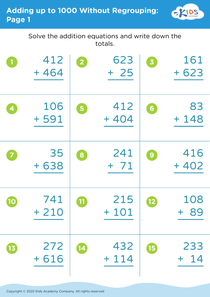
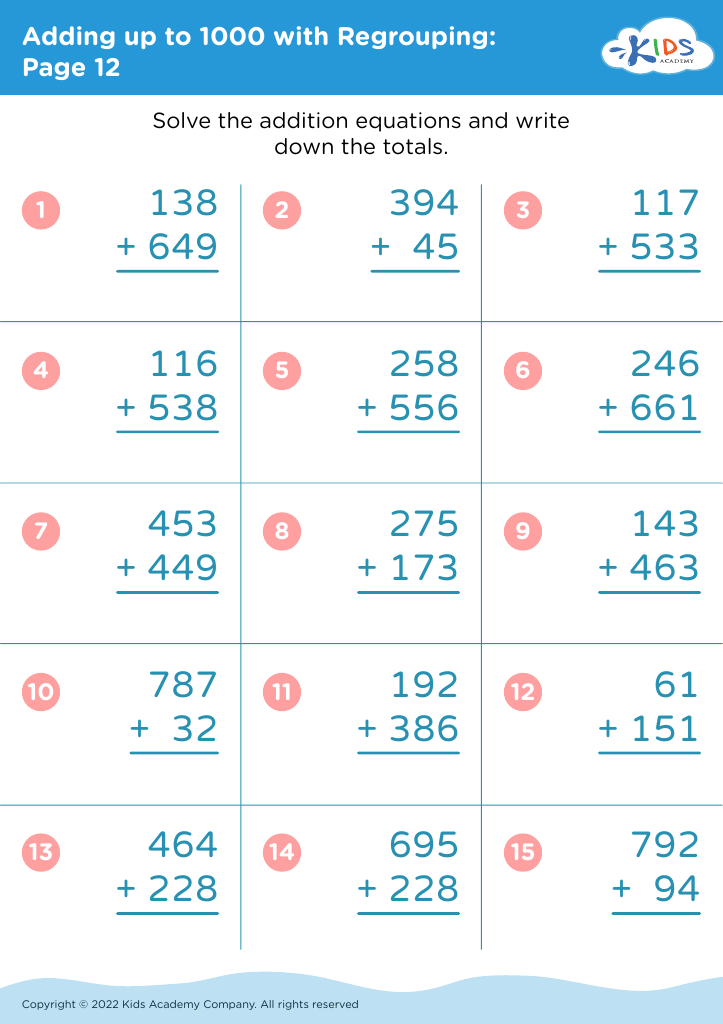
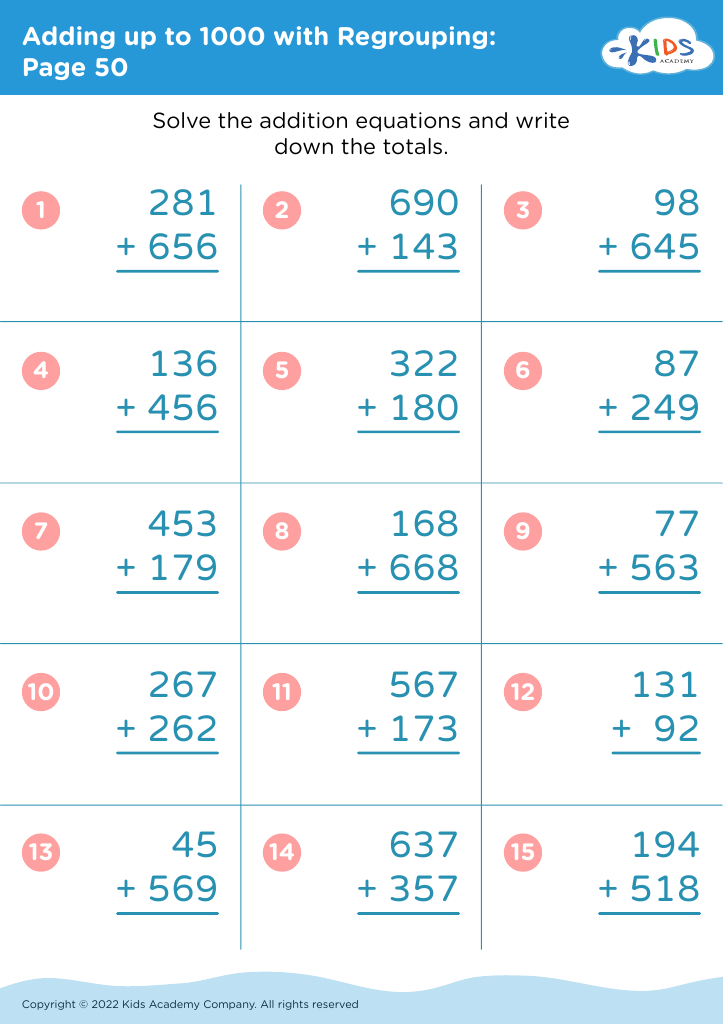
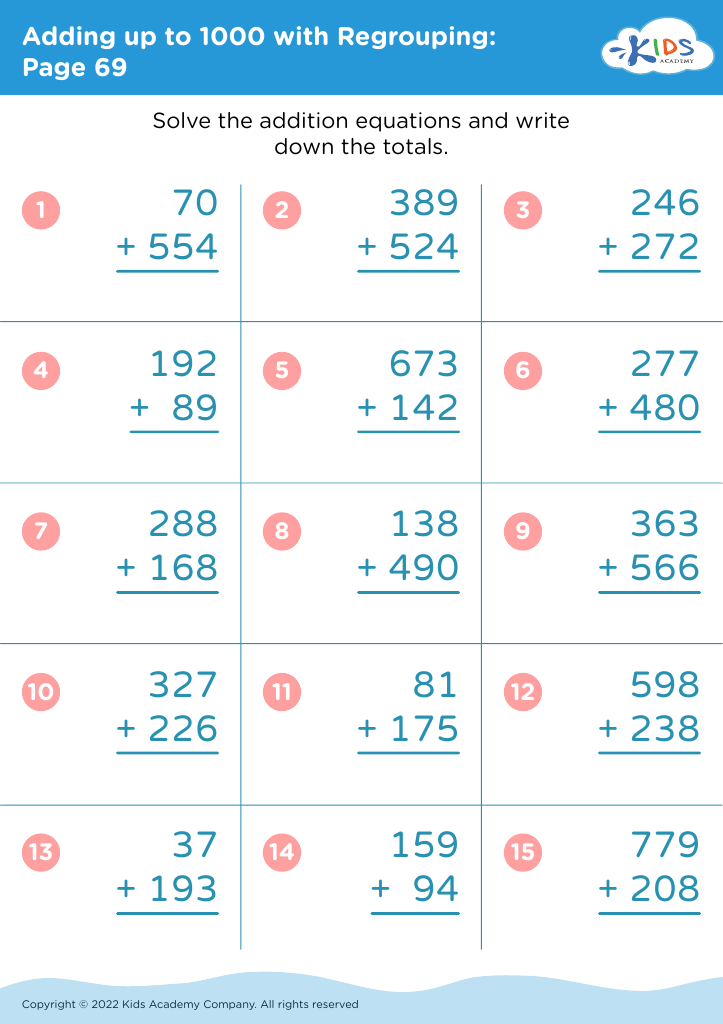
Enhance your students' math skills with our Shape Recognition Adding Up to 1000 with Regrouping Worksheets! These engaging resources are designed to help young learners develop crucial addition techniques involving regrouping while simultaneously recognizing and identifying various shapes. Ideal for early grade classrooms, our worksheets feature vibrant illustrations and interactive problems that encourage hands-on learning. Children will practice adding numbers up to 1000 and apply their shape recognition abilities in a fun and educational way. Perfect for independent work or group activities, these worksheets are an excellent tool for reinforcing essential math concepts while fostering analytical thinking in your classroom!
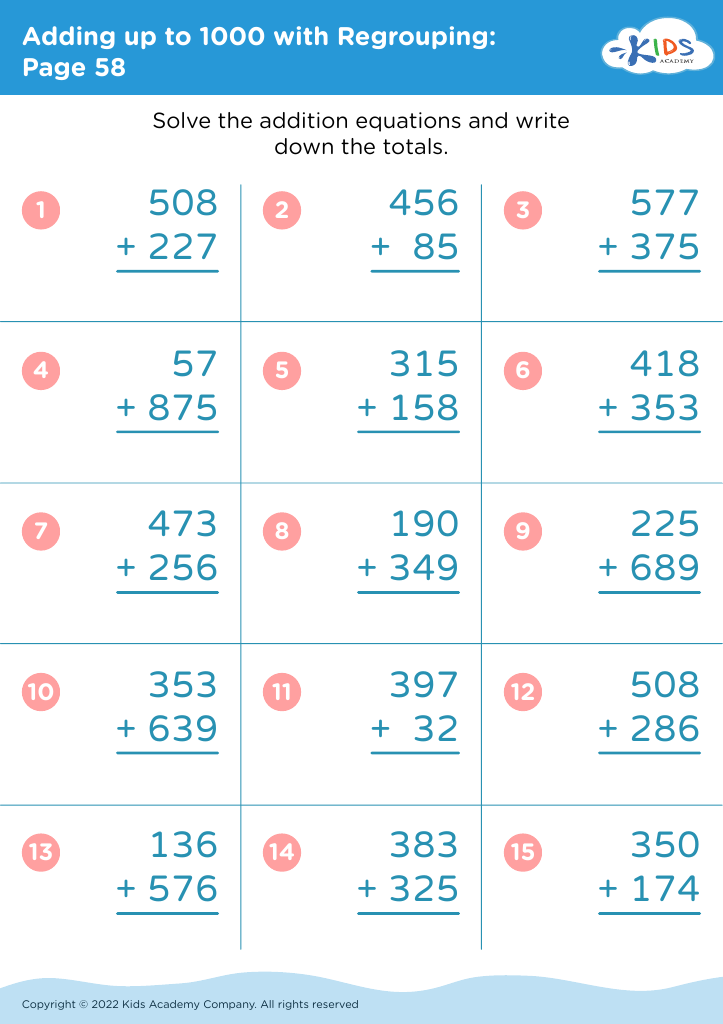
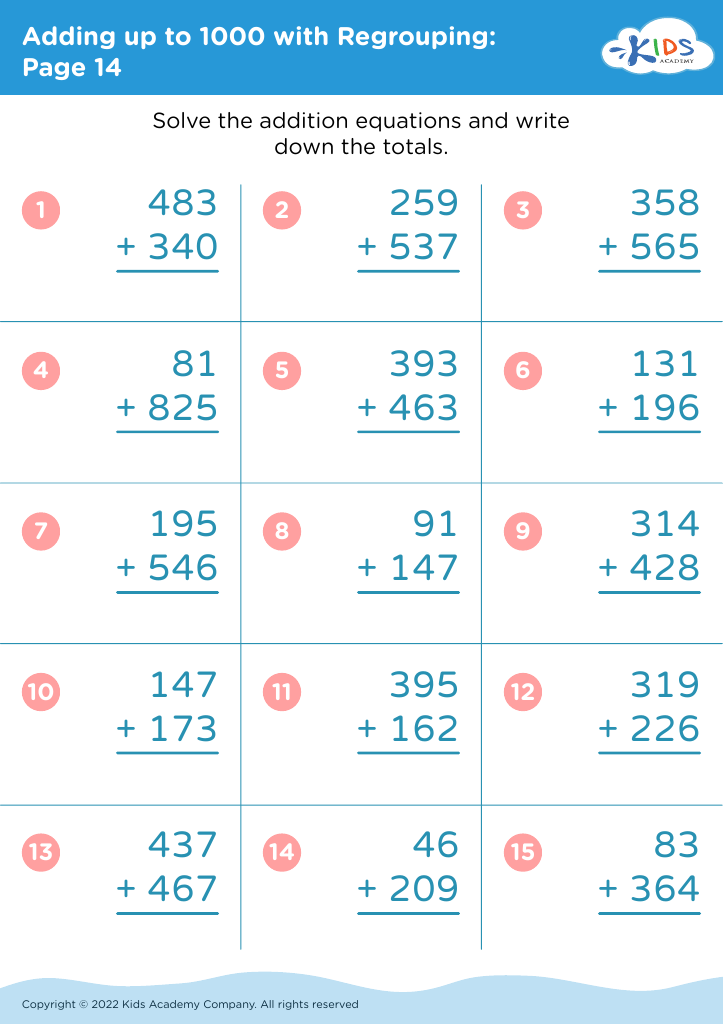
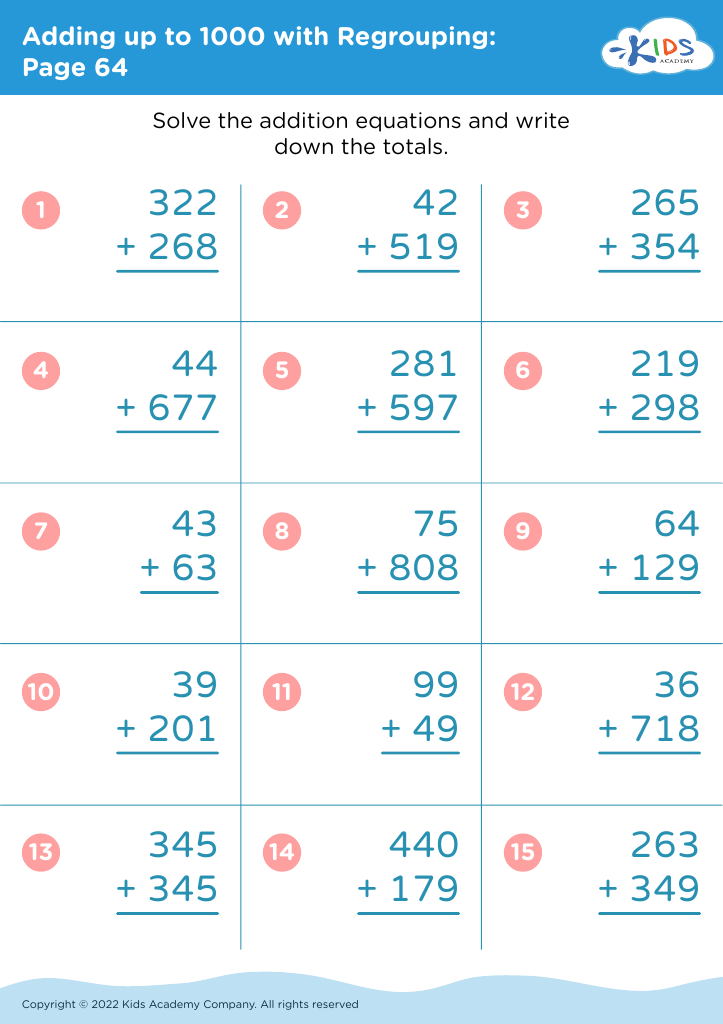


Shape recognition and the ability to add up to 1000 with regrouping are foundational skills in early education that greatly influence a child's cognitive development. Understanding shapes not only fosters spatial awareness but also enhances problem-solving and critical thinking skills. When children can identify and manipulate different shapes, they develop a solid foundation for geometrical concepts they will encounter later in math.
Similarly, mastering addition with regrouping is essential for building proficiency in arithmetic. As students progress to more complex math problems, a strong grasp of regrouping allows them to tackle larger numbers and ensures they understand place value. This skill helps prevent confusion and frustration in future mathematical tasks.
By emphasizing shape recognition and regrouping with large numbers, parents and teachers equip children with the tools they need to succeed in math, science, and everyday life. These skills encourage logical reasoning, creativity, and confidence. Moreover, early mastery of these concepts leads to a love for learning and exploration, inspiring children to embrace future challenges. Therefore, caregivers and educators should prioritize these areas in their teaching and support efforts for holistic child development.