Understanding Sequences Adding up to 1000 with Regrouping Worksheets
4 filtered results
-
From - To
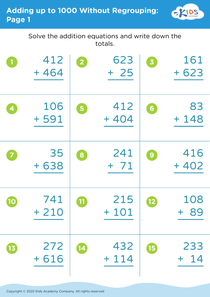
Discover our comprehensive "Understanding Sequences Adding up to 1000 with Regrouping Worksheets," designed specifically for early learners. These engaging resources help students master the concept of sequences while practicing addition with regrouping techniques. Perfect for classroom settings or at-home learning, these worksheets incorporate visually appealing elements to keep children motivated. As they navigate through different sequences and regrouping challenges, students will enhance their fundamental math skills, build confidence, and develop essential problem-solving strategies. Empower your child’s learning journey with our user-friendly worksheets that make understanding math both fun and effective! Start exploring these valuable resources today!
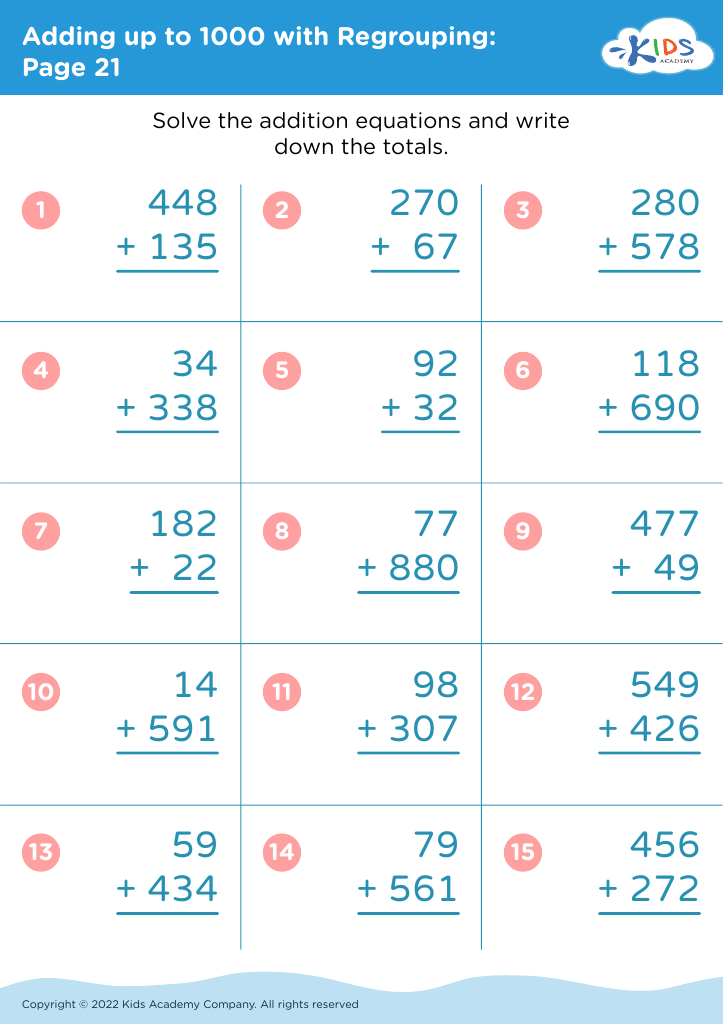
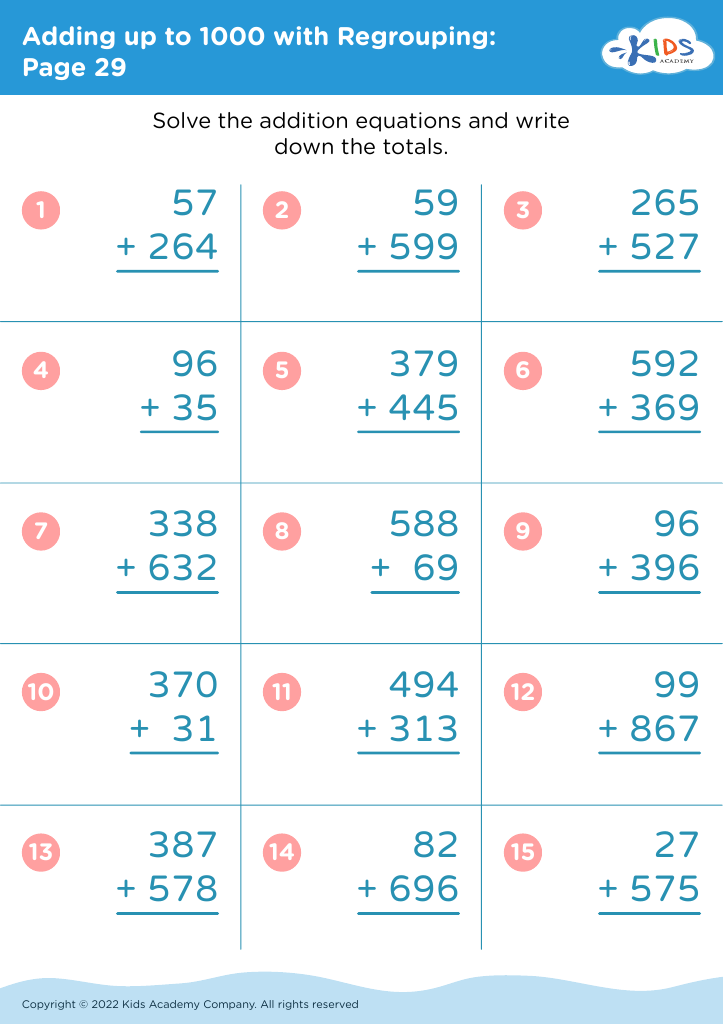
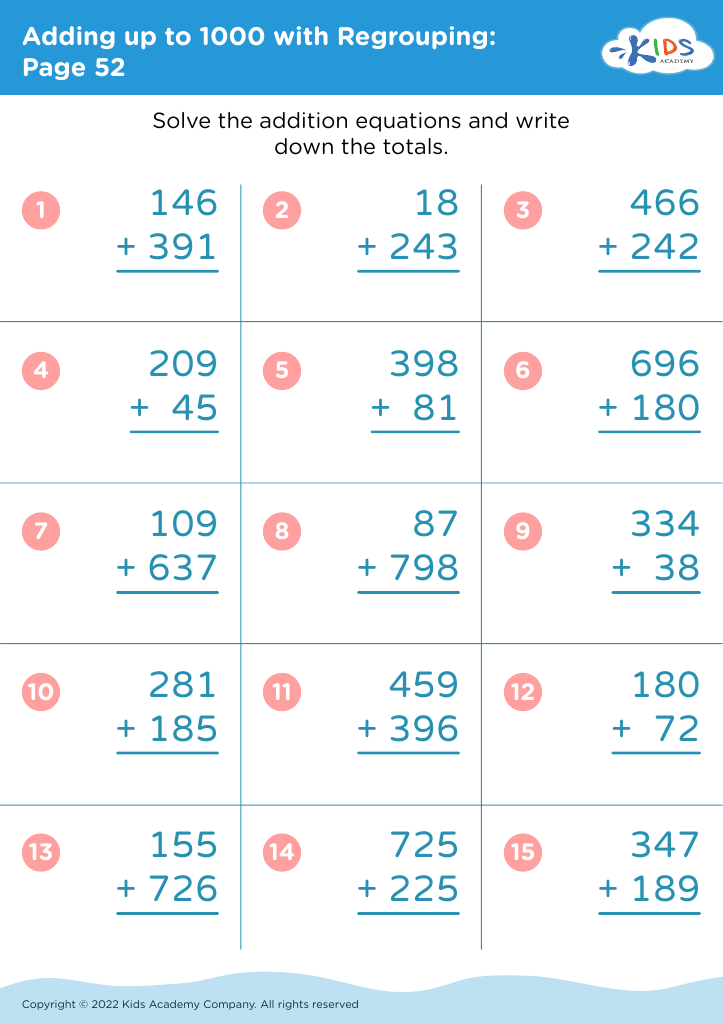
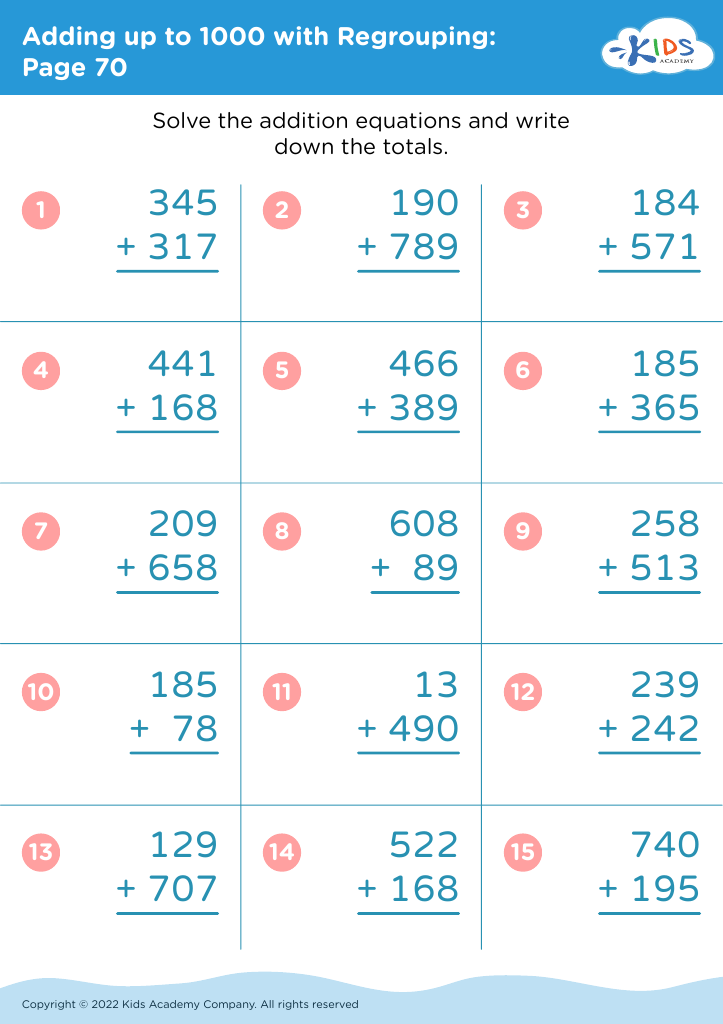


Understanding sequences that add up to 1000 with regrouping is crucial for children’s mathematical development and problem-solving skills. First, it fosters a strong foundation in place value and addition, which are essential for larger mathematical concepts, such as multiplication and division. When students grasp these concepts, they enhance their confidence in handling numbers and complex equations.
Moreover, this understanding helps children visualize the relationships between numbers. For example, regrouping teaches them how to break down numbers into manageable parts, facilitating easier calculations. This skill not only simplifies addition but also enables students to tackle subtraction, making them more versatile in their mathematical abilities.
Teachers and parents should also emphasize this concept because it encourages critical thinking and logical reasoning. As students explore different sequences and ways to reach 1000, they engage in mathematical thinking that aids their overall academic performance.
Additionally, this foundational knowledge prepares students for real-life applications, from budgeting and finance to problem-solving in everyday situations. Consequently, investing time and effort in understanding sequences with regrouping helps nurture confident, capable learners who can navigate mathematics effectively throughout their educational journey.