Comparing Fractions Adding up to 1000 Without Regrouping Worksheets
3 filtered results
-
From - To
Welcome to our "Comparing Fractions Adding Up to 1000 Without Regrouping Worksheets" page! These engaging worksheets are designed to help young learners master the skill of comparing fractions within the context of addition without regrouping. By using fractions that total up to 1000, students will enhance their understanding of numerical relationships and improve their ability to make comparisons. With clear instructions and plenty of practice problems, children will build confidence in their math skills while developing critical thinking abilities. Explore our collection of worksheets and empower your child to effectively compare fractions with ease!
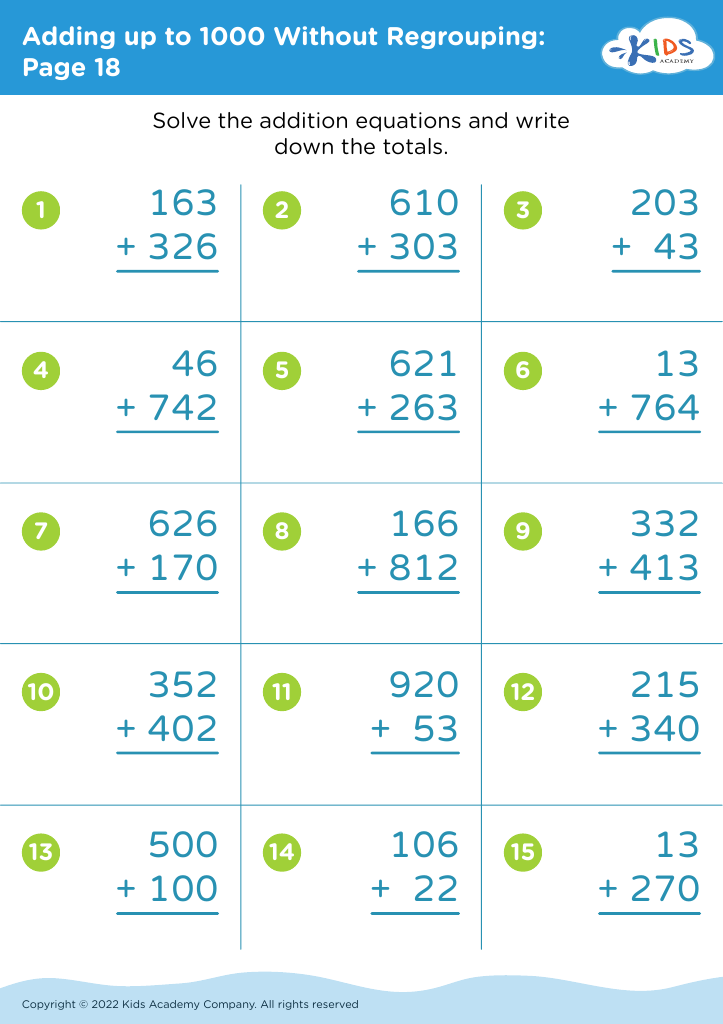
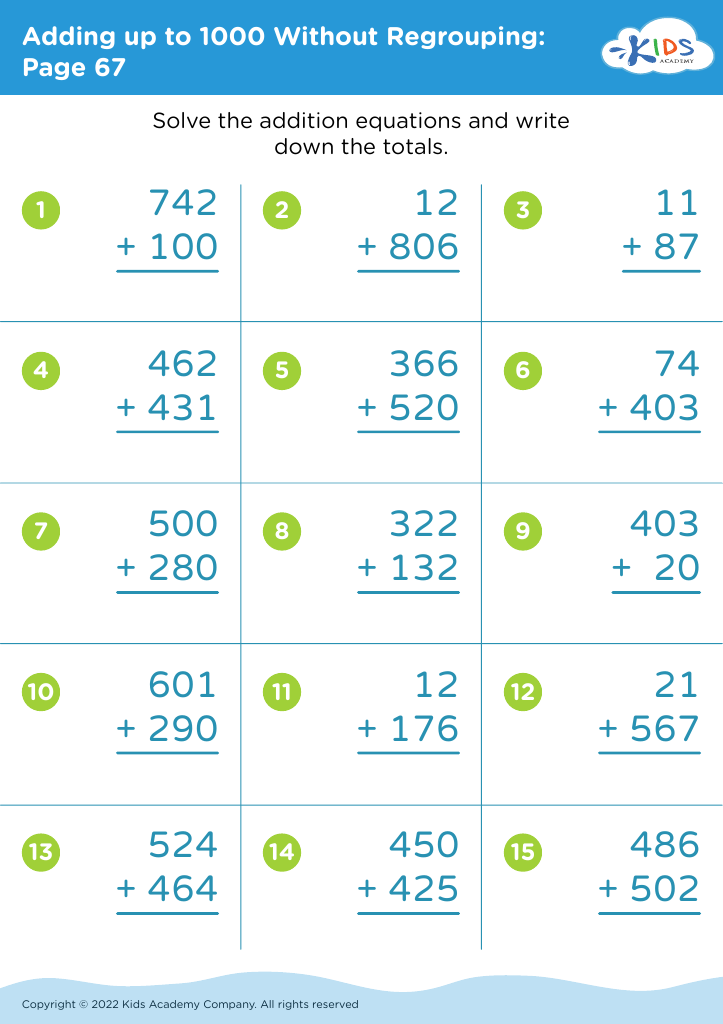
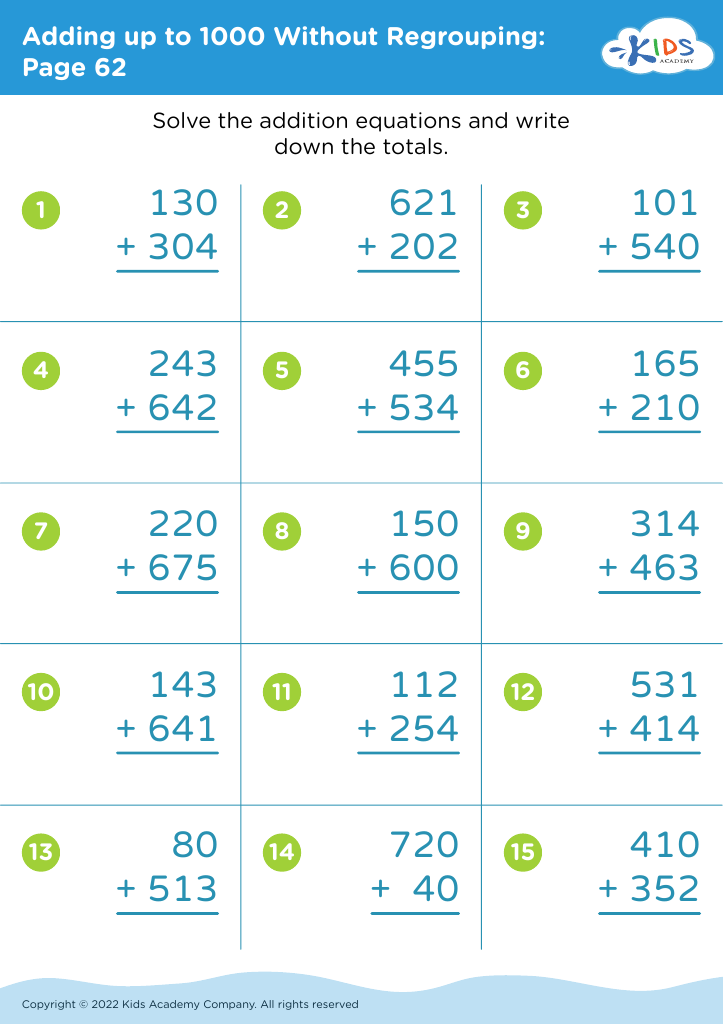


Understanding how to compare fractions, particularly when they sum up to 1000 without regrouping, is essential for both parents and teachers as it lays the foundation for critical mathematical skills. First, mastering this concept helps students grasp notions of numerical relationships and value. By comparing fractions, children learn to identify greater or lesser amounts, which is crucial for everyday decision-making, such as budgeting or portion control.
Additionally, the ability to add fractions effectively prepares students for more complex mathematical concepts, including ratios, proportions, and percentages. Learning to work with fractions without regrouping simplifies the process, making it less intimidating and more accessible. For educators, incorporating this skill into lessons fosters deeper understanding and appreciation of mathematics, promoting confidence in students.
For parents, being involved in their child’s education by reinforcing these skills at home can enhance learning and make mathematics a positive experience. Encourage practice through games, real-life scenarios, and discussions, reinforcing that math skills extend beyond the classroom. Ultimately, fostering a strong numerical literacy in children will equip them with problem-solving skills essential for their future academic pursuits and everyday lives.