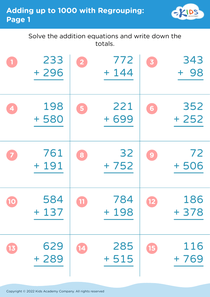
Counting skills Adding up to 1000 Without Regrouping Worksheets
10 filtered results
-
From - To
Enhance your child’s math skills with our "Counting Skills: Adding Up to 1000 Without Regrouping Worksheets." These engaging worksheets are designed to help young learners practice addition in a fun, systematic way. Focusing on adding numbers seamlessly without regrouping, the exercises build confidence and proficiency in foundational math concepts. Our user-friendly layout, colorful designs, and variety of problems cater to different learning styles, making math accessible and enjoyable. Perfect for both in-class activities and at-home practice, these worksheets serve as an essential tool for boosting counting skills and preparing students for more complex math challenges ahead. Start building foundational skills today!
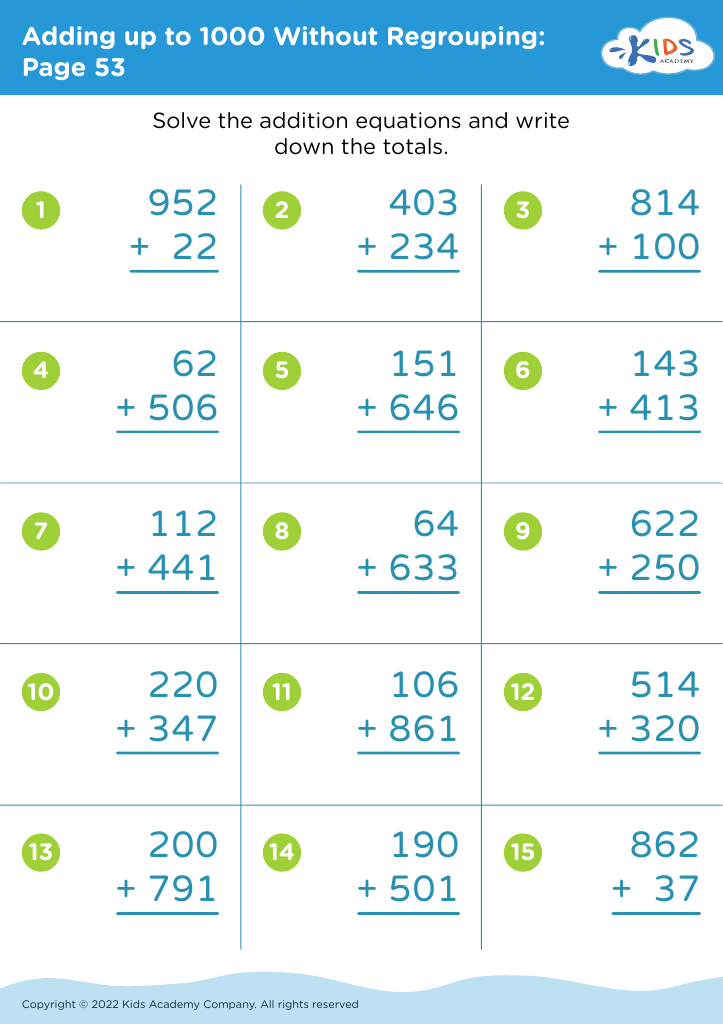
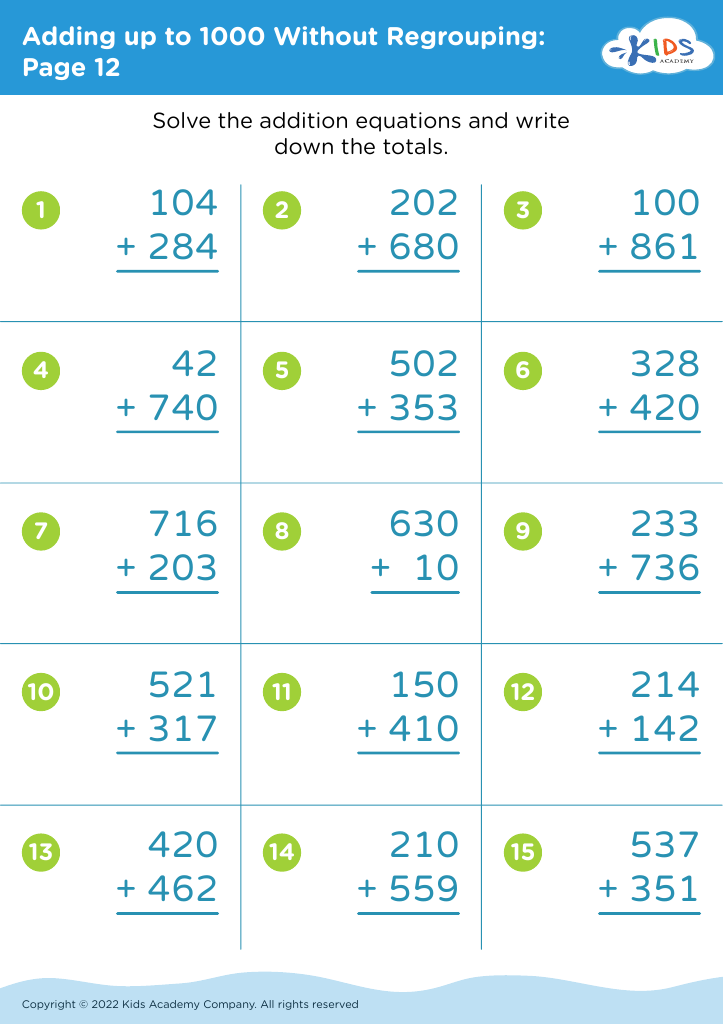
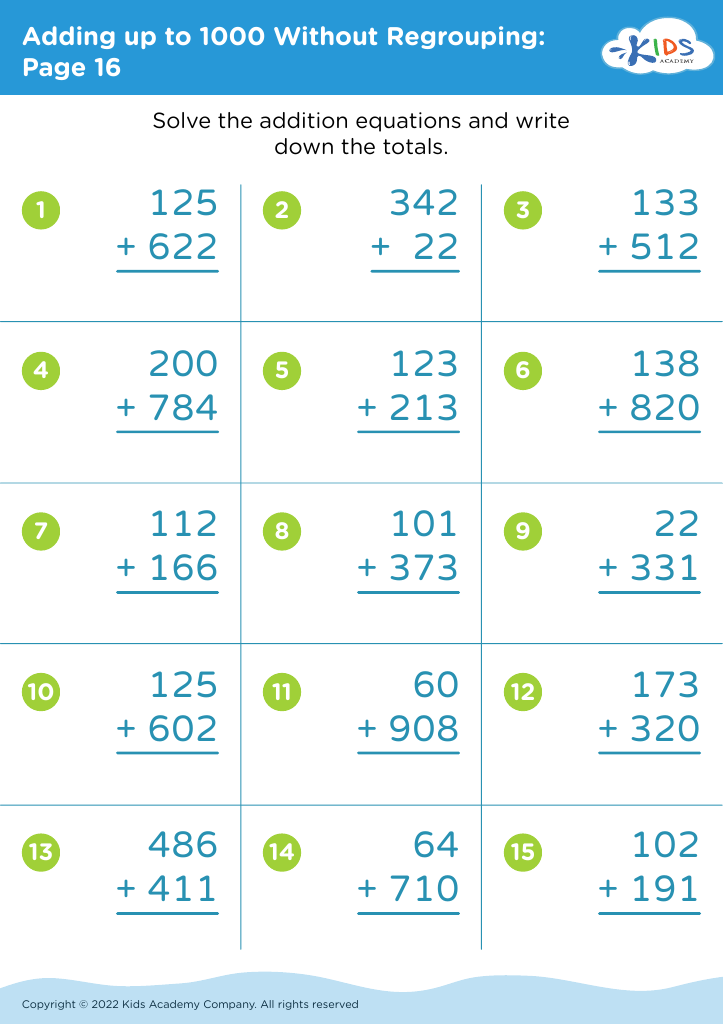
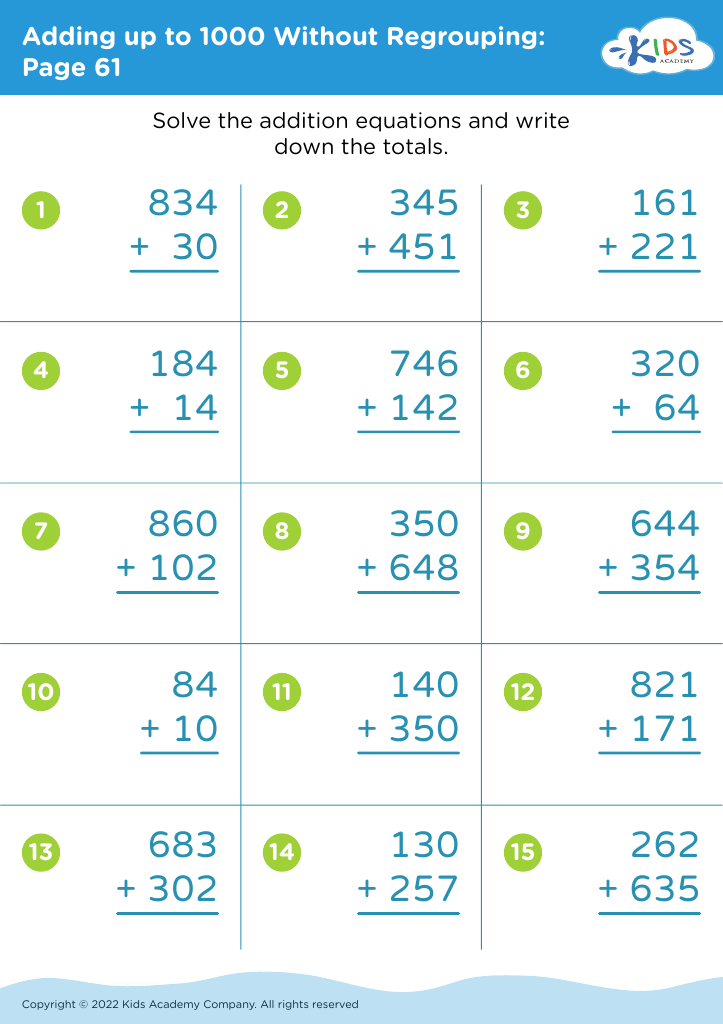
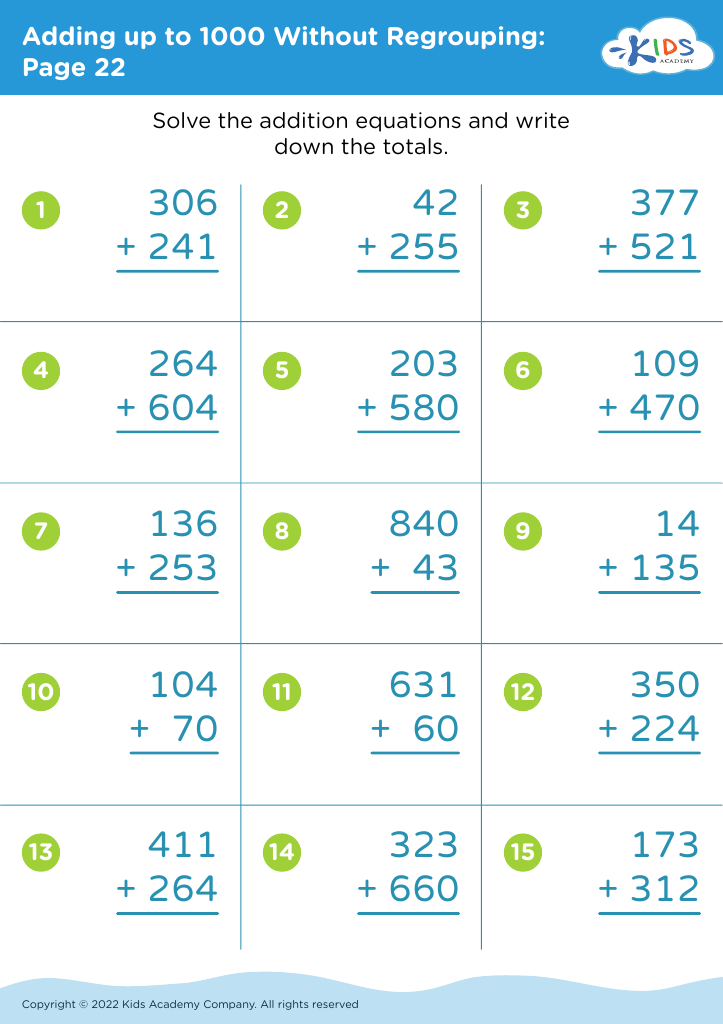
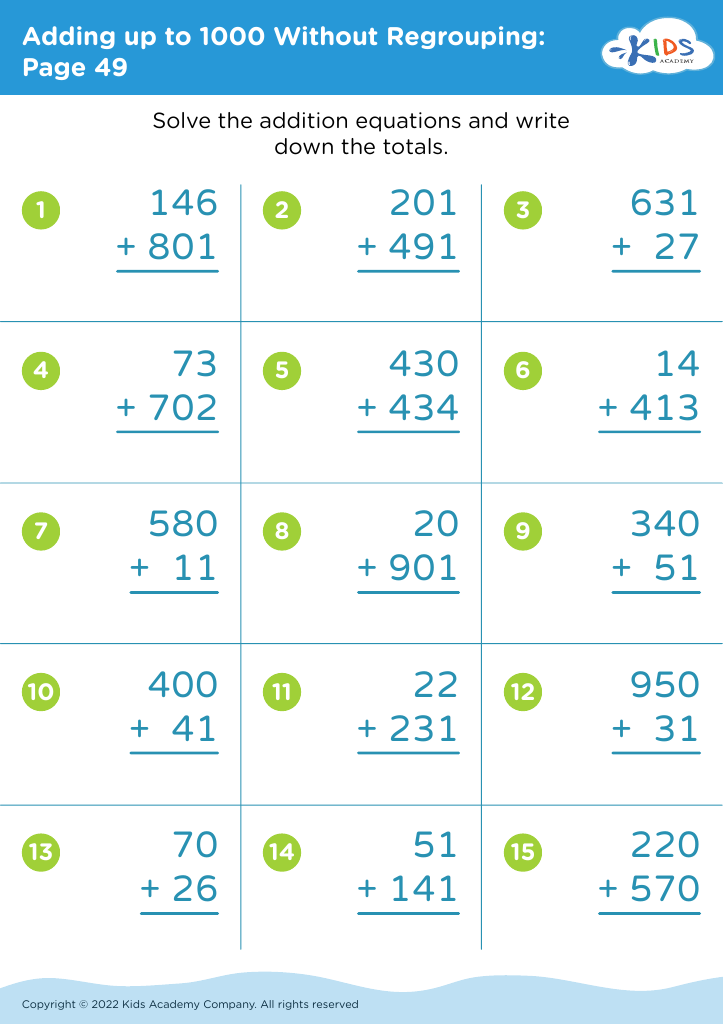
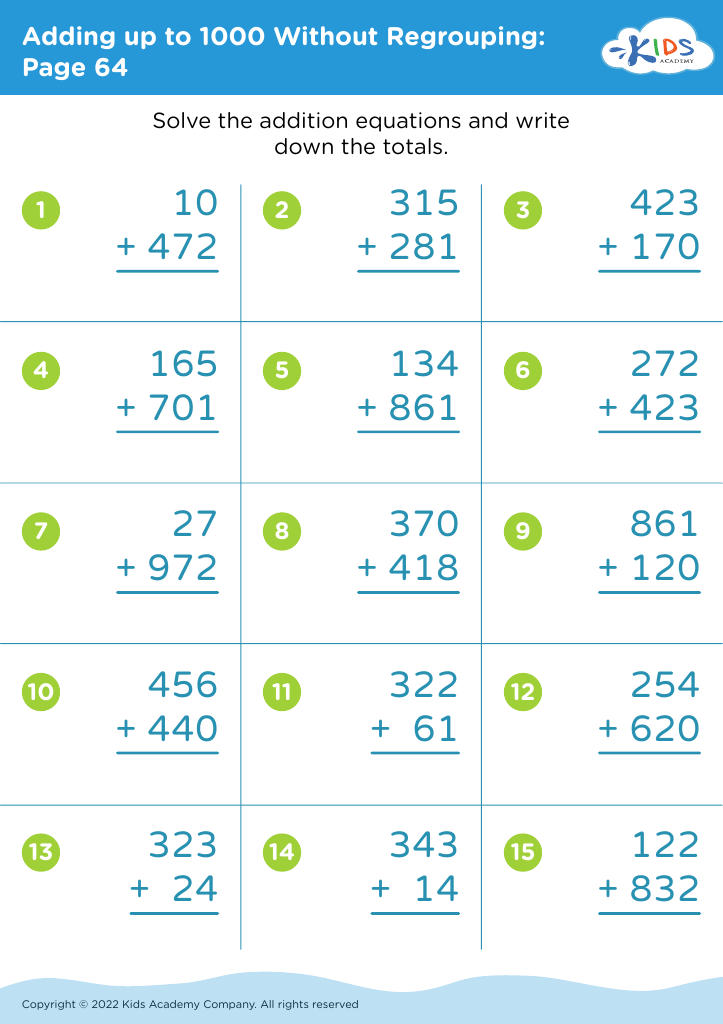
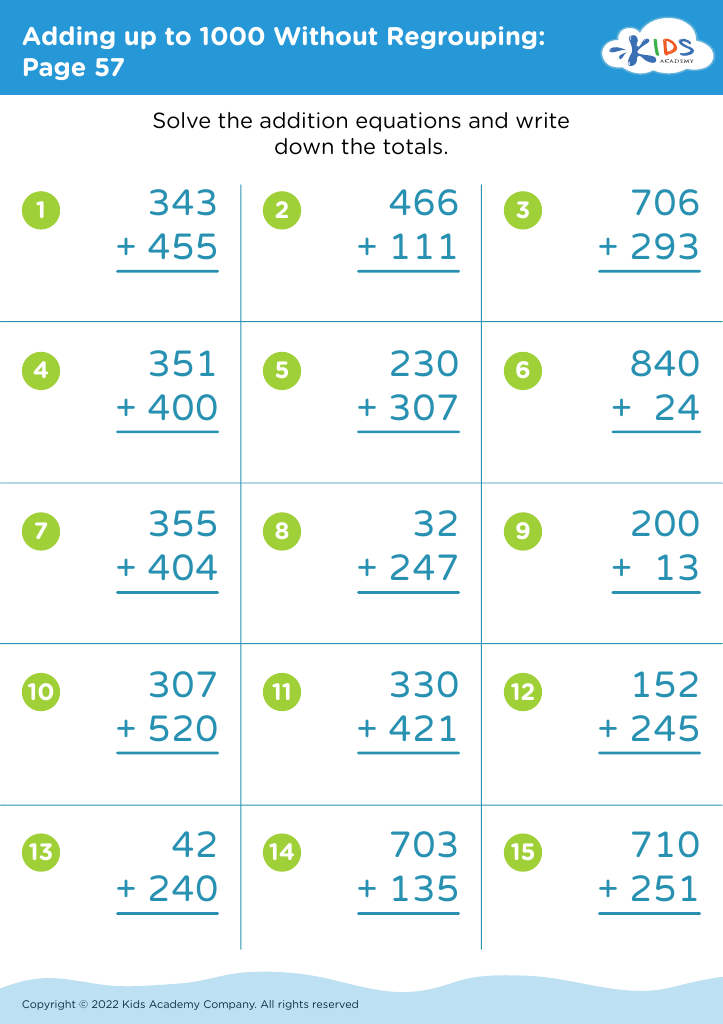
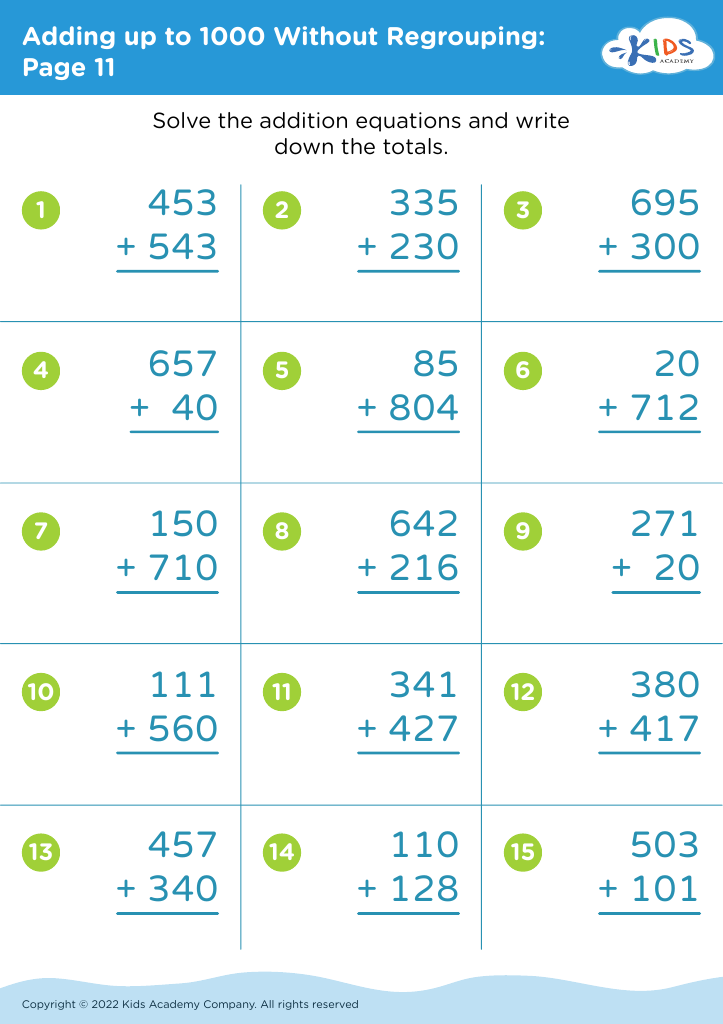
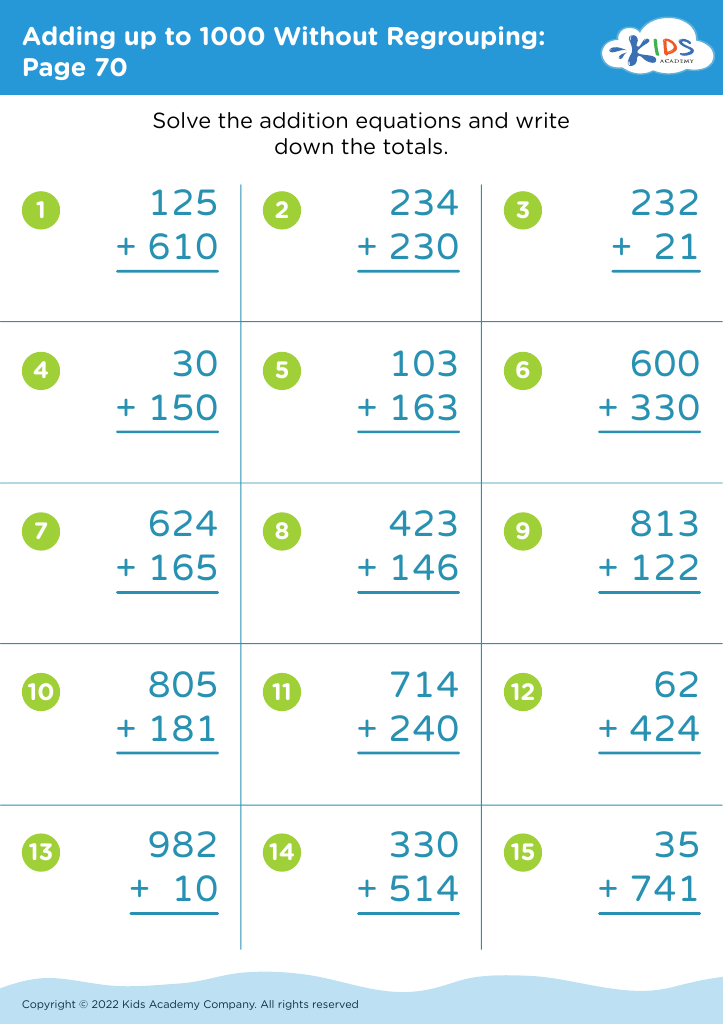


Counting skills, particularly adding up to 1000 without regrouping, are foundational for children's mathematical development and everyday life. For parents and teachers, fostering these skills early on is crucial for several reasons.
Firstly, strong counting skills lay the groundwork for more advanced mathematical concepts, such as addition, subtraction, and place value understanding. These skills also enhance children's problem-solving abilities and logical reasoning.
Secondly, developing the ability to add numbers effectively builds confidence in children. When kids master the art of counting and addition without regrouping, they grow more comfortable tackling larger numbers, thereby fostering a positive attitude toward learning mathematics.
Additionally, these skills are essential in real-life contexts. Children encounter situations that require quick mental calculations, from managing allowances to understanding measurements during cooking or crafting.
Finally, parental and educational engagement in reinforcing counting skills initiatives collaborative learning. It helps establish a supportive environment where children feel encouraged to practice and explore mathematics.
In summary, prioritizing counting skills and adding up to 1000 without regrouping cultivates a child's mathematical fluency, instills confidence, prepares them for practical life scenarios, and strengthens the home-school connection in learning.