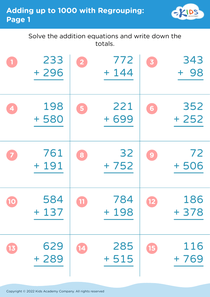
Fraction comparison Adding up to 1000 Without Regrouping Worksheets
4 filtered results
-
From - To
Boost your students' fraction comprehension with our targeted "Fraction Comparison Adding Up to 1000 Without Regrouping Worksheets." Designed for early learners, these engaging worksheets provide a variety of fraction comparison scenarios, helping children practice and solidify their understanding of fractions without the need for regrouping. Featuring clear instructions and visually appealing formats, these resources encourage independent learning and critical thinking. Perfect for classroom activities or at-home practice, they ensure students master essential math skills while building confidence. Explore our collection now and enhance your students' learning experience with effective, fun, and educational fraction comparison exercises!
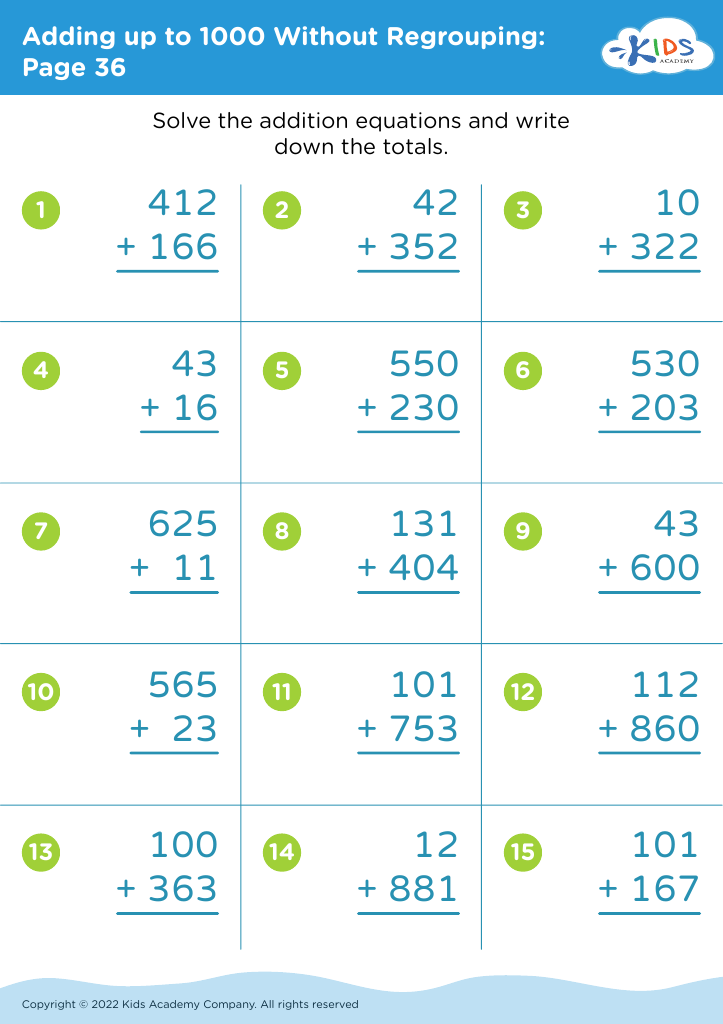
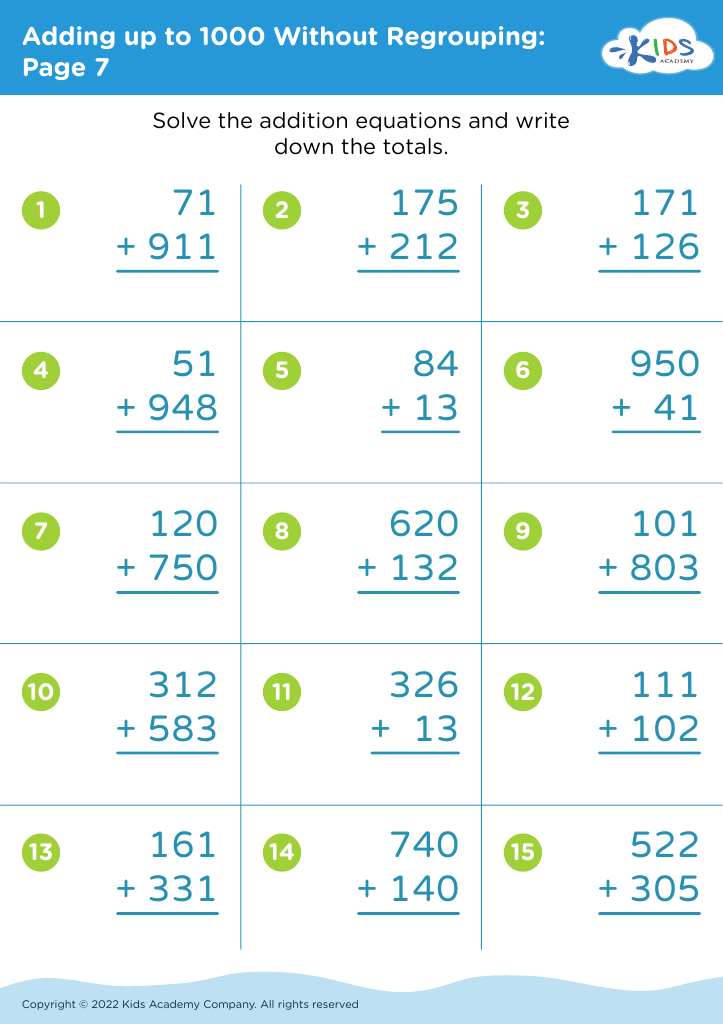
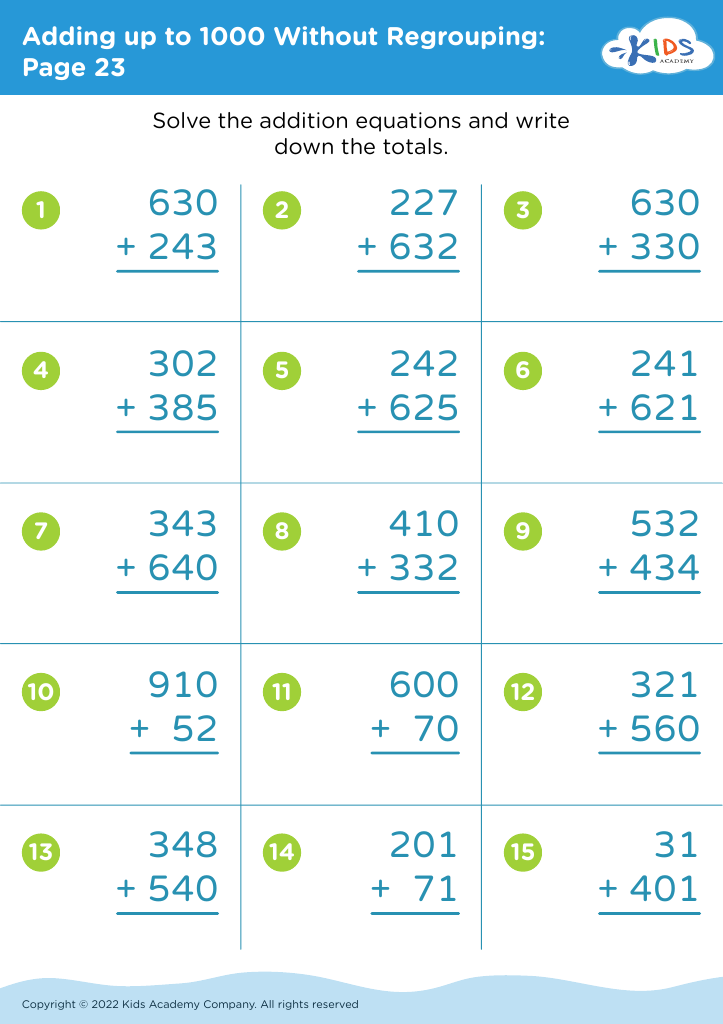
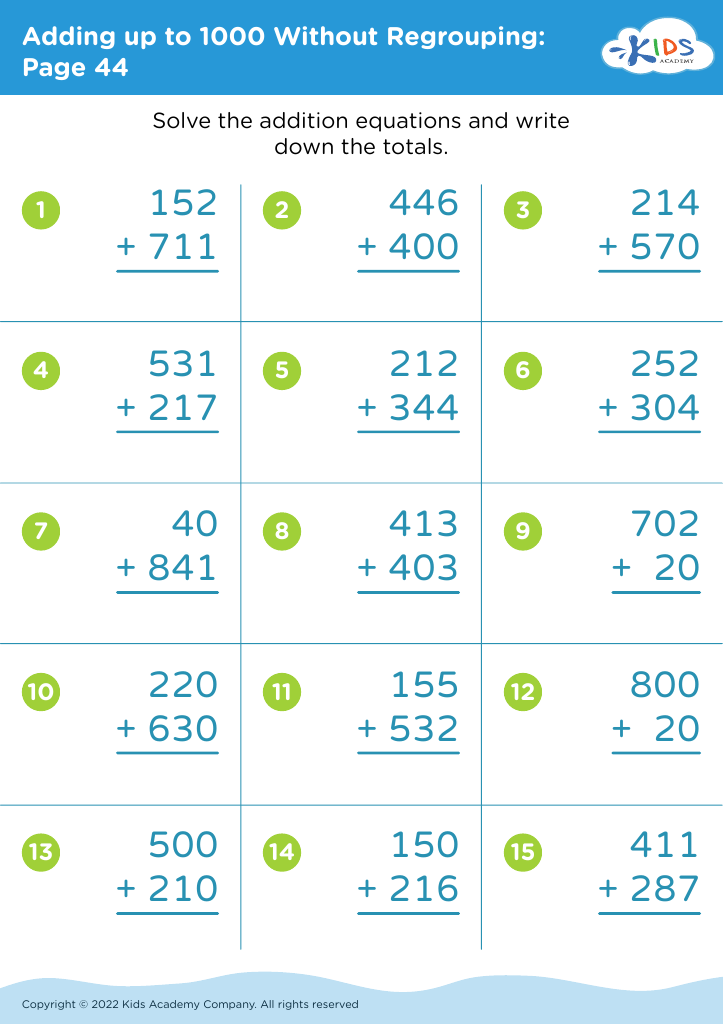


Understanding fraction comparison and adding numbers up to 1000 without regrouping is essential for students’ mathematical development. For parents and teachers, these skills lay the groundwork for more advanced math concepts.
Firstly, mastering fraction comparison enables students to develop a solid foundation in understanding proportions, which is vital in real-life applications such as budgeting, cooking, and making informed decisions. When students can confidently compare fractions, they begin to grasp concepts of equivalence and understand how to manipulate numbers more effectively.
In addition, adding numbers up to 1000 without regrouping fosters mental math skills. This encourages students to build confidence in their numerical abilities, paving the way for problem-solving and critical thinking. It enhances their ability to perform estimated calculations, which is useful in daily situations.
Moreover, these skills are often interconnected with other areas of math, such as measurement and data interpretation. Parents and teachers can cultivate a supportive learning environment by emphasizing the importance of these skills, fostering a positive attitude towards math, and encouraging collaborative learning experiences. Overall, by prioritizing fractions and addition without regrouping, adults can significantly enhance children’s mathematical fluency and preparedness for future educational challenges.