Reading comprehension Adding up to 1000 Without Regrouping Worksheets
4 filtered results
-
From - To
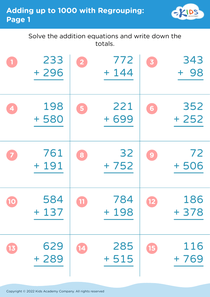
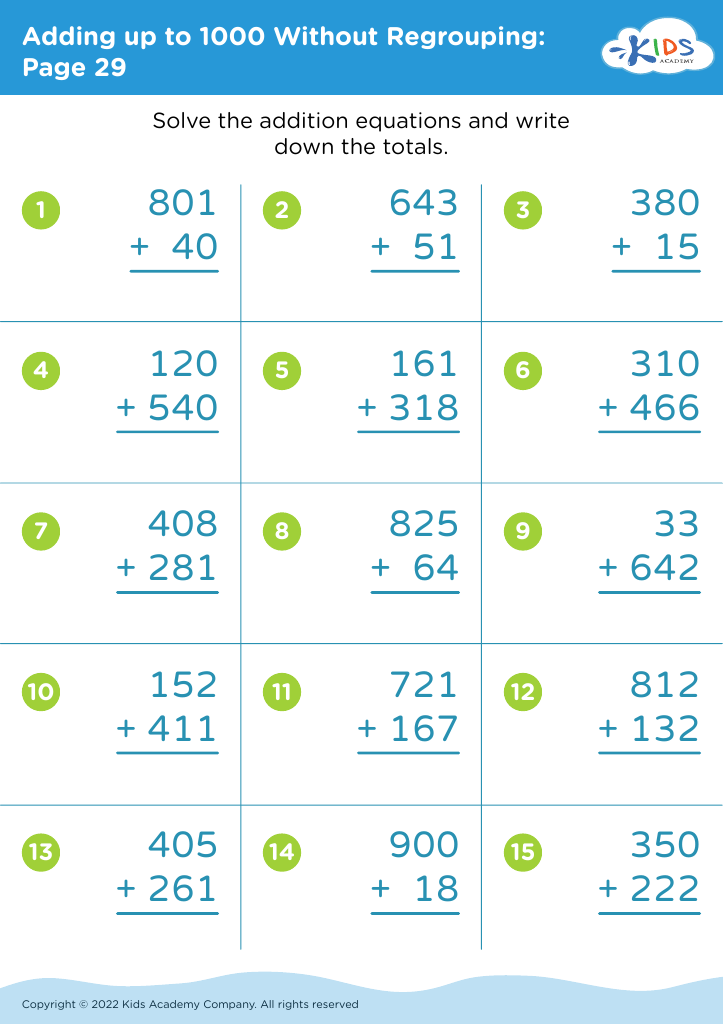
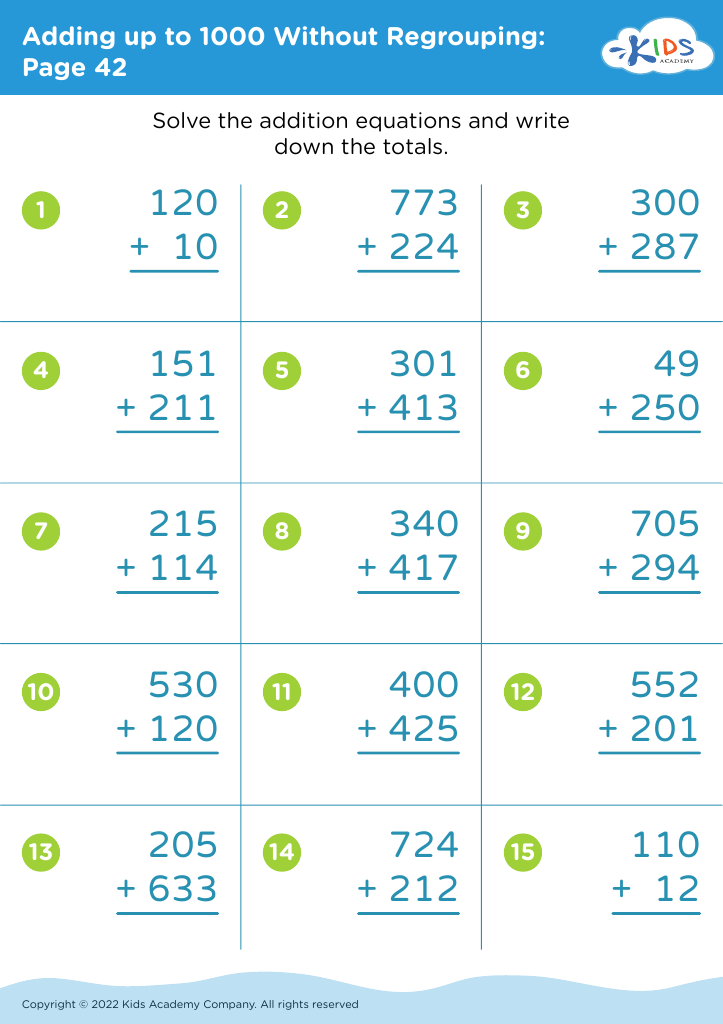
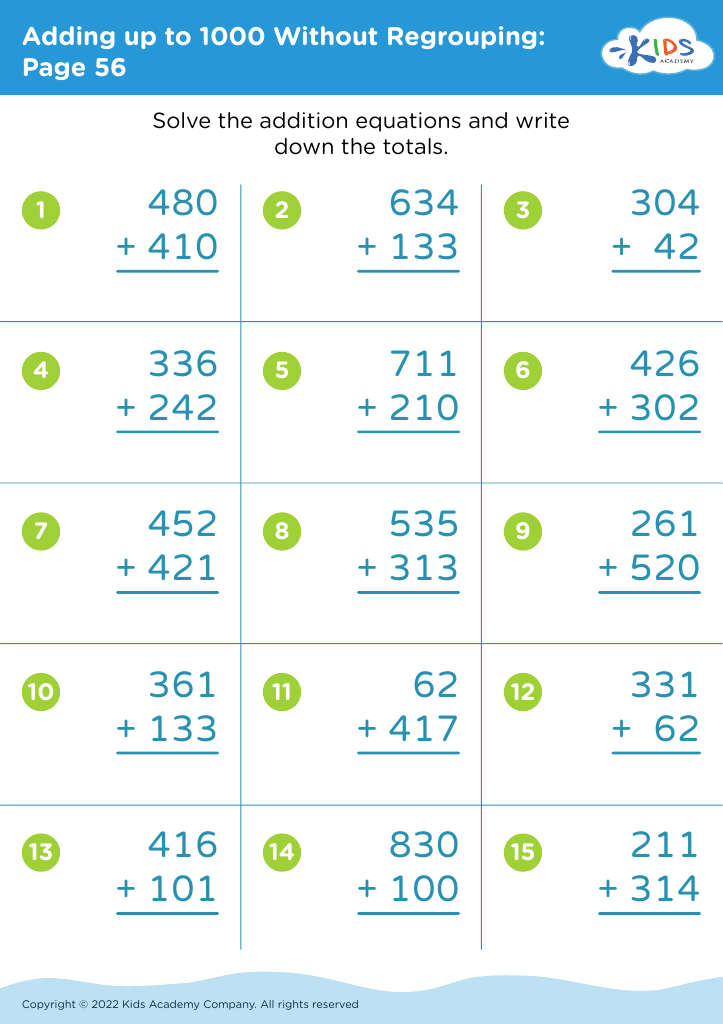
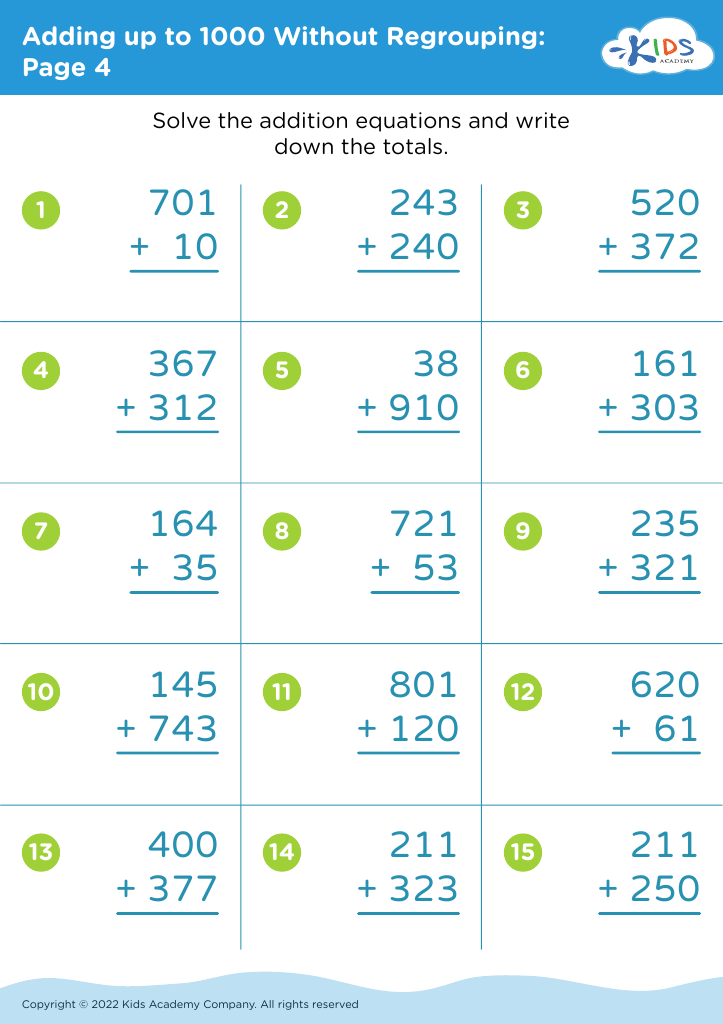
Enhance your students' reading comprehension skills while they practice addition with our "Adding Up to 1000 Without Regrouping Worksheets." Designed specifically for early learners, these engaging worksheets combine math and reading tasks, encouraging children to comprehend and solve addition problems seamlessly. Each activity not only sharpens their mathematical skills but also reinforces crucial reading abilities. By interpreting word problems and using them to perform addition tasks, students build a solid foundation in both subjects. Perfect for classroom or home use, these worksheets offer a fun, interactive way to develop critical thinking and problem-solving skills. Help your students excel in math and reading with these valuable resources!


Reading comprehension is a vital skill that forms the foundation for all future learning. It determines how effectively students can understand and analyze texts, which is crucial for academic success across subjects. Teachers and parents should pay close attention to this skill because it directly impacts a child's ability to engage with content in meaningful ways.
When students grasp what they read, they can evaluate information critically, make connections to prior knowledge, and apply concepts in real-world contexts. This leads to improved performance in assessments, higher self-esteem, and a greater love for learning. Moreover, effective reading comprehension skills are essential for strong communication abilities, as they help students articulate their thoughts and understand perspectives from various texts.
Developing reading comprehension also paves the way for mathematical learning, especially when it comes to understanding word problems like “adding up to 1000 without regrouping.” When students can read and interpret problems accurately, they become more adept problem solvers in mathematics.
Ultimately, fostering this skill among children equips them with lifelong tools for success, reduces educational disparities, and prepares them to navigate an increasingly complex world. Thus, both parents and teachers should consistently prioritize strategies that enhance reading comprehension in young learners.