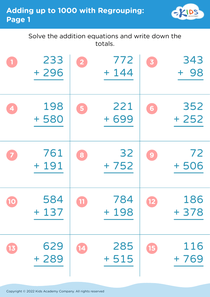
Recognize patterns Adding up to 1000 Without Regrouping Worksheets
3 filtered results
-
From - To
"Recognize patterns Adding up to 1000 Without Regrouping Worksheets" are designed to help young learners master addition skills by focusing on pattern recognition. These engaging worksheets provide opportunities for students to practice adding numbers up to 1000 without the need for regrouping, making it easier to understand and solve problems. Each worksheet offers a variety of exercises to reinforce pattern recognition in a fun and interactive way, boosting confidence in math skills. Perfect for building a strong foundation in addition, these worksheets support classroom learning and offer additional practice at home. Suitable for early grade students.
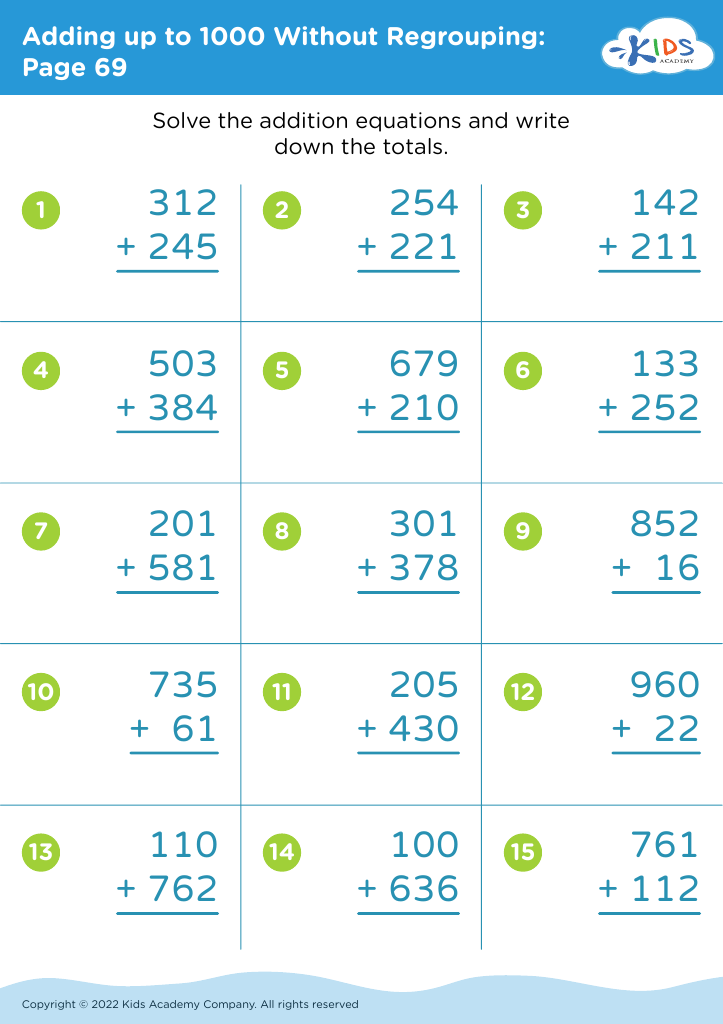
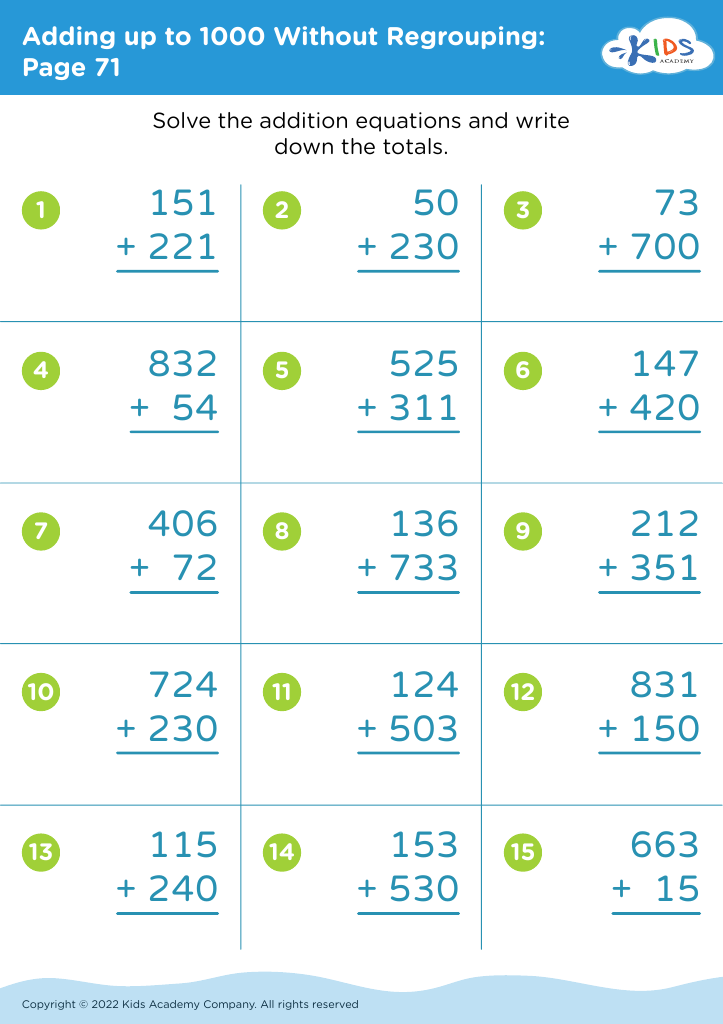
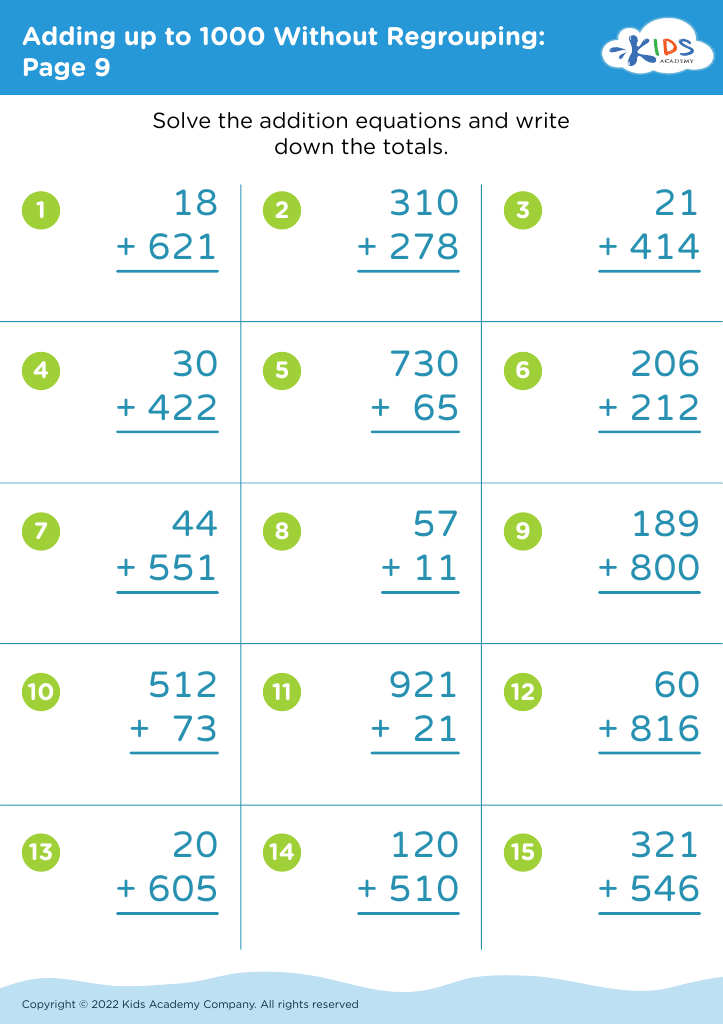


Recognizing patterns and being able to add small numbers up to 1000 without regrouping is crucial for young learners. First, pattern recognition aids cognitive development. Children understand how numbers work and interrelate, forming the foundation for more complex math concepts. When students see that 200 + 300 + 500 clearly add up to 1000 without needing complicated regrouping, they internalize arithmetic operations better.
Moreover, being able to perform such operations smoothly without regroup show students' fluency with base-10 number system, reinforcing place value awareness. This fluency is important for advancing in mathematics and applying these skills efficiently in real-world situations like money counting and measuring quantities.
This numeric agility builds children's confidence and fosters a positive attitude toward mathematics. It reduces math anxiety, promoting a sense of achievement and readiness for advanced topics like multiplication and division. Teachers and parents recognize that regular practice lays down lifelong skills.
In summary, caring about recognizing patterns and mastering addition up to 1000 without regrouping supports a child's overall numeric literacy. It prepares the groundwork for later academic success, ultimately benefiting their everyday life and even broadening future career opportunities.