Recognizing shapes Adding up to 1000 Without Regrouping Worksheets
3 filtered results
-
From - To
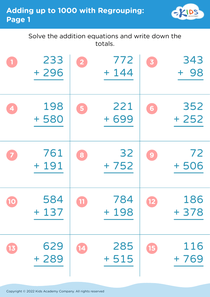
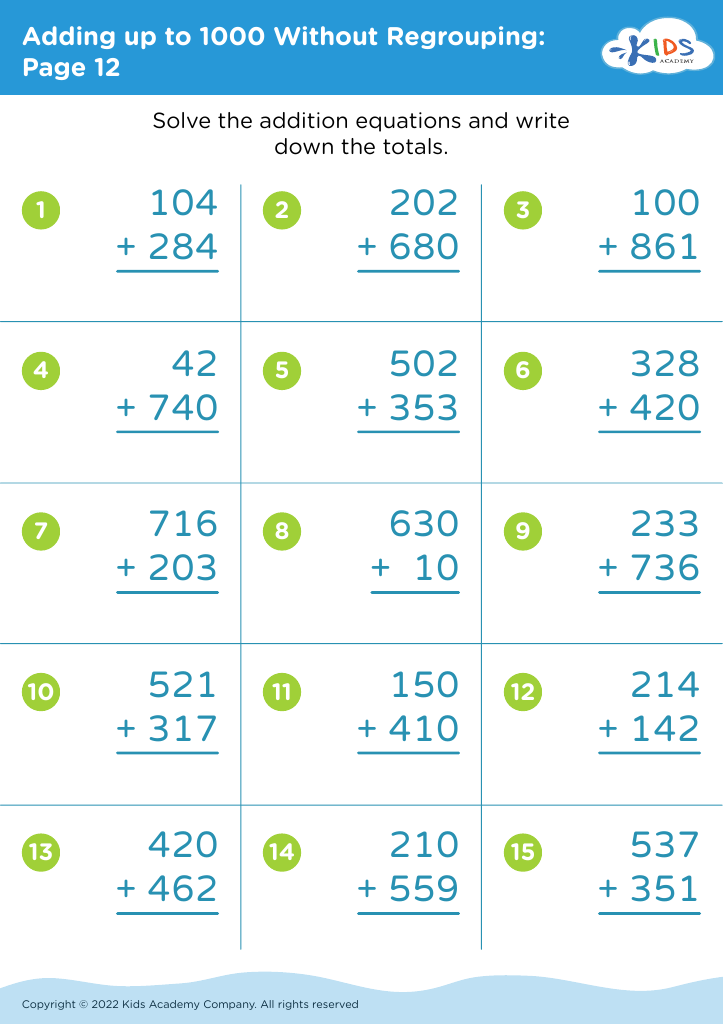
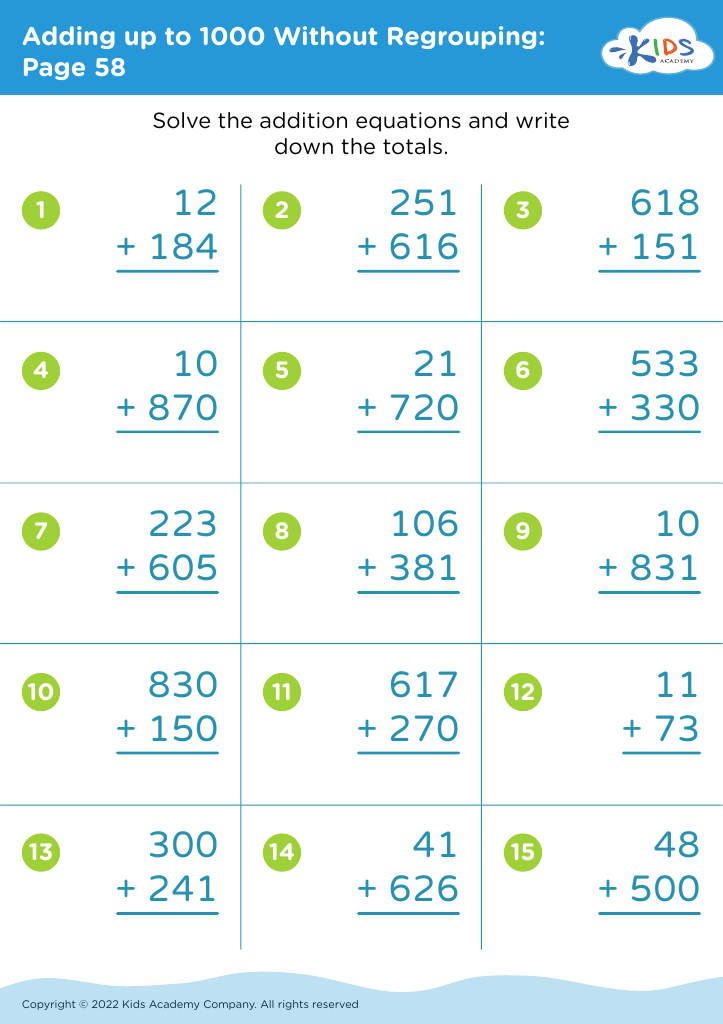
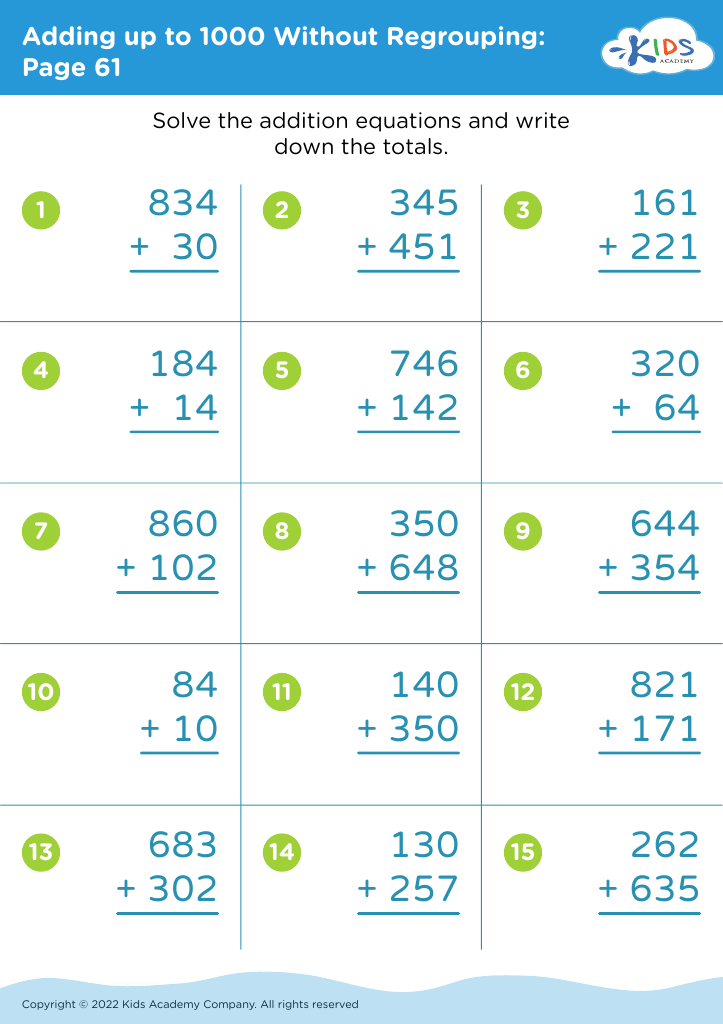
Explore our engaging "Recognizing Shapes Adding Up to 1000 Without Regrouping Worksheets" designed to enhance young learners' math skills. These worksheets combine shape recognition with addition, allowing students to solve problems while identifying various shapes in a fun, interactive way. Perfect for early grade classrooms, each worksheet helps reinforce addition skills up to 1000 without regrouping, ensuring a strong foundational understanding of math concepts. Teachers can easily integrate these resources into their lesson plans, making learning enjoyable and effective. Foster creativity and critical thinking by helping students recognize shapes while mastering essential addition skills with our thoughtfully crafted worksheets!


Recognizing shapes and understanding basic addition skills, such as adding up to 1000 without regrouping, are foundational components of early education that serve multiple purposes for children. Firstly, shape recognition fosters spatial awareness, which is critical in mathematics, art, and even everyday problem-solving. By recognizing different shapes, children learn to categorize objects, understand their properties, and comprehend spatial relationships, invaluable skills for geometrical understanding later in their education.
On the other hand, mastering addition without regrouping helps build strong numerical fluency. When children can add numbers up to 1000 without needing to regroup, they develop confidence in their mathematical abilities. This confidence is essential for tackling more complex operations like regrouping or working with larger numbers later on. Moreover, a solid grasp of basic addition supports skills in various areas, including word problems, mental math, and budgeting.
For parents and teachers, prioritizing these skills is crucial as it sets a strong foundation for future learning. Engaging children in shape recognition and addition activities can be fun and interactive, promoting a positive attitude towards mathematics from an early age. Thus, fostering these skills benefits not only academic success but also overall cognitive development.