Color Identification Adding up to 1000 Worksheets
6 filtered results
-
From - To
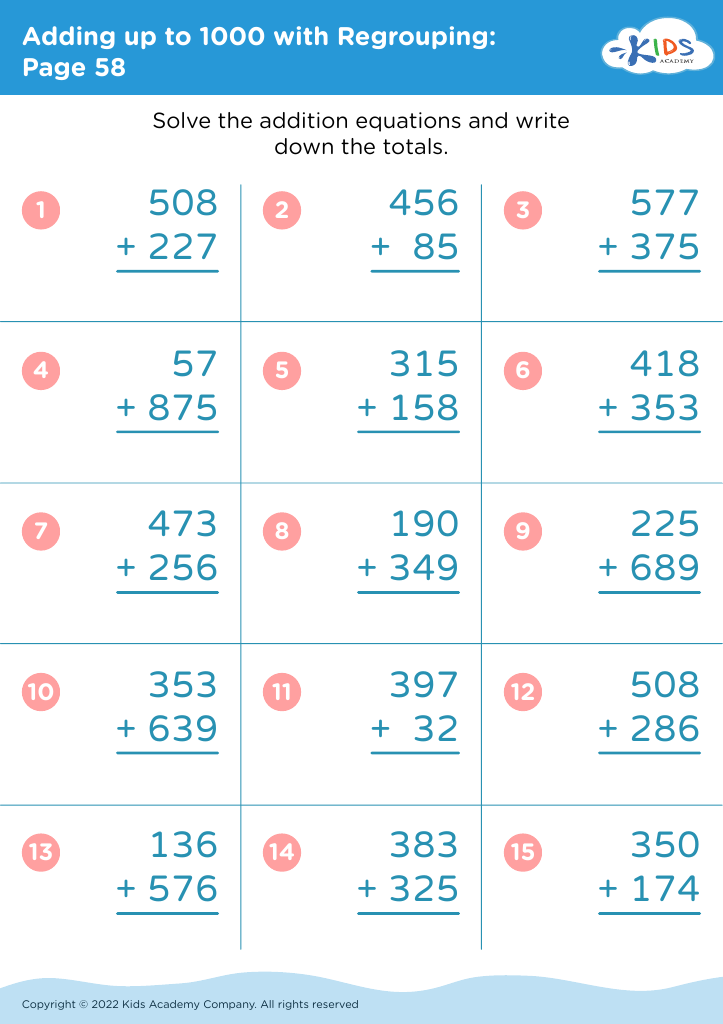
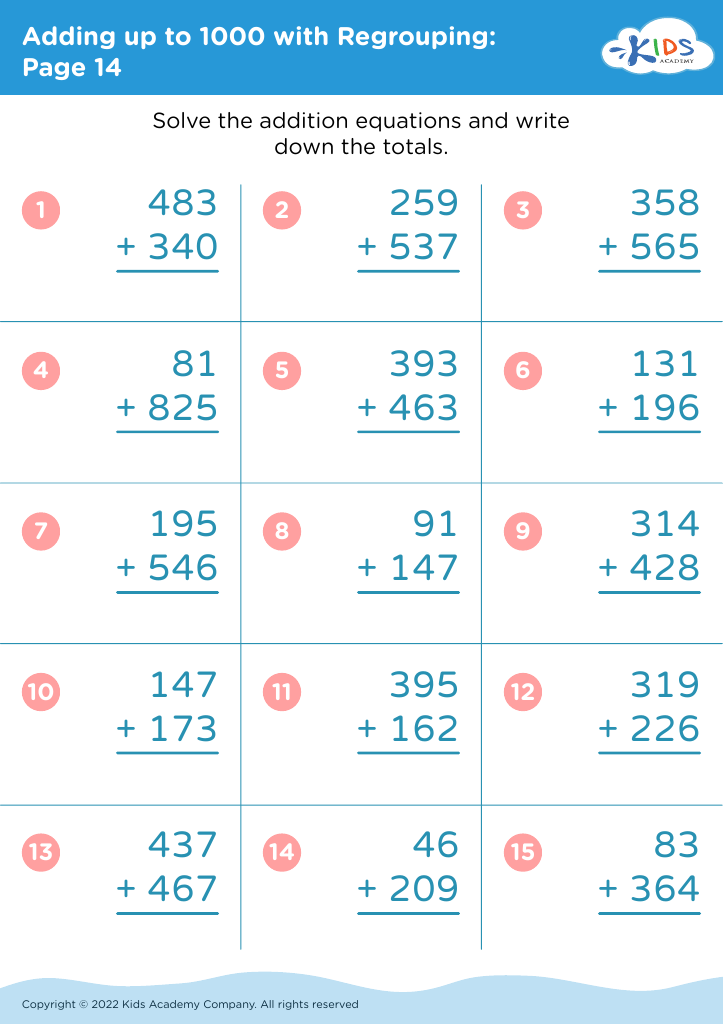
Discover our "Color Identification Adding Up to 1000 Worksheets," designed to engage young learners in math while enhancing their color recognition skills. These worksheets combine vibrant visuals with essential math concepts, allowing children to explore addition up to 1000 in a fun and interactive way. Perfect for early grade students, each activity encourages creativity through color usage while developing critical thinking and problem-solving abilities. With varied exercises, children will improve their understanding of numbers and enhance their ability to identify colors, making learning an enjoyable experience. Foster a love for math and art simultaneously with our colorful and educational resources!



Color identification is an essential skill for early childhood development, and parents and teachers should prioritize it for several reasons. First, recognizing colors helps children communicate and express their observations about the world around them. This foundational language skill fosters creativity as children engage in art, dress-up, and imaginative play, where color choices serve as crucial self-expressions.
Furthermore, color identification contributes to cognitive development. It enhances visual literacy and encourages children to categorize objects, leading to better problem-solving abilities. For instance, when children identify colors, they are practicing classification—a skill that plays a vital role in subjects like math and science later on.
Playing with colors also enriches sensory experiences, helping children develop fine motor skills as they paint, draw, or sort colored objects. In social contexts, recognizing colors promotes peer interaction and cooperation during games or art projects.
Additionally, understanding colors can be a bridge to more advanced learning. Discussing colors can spark curiosity about nature, emotions, and cultural meanings. Overall, engendering a recognition and appreciation for colors equips children with skills that influence their learning, creativity, and social experiences throughout their lives, making it a vital focus for parents and educators.








