Color recognition Adding up to 1000 Worksheets
3 filtered results
-
From - To
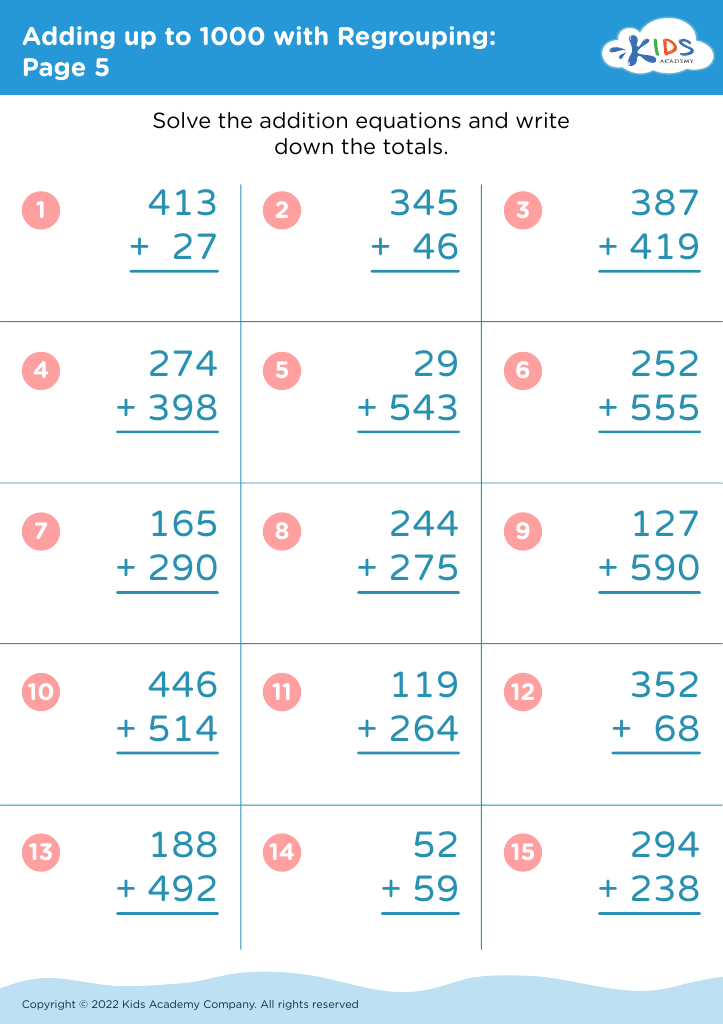
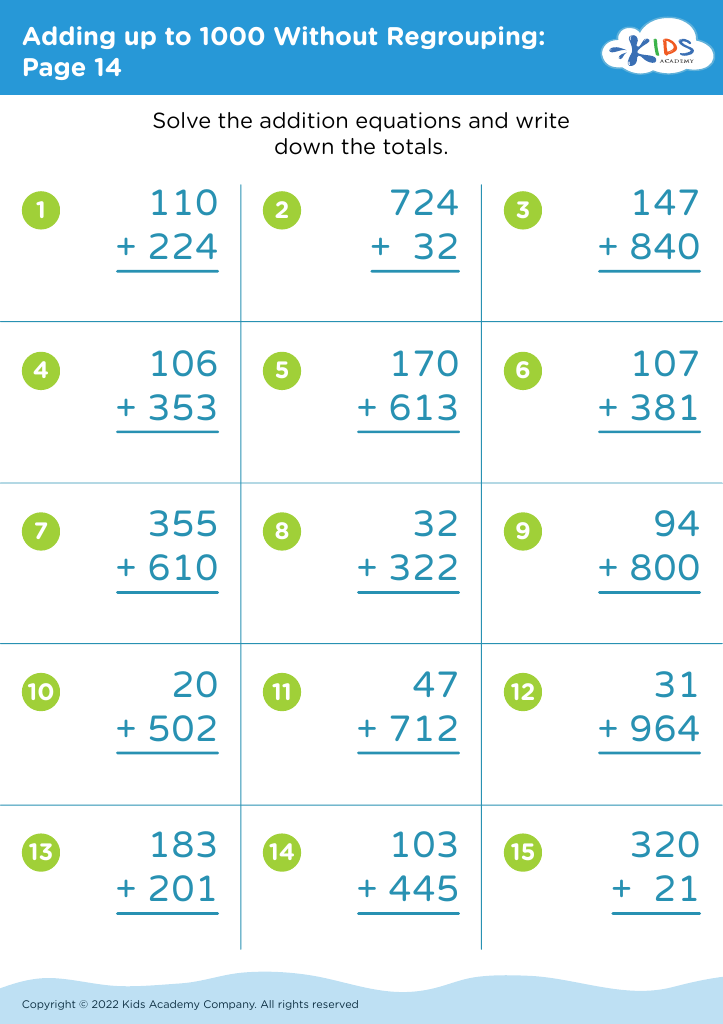
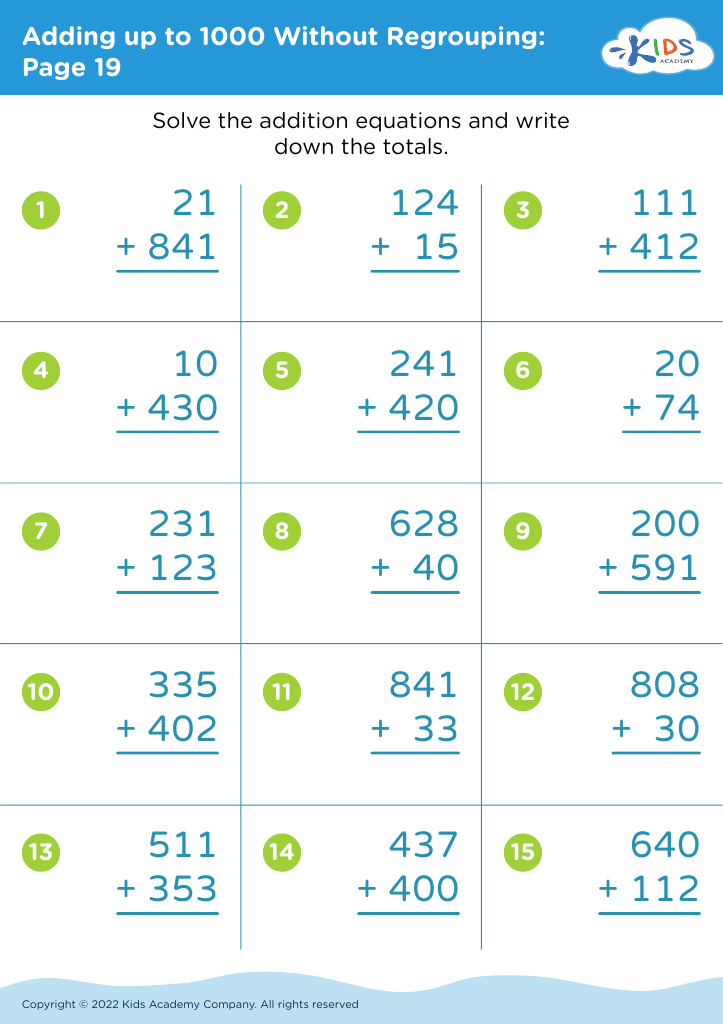
Enhance your child's learning experience with our comprehensive "Color Recognition Adding Up to 1000 Worksheets." These engaging worksheets are designed to help young learners develop essential color recognition skills while practicing addition concepts up to 1000. Perfect for early grade students, each worksheet combines fun visuals with interactive math exercises, making learning enjoyable and effective. Children will strengthen their understanding of numbers, improve fine motor skills, and boost their creativity through colorful illustrations. Ideal for classroom use or at-home learning, our worksheets provide a dynamic approach to mastering math fundamentals and recognizing colors simultaneously. Explore our resources to accelerate your child's math journey today!



Color recognition is a fundamental skill that significantly contributes to a child's cognitive, social, and emotional development. Teachers and parents should prioritize color recognition for several reasons.
Firstly, understanding colors helps children make sense of the world around them. It is a basis for visual discrimination, aiding in their ability to identify and interpret various objects and their characteristics. This foundational skill bolsters critical thinking and problem-solving abilities.
Secondly, color recognition plays a crucial role in language development. As children learn to identify and name colors, they expand their vocabulary and enhance their communication skills. Engaging children in discussions about colors encourages expressive language and descriptive abilities.
Additionally, color recognition fosters creativity. Art activities that involve choosing and mixing colors can inspire imaginative play and self-expression, boosting emotional intelligence.
From a social perspective, recognizing colors helps children interact with peers. Participating in group activities, like sorting colored objects, can promote teamwork and collaboration, essential skills for their future interactions.
Lastly, exposure to color recognition can impact a child's academic performance. Fundamental concepts in math and science often require the understanding of color coding, add further importance to this skill.
In summary, fostering color recognition enriches children's learning experiences, nurturing holistic development essential for their future success in life.








