Filters

16 filtered results

Clear all filters
Favorites
With answer key
Interactive

16 filtered results

Difficulty Level

Grade


Enhance your child’s math skills with our expertly designed "Comparing Fractions Adding up to 1000 Worksheets." Perfect for young learners, these worksheets help students master comparing fractions while developing their addition skills within 1000. Packed with visually engaging content, our resources simplify complex math concepts, making them easy for children to understand and apply. Ideal for practicing at home or in the classroom, our worksheets provide crucial support in building a solid mathematical foundation. Empower your child today with fun and challenging exercises that foster confidence and boost their proficiency in essential math skills. Make learning math exciting and effective!
Check out this FREE Trial Lesson on Adding up to 1000!

D

Favorites
With answer key
Interactive
  • Comparing Fractions
  • Adding up to 1000
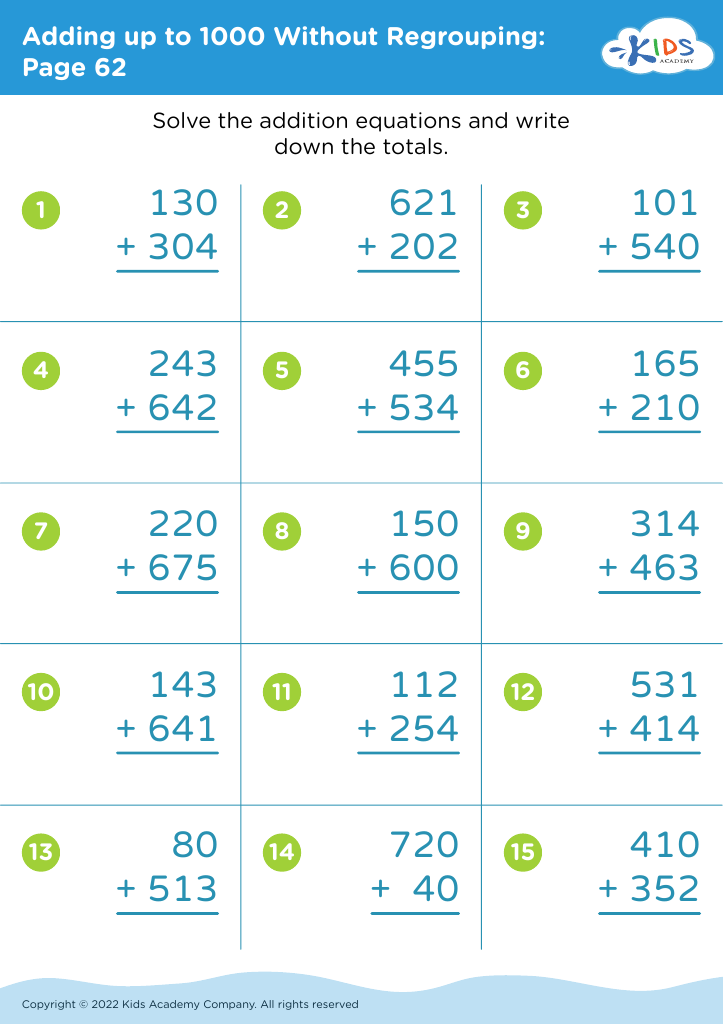
Adding up to 1000 with Regrouping: Page 63
Worksheet
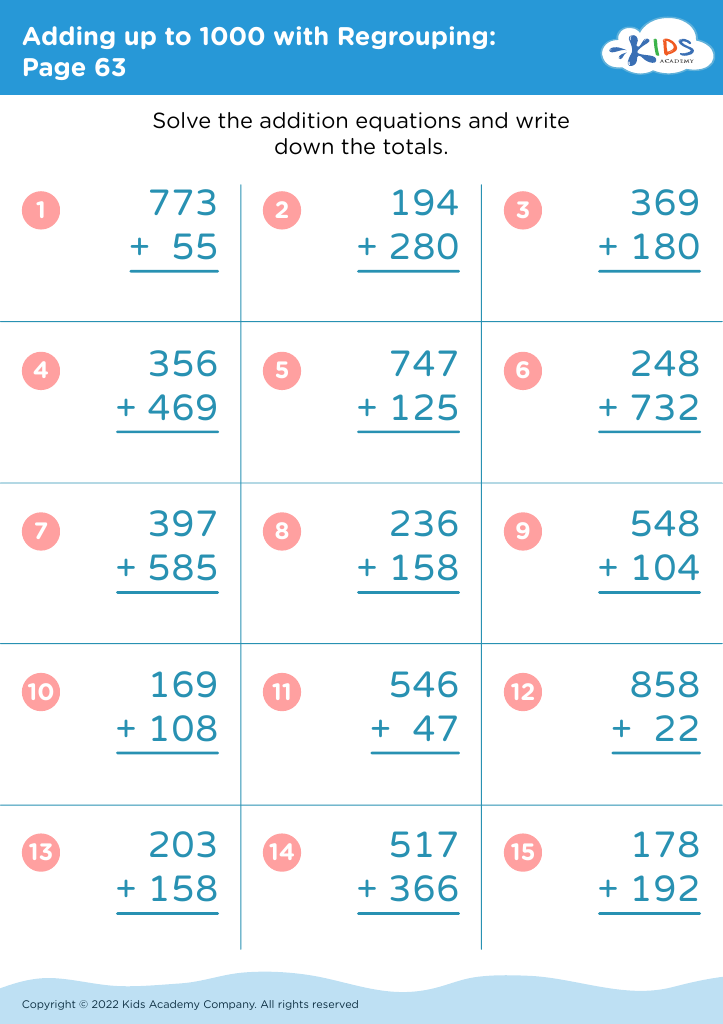
Adding up to 1000 with Regrouping: Page 26
Worksheet
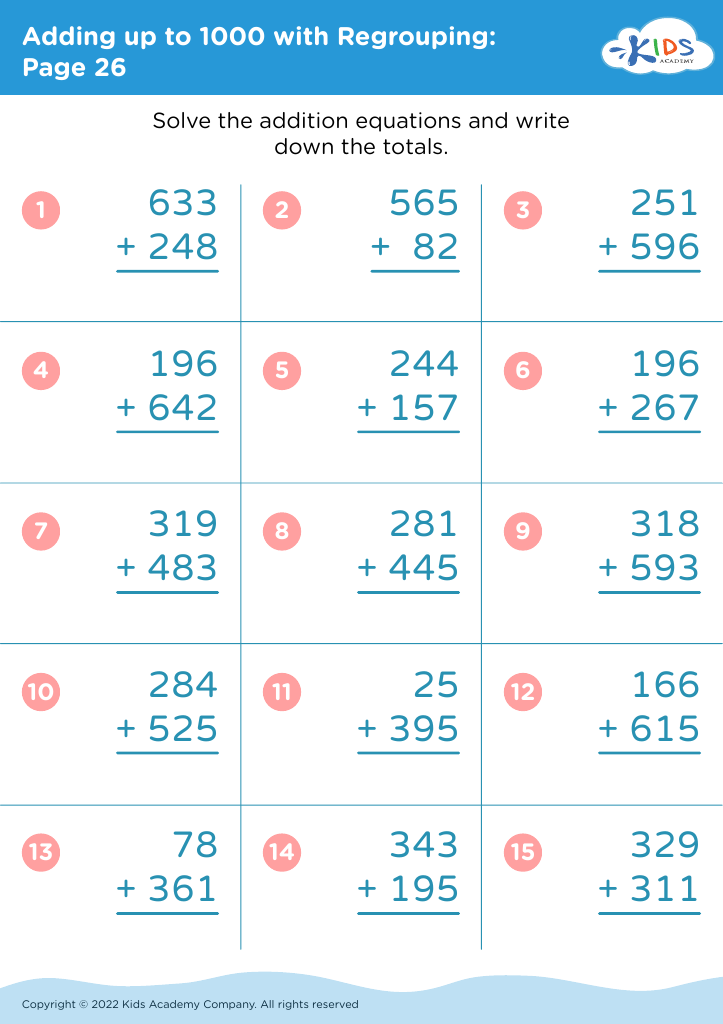
Adding up to 1000: Page 40

Adding up to 1000: Page 40

Adding up to 1000: Page 40
Worksheet
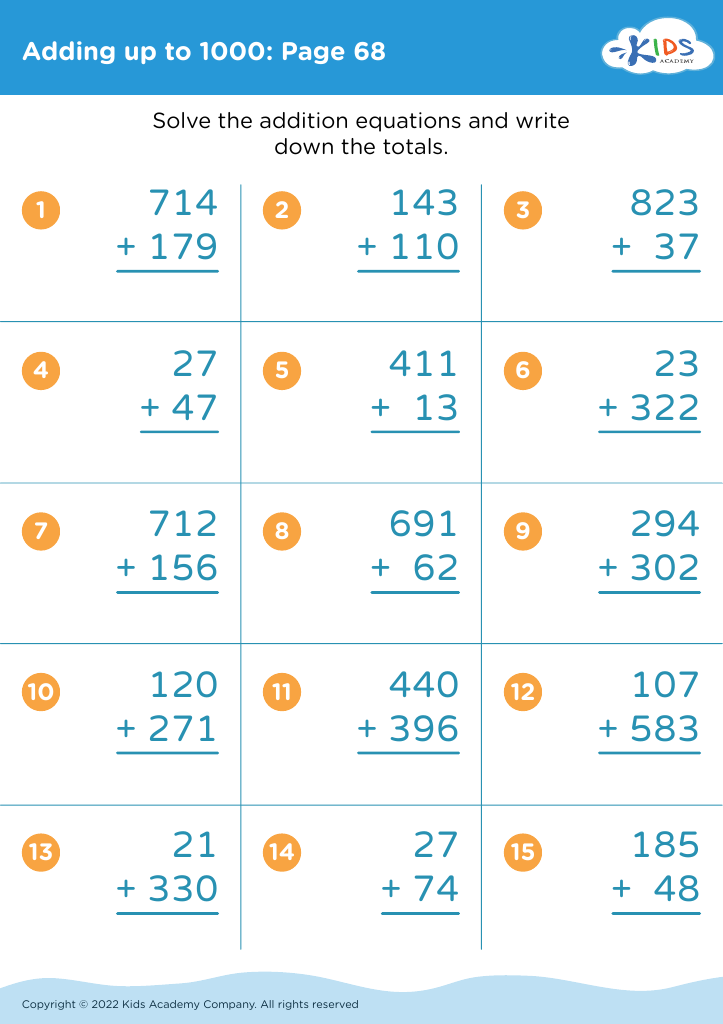
Adding up to 1000: Page 68

Adding up to 1000: Page 68

Adding up to 1000: Page 68
Worksheet
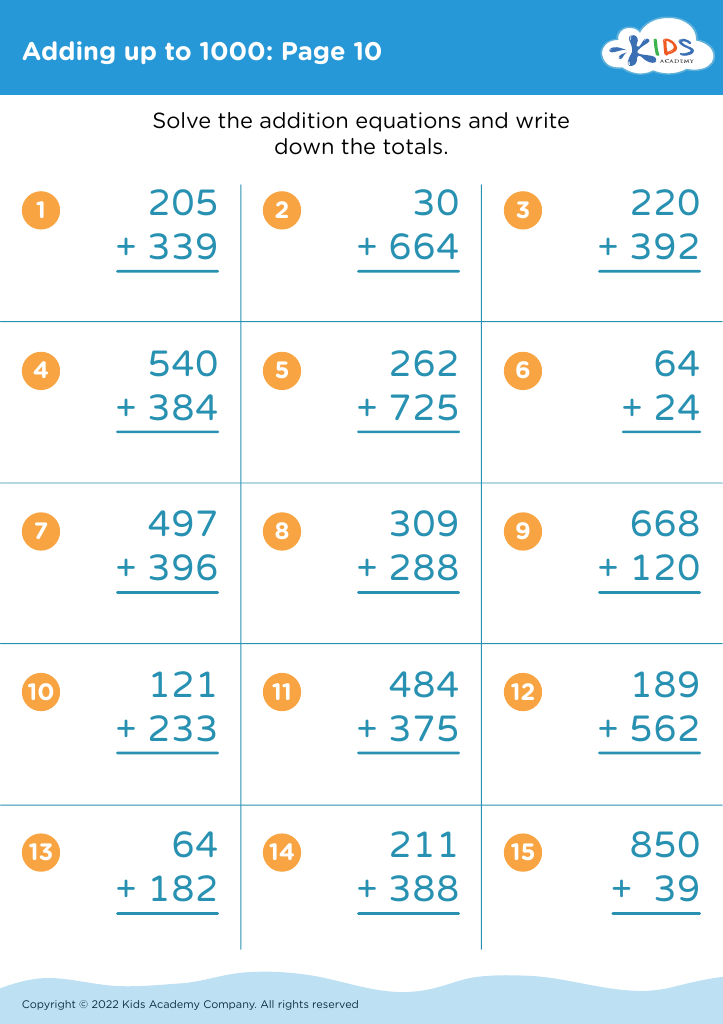
Adding up to 1000: Page 10

Adding up to 1000: Page 10

Adding up to 1000: Page 10
Worksheet
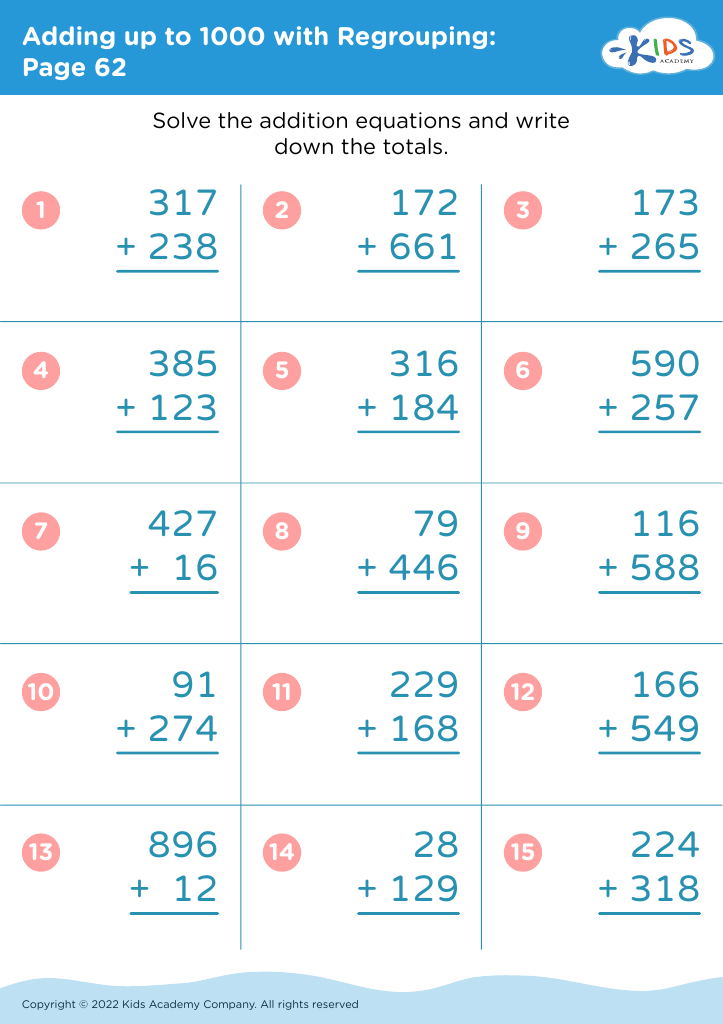
Adding up to 1000 with Regrouping: Page 62
Worksheet
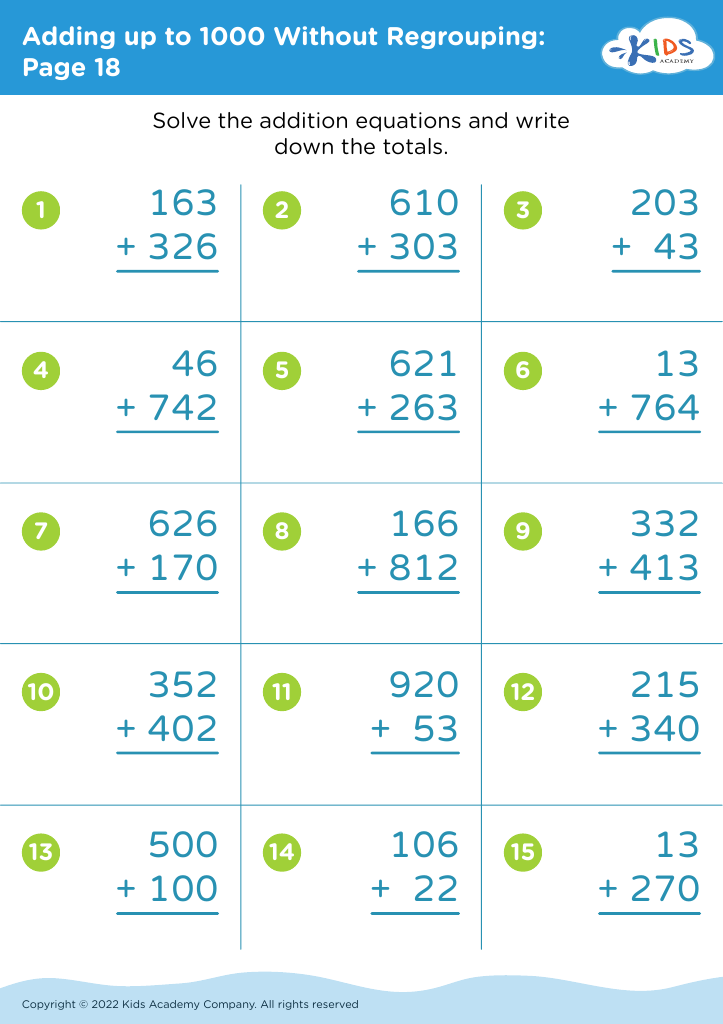
Adding up to 1000 Without Regrouping: Page 18
Worksheet
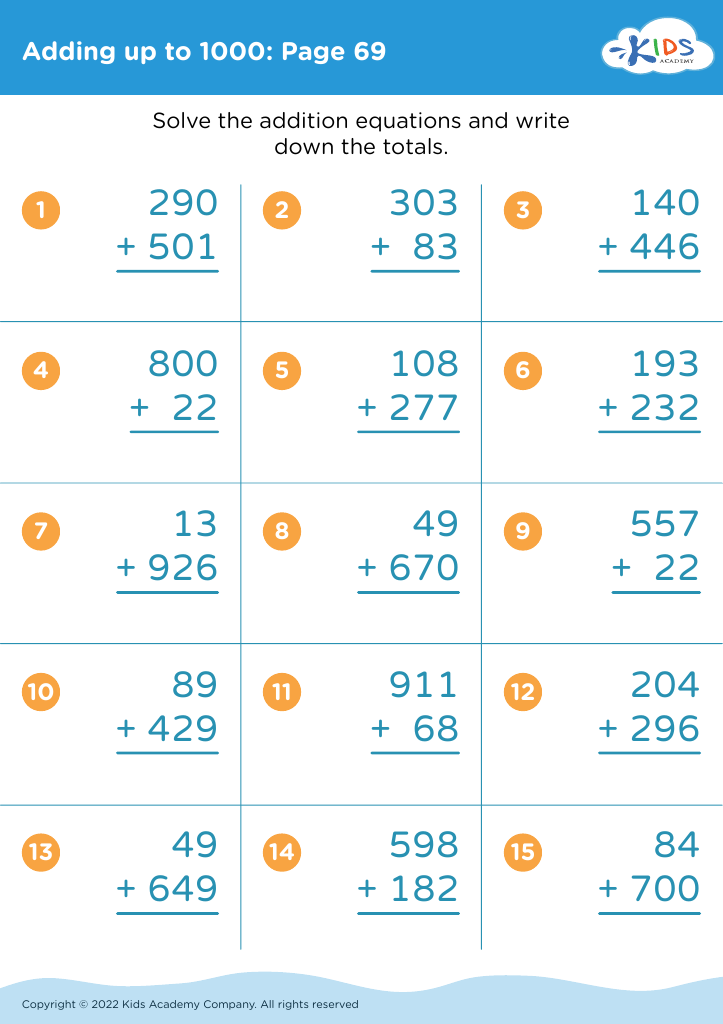
Adding up to 1000: Page 69

Adding up to 1000: Page 69

Adding up to 1000: Page 69
Worksheet
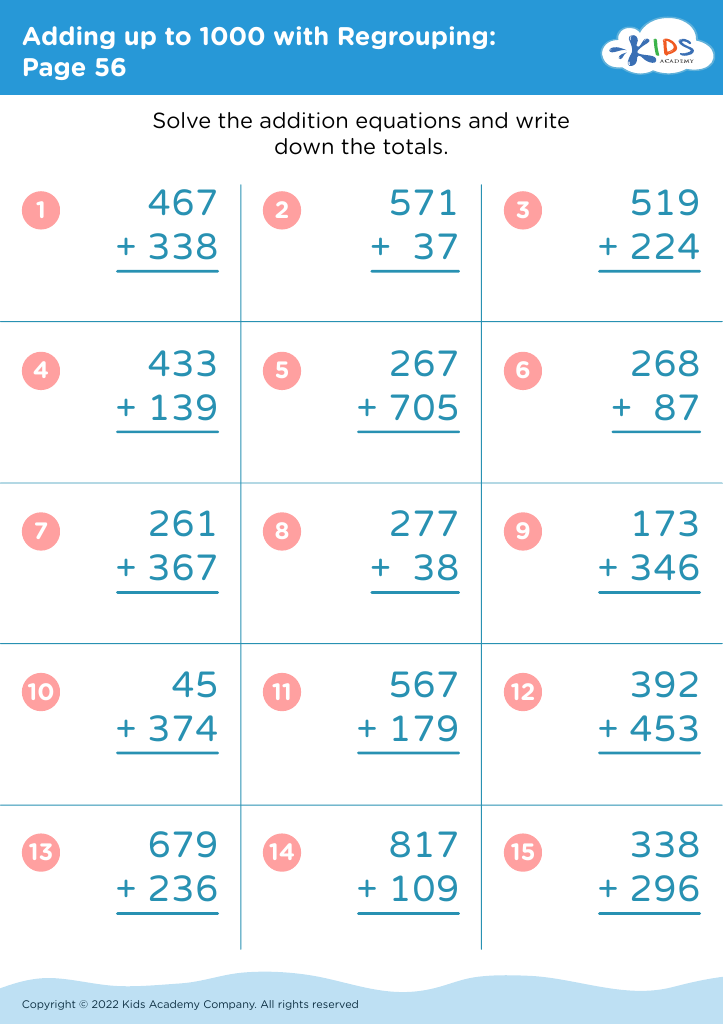
Adding up to 1000 with Regrouping: Page 56
Worksheet
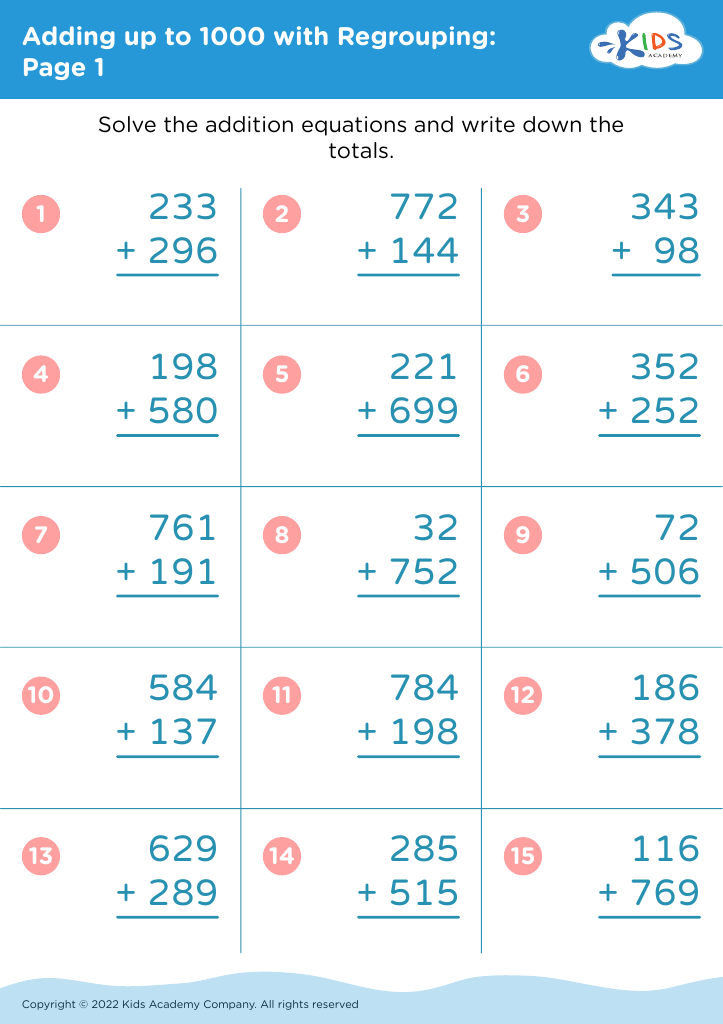
Adding up to 1000 with Regrouping: Page 1
Worksheet
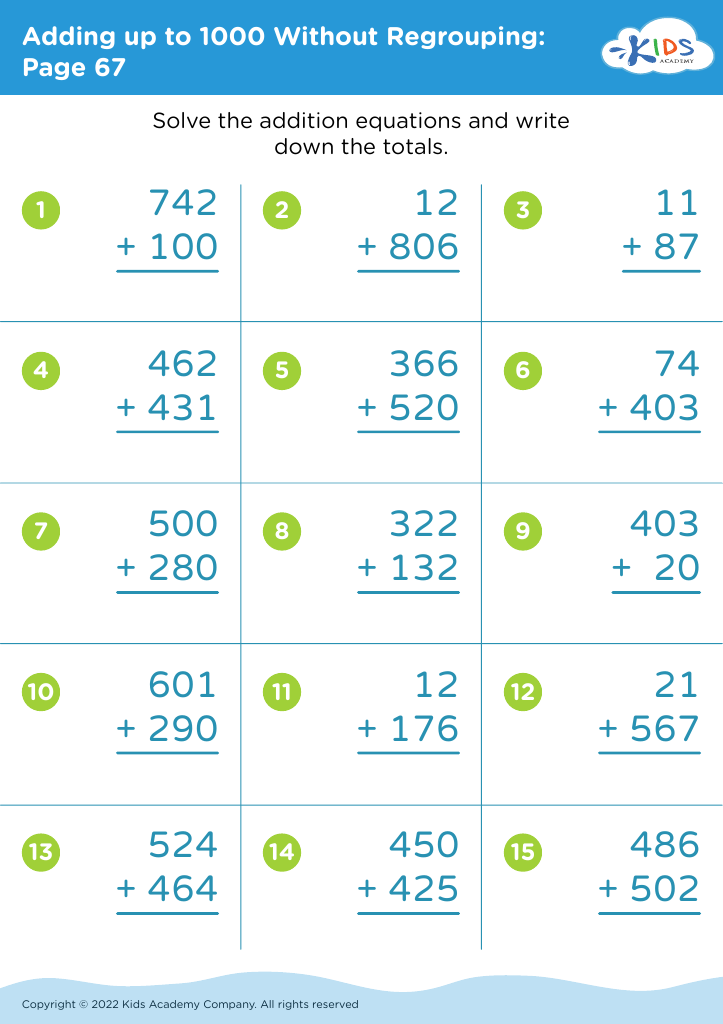
Adding up to 1000 Without Regrouping: Page 67
Worksheet
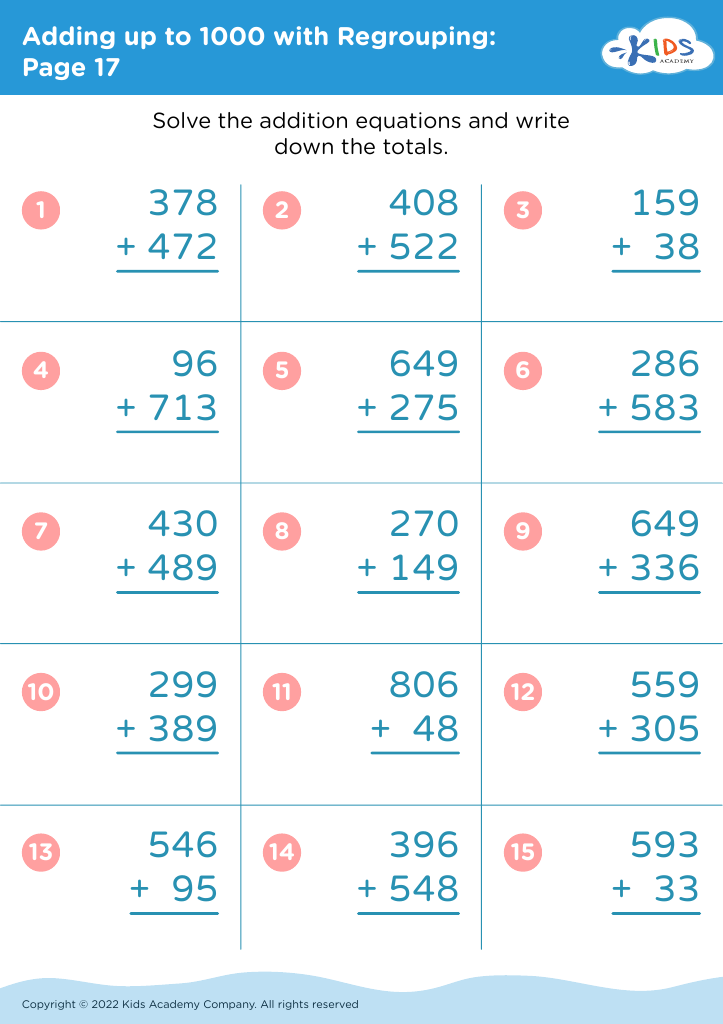
Adding up to 1000 with Regrouping: Page 17
Worksheet
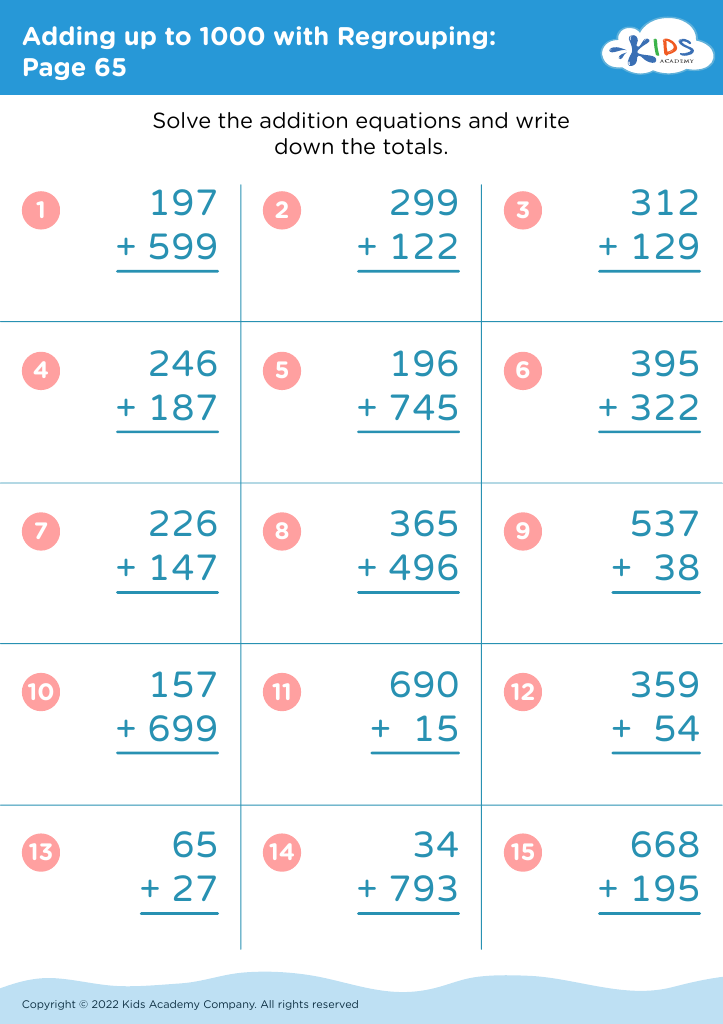
Adding up to 1000 with Regrouping: Page 65
Worksheet
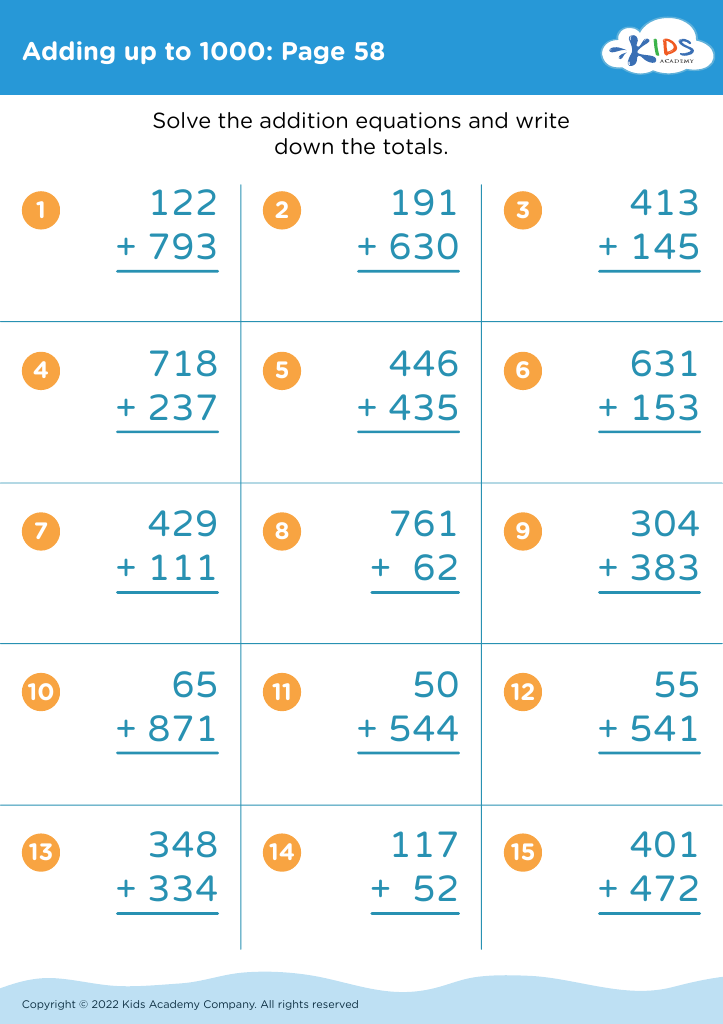
Adding up to 1000: Page 58

Adding up to 1000: Page 58

Adding up to 1000: Page 58
Worksheet
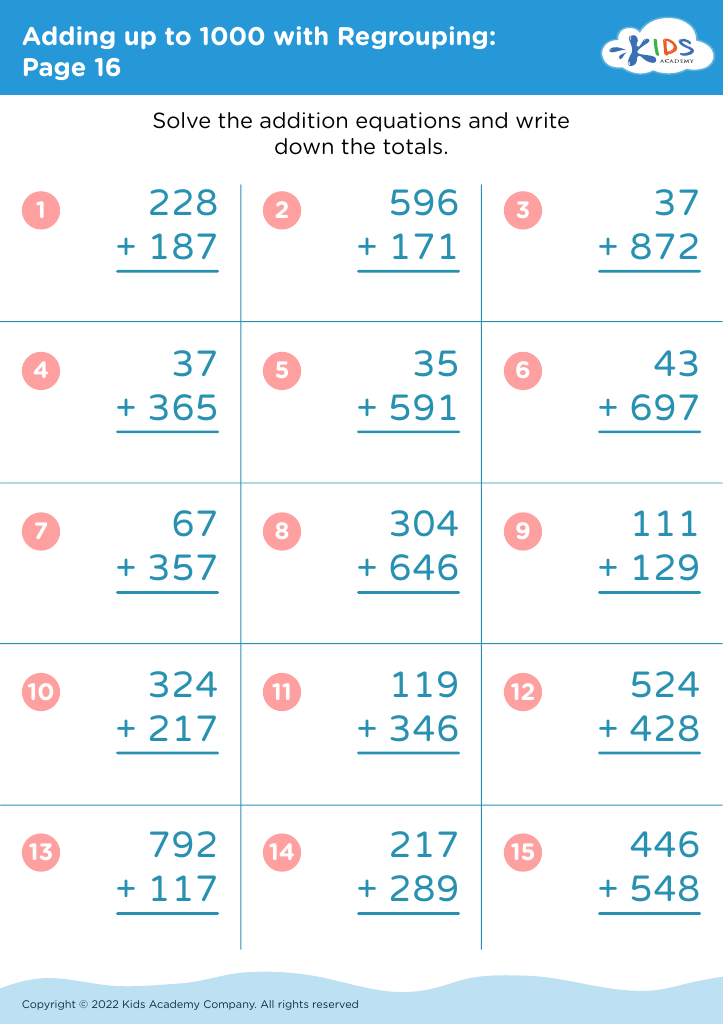
Adding up to 1000 with Regrouping: Page 16
Worksheet
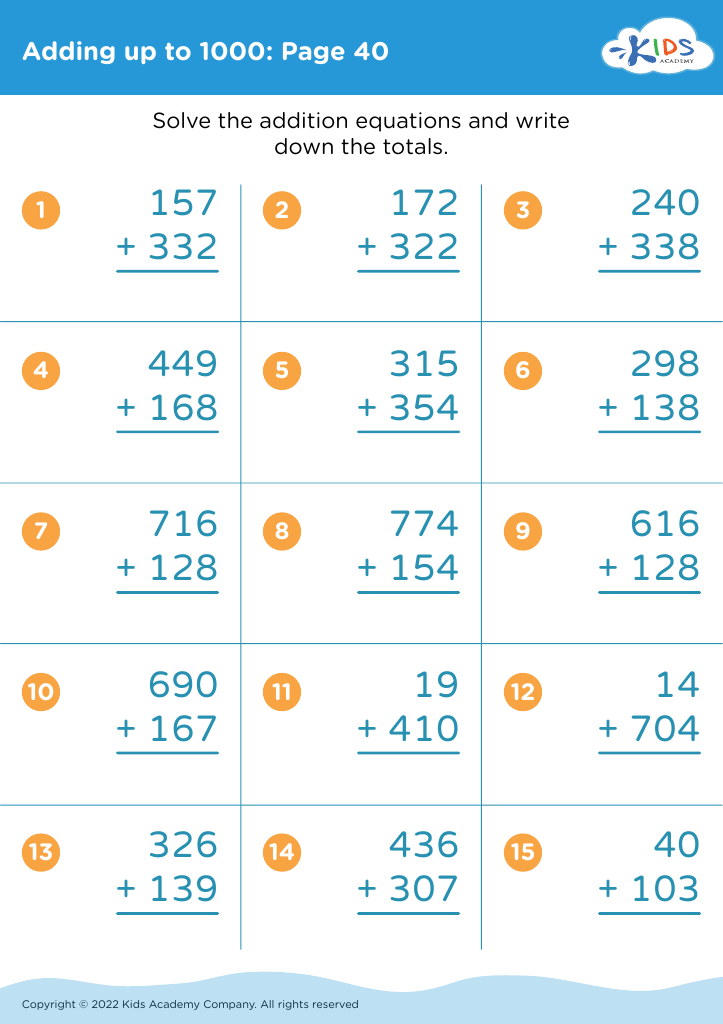
Adding up to 1000 Without Regrouping: Page 62
Worksheet


Understanding how to compare fractions that add up to 1000 can be crucial for a child's mathematical development for several reasons. First, comparing fractions cultivates analytical skills. When children learn to compare fractions, they must understand the concepts of numerator and denominator and the significance of same and different denominators. This builds a solid foundational understanding of mathematical relationships and number sense.

Second, mastery of these skills is essential for more advanced math topics. As students progress in their education, they'll encounter algebra, geometry, and calculus, all of which rely on a strong understanding of fractions. Fostering these skills early can prevent future learning gaps.

Third, math is not just about numbers but strategic thinking and problem-solving. Comparing fractions that add to significant totals like 1000 aids children in learning to break down complex problems into manageable parts. It encourages patience and persistence.

Finally, these skills extend beyond the classroom. Situations in everyday life involving measurements, cooking, budgeting, or even time management often require an intuitive grasp of fractions. Therefore, both parents and teachers should see the value in strengthening this aspect of math education early on, ensuring that children not only perform well academically but also develop practical life skills.