Filters

19 filtered results

Clear all filters
Favorites
With answer key
Interactive

19 filtered results

Difficulty Level

Grade


Enhance your child's math skills with our Counting Practice: Adding up to 1000 Worksheets! Ideal for early graders, these engaging worksheets help students build a strong foundation in addition, boosting their confidence and accuracy. Each task is meticulously designed to reinforce counting and number sense while making learning fun. Perfect for classroom or home use, our printable worksheets feature a variety of problems that gradually increase in difficulty, ensuring comprehensive practice. Help your child develop proficiency in adding numbers up to 1000 with our expertly crafted resources. Start their journey to math mastery today!
Check out this FREE Trial Lesson on Adding up to 1000!

L

Favorites
With answer key
Interactive
  • Counting practice
  • Adding up to 1000
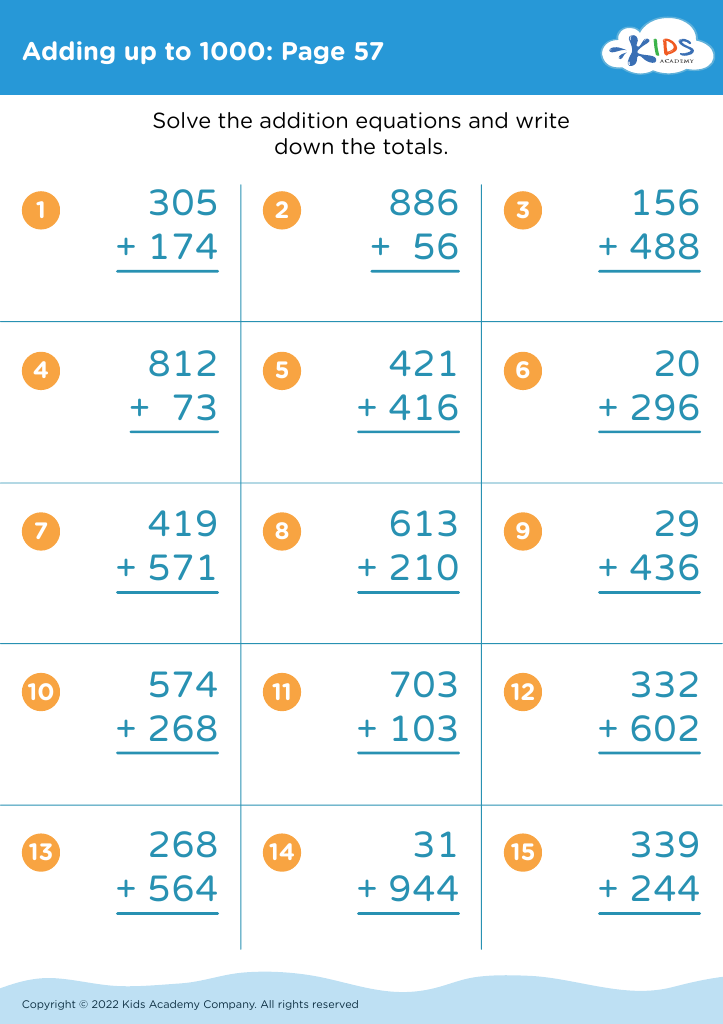
Adding up to 1000: Page 57

Adding up to 1000: Page 57

Adding up to 1000: Page 57
Worksheet
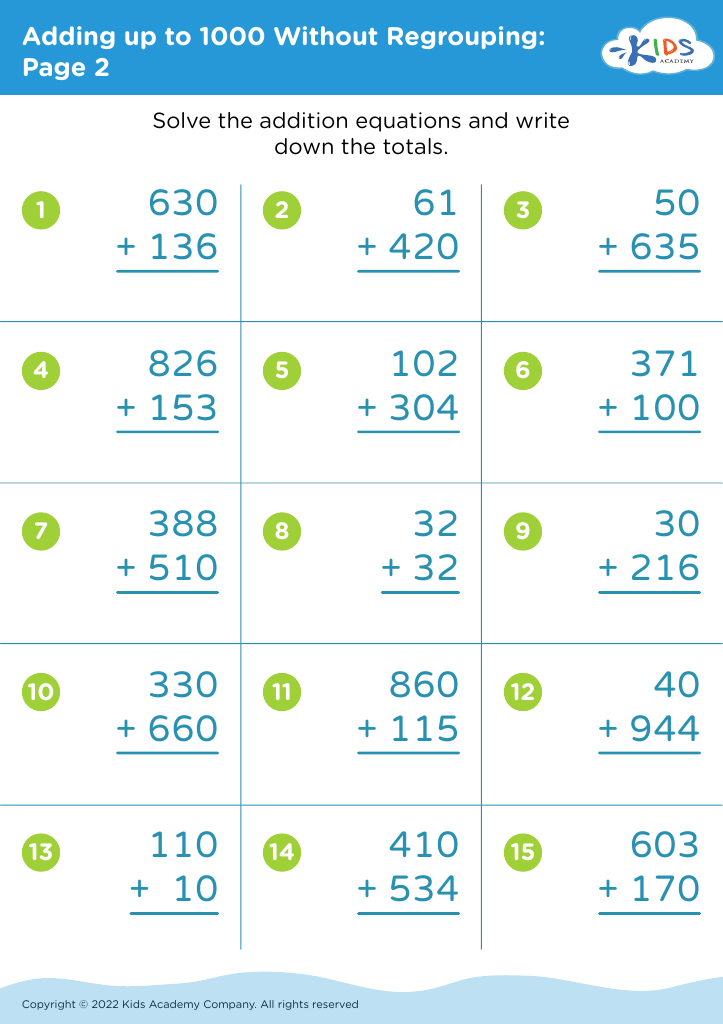
Adding up to 1000 Without Regrouping: Page 2
Worksheet
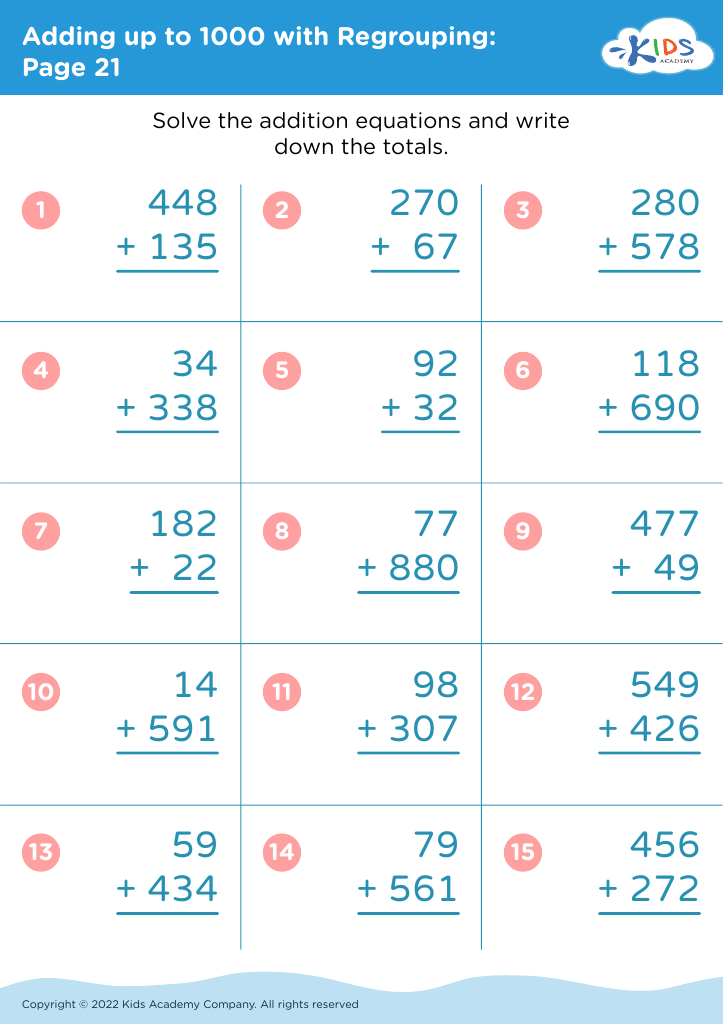
Adding up to 1000 with Regrouping: Page 21
Worksheet
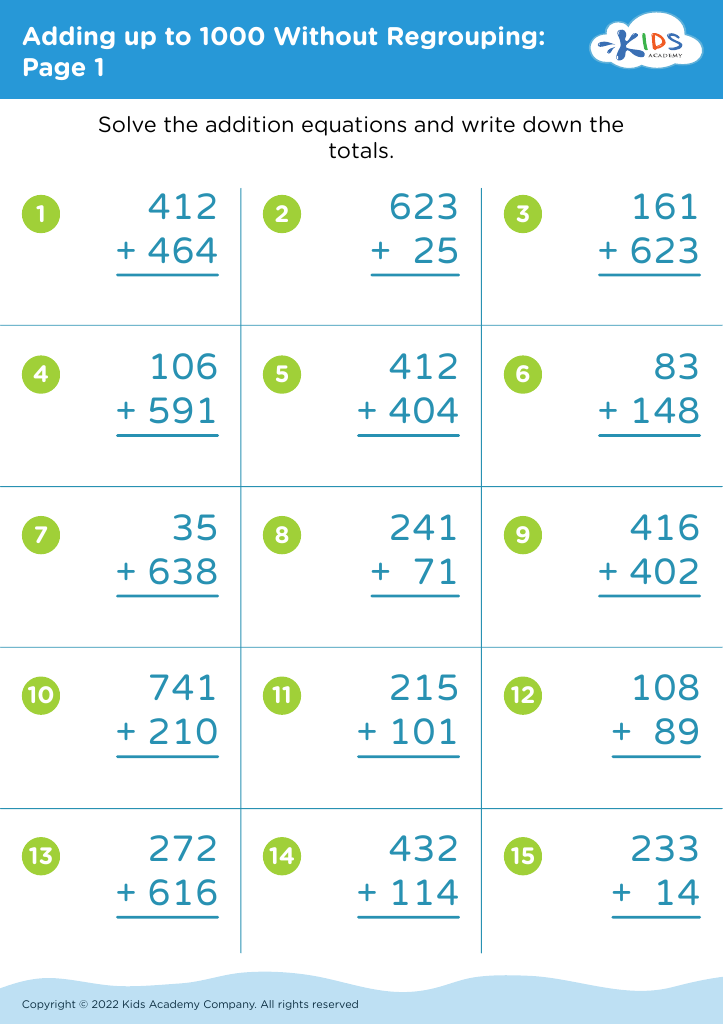
Adding up to 1000 Without Regrouping: Page 1
Worksheet
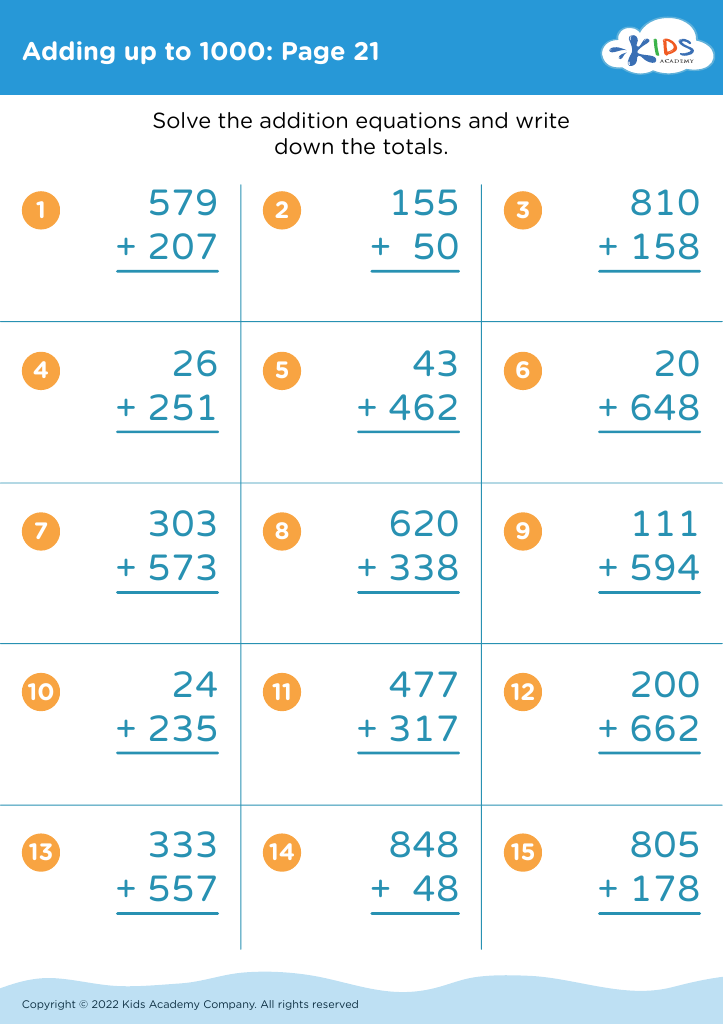
Adding up to 1000: Page 21

Adding up to 1000: Page 21

Adding up to 1000: Page 21
Worksheet
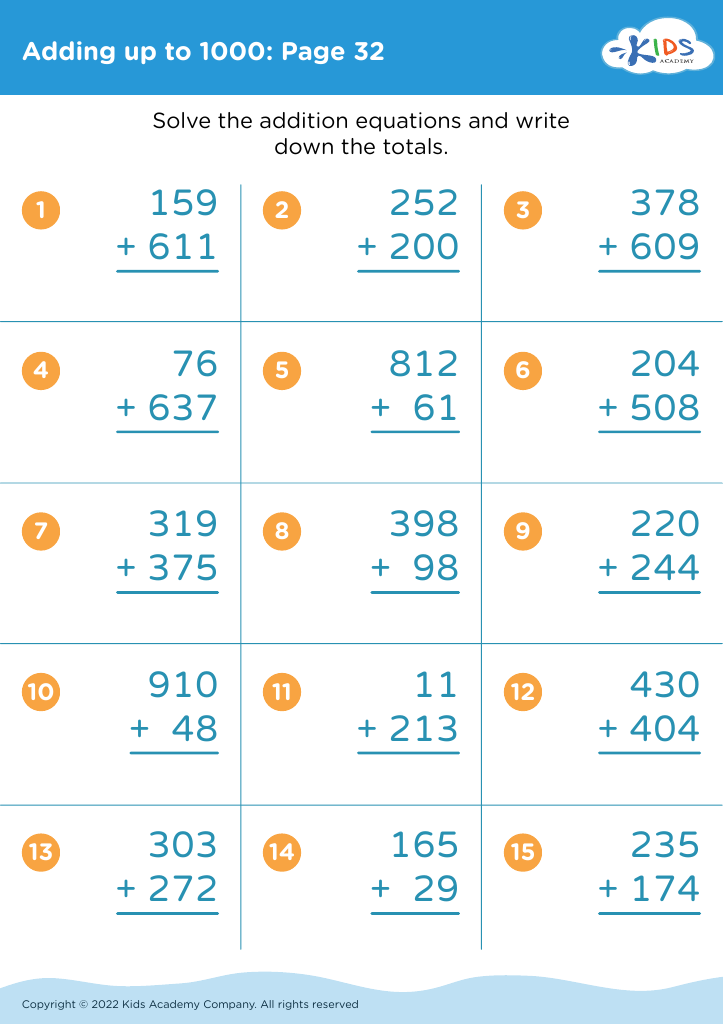
Adding up to 1000: Page 32

Adding up to 1000: Page 32

Adding up to 1000: Page 32
Worksheet
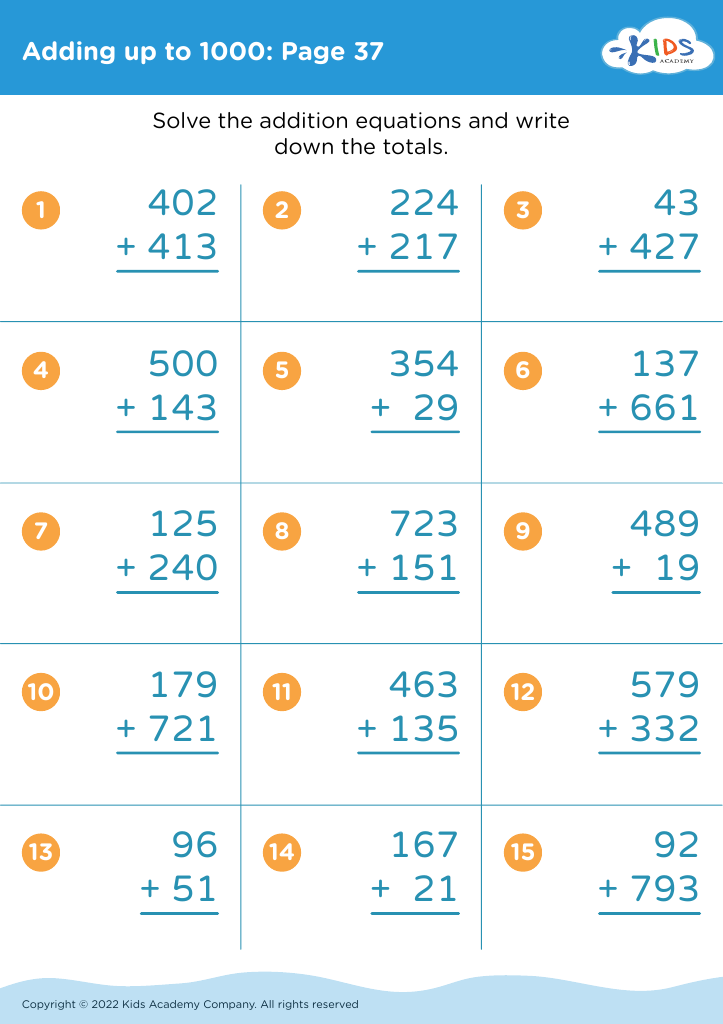
Adding up to 1000: Page 37

Adding up to 1000: Page 37

Adding up to 1000: Page 37
Worksheet
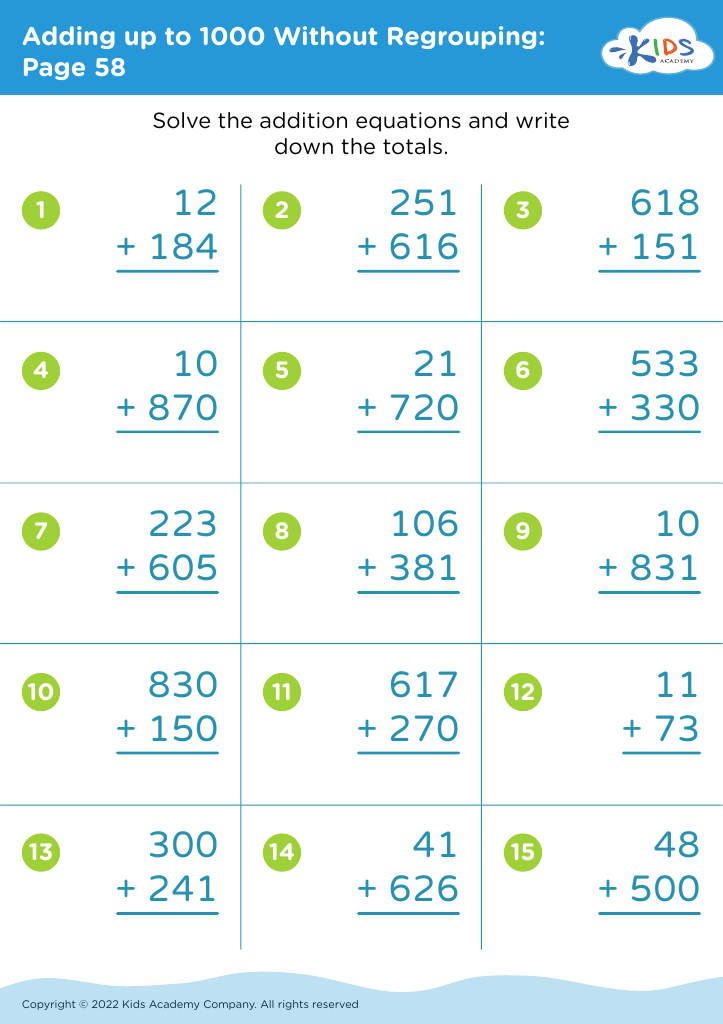
Adding up to 1000 Without Regrouping: Page 58
Worksheet
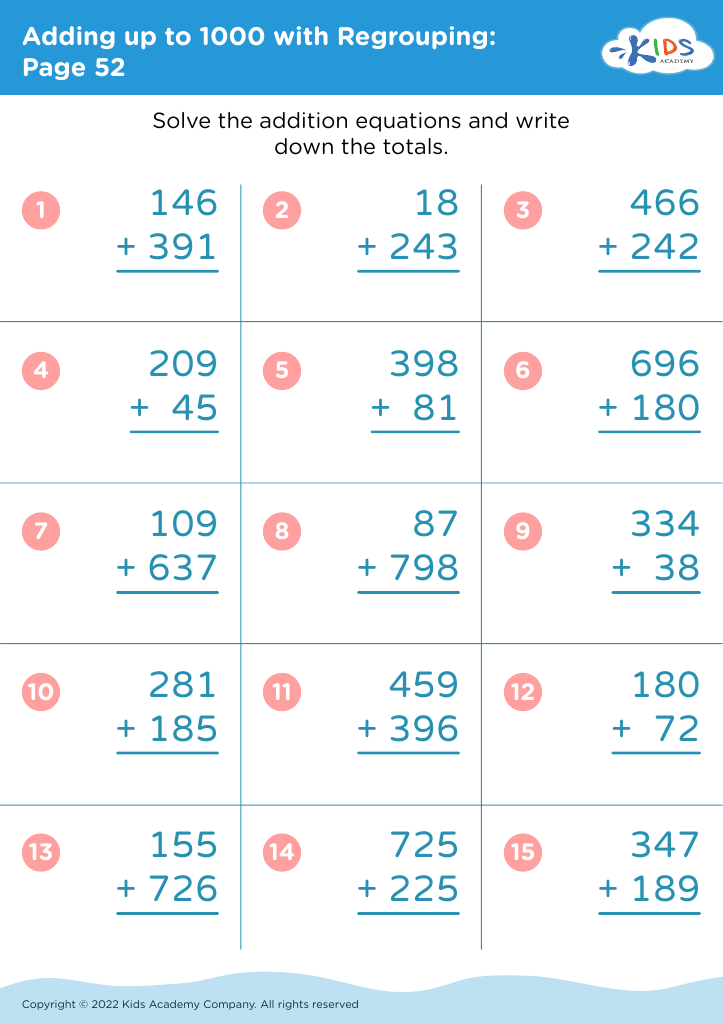
Adding up to 1000 with Regrouping: Page 52
Worksheet
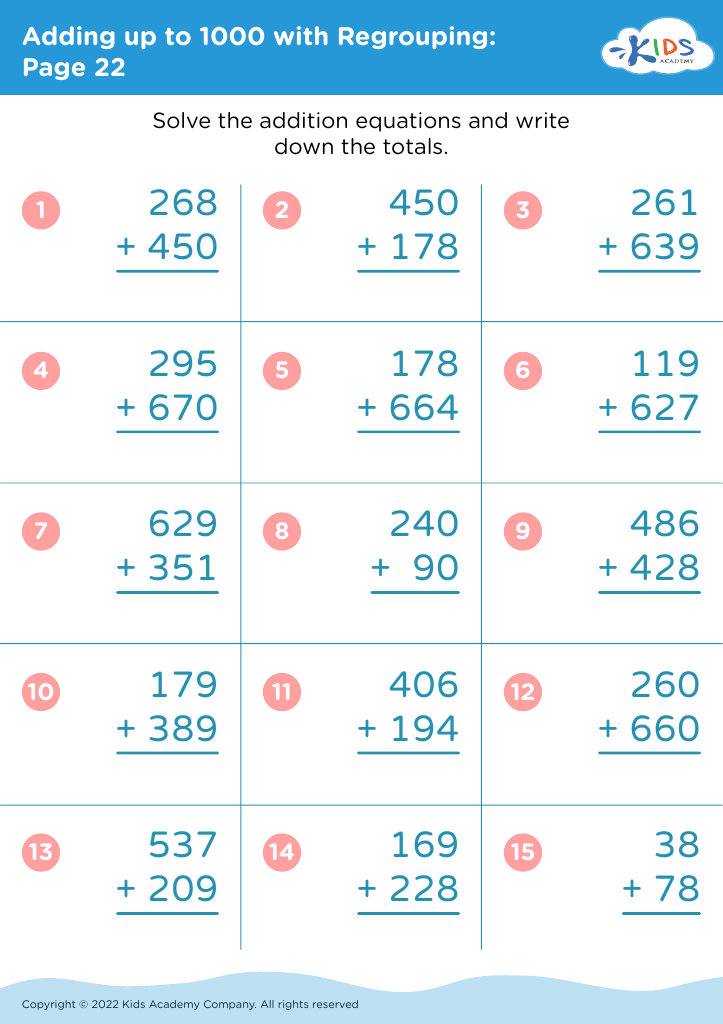
Adding up to 1000 with Regrouping: Page 22
Worksheet
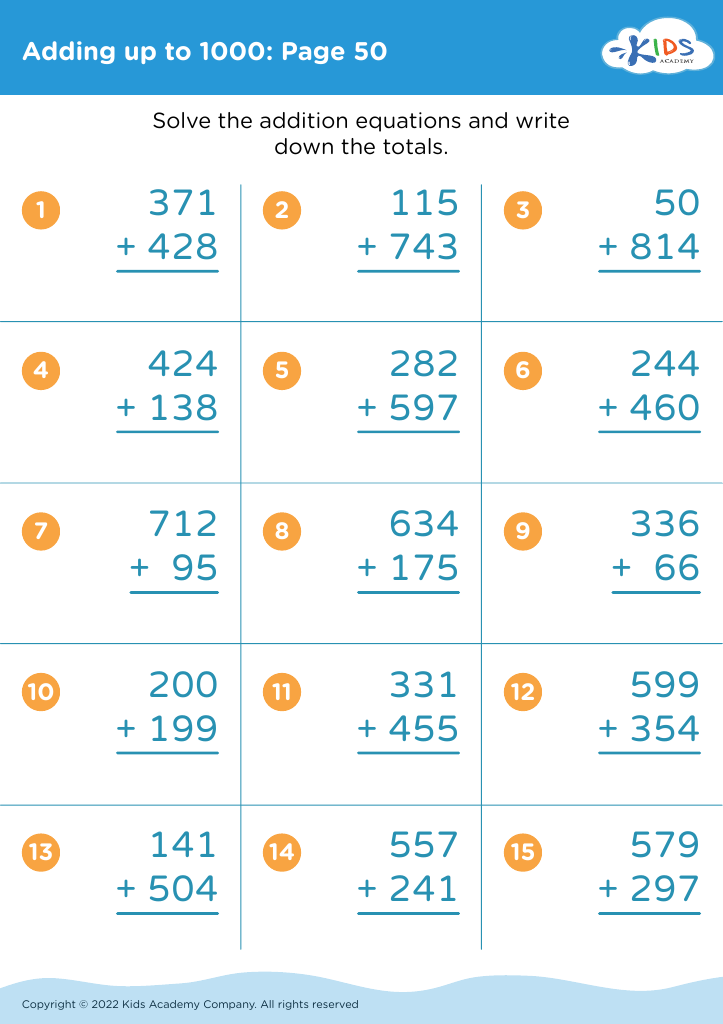
Adding up to 1000: Page 50

Adding up to 1000: Page 50

Adding up to 1000: Page 50
Worksheet
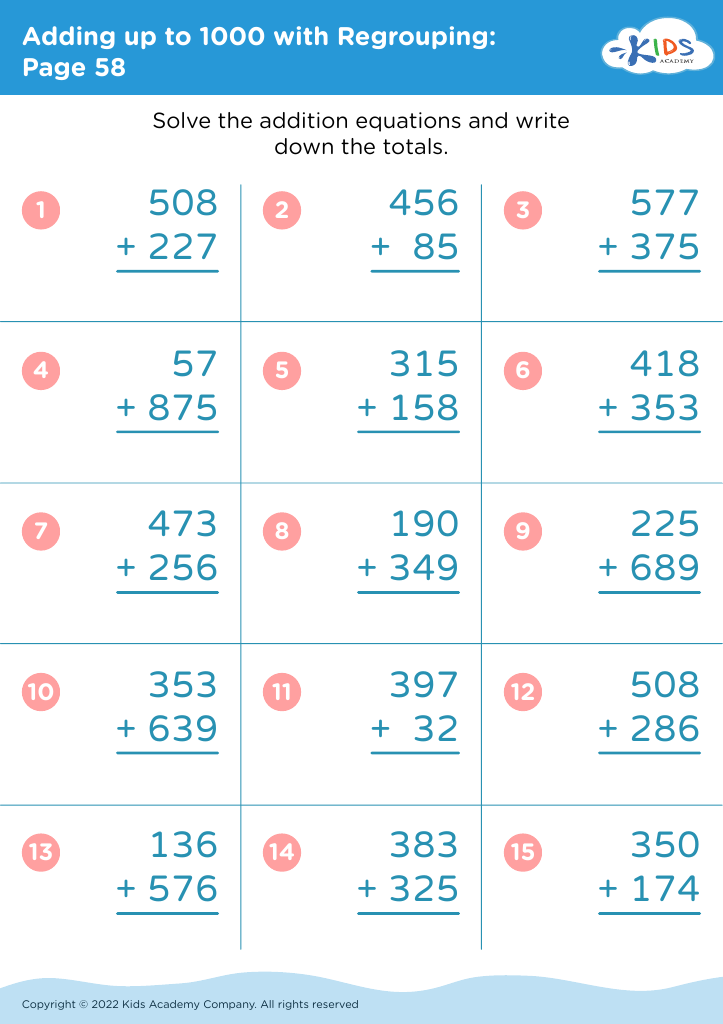
Adding up to 1000 with Regrouping: Page 58
Worksheet
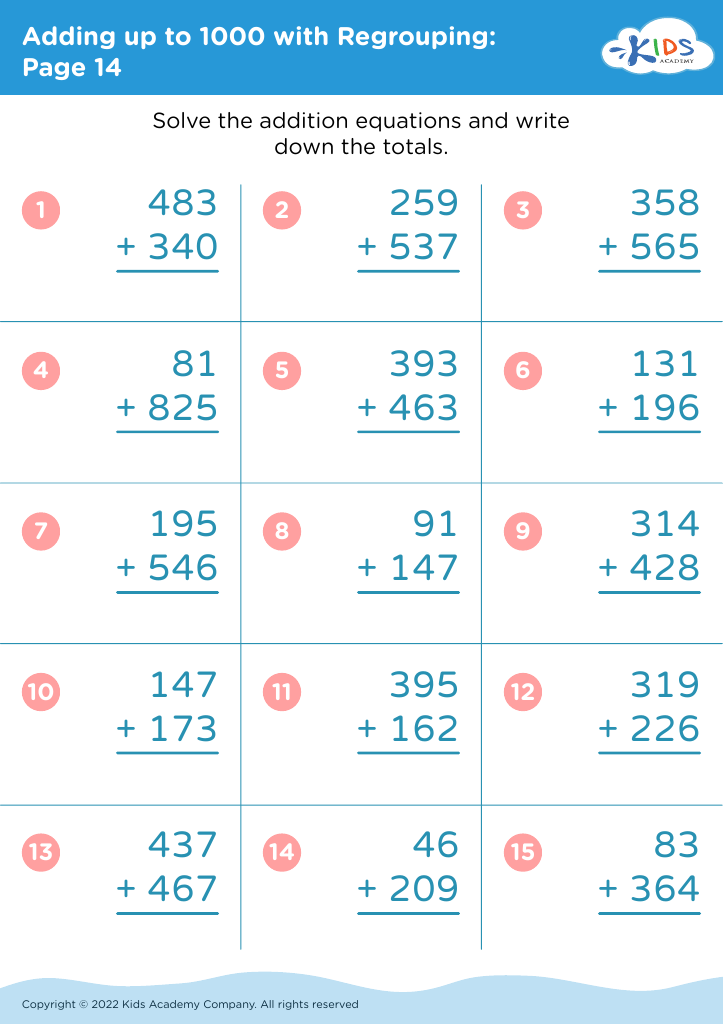
Adding up to 1000 with Regrouping: Page 14
Worksheet
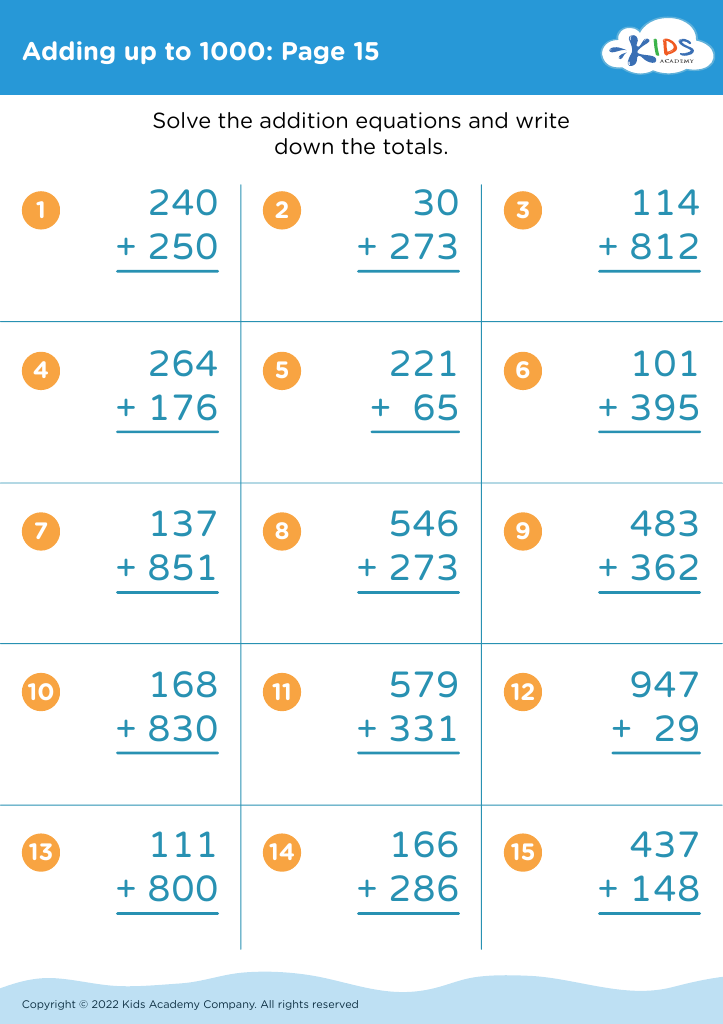
Adding up to 1000: Page 15

Adding up to 1000: Page 15

Adding up to 1000: Page 15
Worksheet
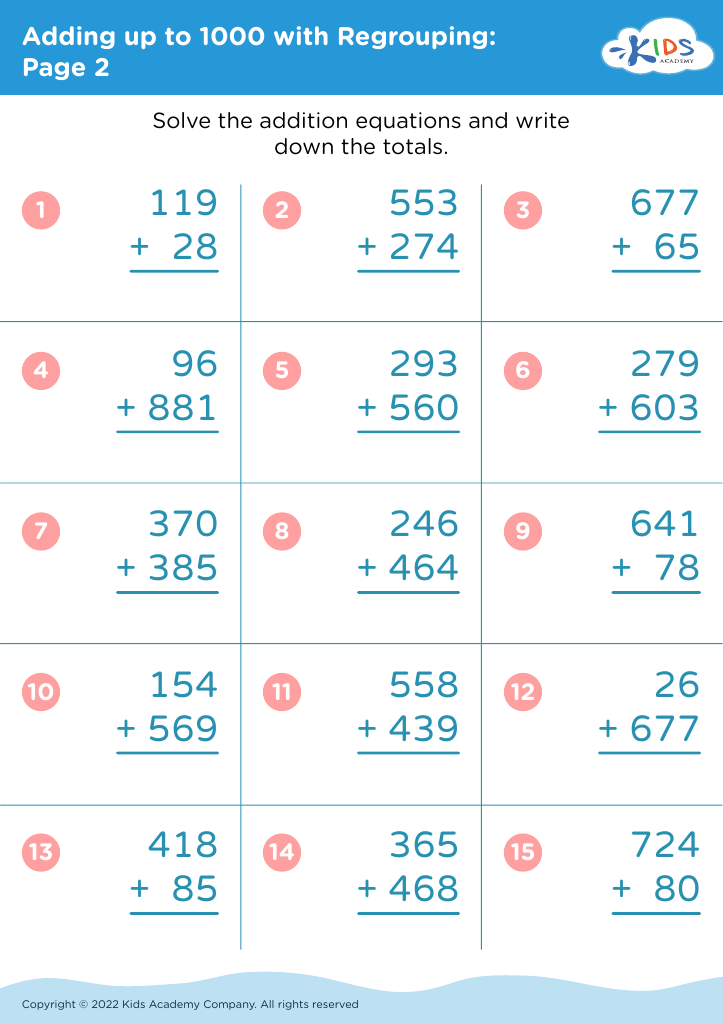
Adding up to 1000 with Regrouping: Page 2
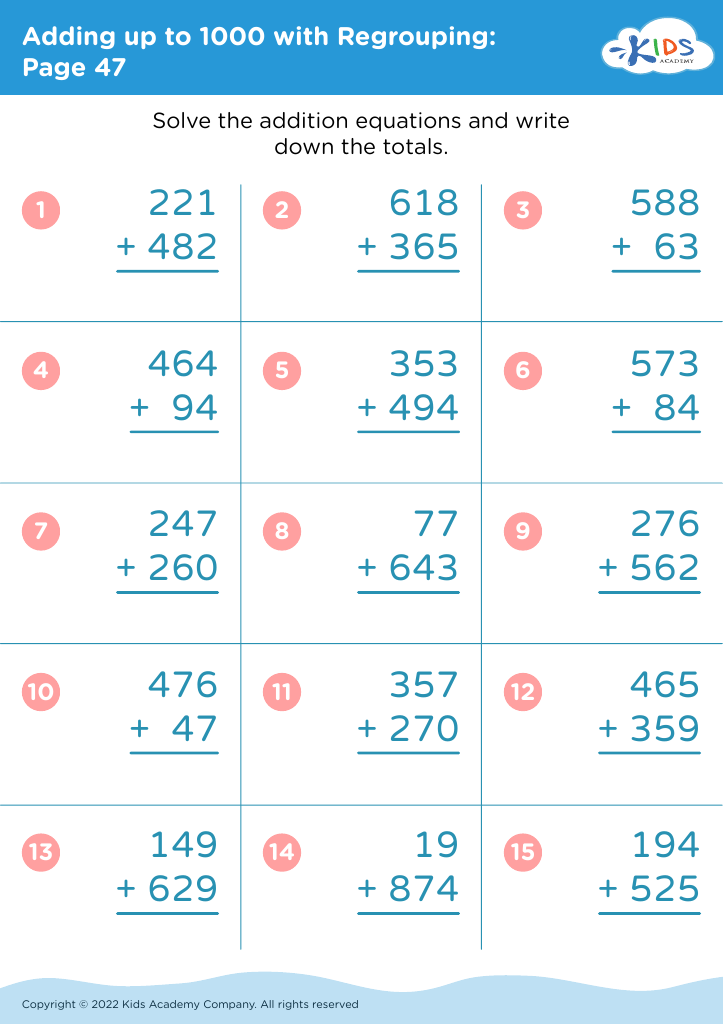
Worksheet
Adding up to 1000 with Regrouping: Page 47
Worksheet
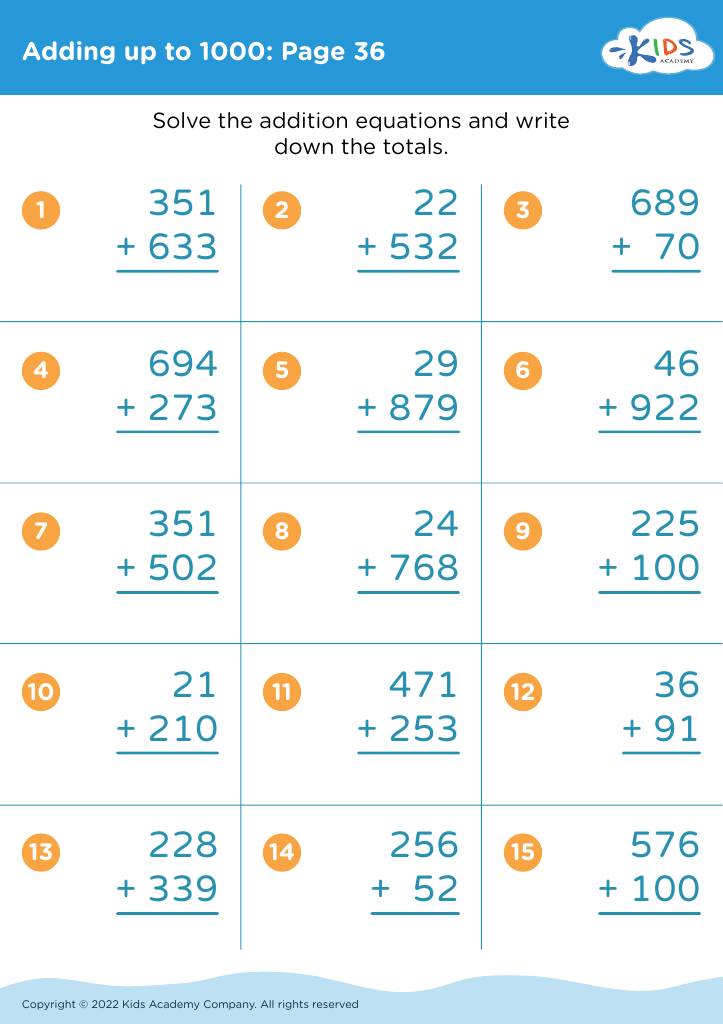
Adding up to 1000: Page 36

Adding up to 1000: Page 36

Adding up to 1000: Page 36
Worksheet
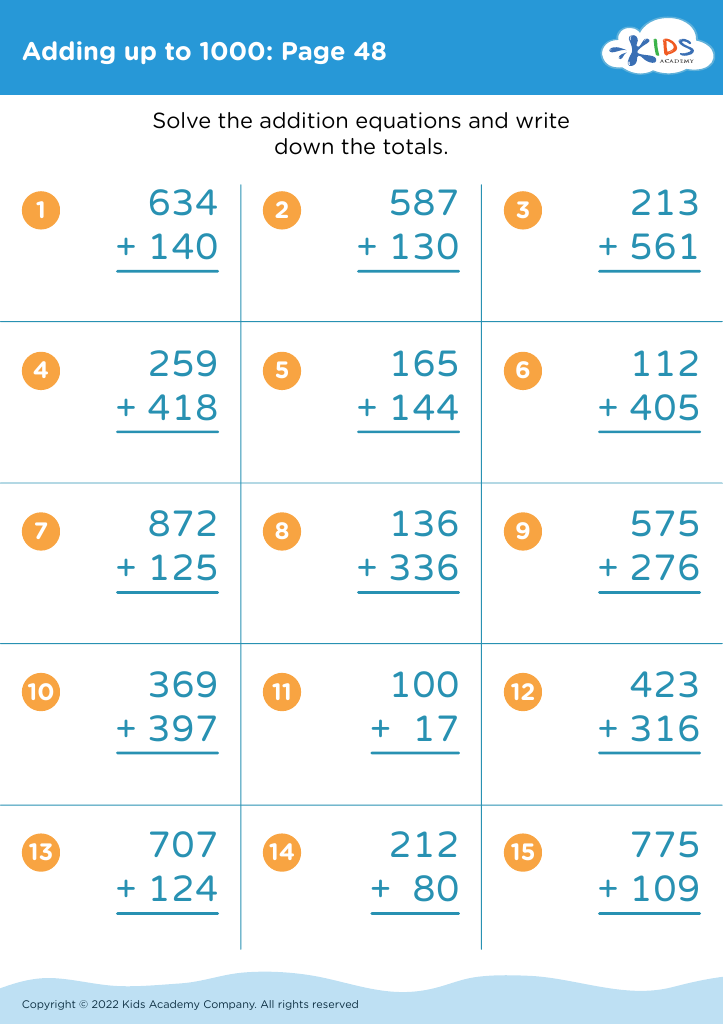
Adding up to 1000: Page 48

Adding up to 1000: Page 48

Adding up to 1000: Page 48
Worksheet
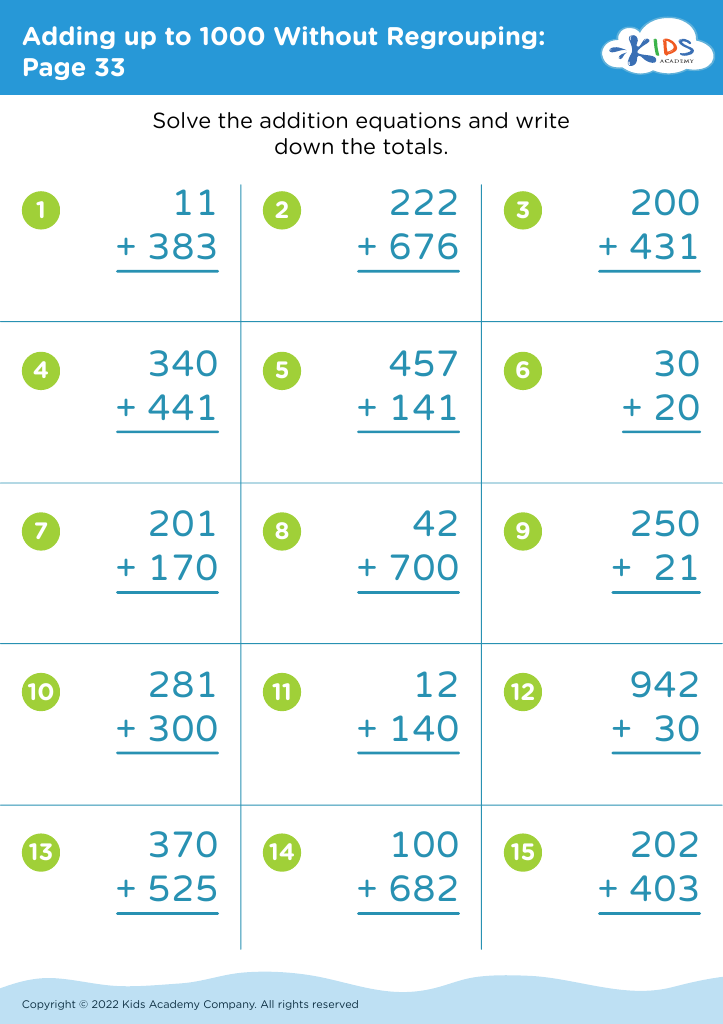
Adding up to 1000 Without Regrouping: Page 33
Worksheet


Parents and teachers should care about counting practice and adding up to 1000 because early math skills form the foundation for more advanced mathematical concepts. Learning to add up to 1000 helps children develop number sense, an understanding that numbers represent quantity, which is critical for problem-solving and logical thinking.

Counting practice also enhances a child’s ability to recognize patterns, which is key in mathematics and science. When children add up to larger numbers like 1000, they practice breaking down numbers into smaller, more manageable parts, a strategy known as decomposition, which is helpful in other areas of math such as subtraction, multiplication, and division.

Moreover, these foundational skills are directly linked to academic success later in life. Studies indicate that early proficiency in math can positively influence overall academic performance, including literacy. Gaining confidence in math at an early age encourages a child's willingness to take risks in learning and face challenges head-on.

Furthermore, math skills are essential in everyday life tasks such as managing money, telling time, and problem-solving. Developing these skills early ensures that children are well-equipped to handle practical tasks independently as they grow. Therefore, supportive counting practice up to 1000 is beneficial for cognitive development and holistic educational growth.