Critical Thinking Adding up to 1000 Worksheets
5 filtered results
-
From - To
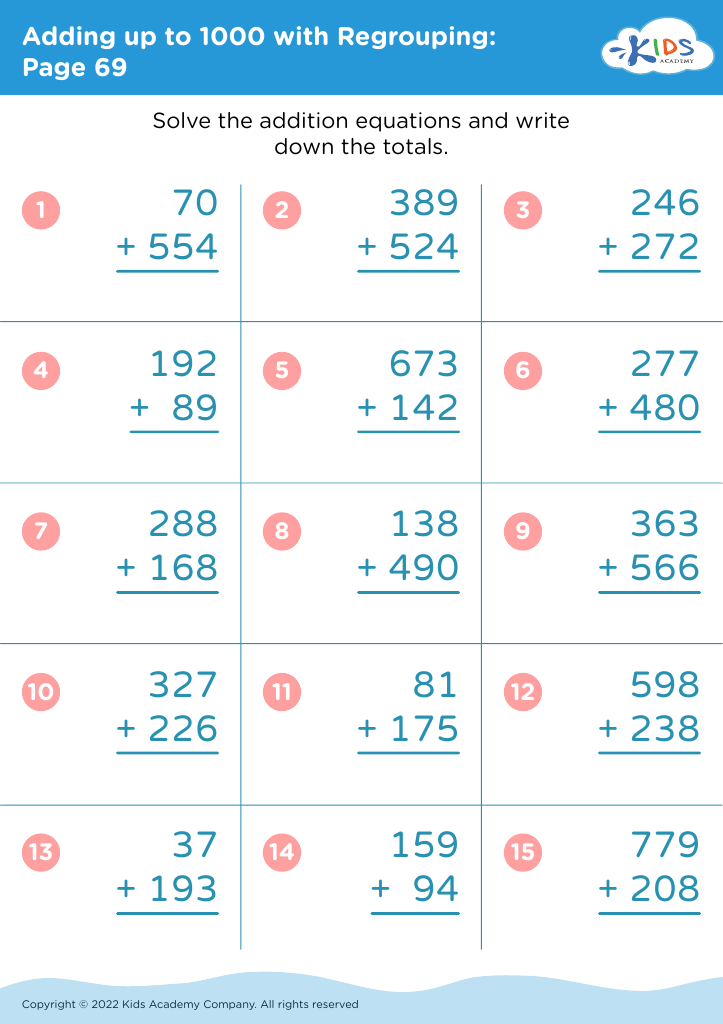
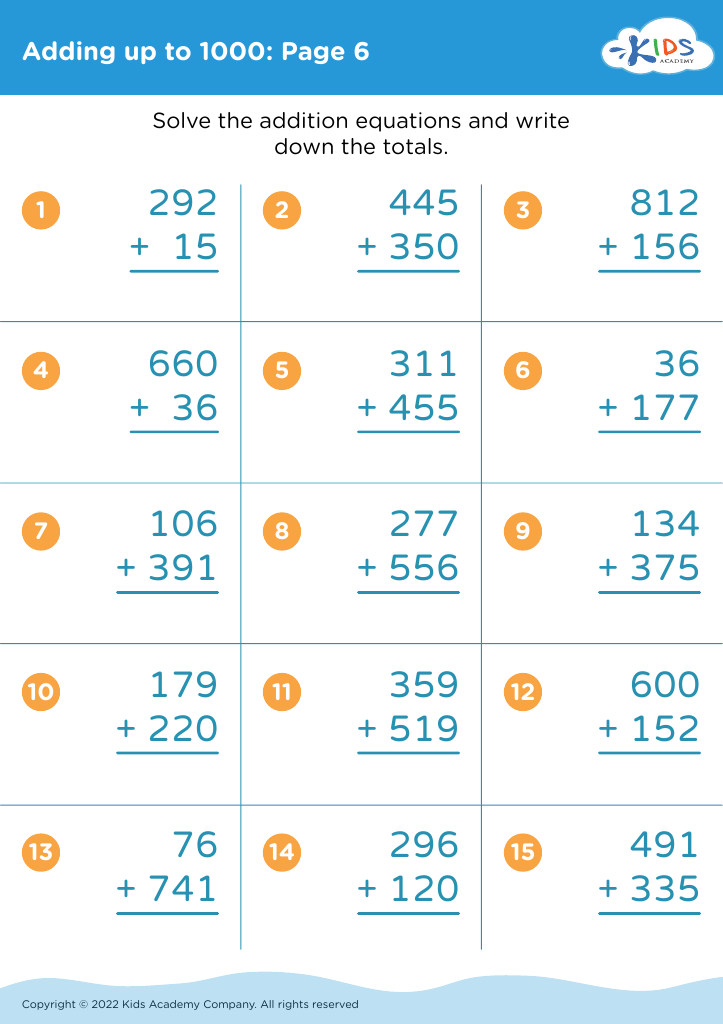
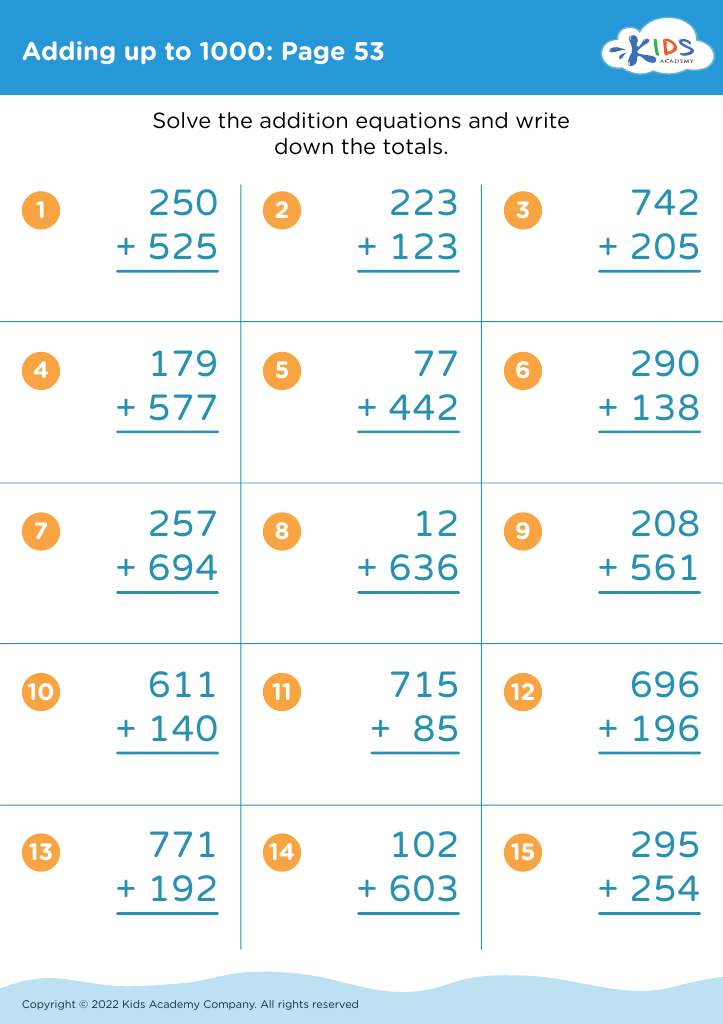
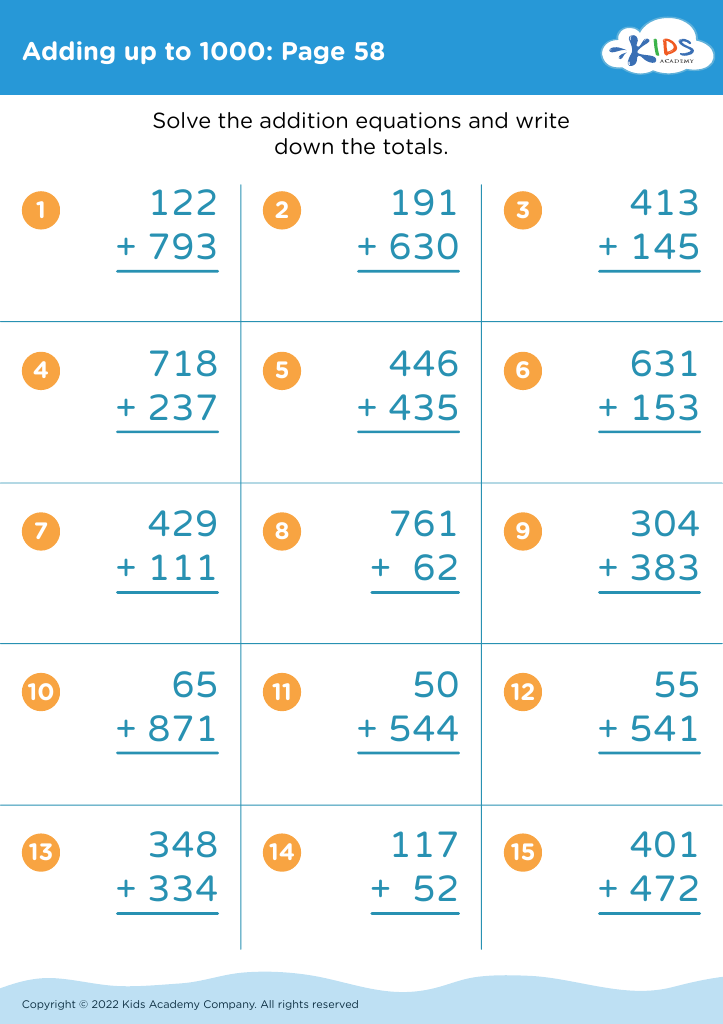
Discover our comprehensive "Critical Thinking Adding up to 1000 Worksheets," designed to enhance students' mathematical reasoning and problem-solving skills. These engaging worksheets challenge young learners to think critically as they practice addition with numbers up to 1000, encouraging them to explore various strategies and develop number sense. Perfect for reinforcing math concepts in a fun and interactive way, our worksheets promote logical thinking and perseverance. Suitable for home and classroom use, our resources will empower children to tackle math challenges with confidence. Equip your students with essential skills through our thoughtfully crafted activities that make learning enjoyable!



Critical thinking is an essential skill that parents and teachers should prioritize because it lays the foundation for a child’s cognitive development and lifelong learning. In a world rapidly changing due to technological advancements and information overload, the ability to analyze, evaluate, and synthesize information is more crucial than ever. Critical thinking empowers students to approach problems methodically, leading to better decision-making and effective problem-solving skills.
For parents, fostering critical thinking at home encourages children to express their opinions, ask questions, and engage with the material creatively, rather than passively absorbing information. This nurturing environment enhances their confidence and independence, building a sense of agency in their learning process.
Teachers, on the other hand, play a vital role in cultivating a classroom that promotes critical inquiry. Implementing activities that challenge students to think deeply about various subjects encourages them to move beyond rote memorization and engage in meaningful discussions. This not only supports academic achievement but also prepares students to become informed, responsible citizens who can navigate the complexities of contemporary society.
In summary, investment in critical thinking benefits children’s education and personal growth, fostering skills they will carry into adulthood. Everyone—parents, teachers, and communities—shares the responsibility of nurturing these vital cognitive abilities.








