Fine Motor Skills Adding up to 1000 Worksheets
12 filtered results
-
From - To
Boost your child's fine motor and math skills with our "Fine Motor Skills Adding up to 1000" worksheets. These engaging activities are designed to help children practice addition within 1000, while simultaneously enhancing their hand-eye coordination and pencil control. With vibrant visuals and fun exercises, kids can enjoy a productive learning experience. Ideal for preschool through early elementary students, these worksheets not only improve mathematical proficiency but also build the fine motor skills crucial for writing. Visit Kids Academy and download these valuable resources today, partnering in your child's educational journey toward excellence.
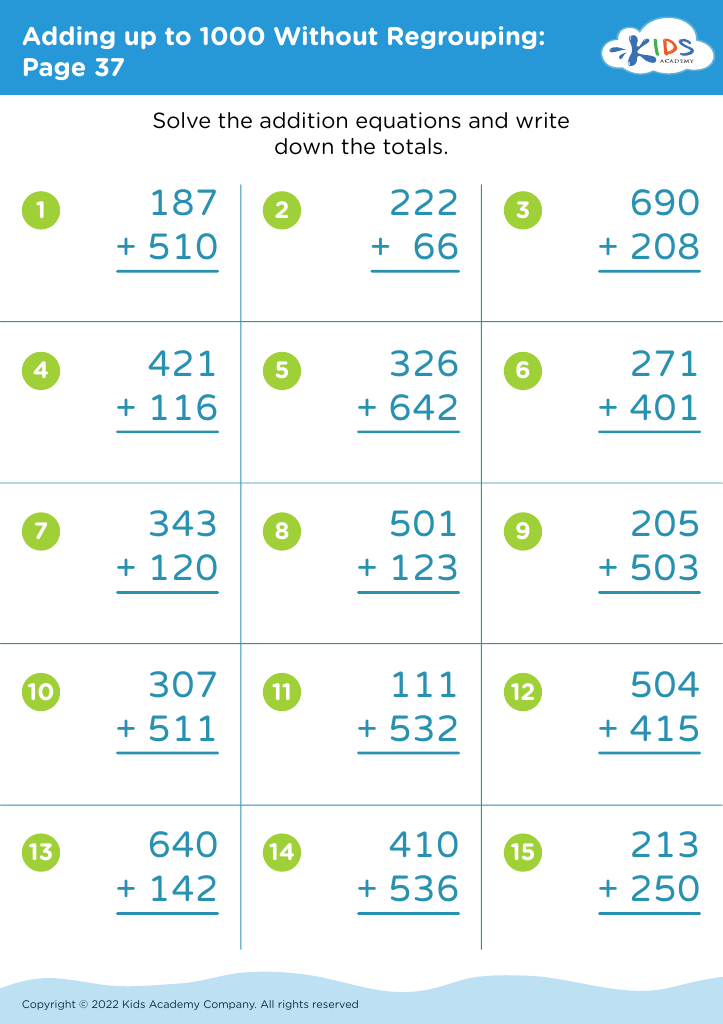
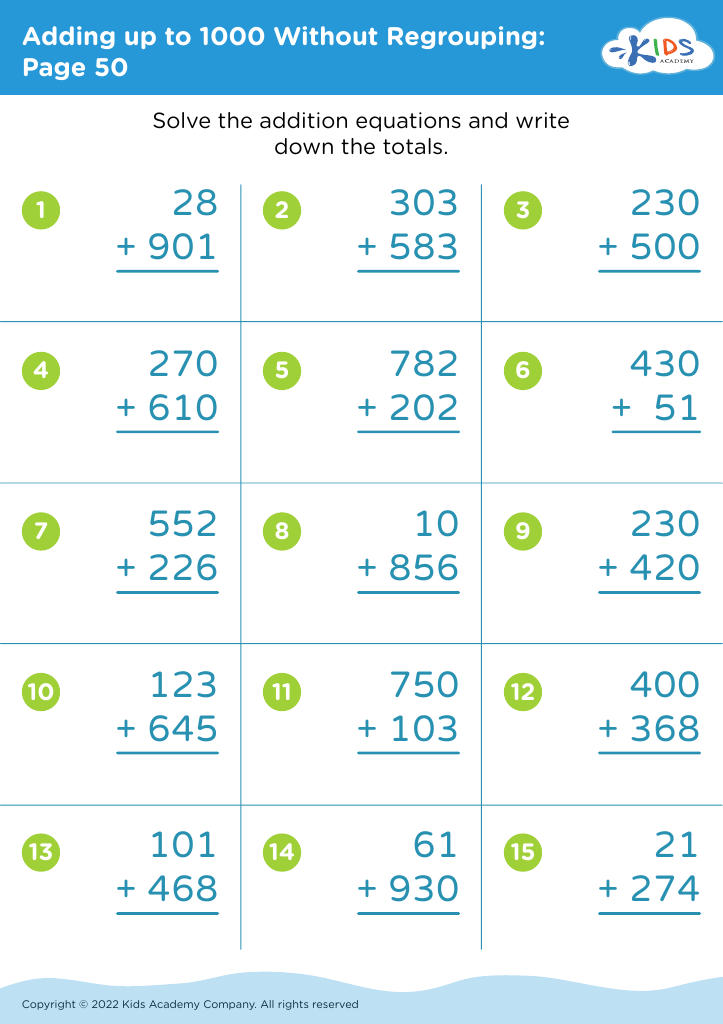
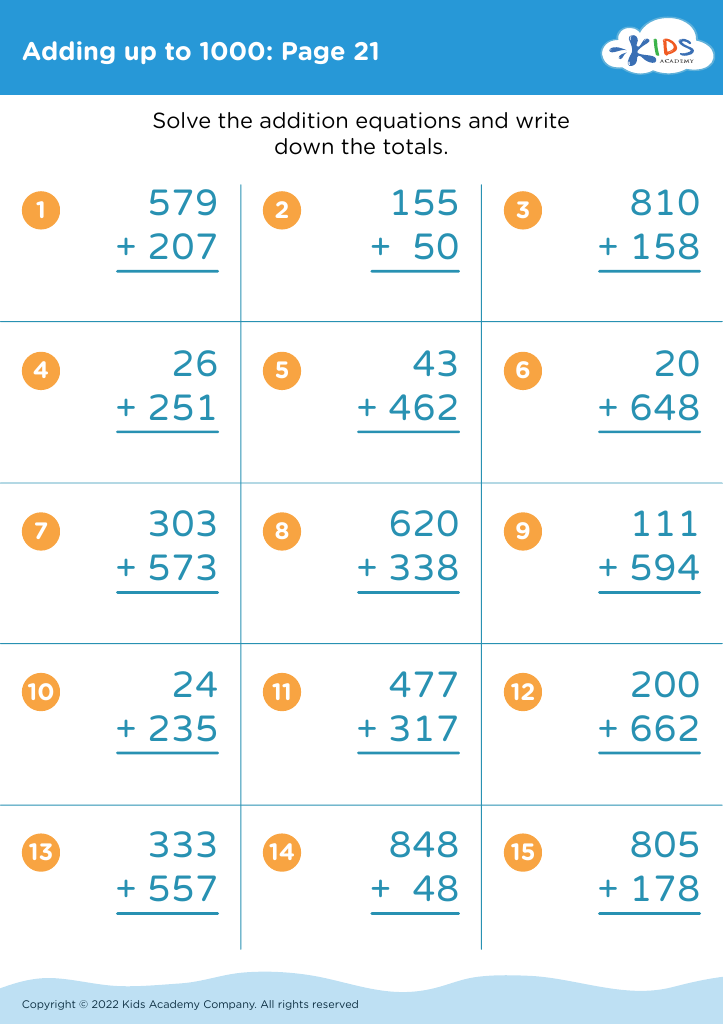
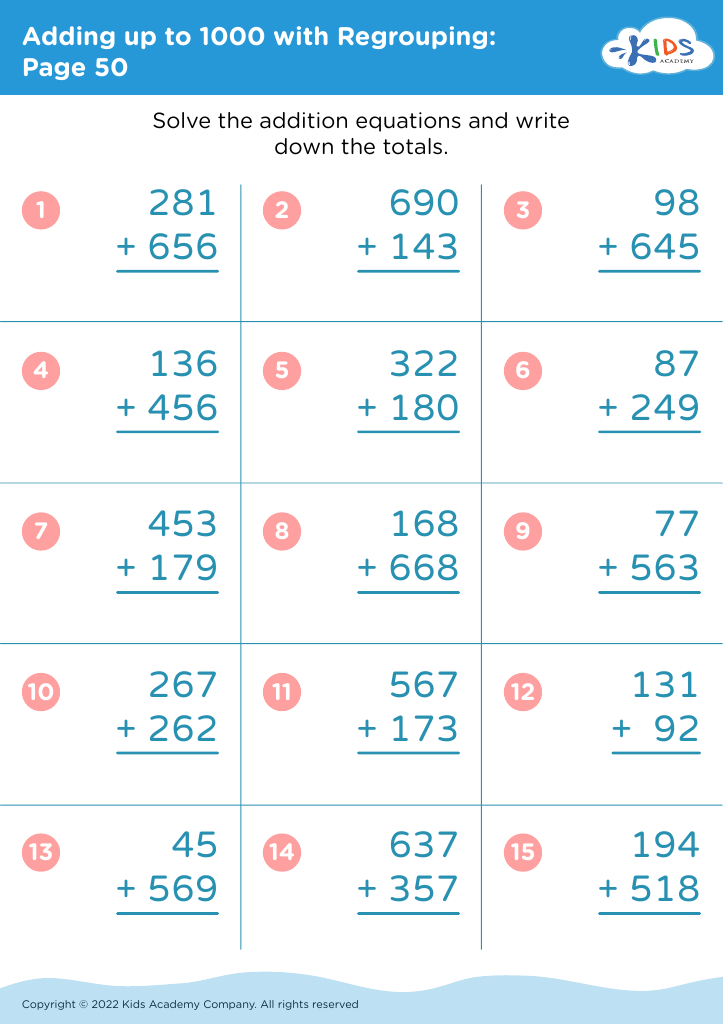
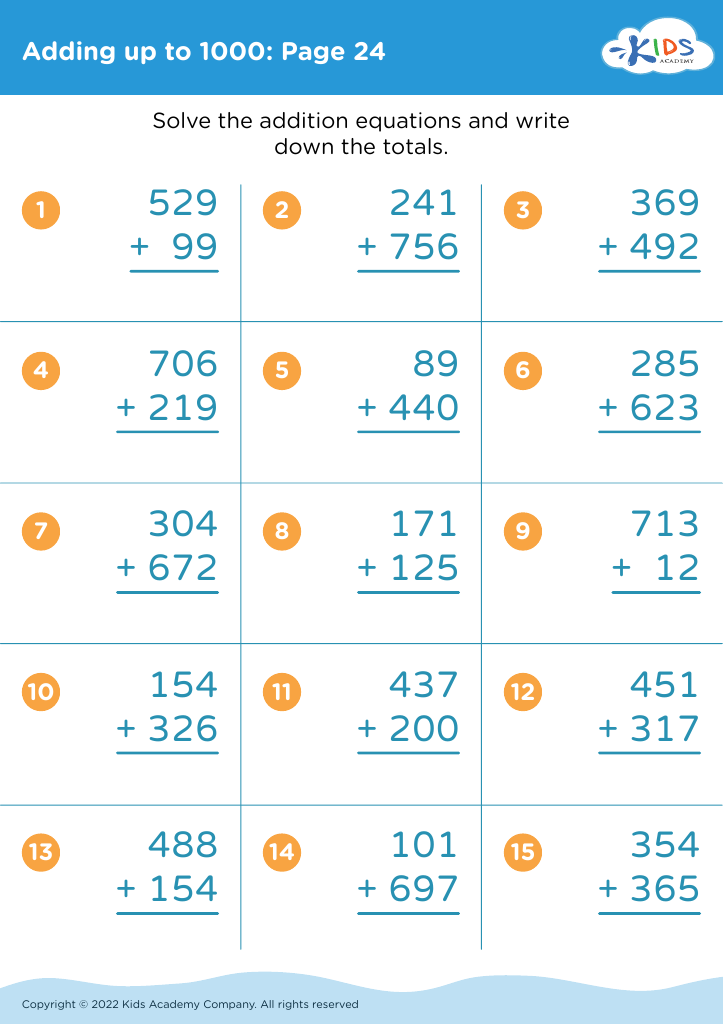
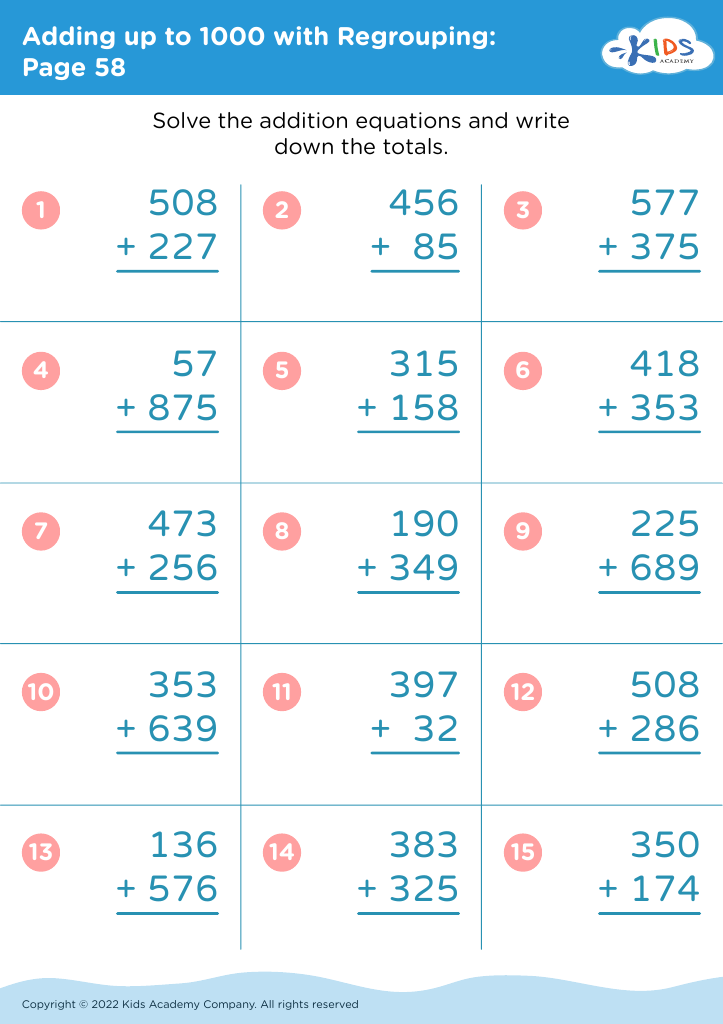
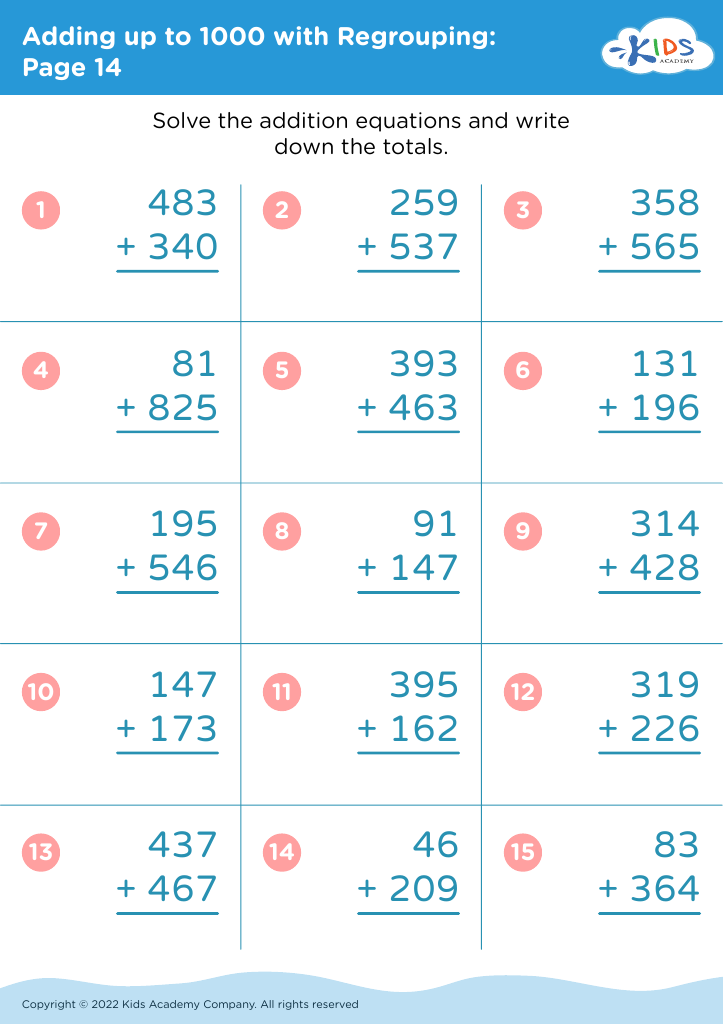
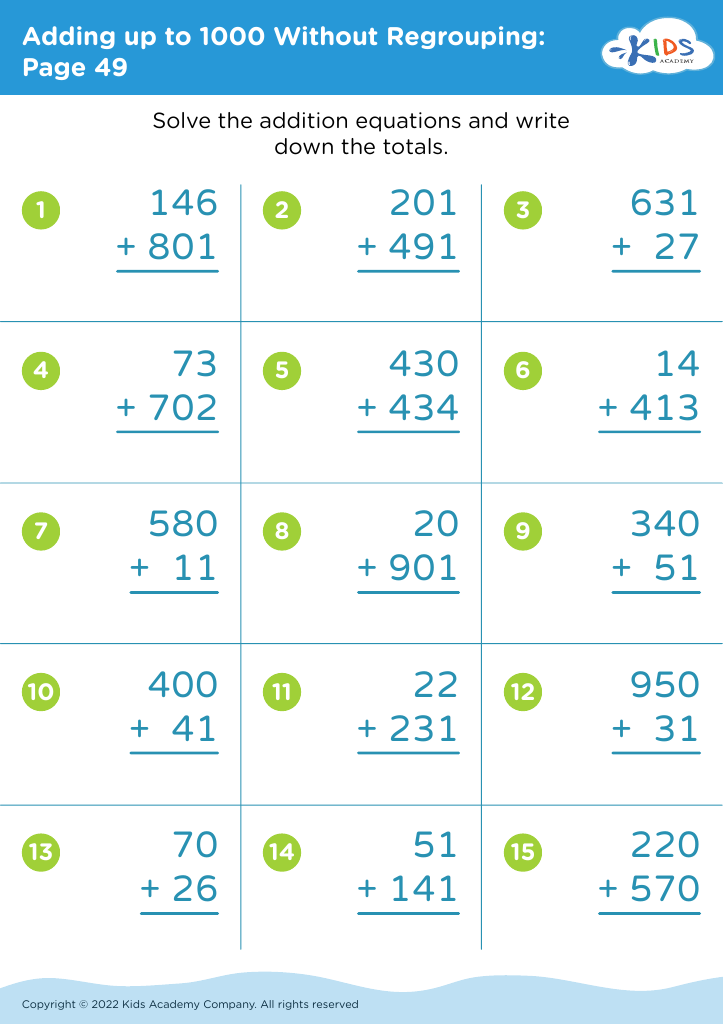
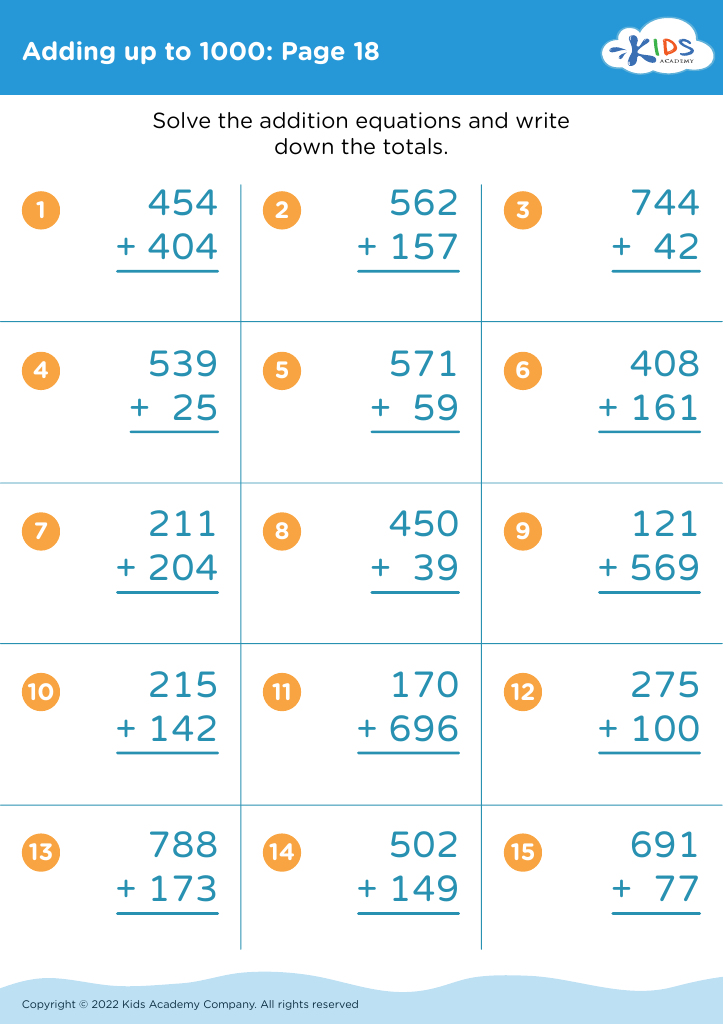
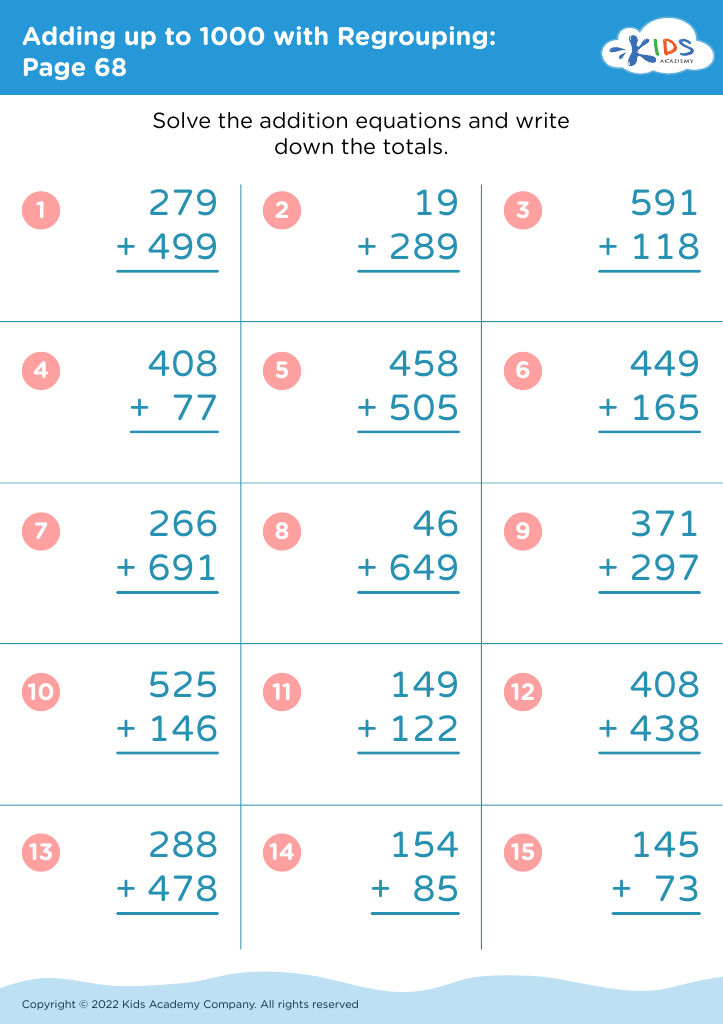
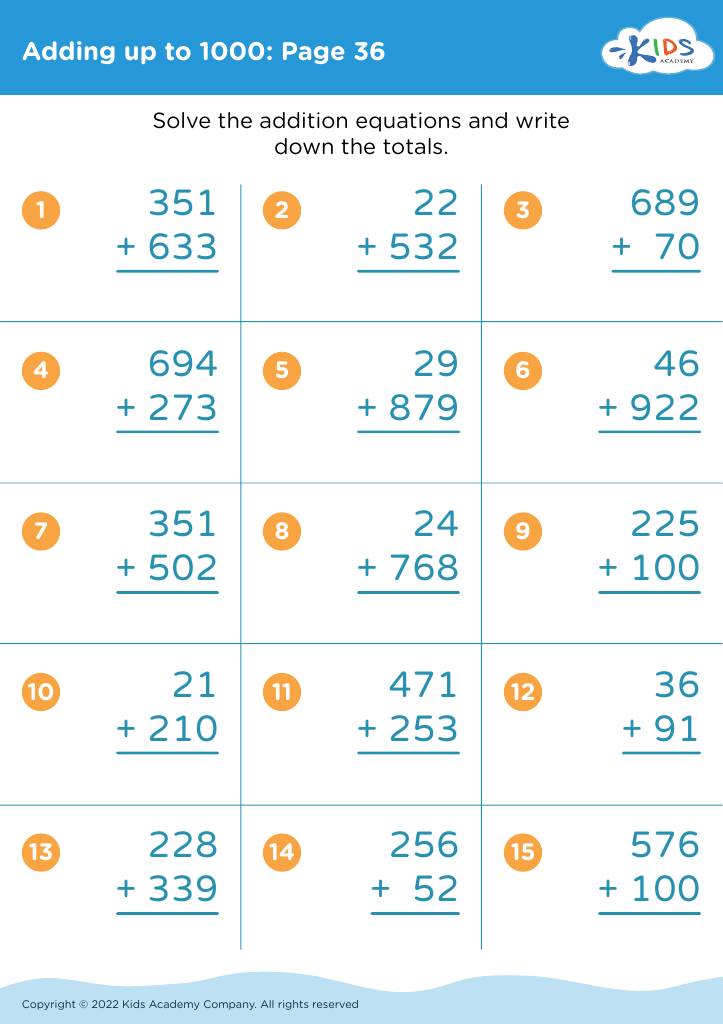
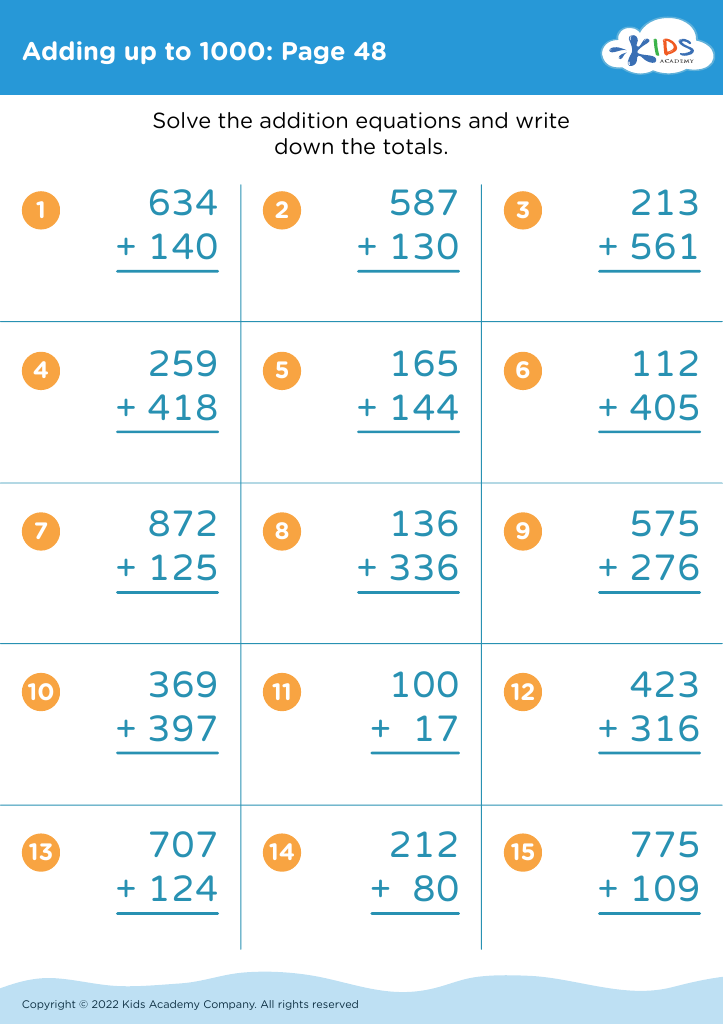



Fine motor skills are critical for young children's development and should be a primary concern for both parents and teachers. These skills involve the coordination of small muscles, particularly in the hands and fingers, which are essential for performing everyday tasks such as buttoning clothes, tying shoelaces, and, importantly, writing. When children work on activities that add up to 1000—whether it's counting, manipulating small objects, or solving math problems on paper—they are simultaneously honing these fine motor skills.
Developing fine motor skills lays the groundwork for more complex task execution as children grow. For example, neat handwriting, an essential aspect of classroom learning and communication, depends heavily on the mastery of fine motor skills. In addition, activities that blend motor skill development with cognitive functions—like counting to 1000—enhance neural processing and spatial awareness, which are fundamental for supporting academic subjects.
Moreover, well-developed fine motor skills contribute to children's independence and self-esteem. When children can manipulate objects with precision, they feel more in control and confident. Teachers and parents must therefore emphasize fine motor skill development to ensure children's academic and personal growth, paving the way for successful, well-rounded individuals. By embedding these skills into engaging, number-based tasks, we can make the learning both effective and enjoyable.








