Fraction simplification Adding up to 1000 Worksheets
7 filtered results
-
From - To
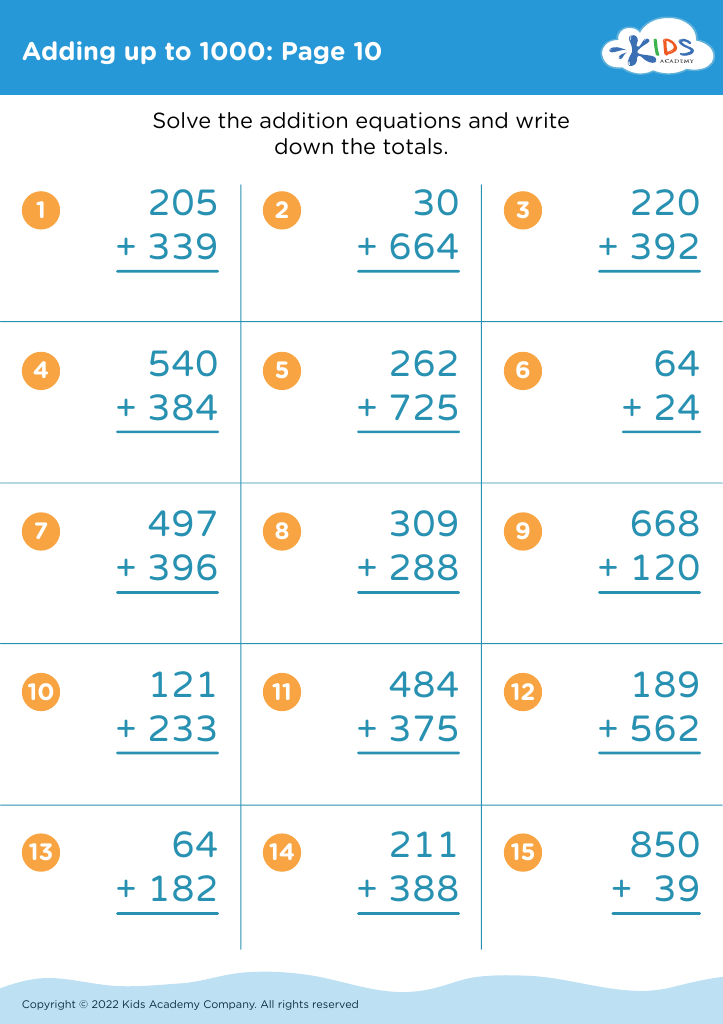
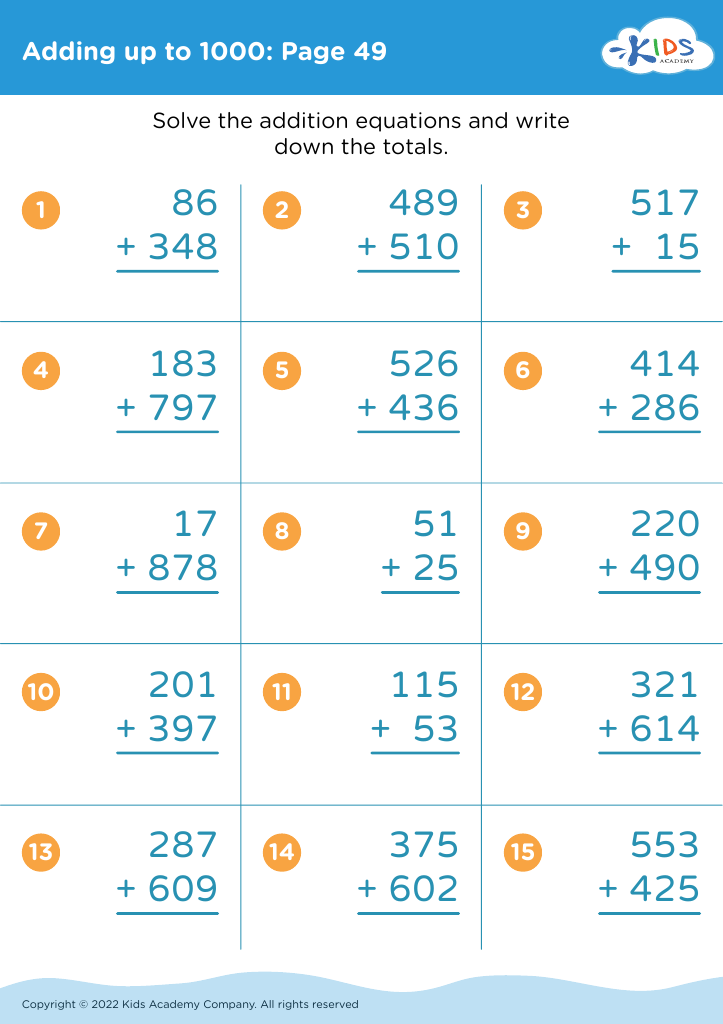
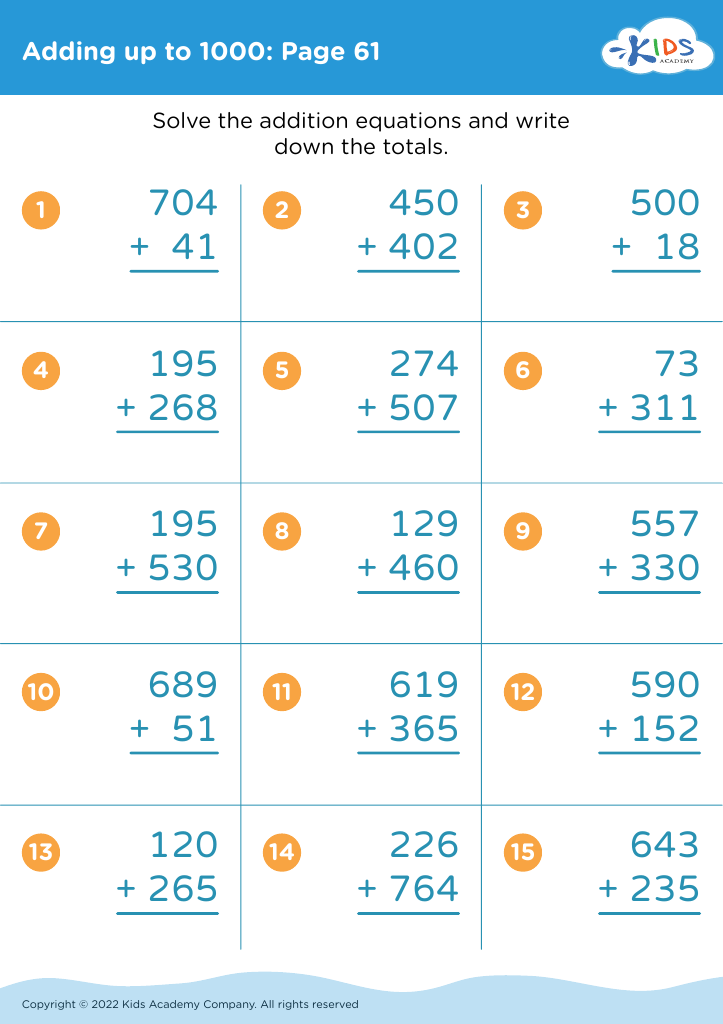
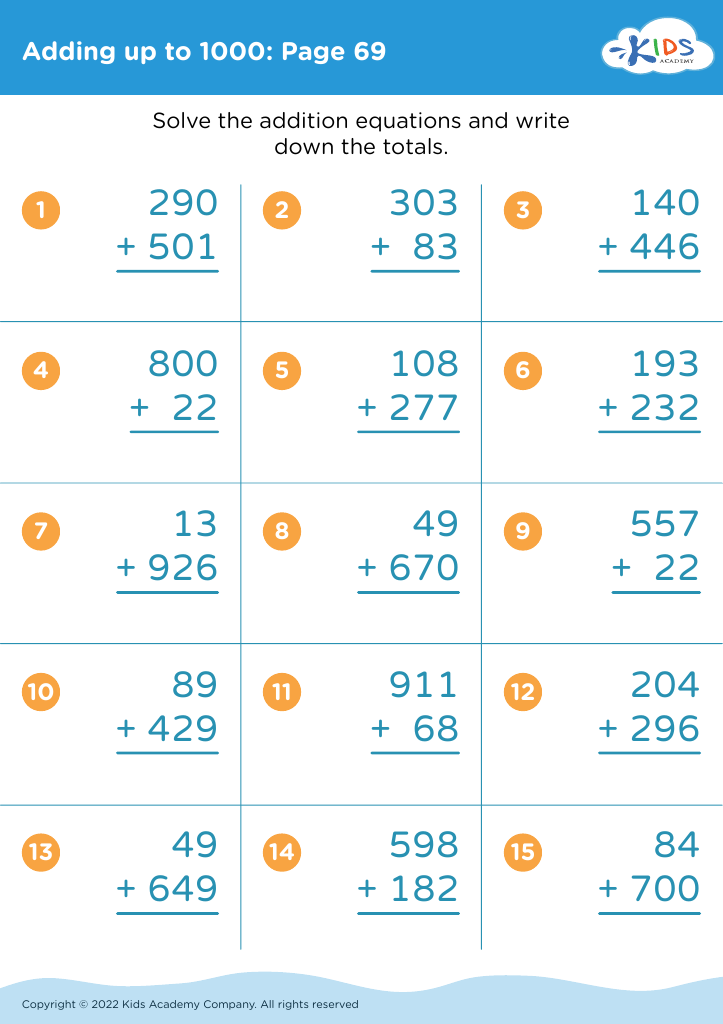
Welcome to our "Fraction Simplification Adding Up to 1000 Worksheets" page! Designed for early grade learners, these worksheets make mastering fraction simplification both engaging and educational. Without overwhelming students, our resources provide step-by-step guidance for simplifying fractions with numerators and denominators that add up to 1000. Ideal for classroom and home use, these worksheets enhance critical math skills, helping young learners build a strong foundation in mathematics. With a mix of problems, children can practice and improve their fraction understanding. Dive into the world of fractions with us, and watch your child gain confidence in their math abilities!



Understanding fraction simplification is vital for parents and teachers because it lays the foundation for students' mathematical fluency. Simplifying fractions enhances learners' ability to grasp more complex concepts such as ratios, proportions, and percentages. When students simplify fractions, they become adept at recognizing patterns and relationships in numbers, which is essential for problem-solving.
Moreover, simplifying fractions aids in their ability to perform operations with fractions effectively, such as adding, subtracting, multiplying, or dividing. This skill is necessary when encountering real-world situations that involve fractions, such as cooking, carpentry, or budgeting.
By helping students master fraction simplification, parents and teachers provide them with important tools to approach mathematical challenges with confidence. This knowledge fosters perseverance and a growth mindset, encouraging learners to tackle difficult tasks rather than shy away from them.
Furthermore, a solid grasp of fractions is crucial as students progress to higher mathematics. Learning to simplify fractions is correlated with improved academic achievement, making it an essential focus in early education. Ultimately, fraction simplification not only supports academic success but also equips children with essential life skills in numeracy and logical reasoning.ressed








