Identify shapes Adding up to 1000 Worksheets
4 filtered results
-
From - To
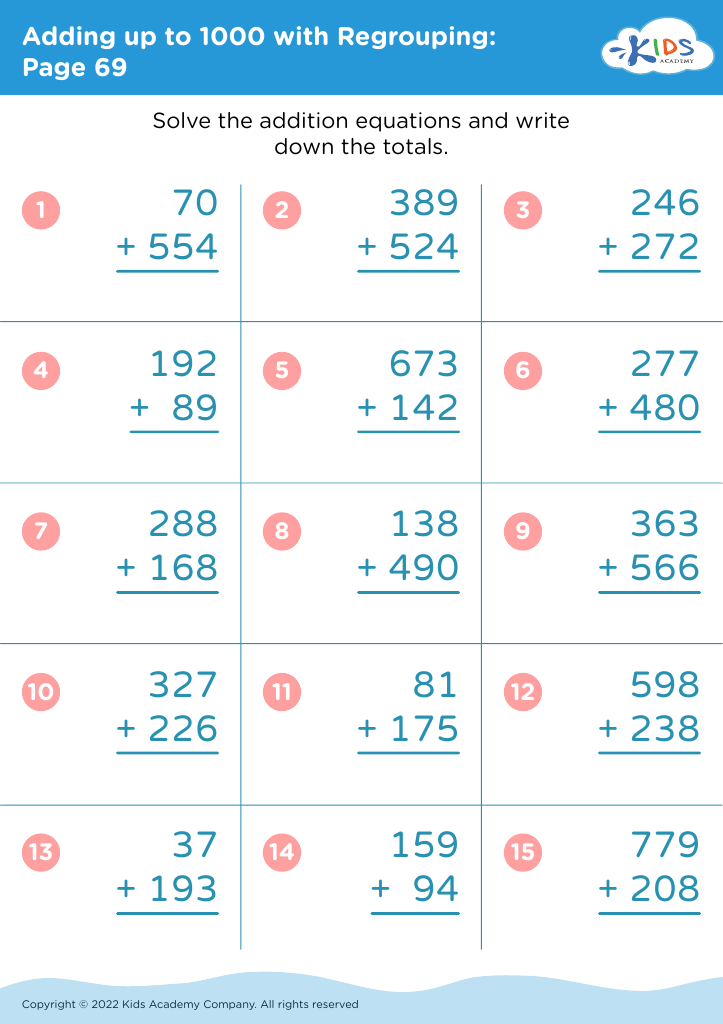
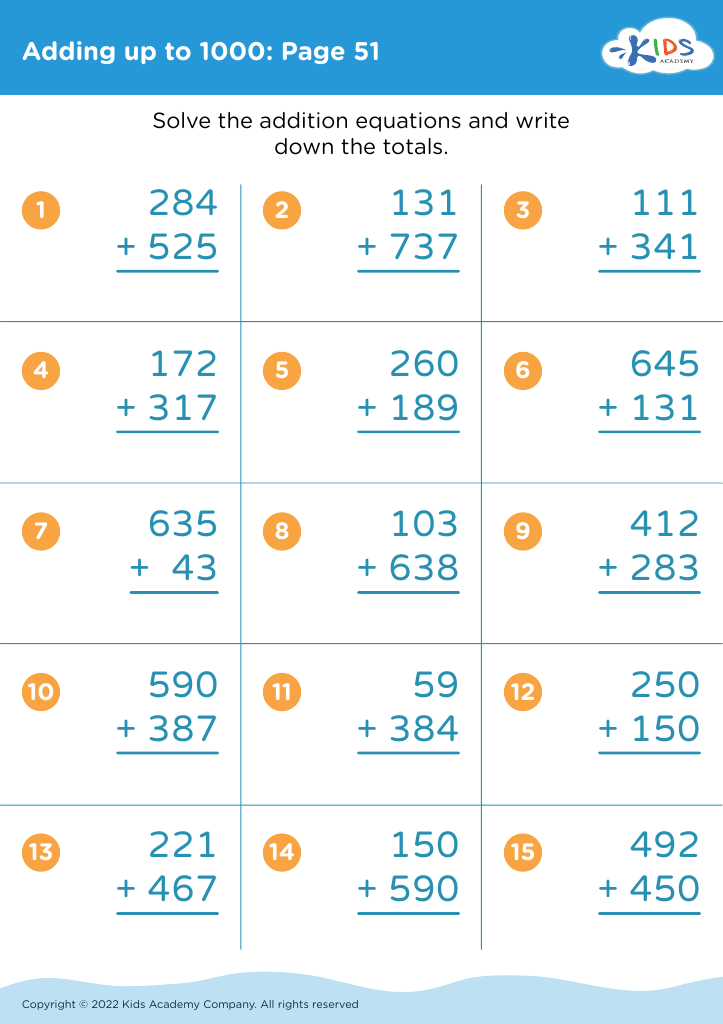
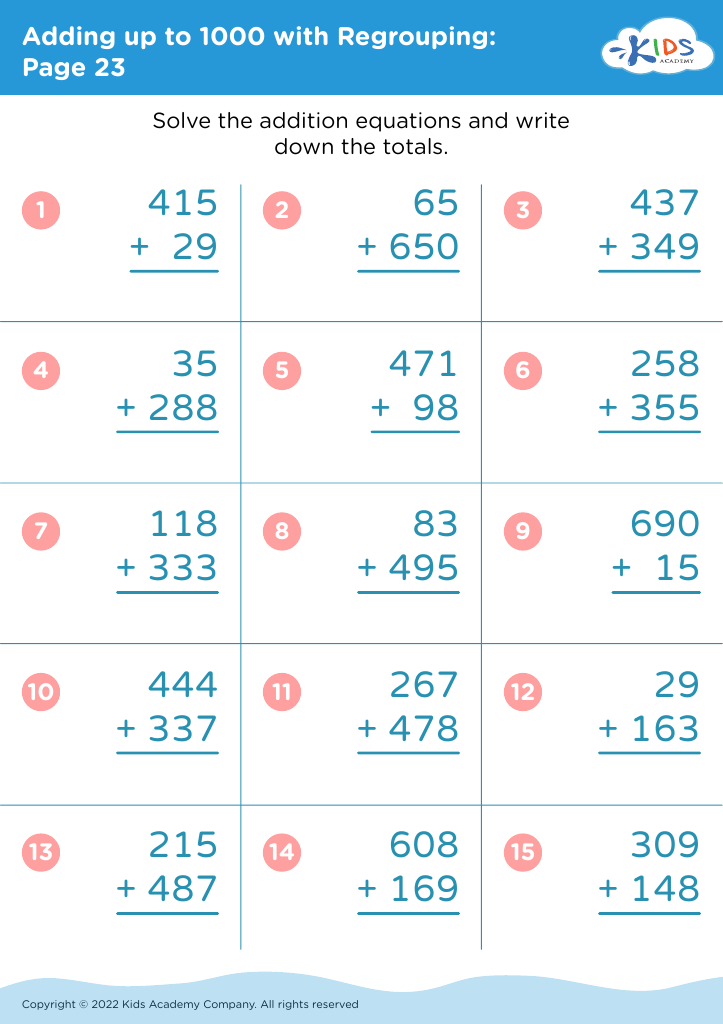
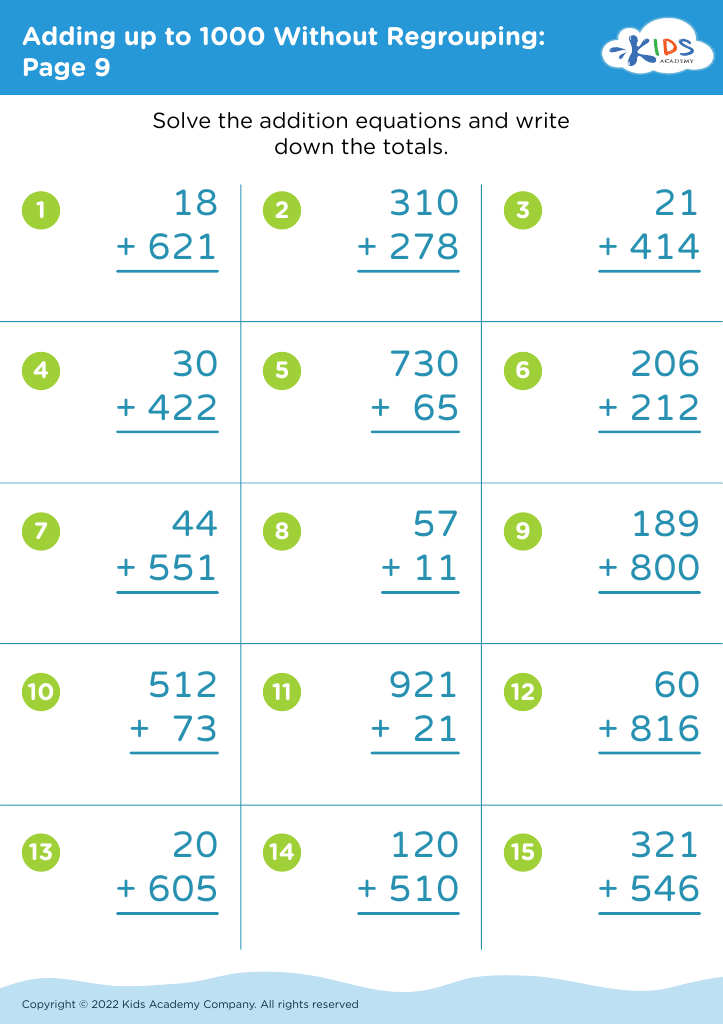
Explore our engaging "Identify Shapes Adding Up to 1000 Worksheets" designed for early learners! These interactive resources blend geometry and addition skills, helping students recognize and name various shapes while practicing their math proficiency. Each worksheet encourages children to identify shapes such as triangles, squares, and circles, while solving addition problems that total up to 1000. Perfect for reinforcing classroom learning, these worksheets promote critical thinking and enhance shape recognition. Ideal for teachers and parents looking to supplement math education, our materials offer a fun and effective way to build foundational skills in geometry and addition. Dive in and watch your child thrive!



Understanding how to identify shapes and their properties is crucial for early learners as it lays the foundation for essential math skills. When parents and teachers focus on shape recognition, they not only enhance a child's cognitive abilities but also their spatial awareness, which is vital for problem-solving and logical thinking. Recognizing various shapes helps children to connect mathematical concepts to their environment, making learning relevant and engaging.
Additionally, combining shape identification with skills like adding up to 1,000 can lead to a holistic understanding of mathematics. This dual focus promotes critical thinking as students learn to categorize shapes while performing numerical operations. For example, recognizing shapes like triangles or rectangles can eventually help them understand area and perimeter, deepening their mathematical knowledge.
Furthermore, engaging with shapes in collaborative activities encourages social interaction and communication skills, crucial for a child's overall development. In summary, when parents and teachers emphasize the importance of identifying shapes in conjunction with foundational math principles like addition, they equip children with the tools needed for academic success and real-world applications, fostering a love for learning that extends beyond the classroom.








