Number Recognition Adding up to 1000 Worksheets - Page 2
31 filtered results
-
From - To
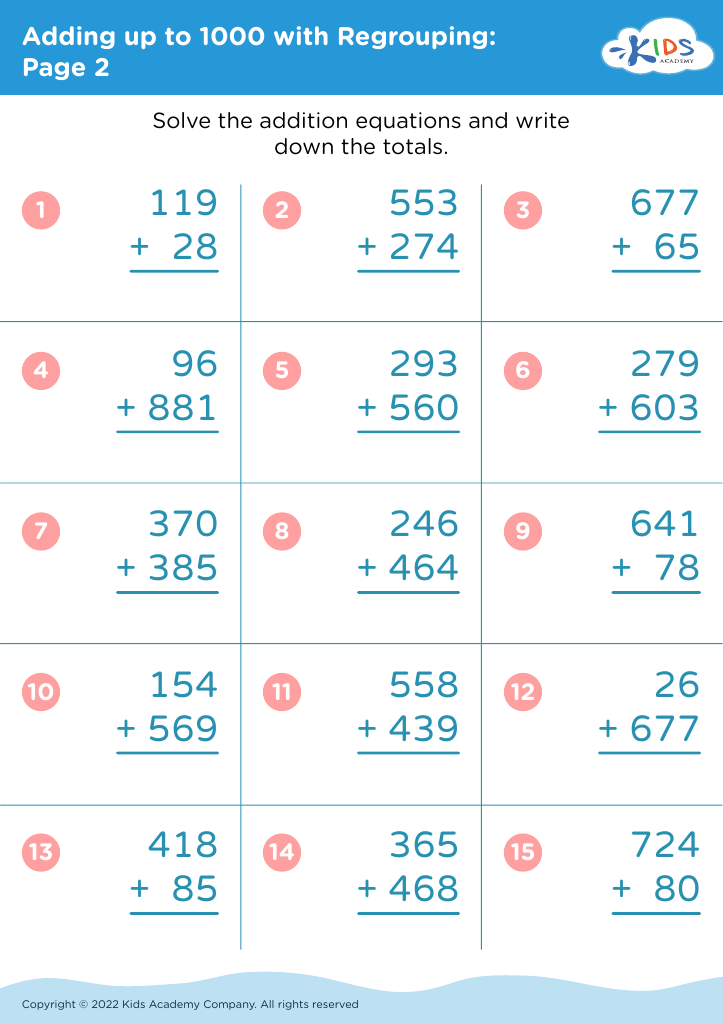
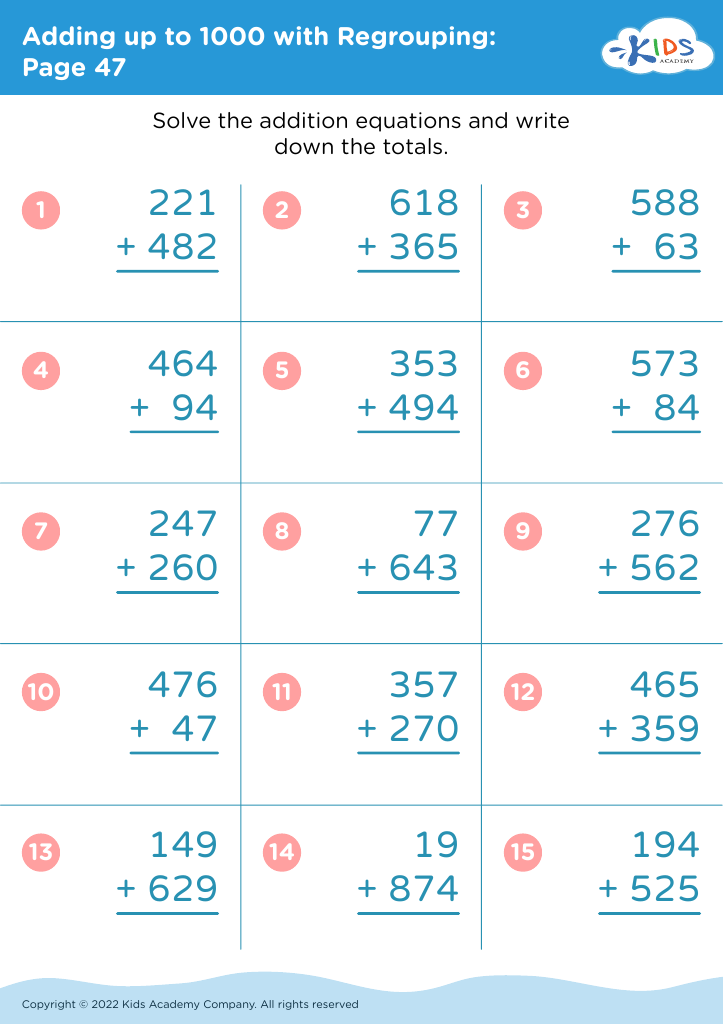
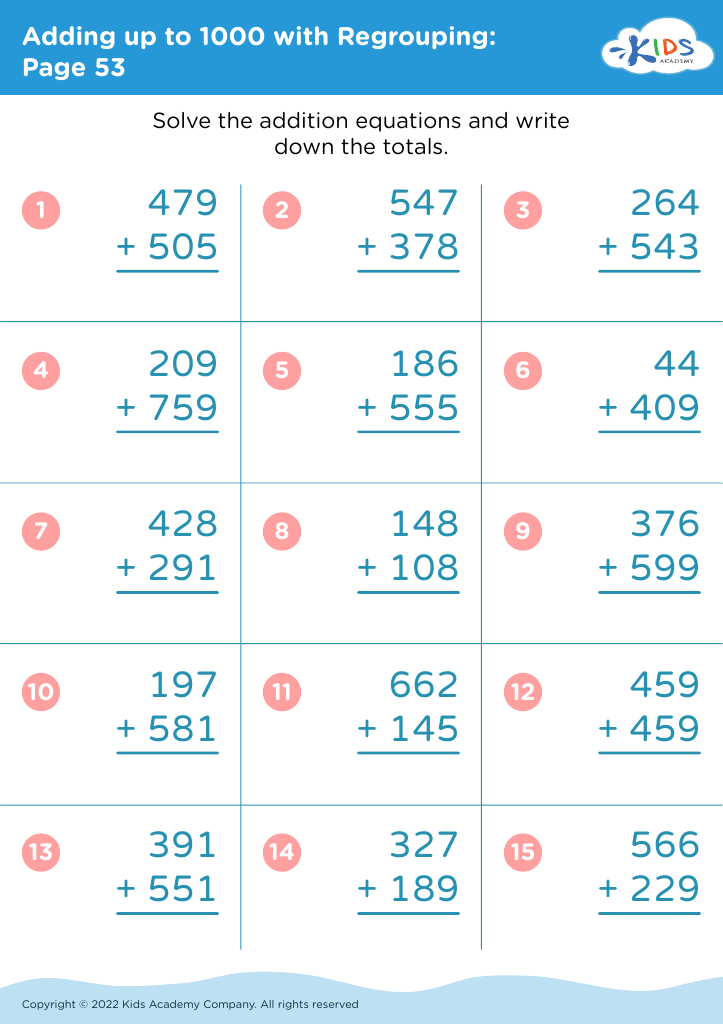
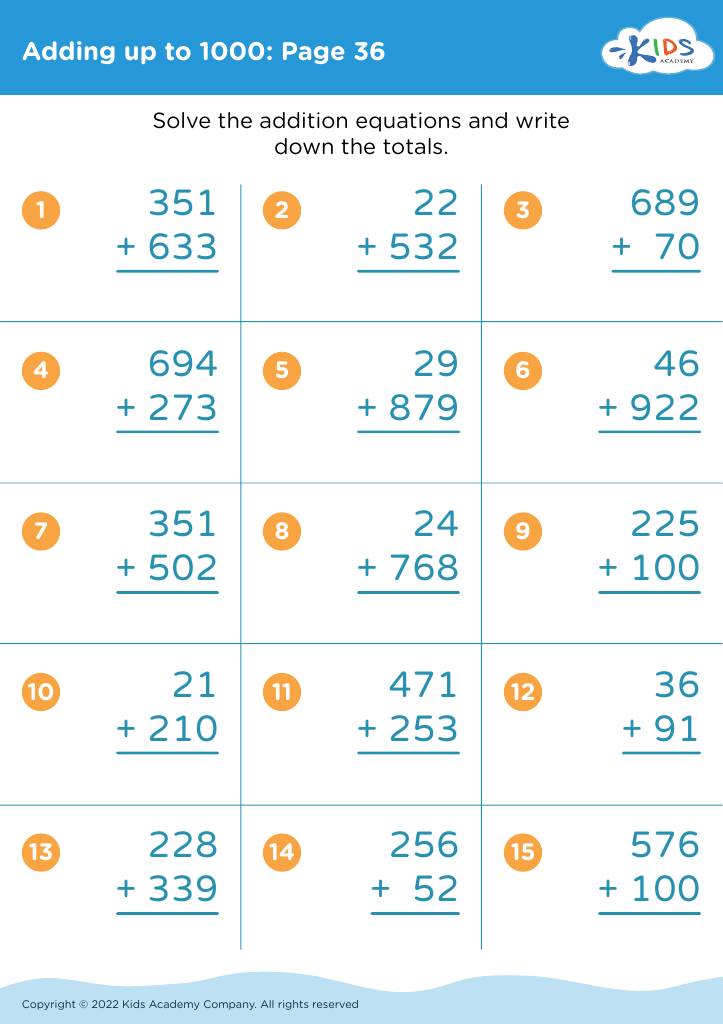
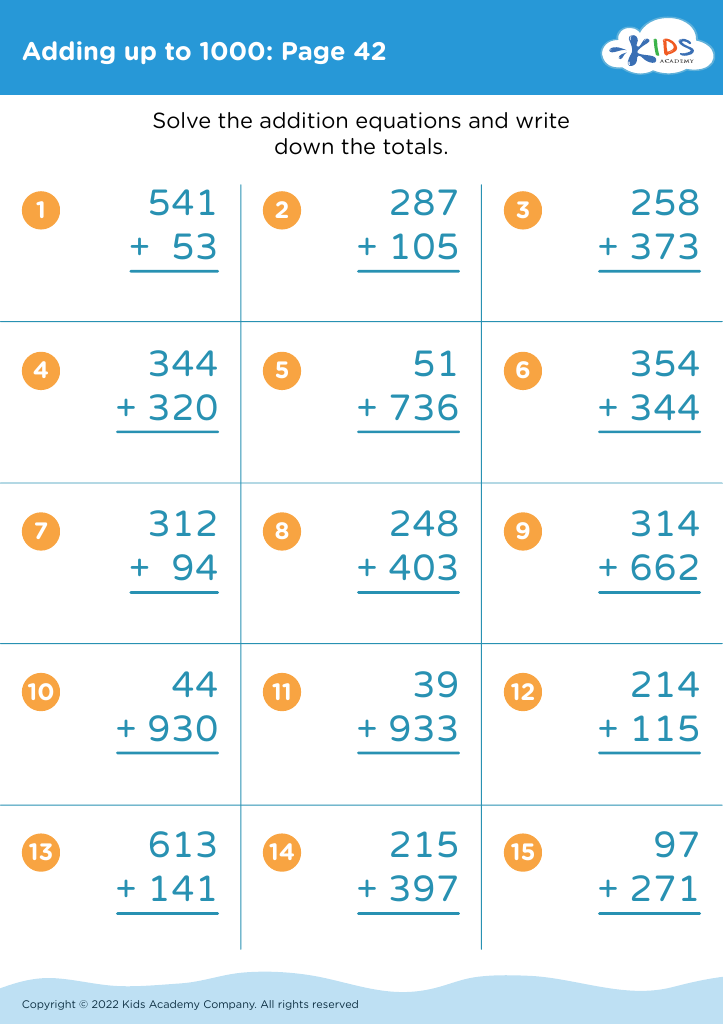
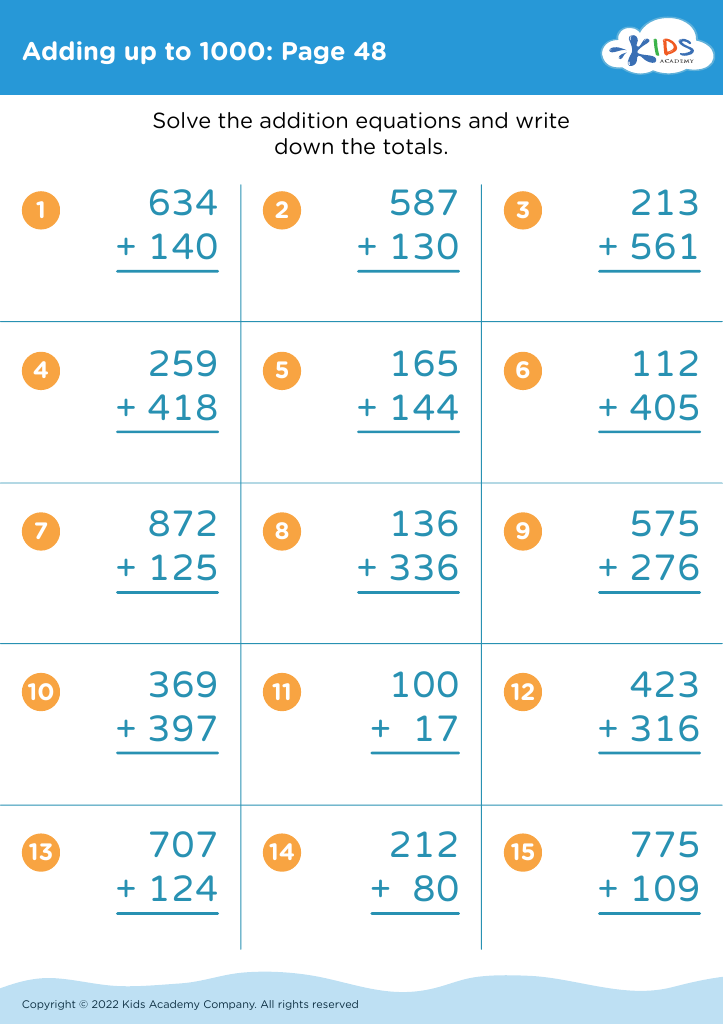
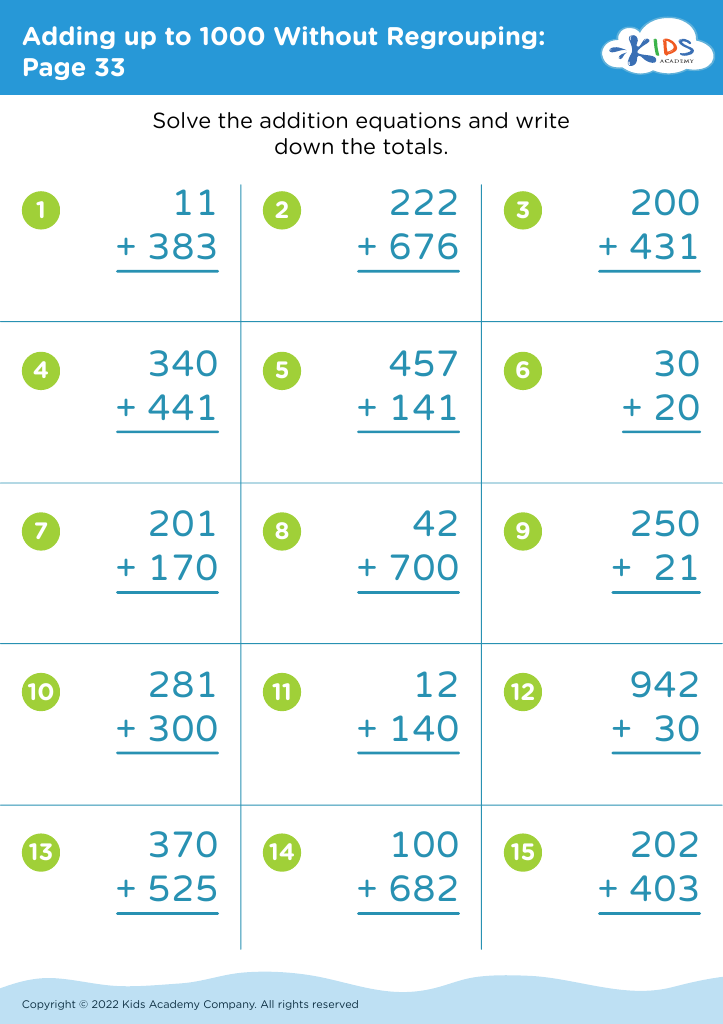




Number recognition is a foundational skill in mathematics that significantly impacts a child's academic success and everyday functioning. Teaching children to recognize numbers up to 1000 prepares them for more advanced math concepts and develops essential cognitive skills. This skill promotes numeracy, which is crucial for understanding basic arithmetic operations such as addition, subtraction, multiplication, and division.
When children can recognize and understand numbers up to 1000, they gain confidence in their math abilities. This confidence encourages them to tackle more complex problems, setting the stage for STEM-related studies. Moreover, number recognition aids in real-life situations, such as telling time, managing money, and even understanding basic scientific data.
For educators and parents, fostering number recognition is a way to support a child's literacy and numeracy growth holistically. Engaging with numbers cultivates critical thinking and problem-solving skills essential for overall educational attainment. Investing time in number recognition not only serves immediate academic goals but also equips children with the tools they need for lifelong learning and success. Thus, both parents and teachers should prioritize fostering these skills early on for sustained cognitive development.








