Reading analog clocks Adding up to 1000 Worksheets
3 filtered results
-
From - To
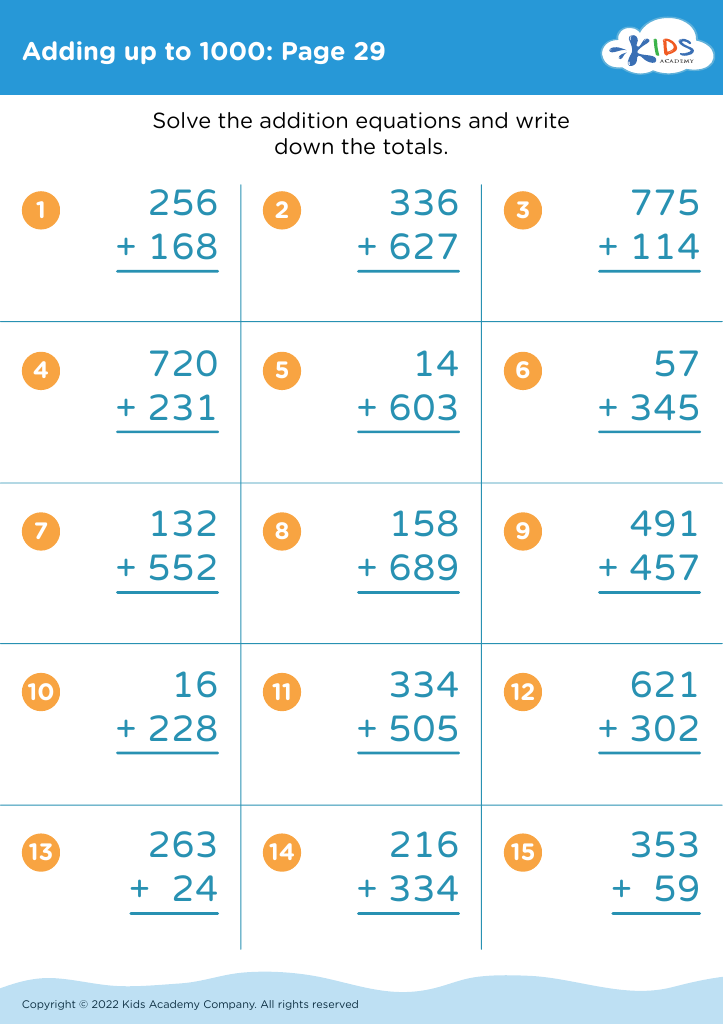
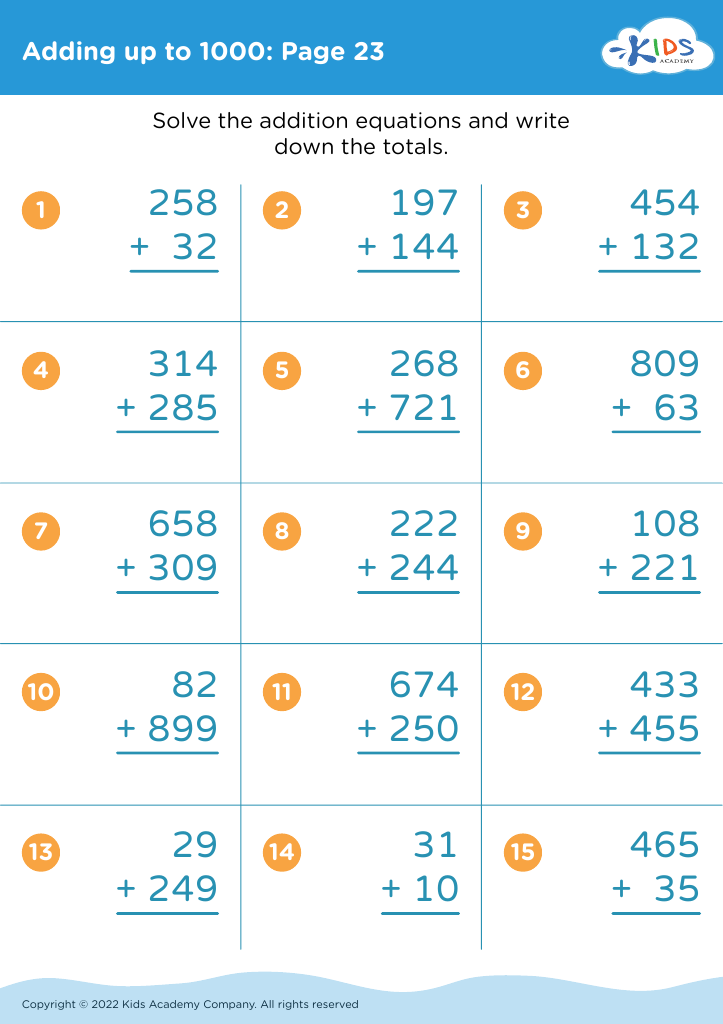
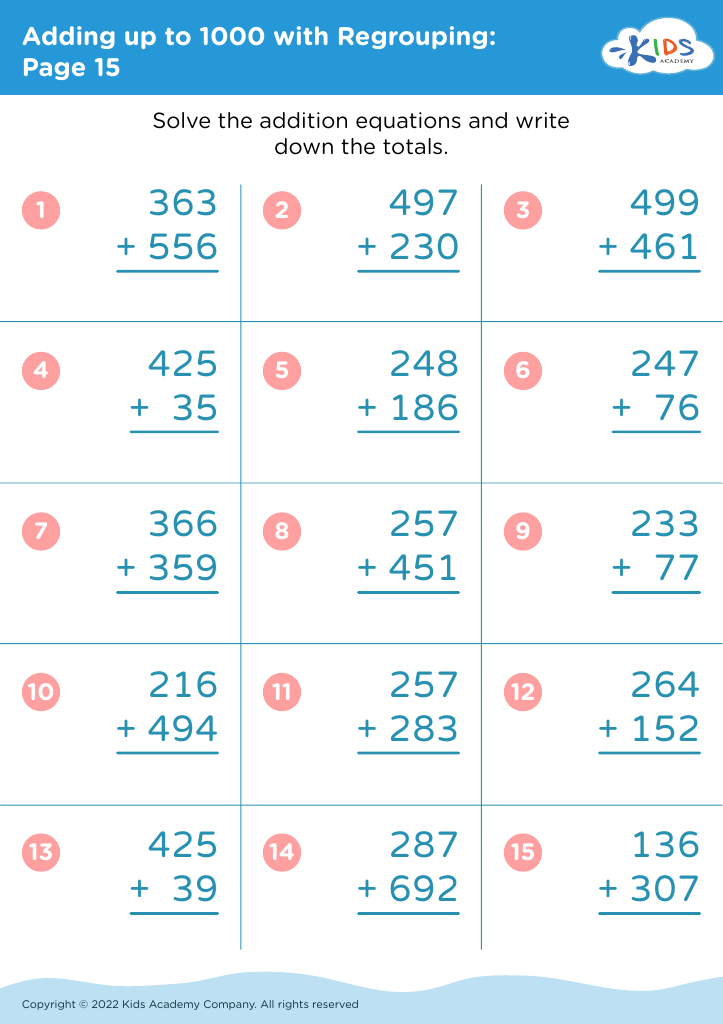
Enhance your child's math and time-telling skills with our "Reading Analog Clocks Adding Up to 1000 Worksheets." These engaging worksheets combine mathematics and time recognition, allowing students to practice addition while learning to read analog clocks accurately. Each worksheet provides a fun, interactive way for kids to practice estimating time, solving addition problems that total up to 1000, and developing critical thinking skills. Ideal for early learners, these resources support classroom learning and home study alike, helping children gain confidence as they navigate both numbers and time. Get started today and watch your student's skills flourish!



Understanding how to read analog clocks is an essential skill that fosters a child's cognitive development, promoting numeracy, problem-solving abilities, and time management. It assists kids in grasping the concept of time as a continuum, rather than merely a set of numbers. This comprehension is crucial as children learn to organize their daily schedules, understand duration, and ultimately lead to greater independence.
For parents and teachers, introducing analog clocks can open up discussions about the behavior of time and its significance. Teaching children the importance of punctuality begins early; readjusting activities according to a visual representation of time prepares them to function effectively in both school and life.
Moreover, incorporating analog clocks in learning activities can add to their excitement and engagement. Utilizing hands-on methods or games can enhance the experience, making it enjoyable while already adding foundational skills. Analog clocks also bolster comparisons with digital formats, thus deepening understanding.
Ultimately, instilling an appreciation for reading analog clocks prepares them for future success by integrating time management skills into everyday life. By valuing the nuances of traditional time-telling, educators and caregivers equip children with tools they will continue to use as they grow.








