Recognize patterns Adding up to 1000 Worksheets
6 filtered results
-
From - To
Welcome to our "Recognize Patterns Adding up to 1000 Worksheets" page! Designed for early learners, these engaging worksheets help students identify and understand numerical patterns while practicing addition skills up to 1000. Each worksheet reinforces critical thinking and problem-solving abilities as children explore various arithmetic sequences and relationships. By recognizing patterns, students enhance their mathematical intuition, making them more confident in tackling complex problems. The colorful and interactive layouts make learning fun and accessible, perfect for classroom or at-home use. Explore our diverse collection and watch your child develop a solid foundation in math through pattern recognition today!
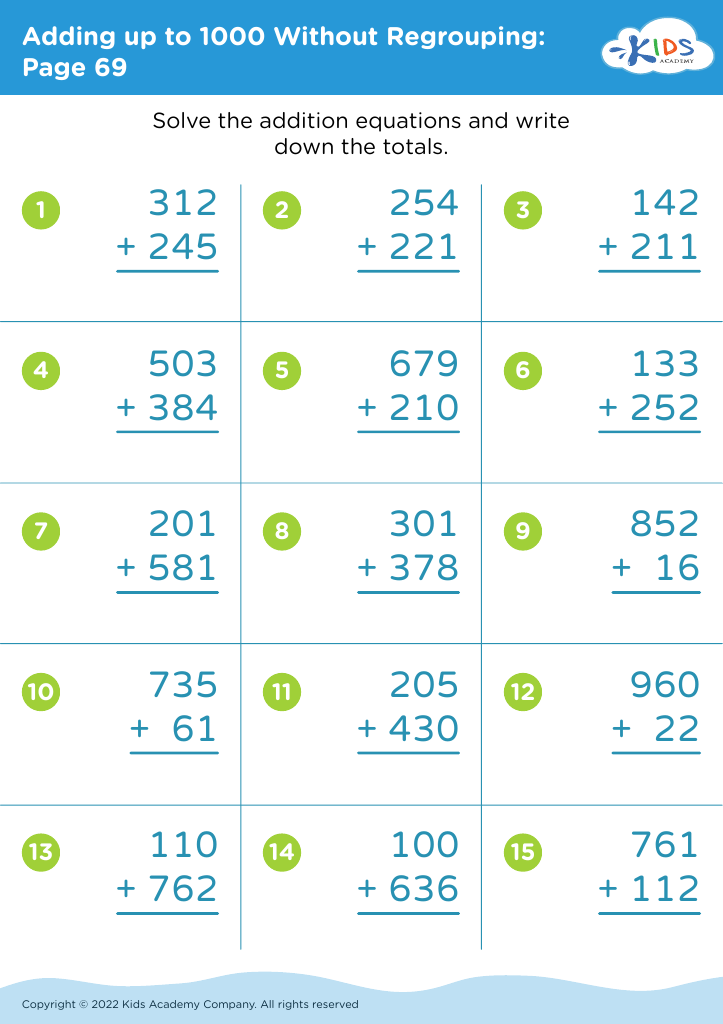
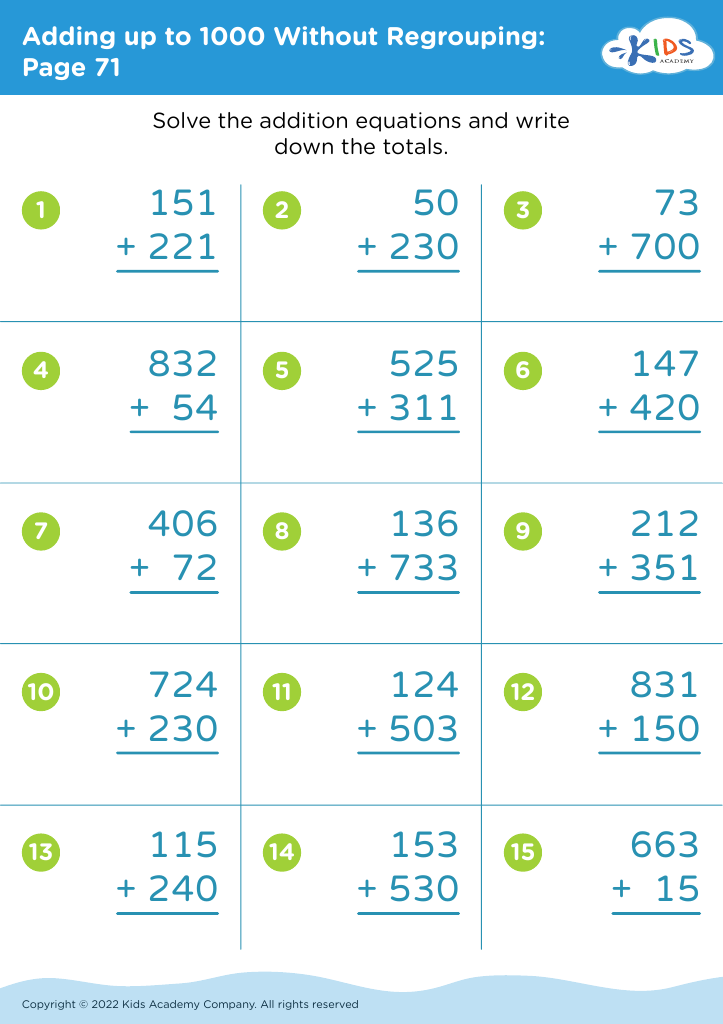
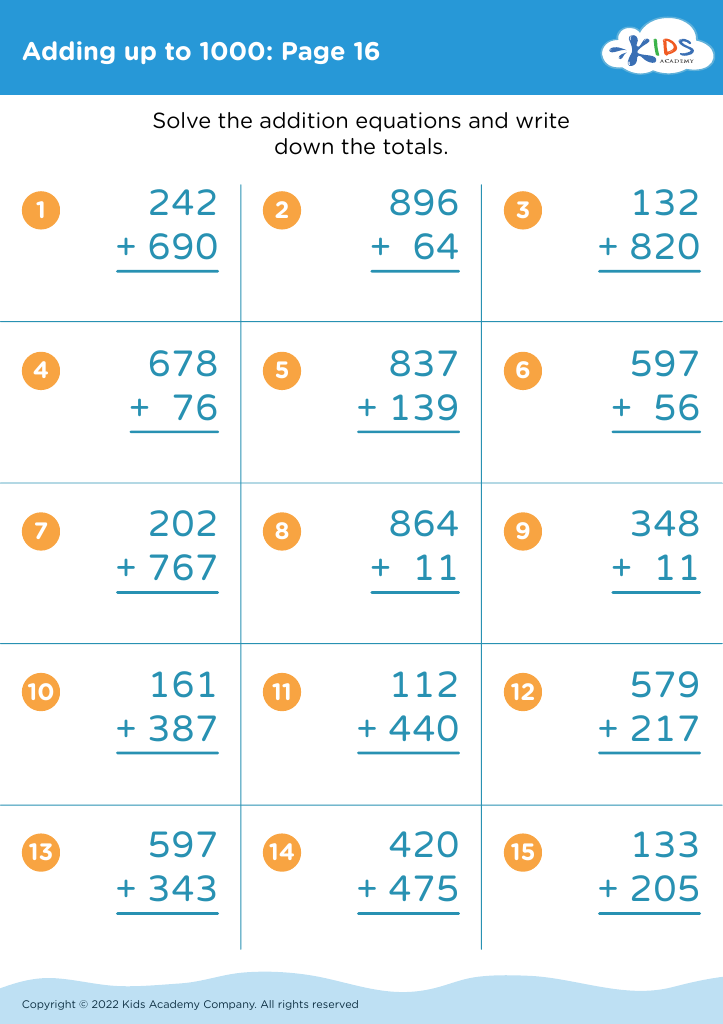
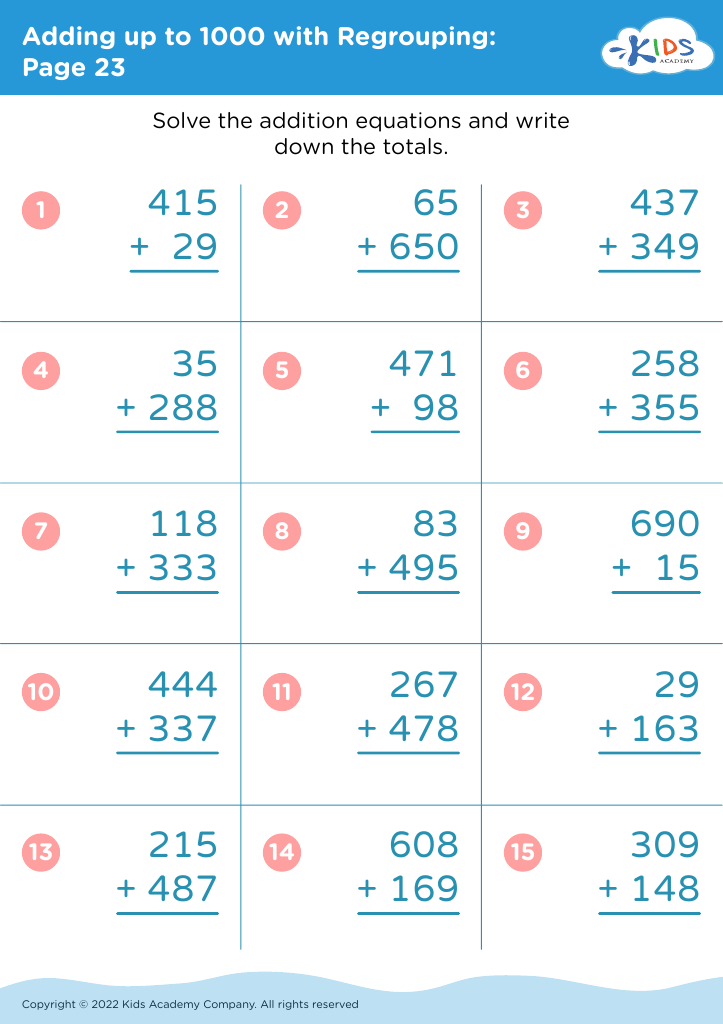
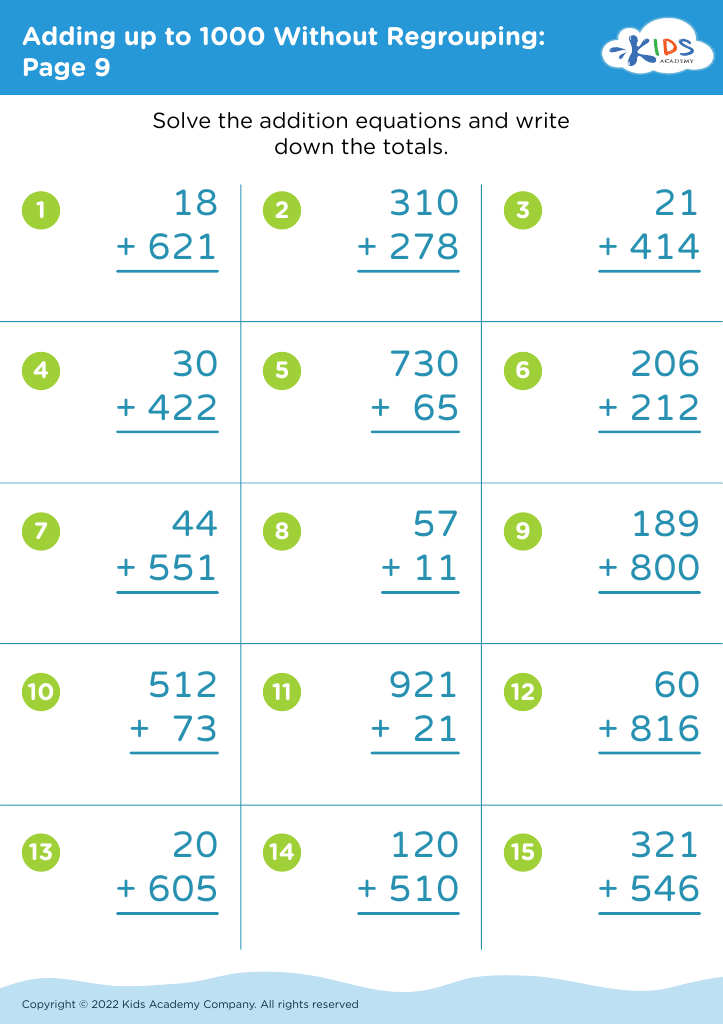
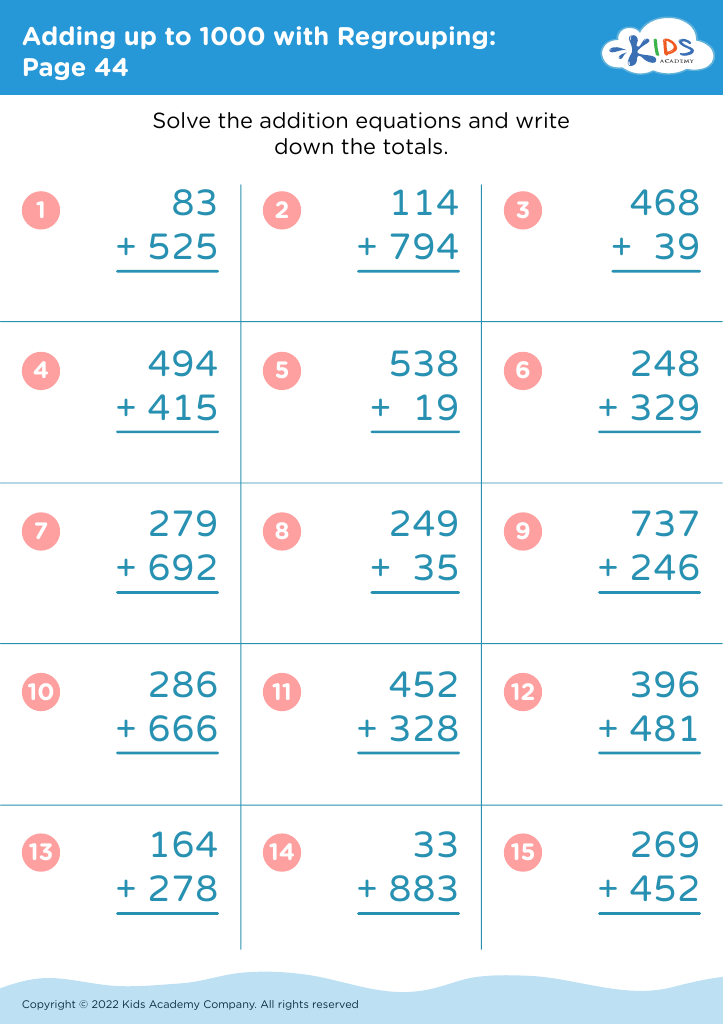



Recognizing patterns in mathematics, particularly when adding numbers up to 1000, is crucial for students’ cognitive development and future success in math. For parents and teachers, nurturing this skill helps students build a strong foundation for more advanced mathematical concepts. Pattern recognition fosters critical thinking, allowing children to identify relationships between numbers and apply strategies for efficient problem-solving.
When children learn to recognize patterns, they can group numbers logically, aid their memory retention, and experience less frustration during calculations. For instance, recognizing that 450 + 550 equals 1000 can help them understand numeric relationships better, making it easier to solve similar problems in the future. This skill also enhances mental math abilities, which boost confidence and encourage a positive perception of math.
Furthermore, as our society becomes increasingly data-driven, the capability to recognize and analyze patterns will significantly benefit students both academically and in their future careers. By focusing on these skills early on, parents and teachers are not just supporting math comprehension but also ensuring that students are equipped with essential life skills that extend beyond the classroom. Ultimately, fostering this skill empowers children to engage more deeply with learning and encourages a lifelong love of mathematics.








