Recognize shapes Adding up to 1000 Worksheets
4 filtered results
-
From - To
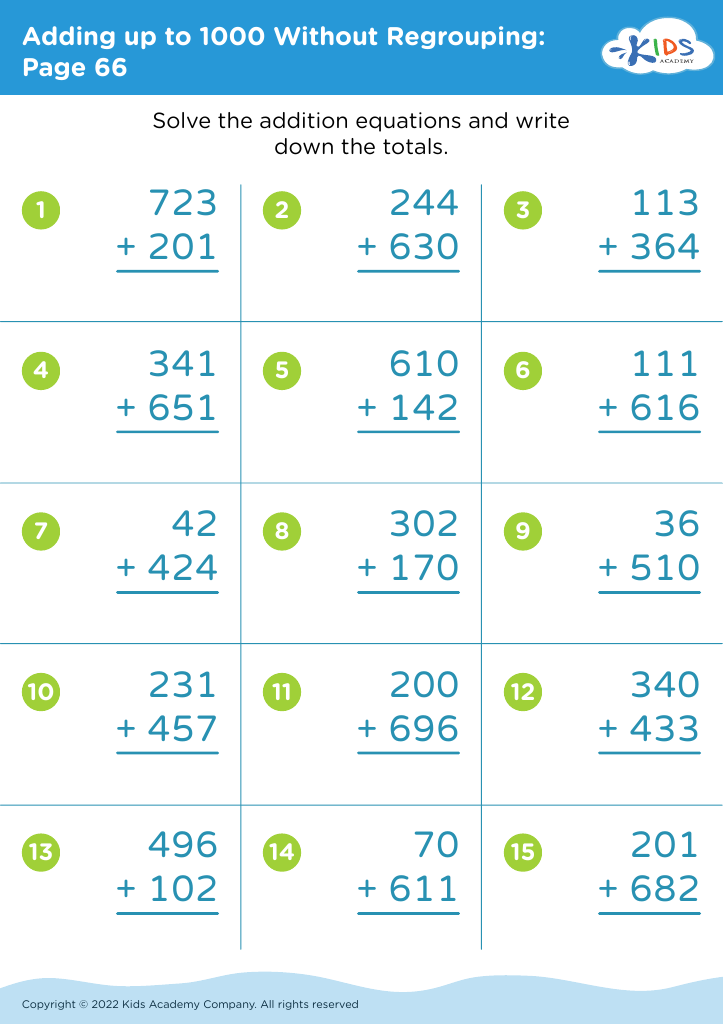
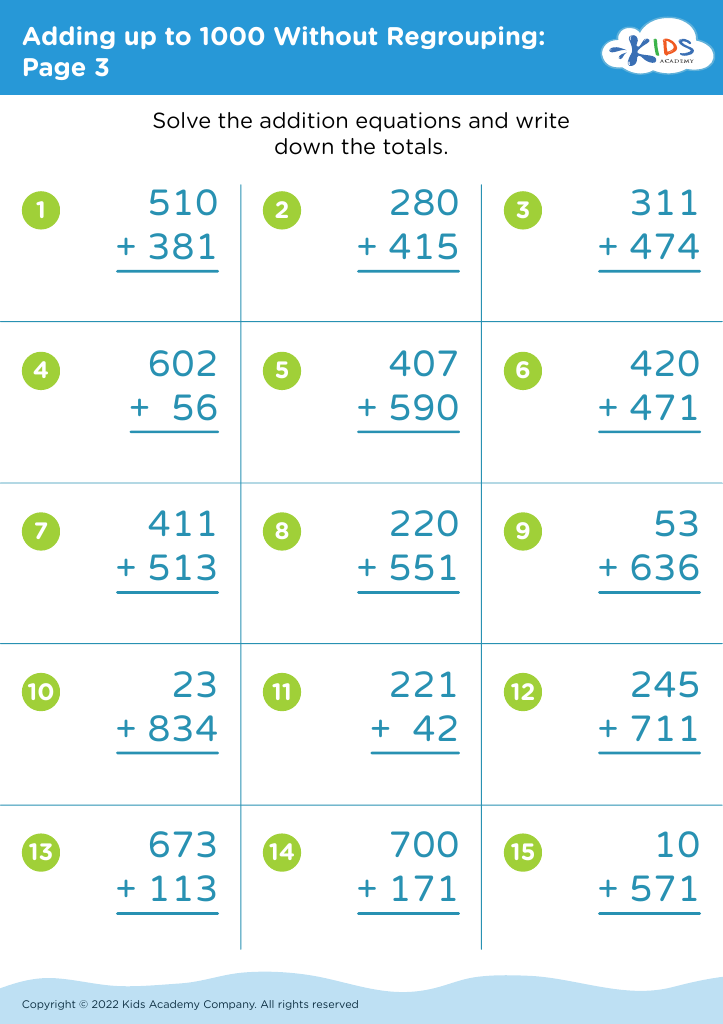
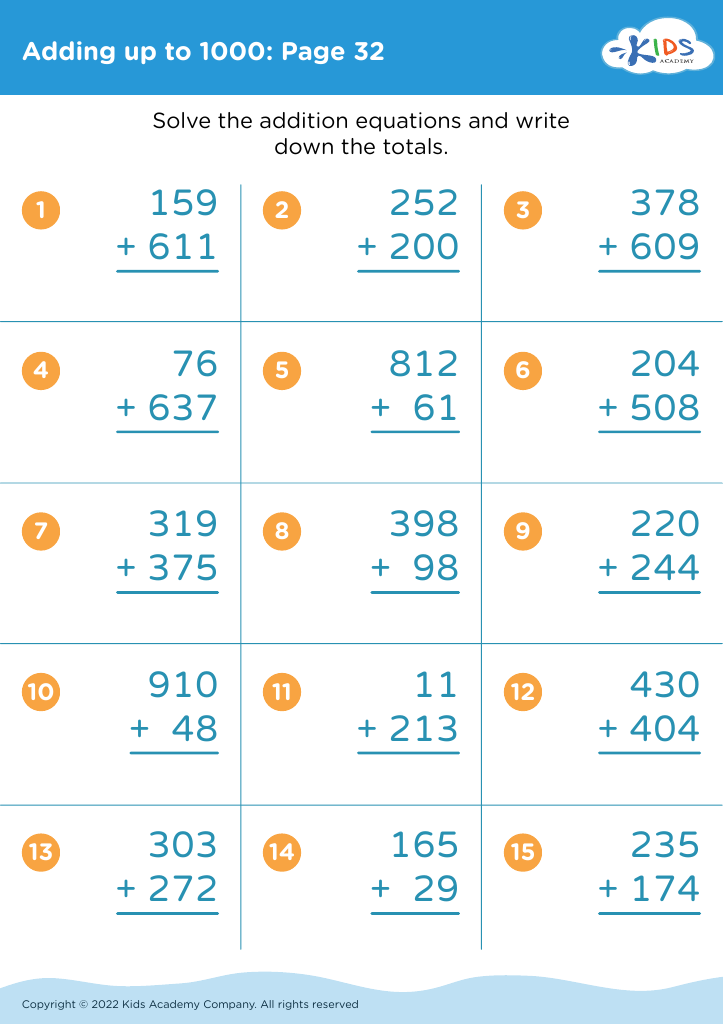
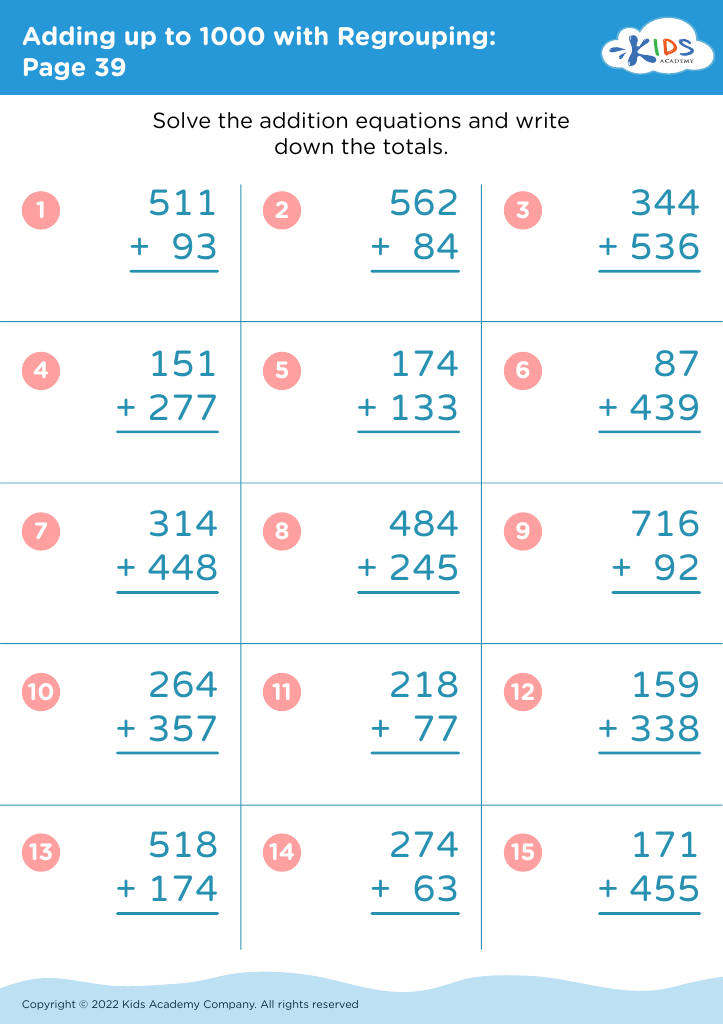
Welcome to our "Recognize Shapes Adding Up to 1000 Worksheets" page! Designed for early grade learners, these engaging worksheets combine geometry and addition skills. Students will explore various shapes while practicing their addition, reinforcing their understanding of both math and visual recognition. Each worksheet offers a fun opportunity to identify, classify, and add shapes, making learning interactive and enjoyable. Perfect for classroom use or homeschooling, our resources cater to various learning styles, ensuring all children grasp these essential concepts. Boost your child’s confidence in math and geometry with our thoughtfully designed worksheets and watch their skills grow!



Recognizing shapes and understanding their properties is fundamental for early learners, laying the groundwork for various skills in mathematics and critical thinking. When children engage with shapes like triangles, squares, and circles, they begin to comprehend concepts such as symmetry, area, and perimeter. This visual spatial awareness is essential for problem-solving and is reinforced in further mathematical learning.
Adding up to 1000 is a crucial milestone in mathematics. It signifies a foundational skill that enhances children's capabilities in arithmetic, geometry, and even higher-level math competencies. By learning to add up to 1000, students develop an understanding of number sense, patterns, and grouping, which all play a significant role in mental math and calculations.
Additionally, the fusion of shape recognition and addition fosters creativity as students visualize and manipulate shapes to solve problems. Encouraging activities that combine both approaches builds not only mathematical proficiency but also boosts confidence, resilience, and collaboration in group settings. Ultimately, investing time and resources in recognizing shapes and foundational addition skills prepares students for complex concepts in the future and empowers them to navigate the world with strong analytical abilities. This holistic development should be a priority for both parents and teachers.








