Shape Recognition Adding up to 1000 Worksheets
11 filtered results
-
From - To
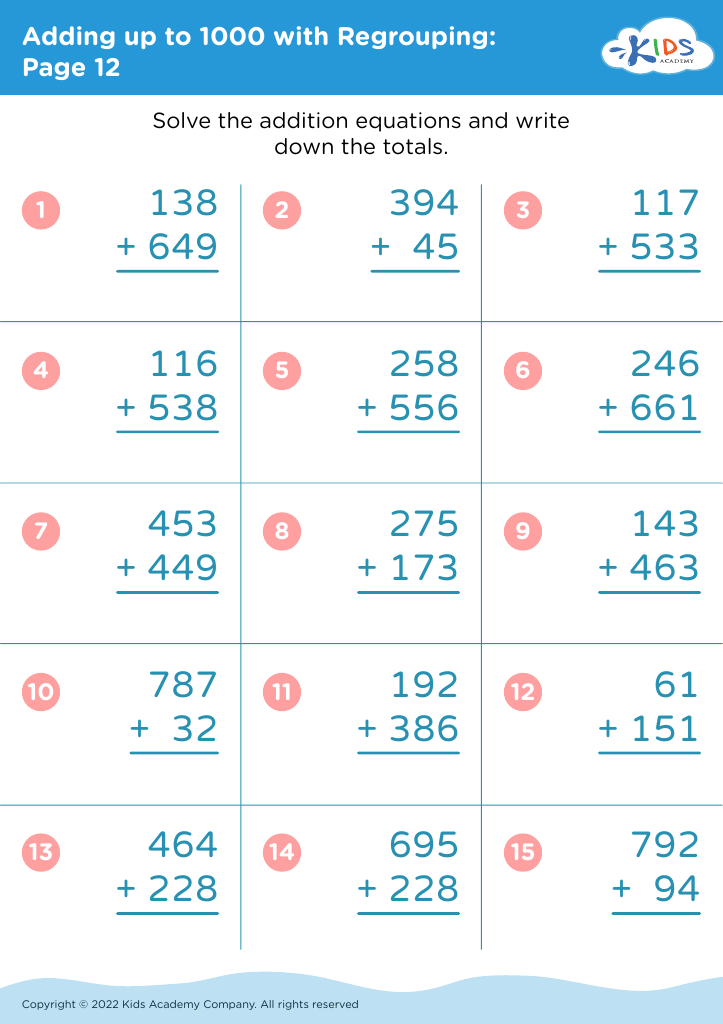
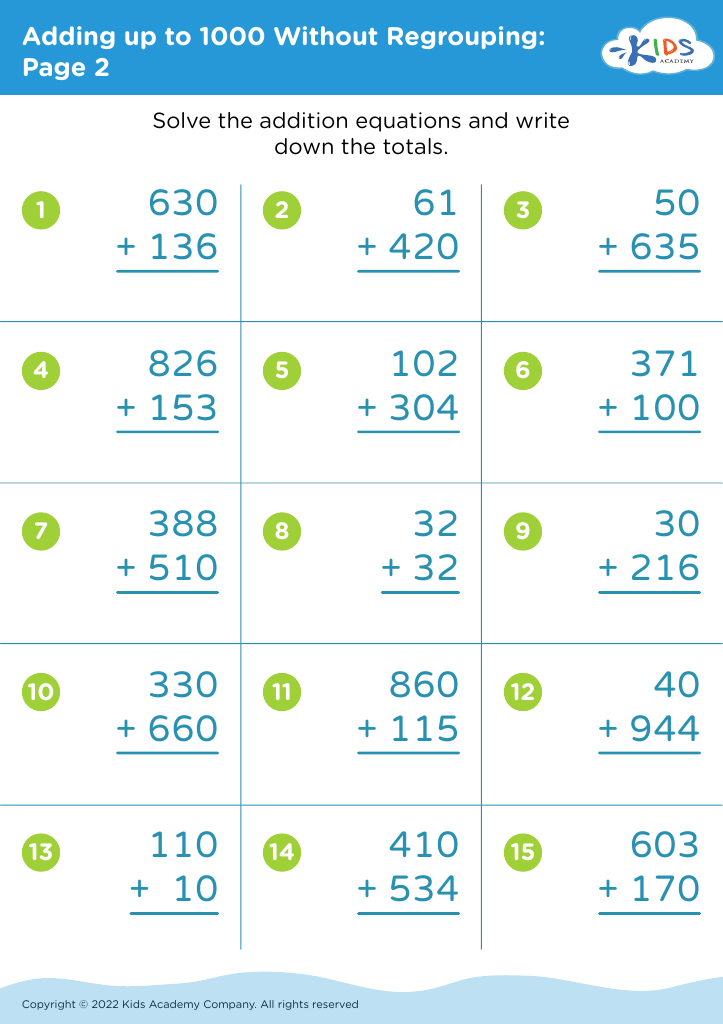
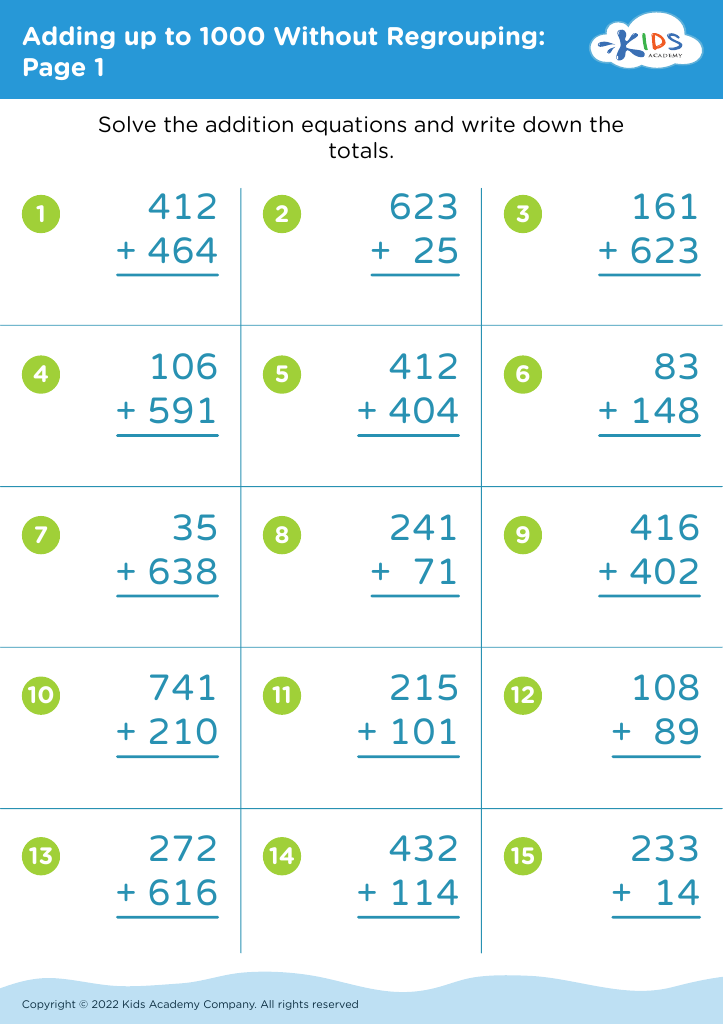
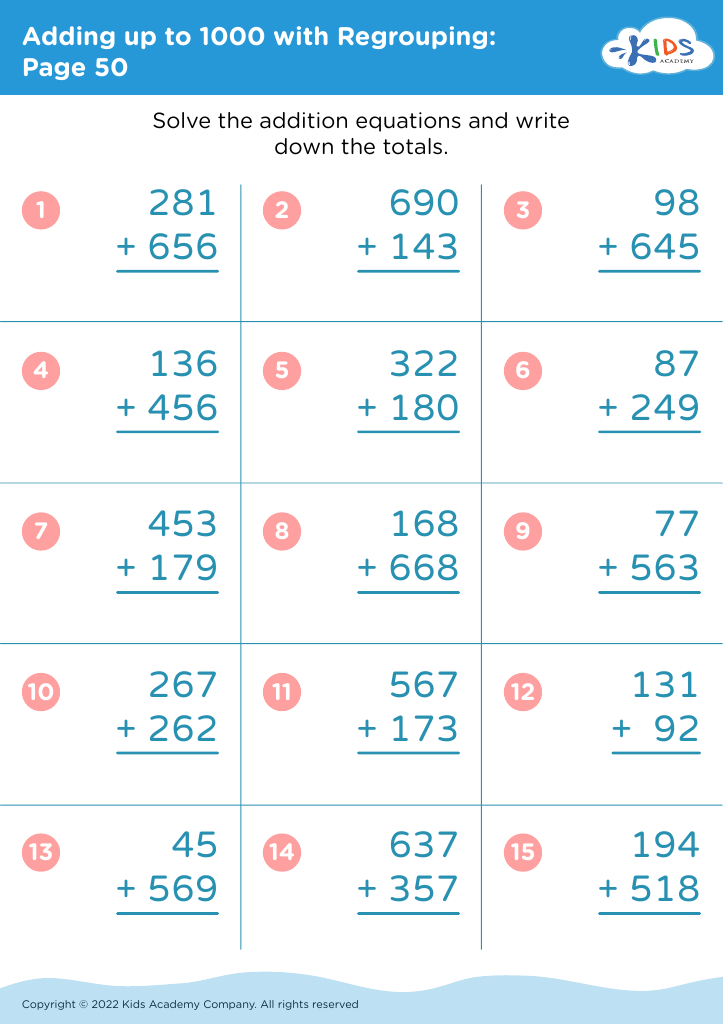
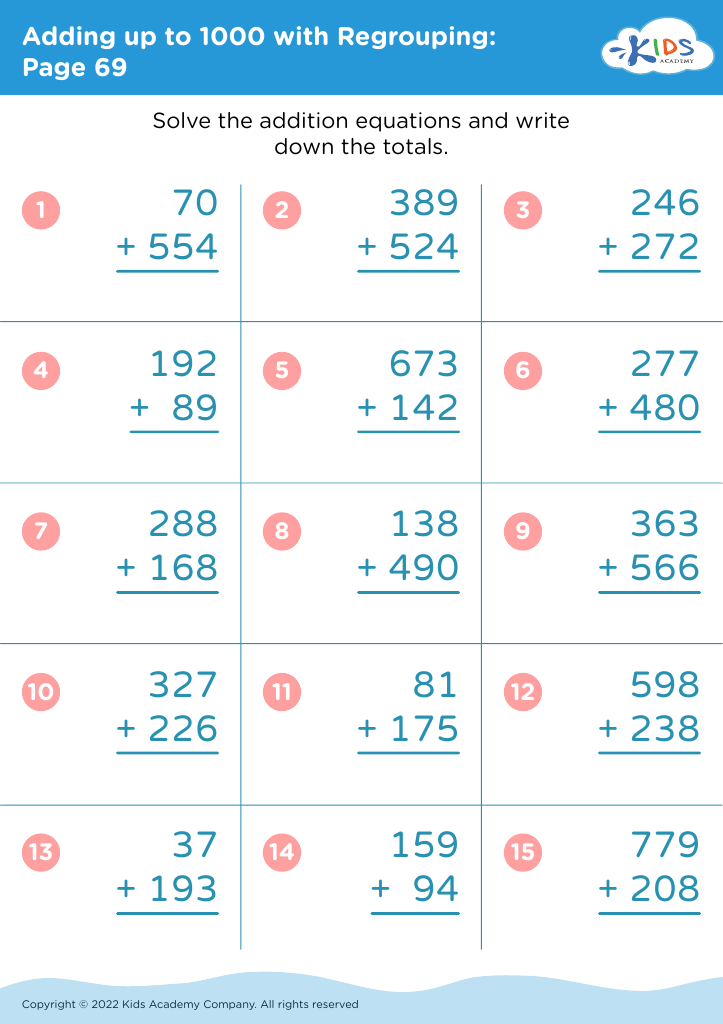
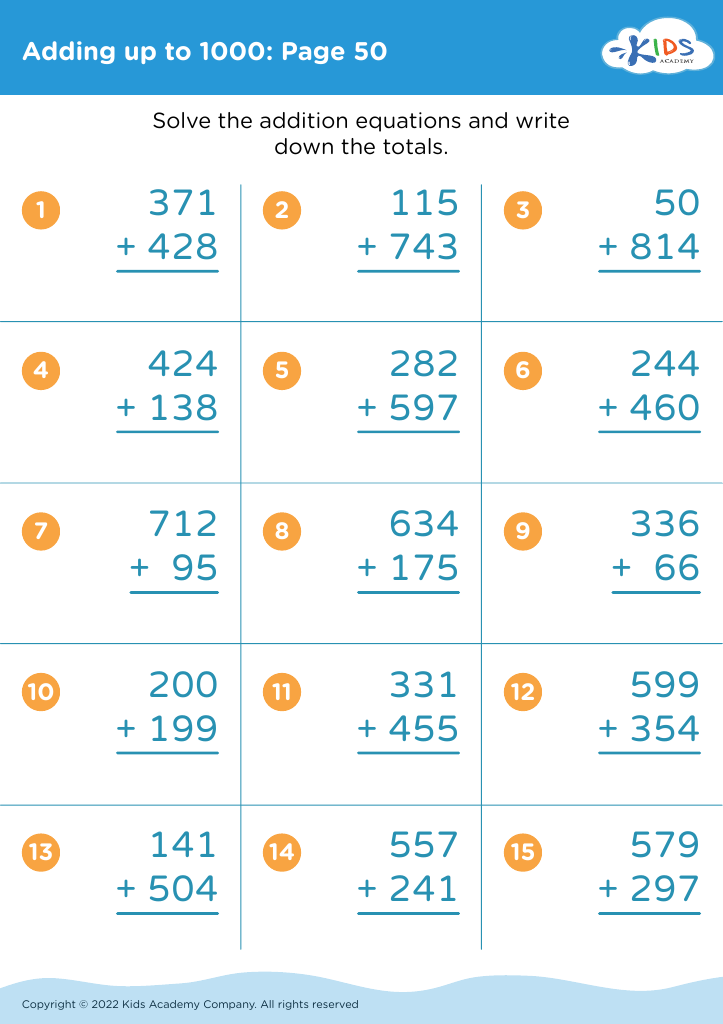
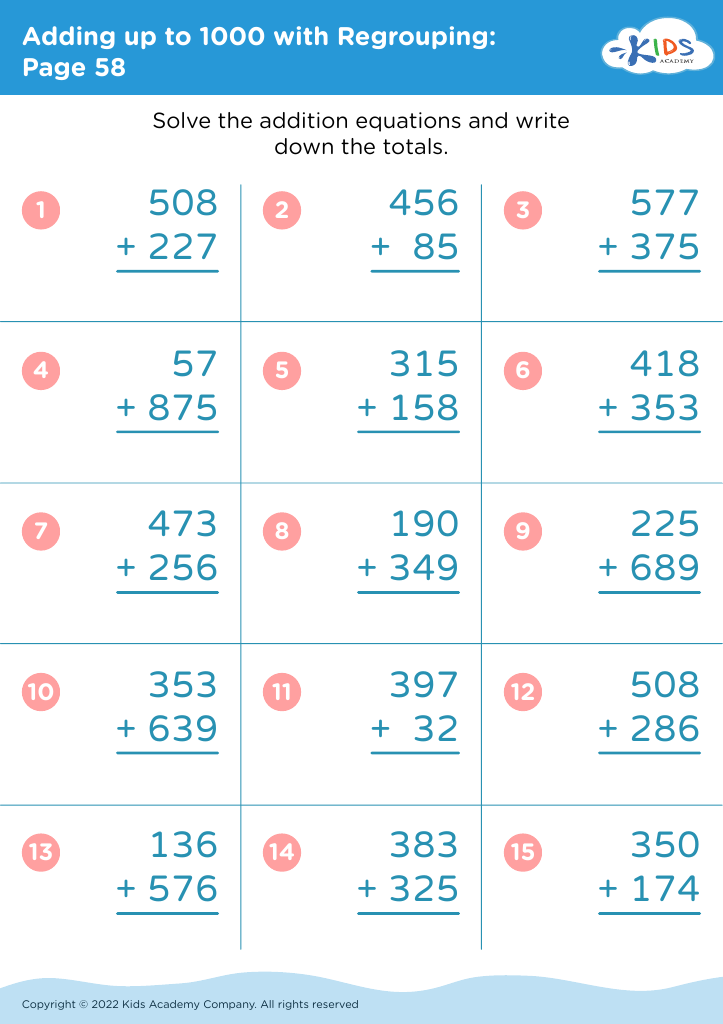
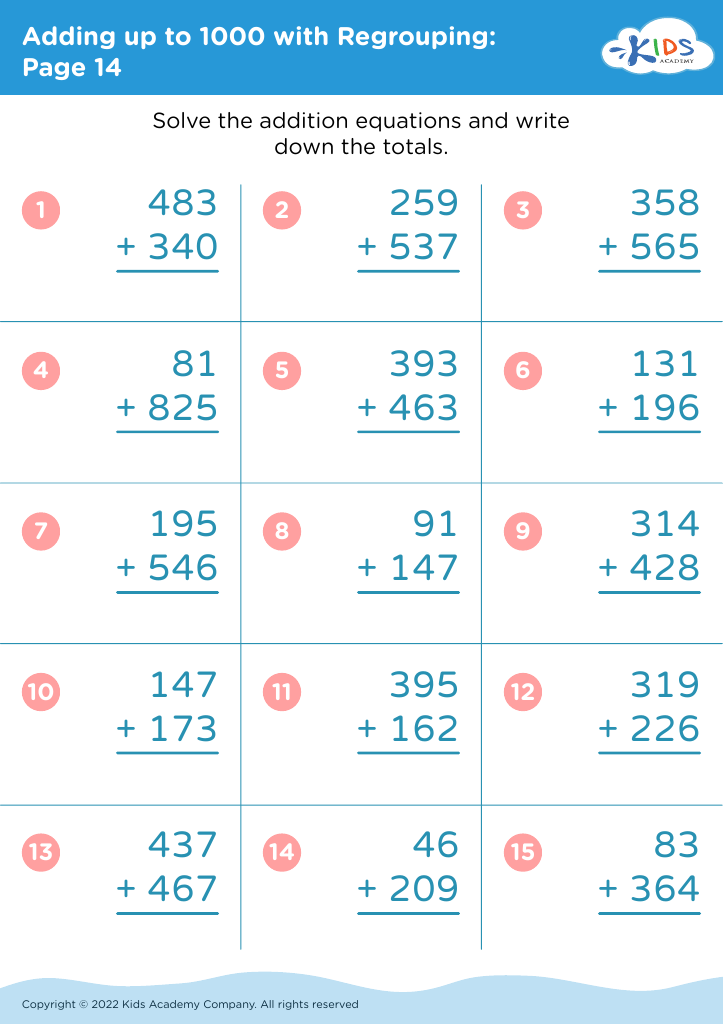
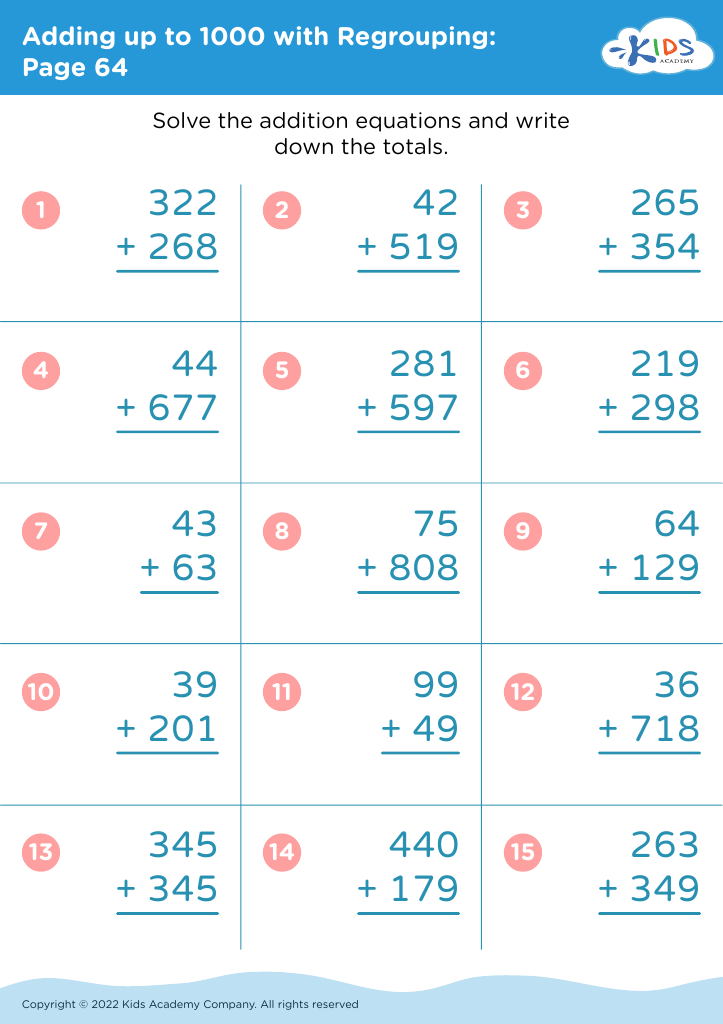
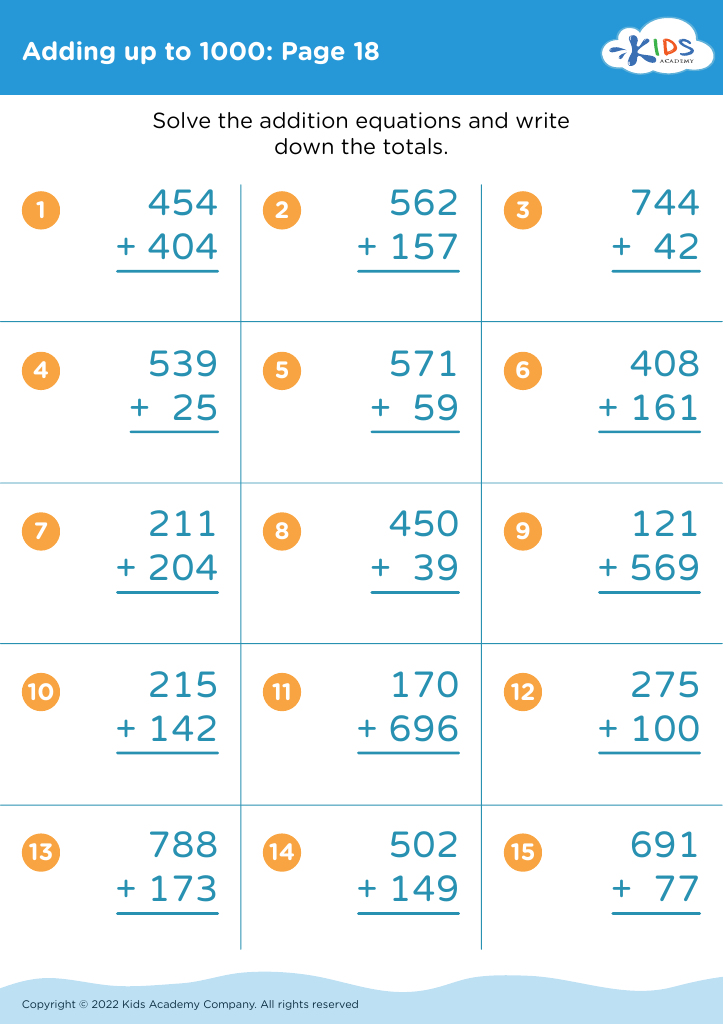
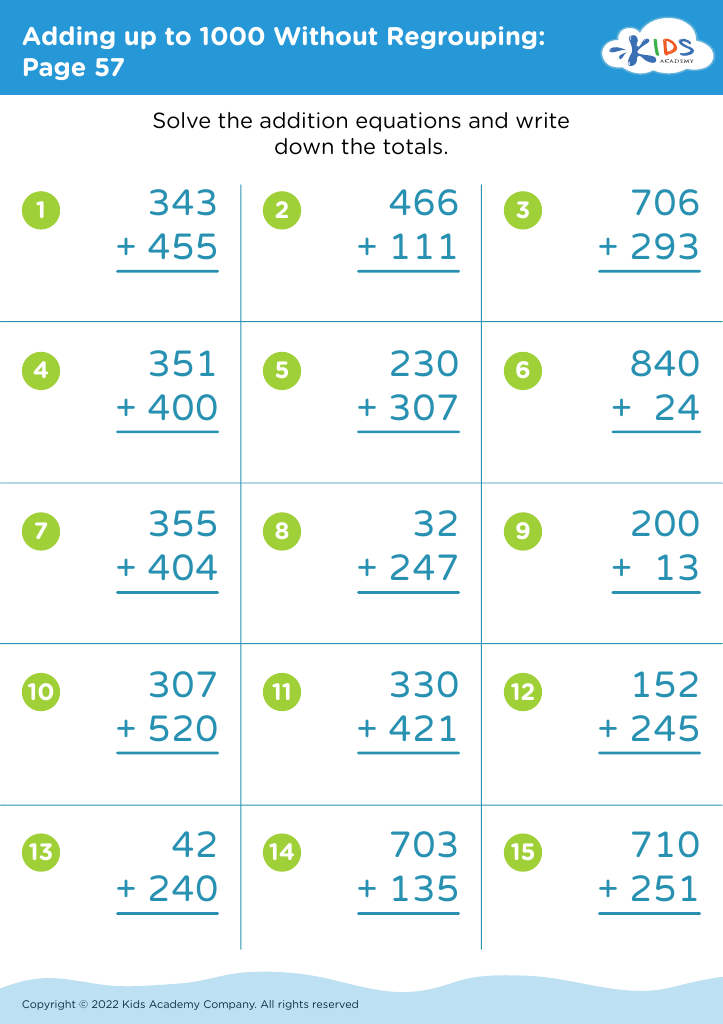
Introducing our comprehensive "Shape Recognition Adding up to 1000 Worksheets," designed to enhance your child's math and shape recognition skills. This engaging collection helps young learners identify and differentiate between various shapes while practicing addition up to 1000. Each worksheet incorporates colorful visuals and interactive exercises, fostering a fun and effective learning environment. Perfect for early grade teachers and parents, these printable resources support skill development in geometry and arithmetic. Watch your child build confidence as they explore the relationship between shapes and numbers through these thoughtfully crafted worksheets. Equip your learner with essential skills for future math success!



Shape recognition is an essential skill in early childhood development, and understanding its importance is crucial for parents and teachers. Firstly, recognizing shapes aids in the development of spatial awareness, which is vital for problem-solving and logical thinking. Children learn to categorize and understand their environment better, laying the groundwork for mathematical concepts and geometry later in life.
Additionally, engaging with shapes enhances fine motor skills through activities such as cutting, drawing, and building, contributing to overall physical development. Shape recognition also fosters creativity, allowing children to explore and use shapes in art and design.
Moreover, these foundational skills create a bridge to more complex subjects, supporting literacy and critical thinking. Recognizing shapes helps children grasp patterns, which are prevalent in language learning and reading comprehension.
Lastly, early shape recognition lays the groundwork for future cognitive processes. It cultivates confidence in their abilities, encouraging exploration and curiosity, which are crucial for lifelong learning. In summary, parents and teachers should prioritize shape recognition because it nurtures a range of developmental domains, including cognitive, physical, and social skills, ultimately encouraging well-rounded, self-assured learners.








