Understanding sequencing Adding up to 1000 Worksheets
3 filtered results
-
From - To
Welcome to our "Understanding Sequencing Adding Up to 1000 Worksheets" page! Tailored for young learners, these engaging worksheets are designed to reinforce the concept of sequencing in the context of addition. Our resources facilitate a fun and interactive approach, helping students grasp the importance of order in numbers while practicing addition up to 1000. Each worksheet incorporates colorful visuals and easily digestible tasks, promoting critical thinking and enhancing number sense. Ideal for classroom use or at-home practice, these worksheets empower children to build a solid foundation in math while developing key sequencing skills. Explore our collection and watch your child's confidence grow!
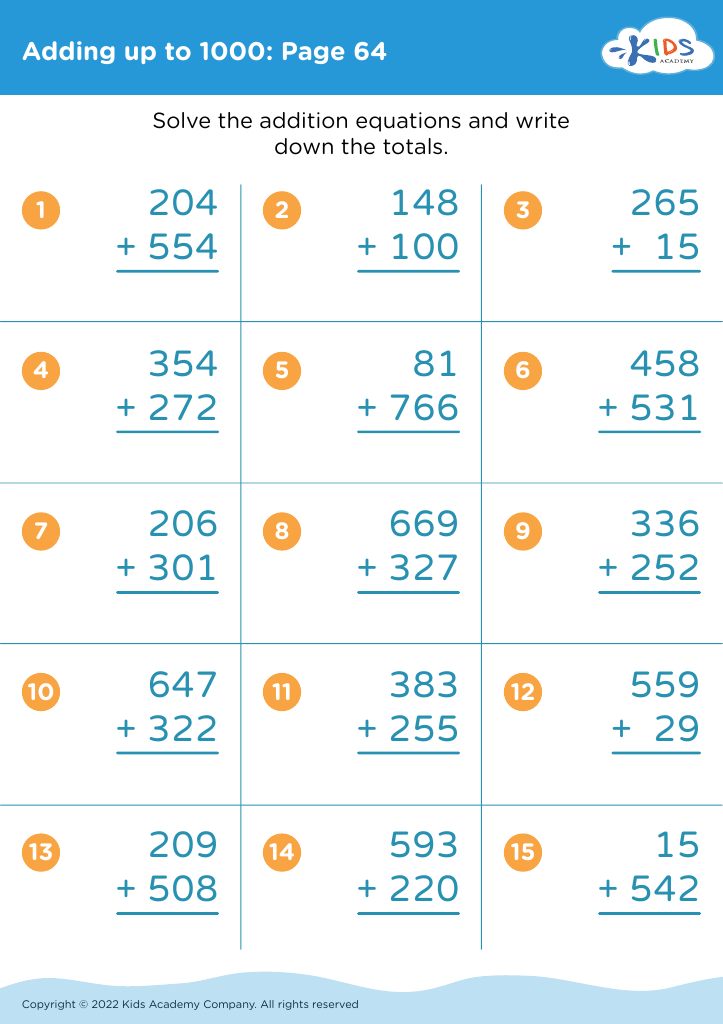
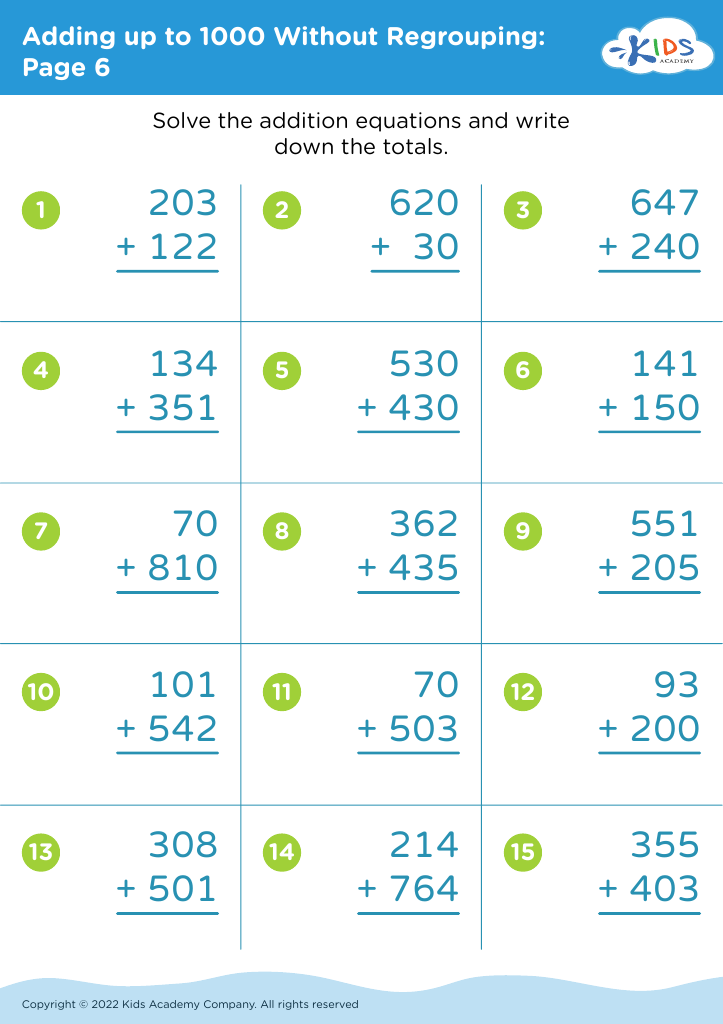
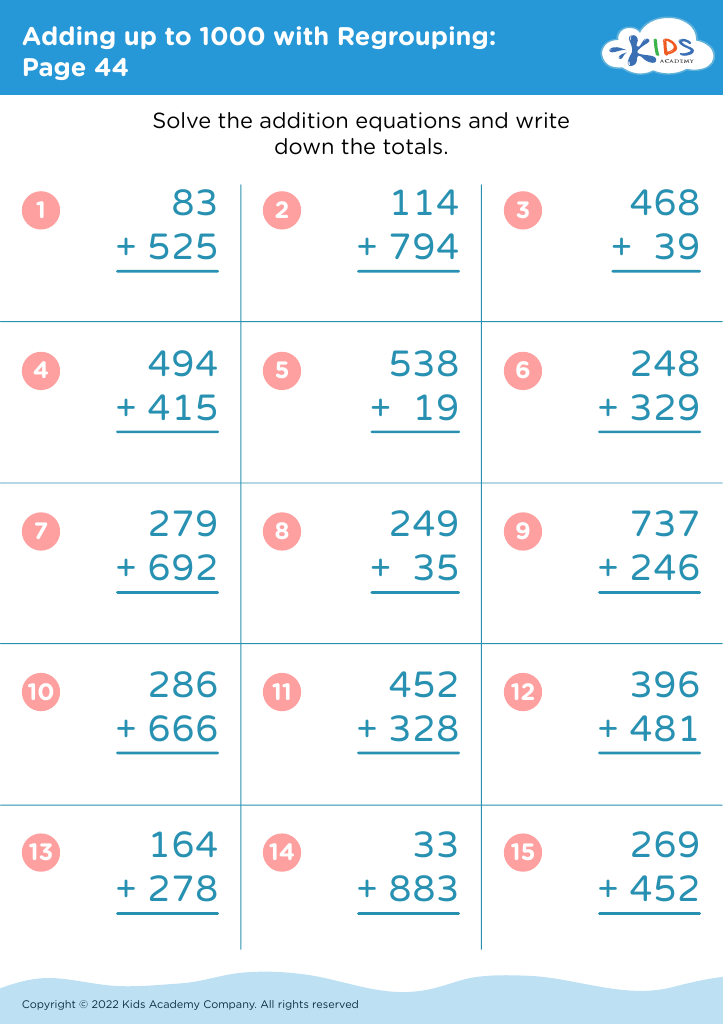



Understanding sequencing, particularly when adding up to 1000, is crucial for both parents and teachers as it lays the foundation for students’ arithmetic skills and problem-solving abilities. It involves recognizing the order in which numbers combine, facilitating easier calculations and enhancing mental math skills. When students grasp sequencing, they can sequentially approach addition problems, making the process more systematic and manageable.
Moreover, learning to add up to 1000 encourages students to develop their number sense and to visualize their calculations. This numerical fluency empowers them to tackle more complex problems in higher grades, helping them develop confidence in their mathematical abilities.
Additionally, as students engage in sequenced addition, they cultivate critical thinking and logical reasoning. These skills are not only applicable in mathematics but also extend to various real-life contexts, fostering overall cognitive development.
Lastly, paying attention to sequencing can help identify students who may struggle with basic concepts, allowing early intervention and tailored support. By encouraging sequencing in addition, parents and teachers equip students with essential skills that promote academic success and lifelong learning. Therefore, investing time and resources in understanding this concept ultimately benefits students' educational journeys and self-efficacy in math.








