Understanding symmetry Adding up to 1000 Worksheets
4 filtered results
-
From - To
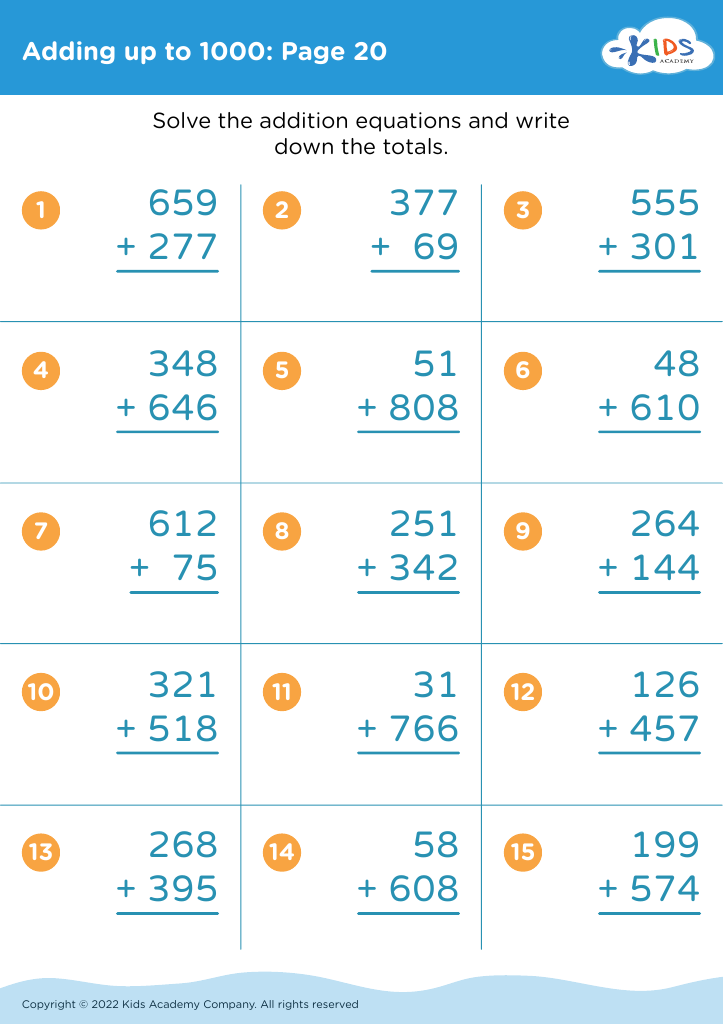
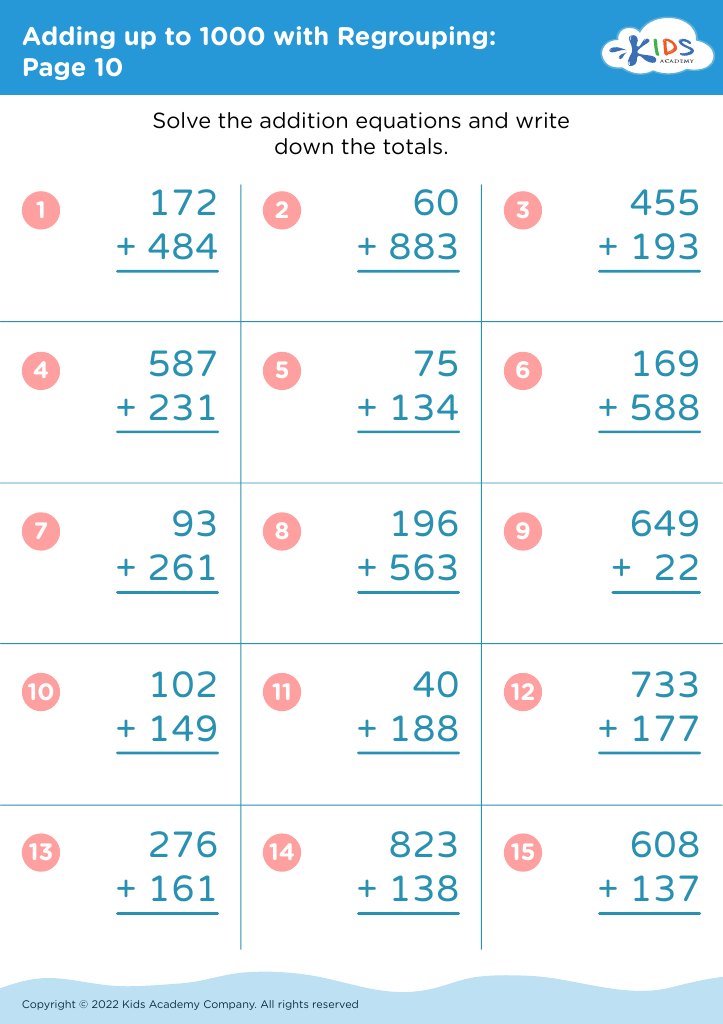
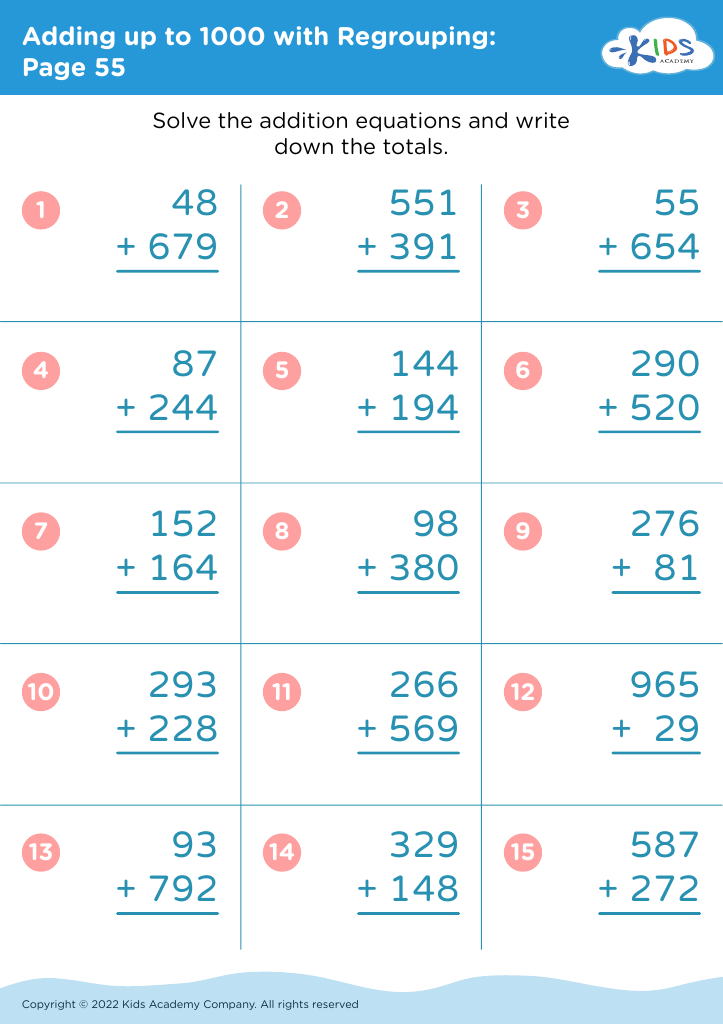
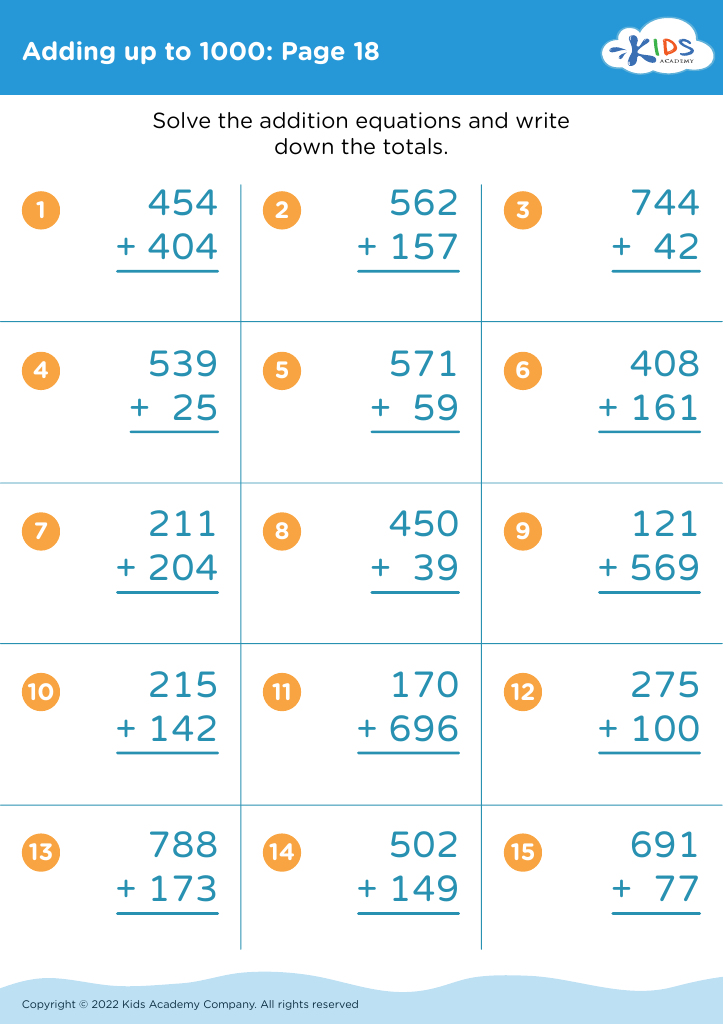
"Understanding Symmetry Adding Up to 1000 Worksheets" are specially designed to help young learners grasp essential mathematical concepts. These educational resources blend symmetry and addition practices, creating a fun and engaging way for children to improve their math skills. Each worksheet guides students through intriguing symmetry exercises and addition problems up to 1000, reinforcing critical thinking and problem-solving abilities. Perfect for individual practice or classroom use, these worksheets cater to different learning styles, making them an indispensable tool for teachers and parents looking to boost their child's confidence in math. Unlock your child's potential with these innovative and interactive resources!



Understanding symmetry and the ability to add numbers up to 1000 are foundational mathematical skills that foster cognitive development and problem-solving abilities in children.
Symmetry, the quality of being made up of exactly similar parts facing each other, is not only important in mathematics but also in everyday life. It's visually appealing and helps children recognize patterns and structures, which is crucial in fields ranging from art to engineering. Grasping symmetry aids in the development of spatial awareness, critical thinking, and the ability to recognize that shapes and objects can be divided and shared equally.
On the other hand, competency in adding numbers up to 1000 builds solid arithmetic fundamentals. This skill is essential for subsequent, more complex mathematical concepts such as multiplication, division, and algebra. Moreover, it's a practical life skill; for instance, understanding large numbers helps in managing money, time, or quantities in cooking recipes and during shopping.
For teachers and parents, cultivating these skills means not only adhering to curriculum requirements but also ensuring that children develop a balanced and comprehensive mathematical foundation. Early competence in these areas promotes confidence and removes the intimidation factor often associated with math, paving the way for academic success and a confident approach to real-life mathematical problems.








