Understanding time Adding up to 1000 Worksheets
3 filtered results
-
From - To
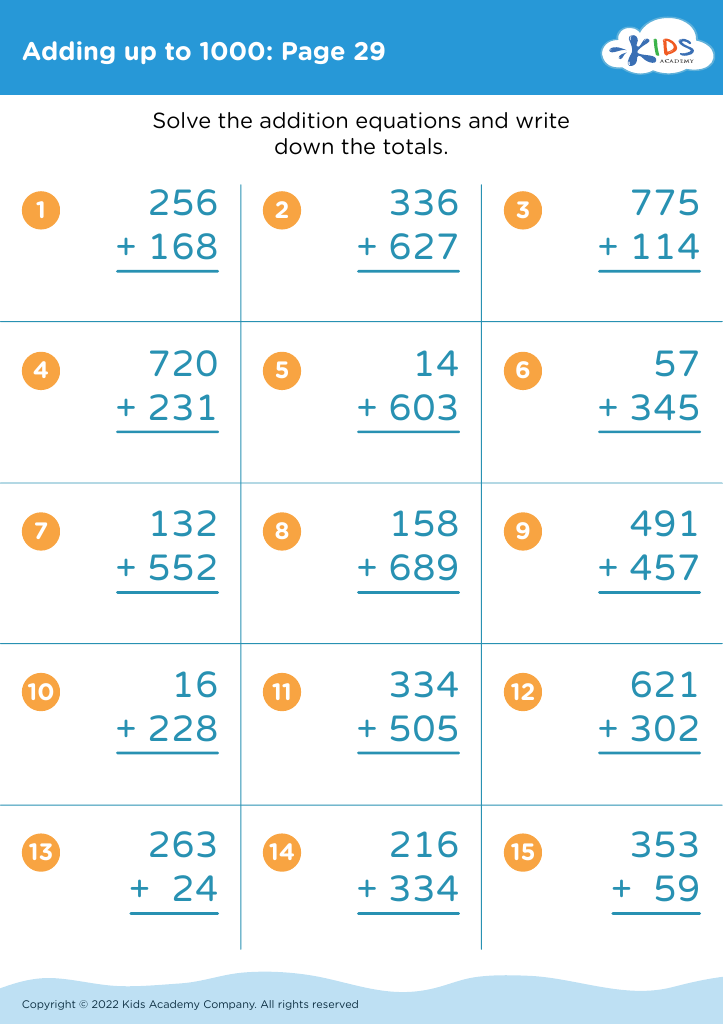
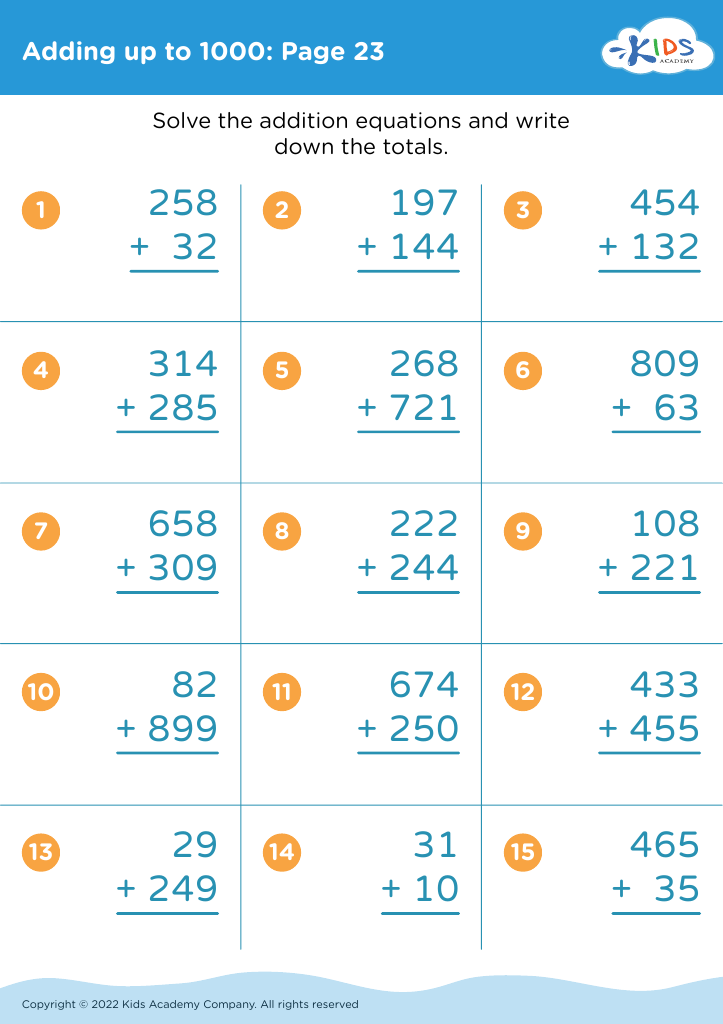
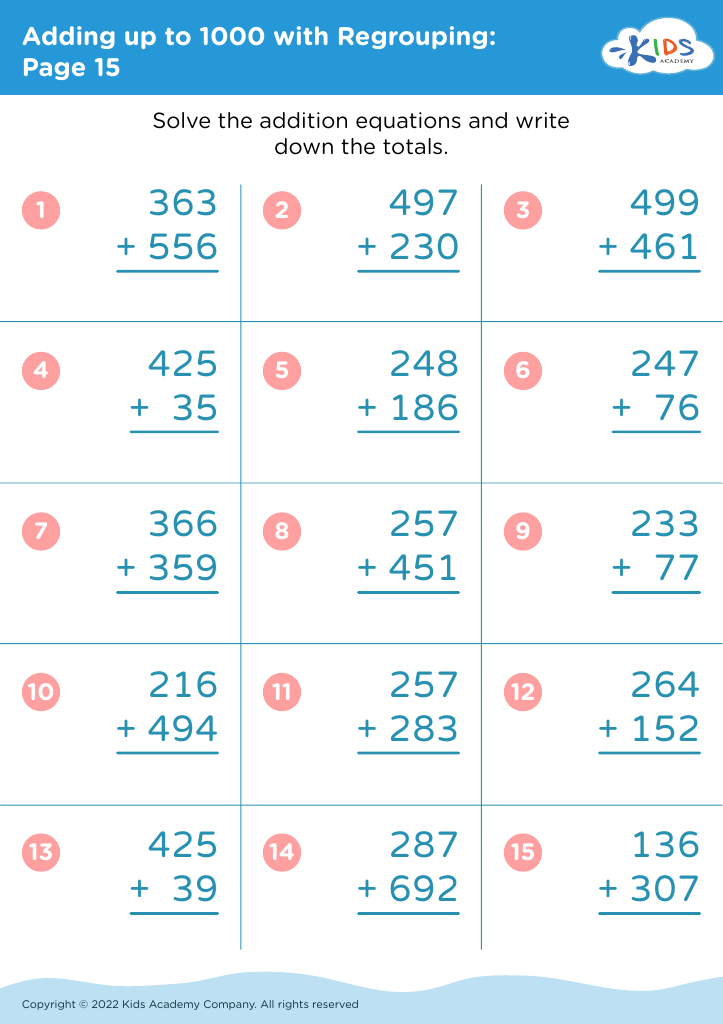
Dive into the world of time-telling and arithmetic with our "Understanding Time Adding up to 1000 Worksheets." Designed for young learners, these engaging and interactive worksheets help children master the fundamentals of time while enhancing their addition skills, specifically for sums up to 1000. Through colorful illustrations and practical exercises, kids will learn to read clocks, understand intervals, and perform addition operations confidently. Perfect for both classroom and home use, our worksheets make learning time fun and rewarding, ensuring students grasp these essential math concepts with ease. Unlock your child's potential today with our expertly crafted resources.



Understanding how to add numbers up to 1000 develops children's foundational math skills, critical for academic success and practical life. Firstly, this skill enhances numerical fluency and mental arithmetic, helping children make quick calculations. When kids master addition within this range, they build confidence, enabling them to tackle more complex mathematical concepts like multiplication, division, and algebra later on.
Moreover, clear comprehension of these skills is vital outside the classroom. For instance, if children go shopping with their parents, they can help in calculating costs and change, improving their understanding of money and value. This applicability ingrains a sense of practical utility of math in their everyday lives.
Teachers and parents play a crucial role in students’ early learning stages, providing the necessary encouragement and forming foundational habits. By reinforcing the significance of these numeracy skills, they demonstrate the importance of diligence and persistence. When children see adults valuing and practicing these soft skills, it underscores the relevance of education and work ethic.
Lastly, understanding addition up to 1000 cultivates logical thinking and problem-solving abilities. These skills are beneficial not just academically but are lifelong assets that help children navigate various situations effectively. Supporting children in mastering these concepts is a crucial investment in their overall growth and future success.








