Visual interpretation Adding up to 1000 Worksheets
3 filtered results
-
From - To
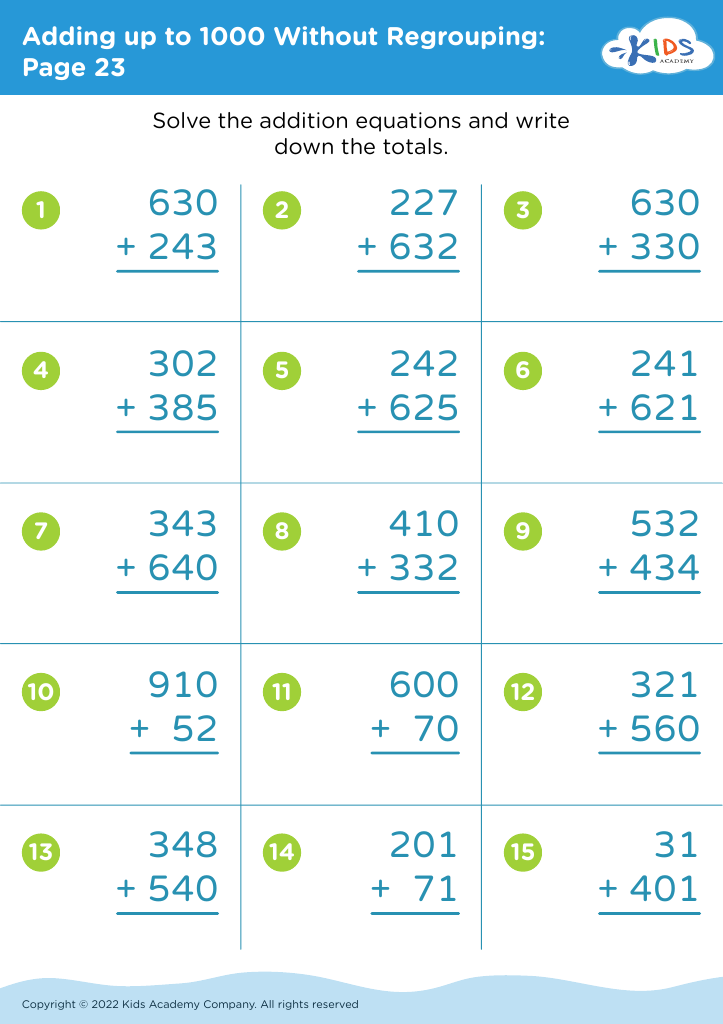
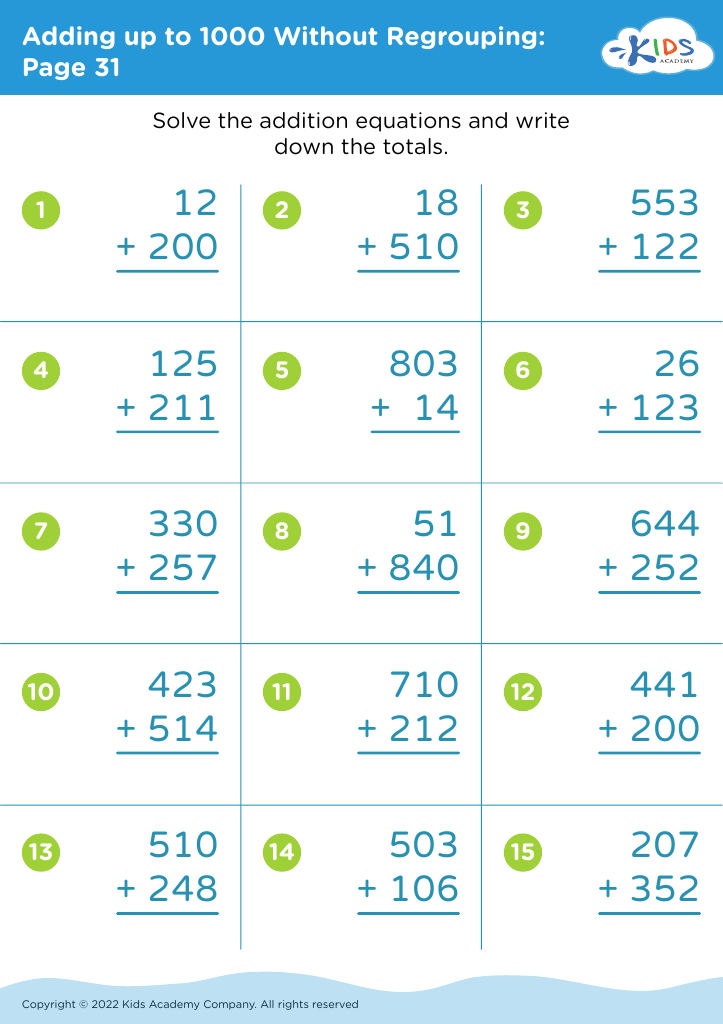
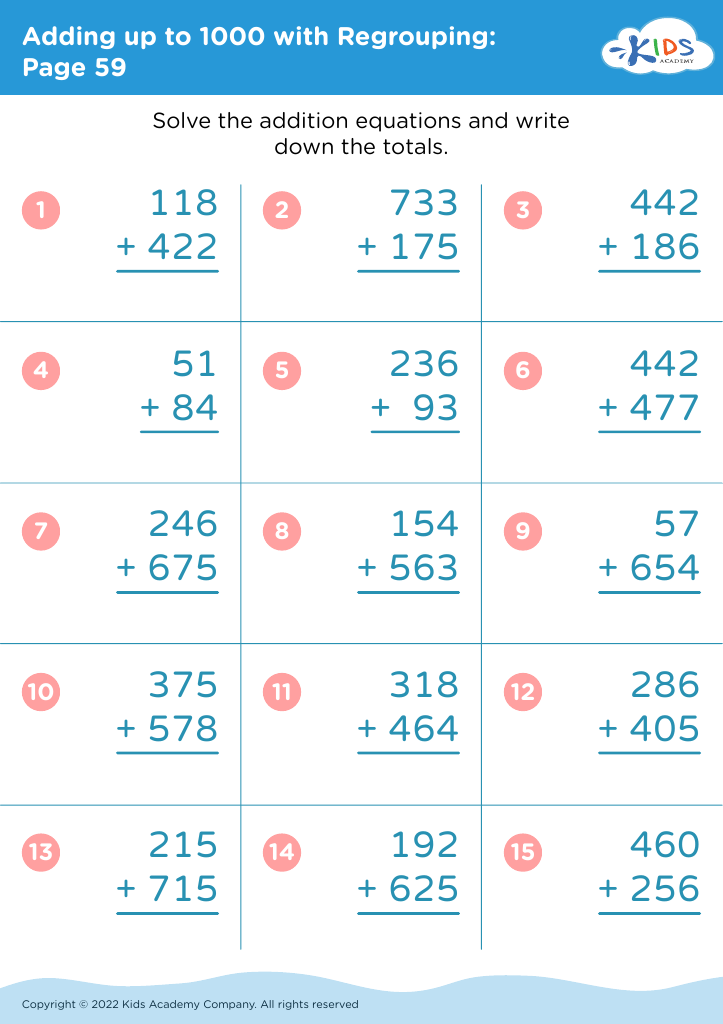
Unlock your child's mathematical potential with our "Visual Interpretation Adding up to 1000 Worksheets." Designed for early learners, these worksheets encourage the understanding of addition through engaging visuals and practical scenarios. Young students will practice adding numbers up to 1000 while developing critical thinking and problem-solving skills. Each worksheet is crafted to foster a strong numeric foundation, using pictures and diagrams to enhance comprehension. Ideal for classroom activities or home practice, these resources promote a fun and interactive approach to math. Dive into our comprehensive collection and watch your child build confidence in their addition abilities!



Visual interpretation is a crucial skill that enhances a child's overall learning experience and engagement in the classroom. For parents and teachers, understanding and promoting this skill can significantly impact a child's academic performance and social development.
Visual interpretation allows students to process and understand information presented in various formats, from charts and graphs to diagrams and images. This ability is essential in an increasingly visual world, where information is often conveyed through visuals rather than just text. By nurturing visual interpretation skills, adults can help children become better critical thinkers and problem solvers.
Furthermore, effective visual interpretation can boost students' confidence and motivation. As they become adept at interpreting visual data, they will engage more meaningfully with content, leading to increased participation and enthusiasm in learning activities.
Parents and teachers should work collaboratively to include visual materials in lessons and foster discussions around those visuals. This collaboration not only reinforces visual learning but also builds strong bonding over shared educational experiences. Encouraging a focus on visual interpretation enables students to develop essential skills needed in both academic settings and real-world applications, ultimately preparing them for future challenges and opportunities in a visually oriented society.








