Filters

244 filtered results

Clear all filters
Favorites
With answer key
Interactive

244 filtered results

Difficulty Level

Grade


Check out this FREE Trial Lesson on Adding Up to 5!

Match Exactly the Same

Favorites
With answer key
Interactive
  • Basic Addition Skills
  • Adding Up to 5
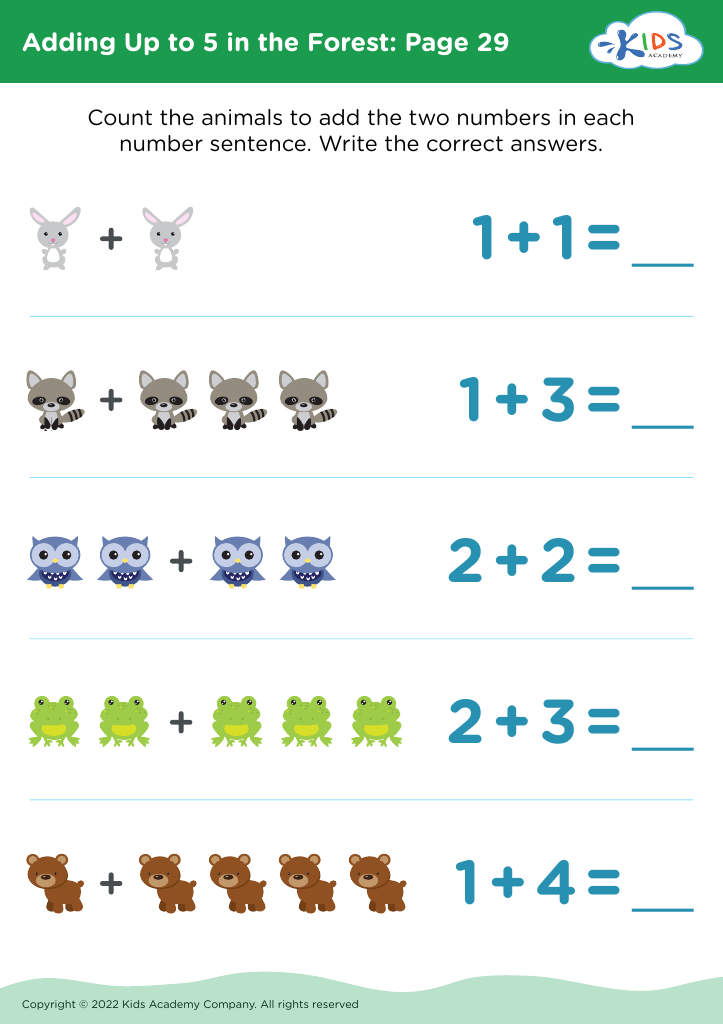
Adding Up to 5 in the Forest: Page 29
Worksheet
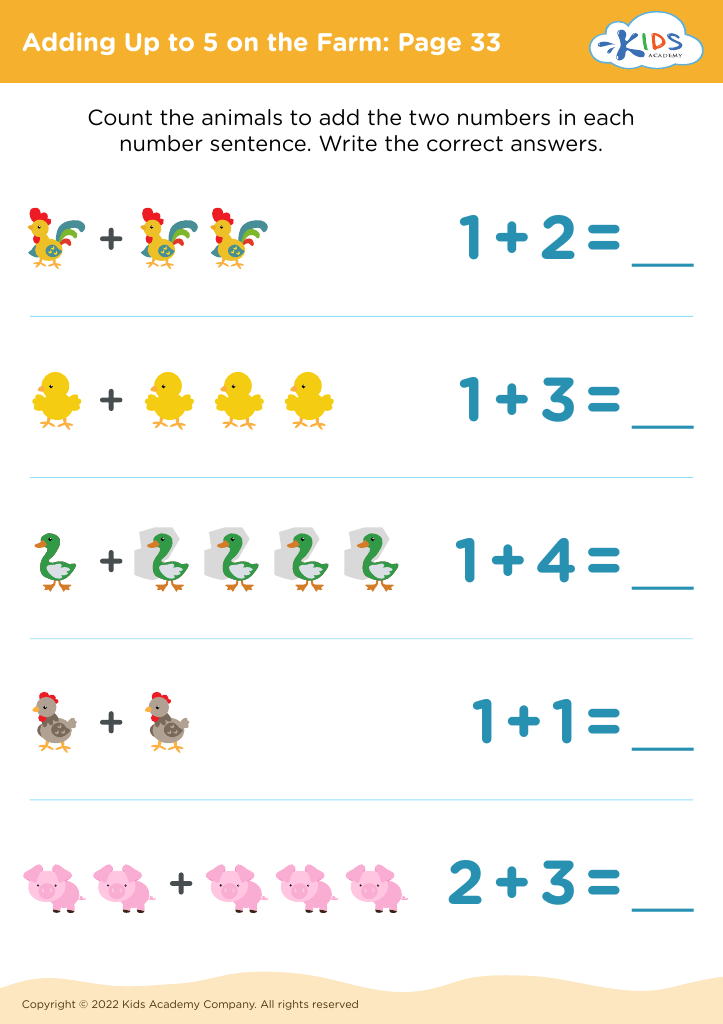
Adding Up to 5 on the Farm: Page 33
Worksheet
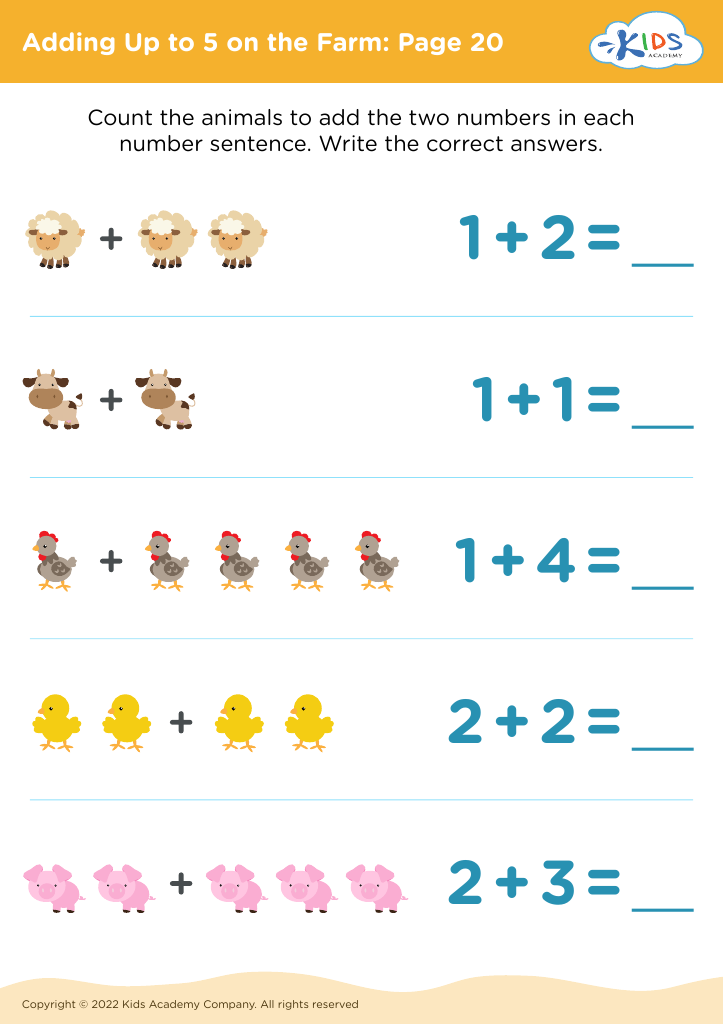
Adding Up to 5 on the Farm: Page 20
Worksheet
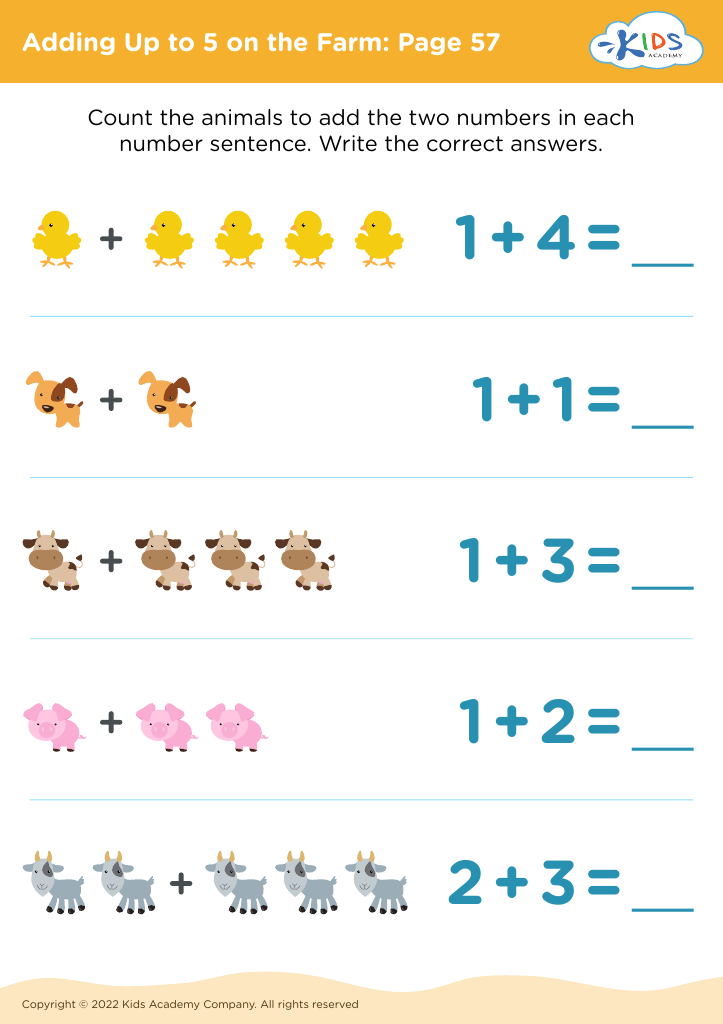
Adding Up to 5 on the Farm: Page 57
Worksheet
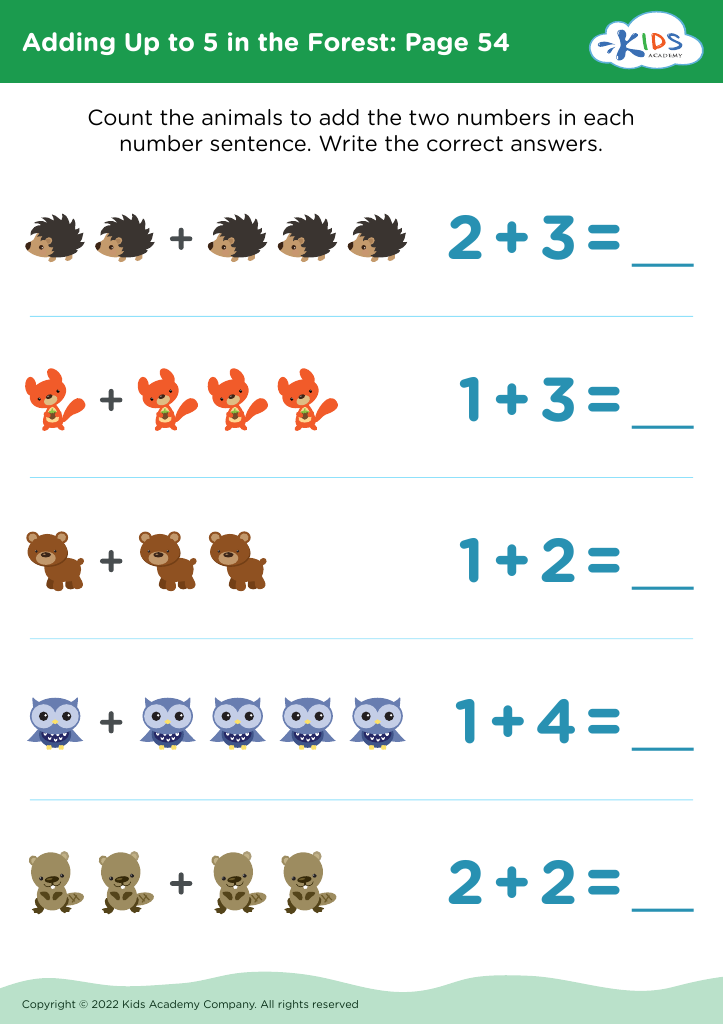
Adding Up to 5 in the Forest: Page 54
Worksheet
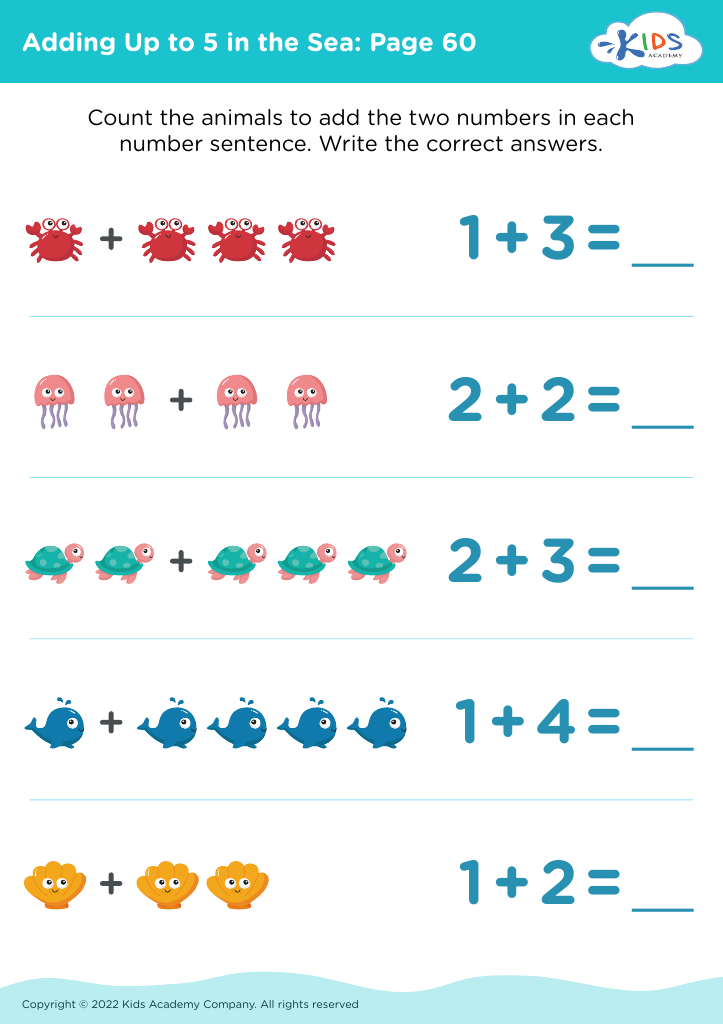
Adding Up to 5 in the Sea: Page 60
Worksheet
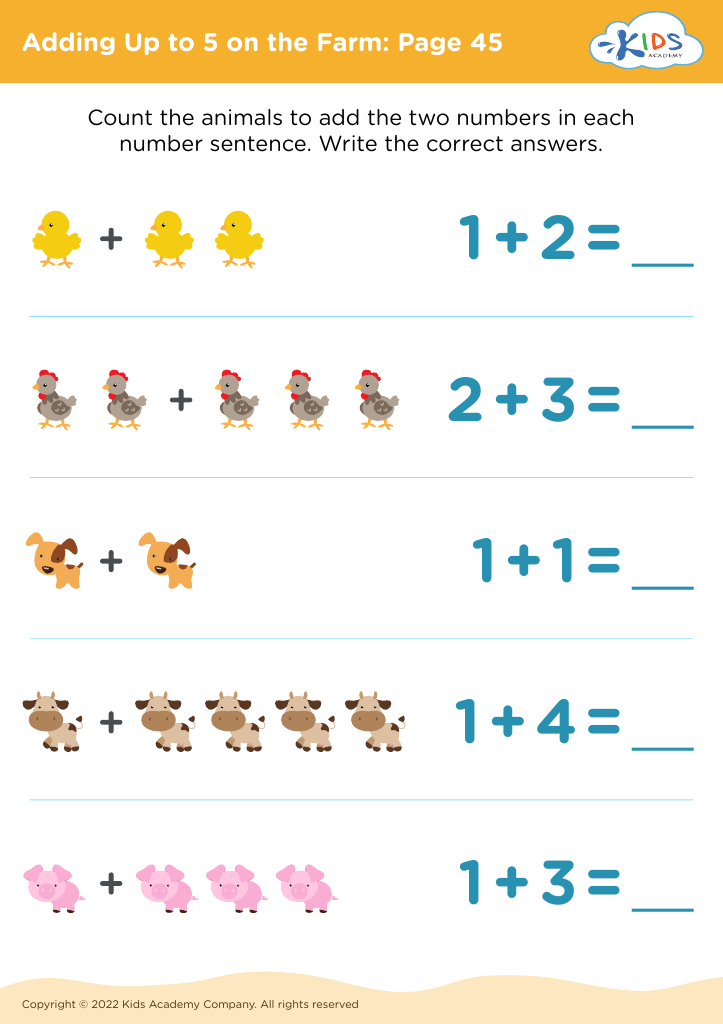
Adding Up to 5 on the Farm: Page 45
Worksheet
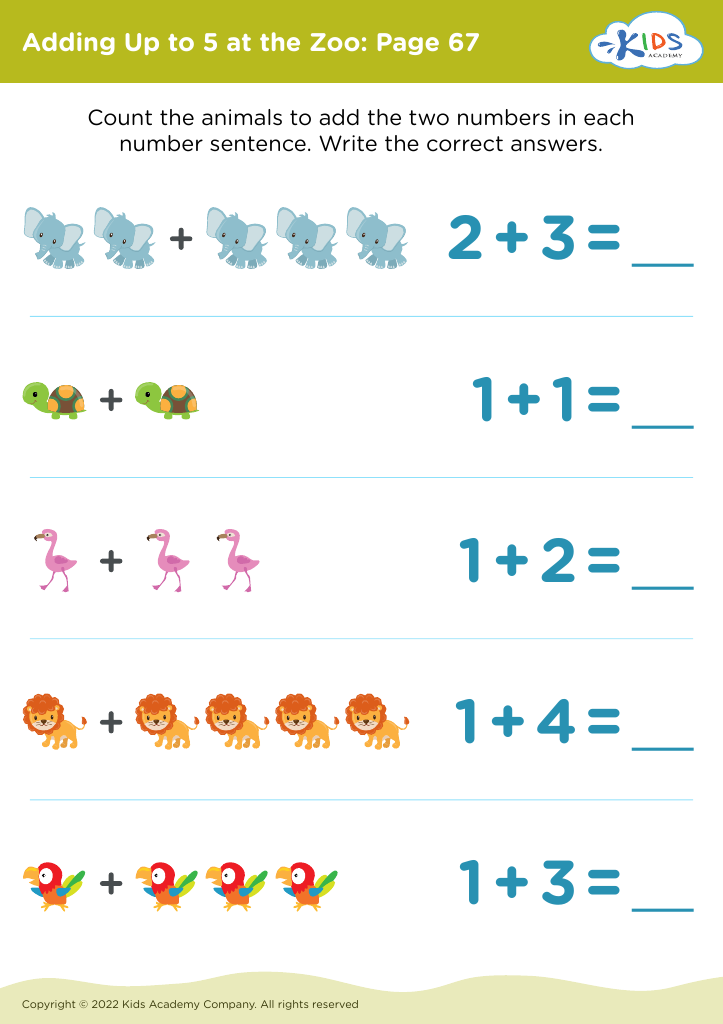
Adding Up to 5 at the Zoo: Page 67
Worksheet
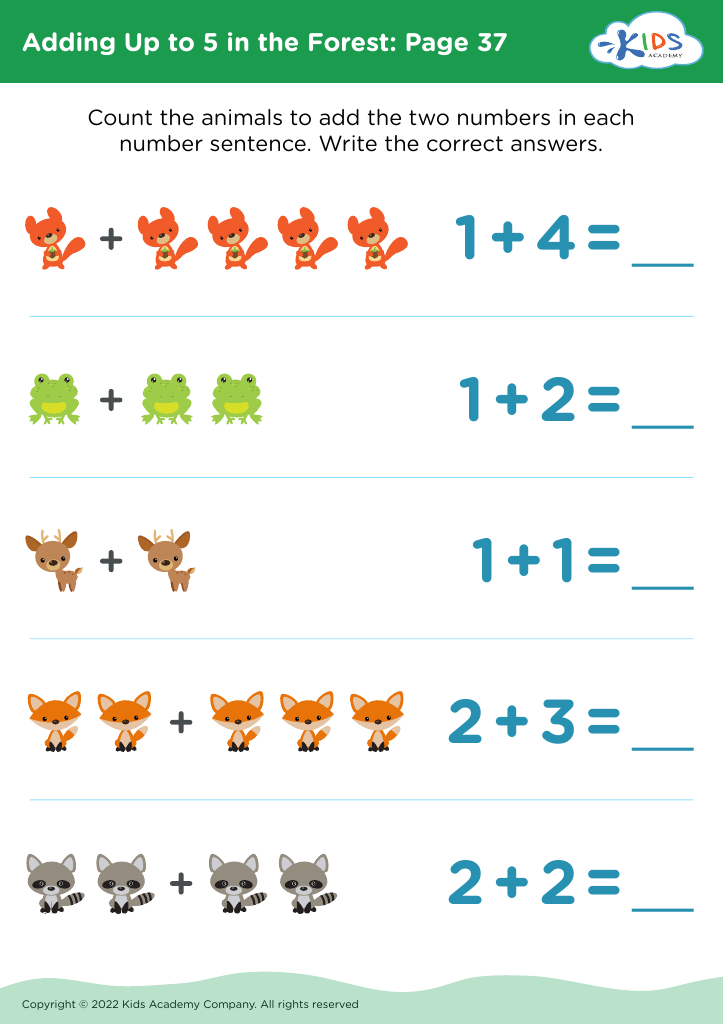
Adding Up to 5 in the Forest: Page 37
Worksheet
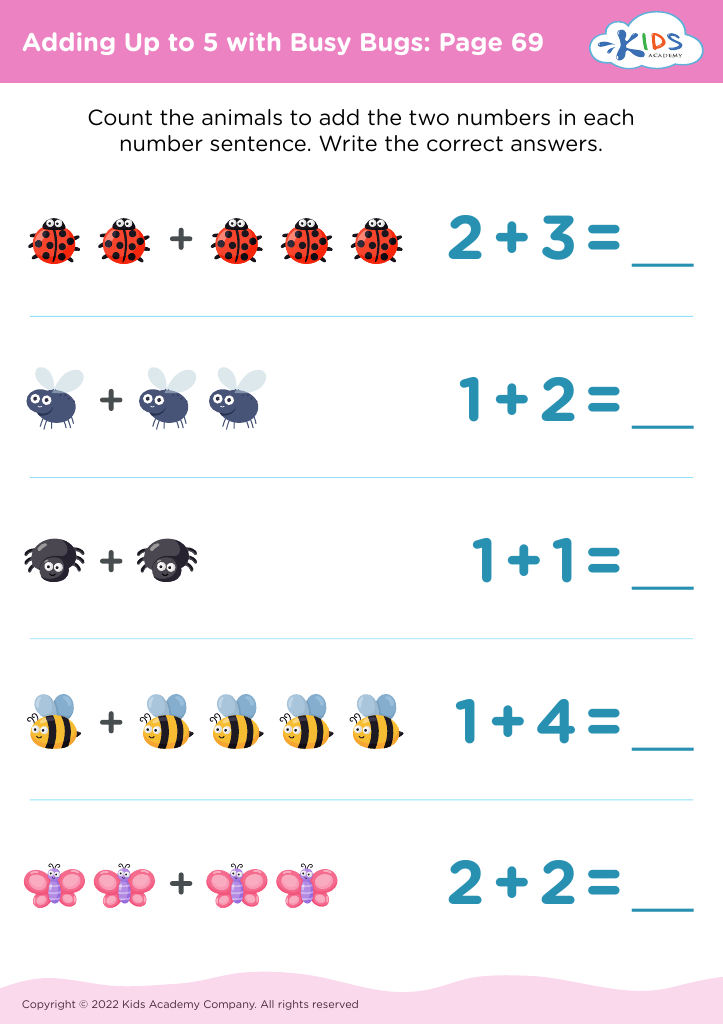
Adding Up to 5 with Busy Bugs: Page 69
Worksheet
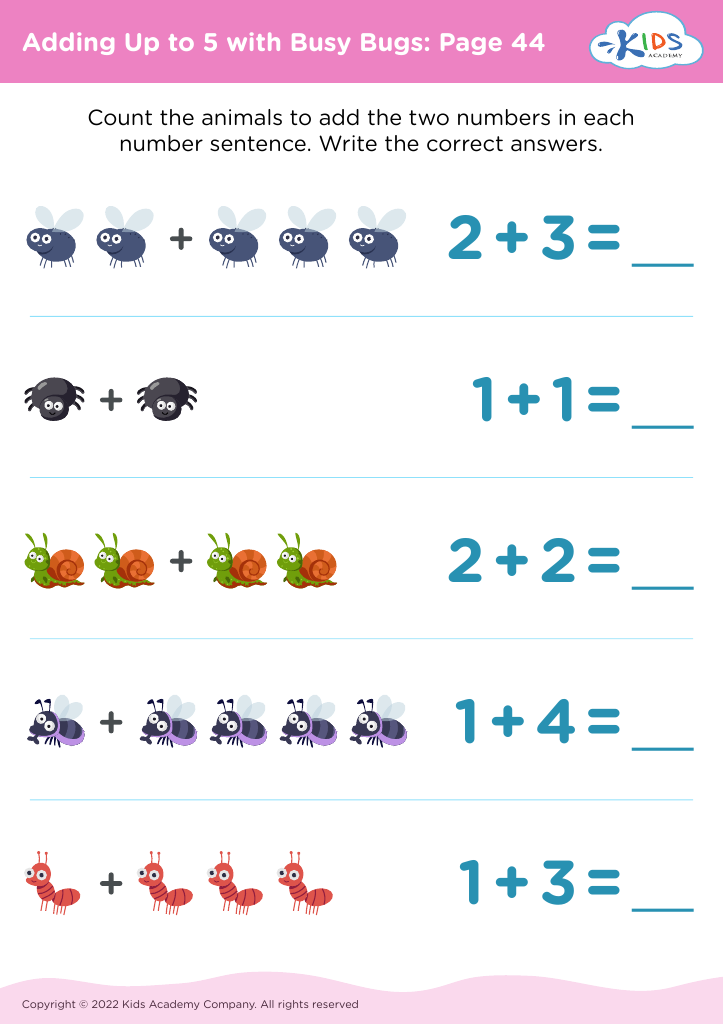
Adding Up to 5 with Busy Bugs: Page 44
Worksheet
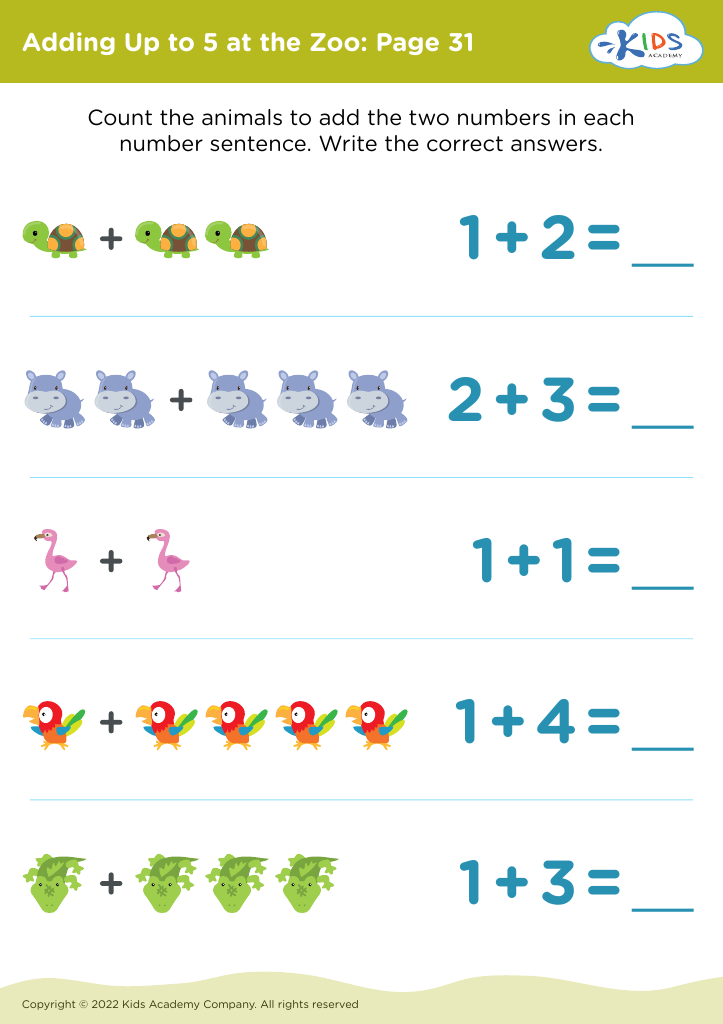
Adding Up to 5 at the Zoo: Page 31
Worksheet
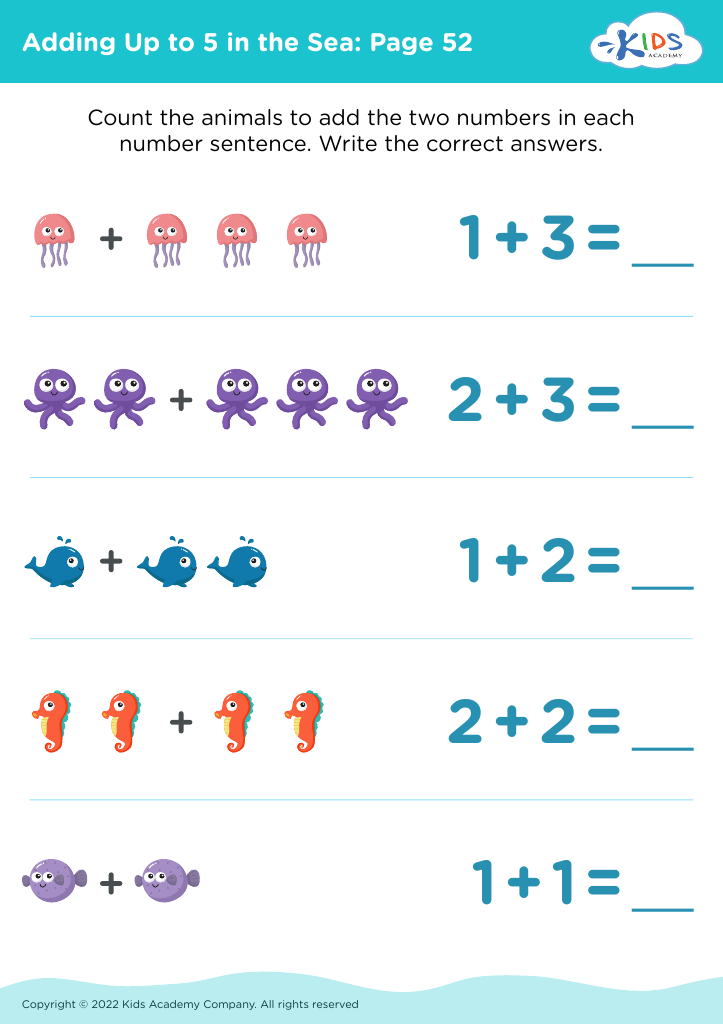
Adding Up to 5 in the Sea: Page 52
Worksheet
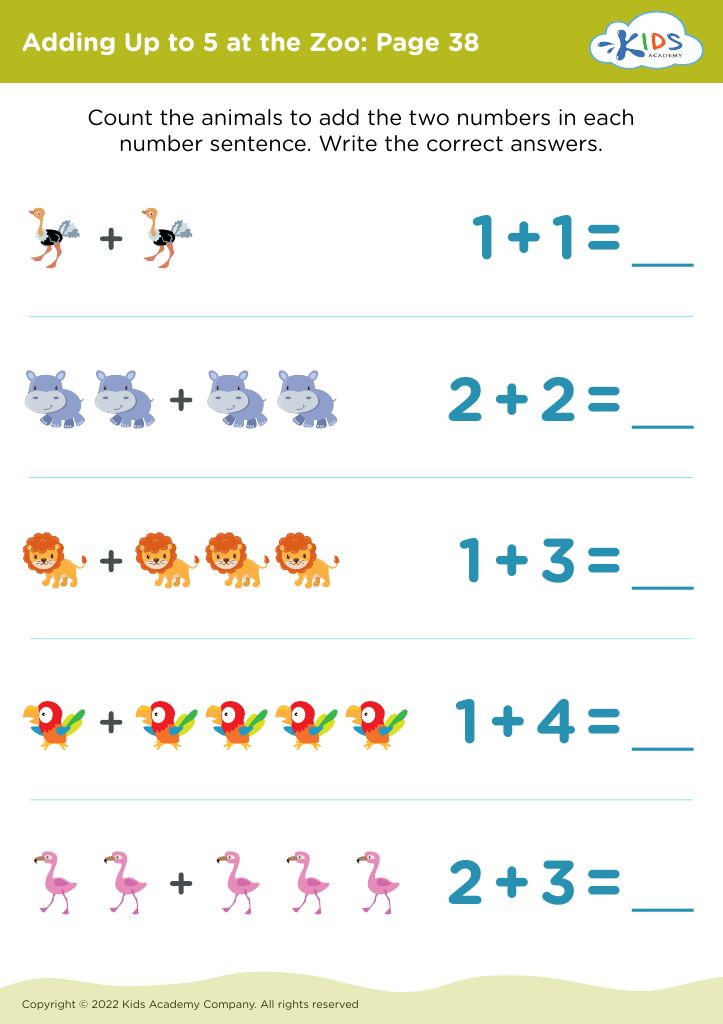
Adding Up to 5 at the Zoo: Page 38
Worksheet
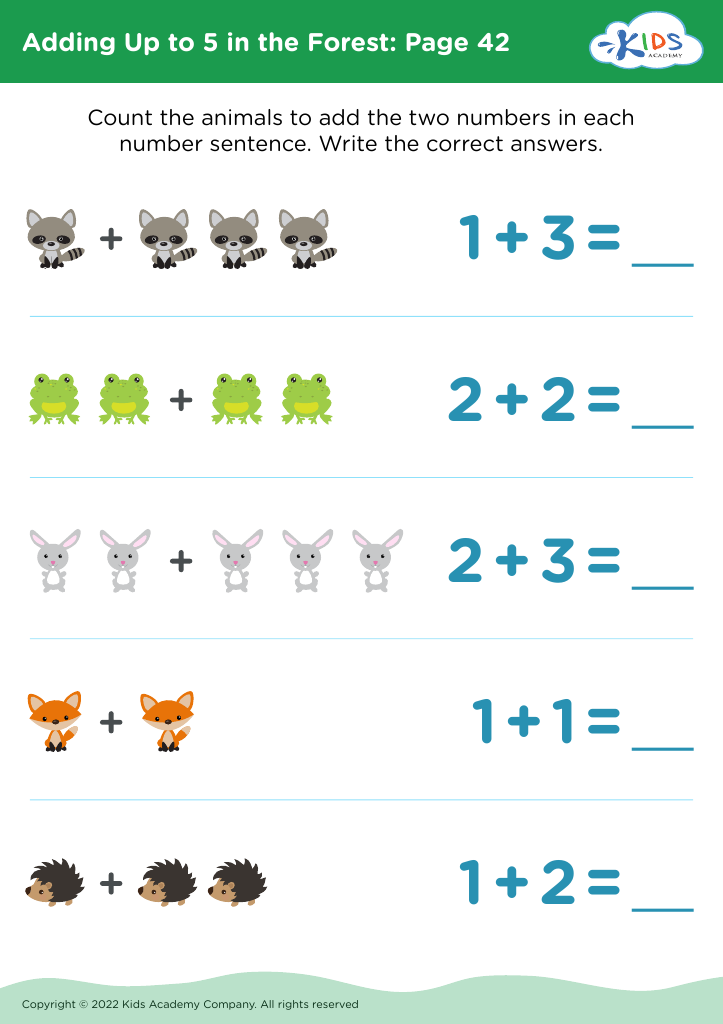
Adding Up to 5 in the Forest: Page 42
Worksheet
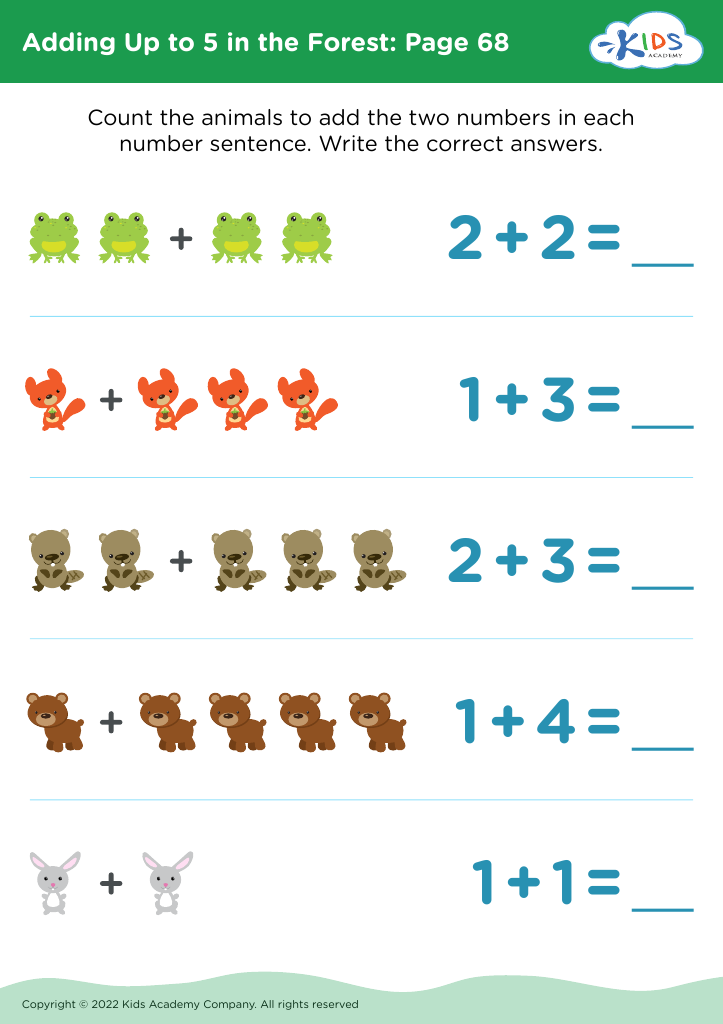
Adding Up to 5 in the Forest: Page 68
Worksheet
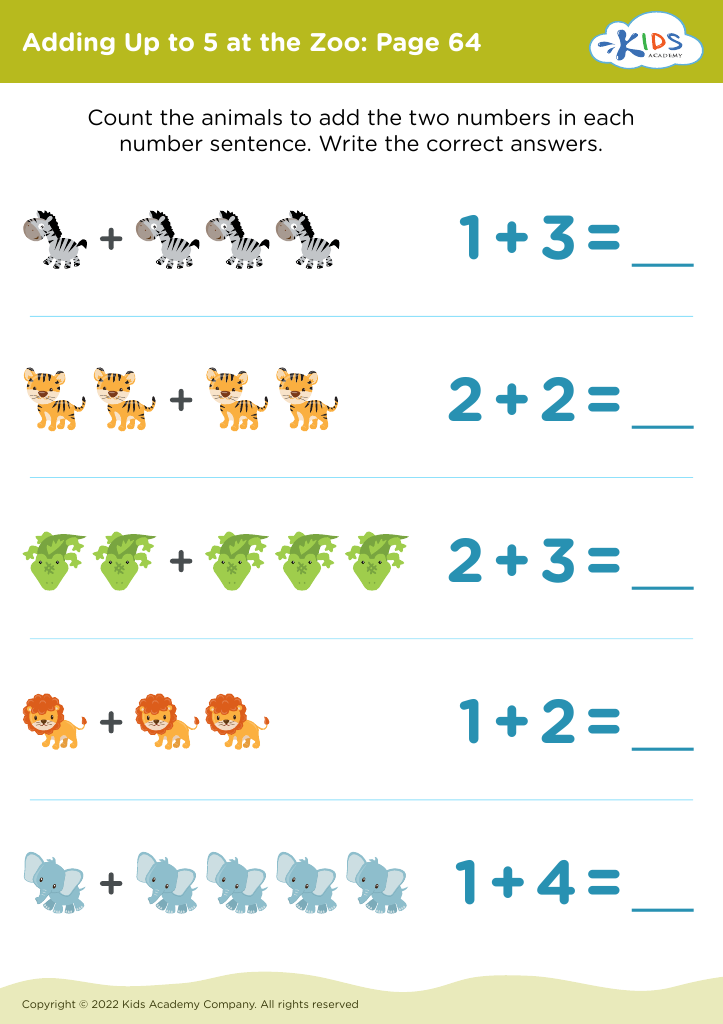
Adding Up to 5 at the Zoo: Page 64
Worksheet
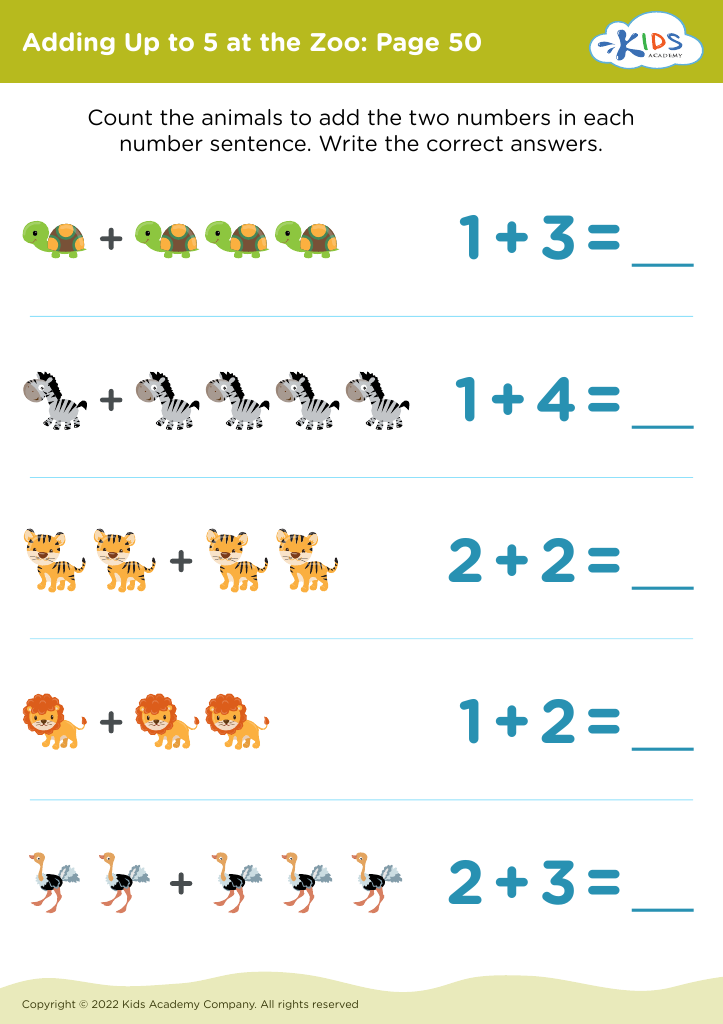
Adding Up to 5 at the Zoo: Page 50
Worksheet
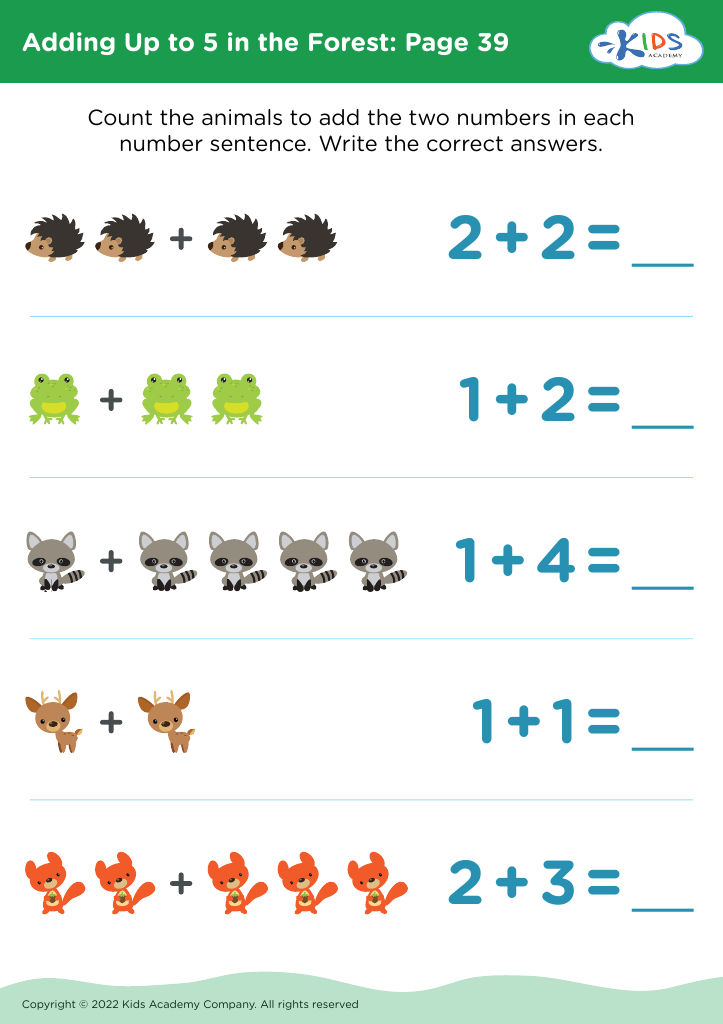
Adding Up to 5 in the Forest: Page 39
Worksheet
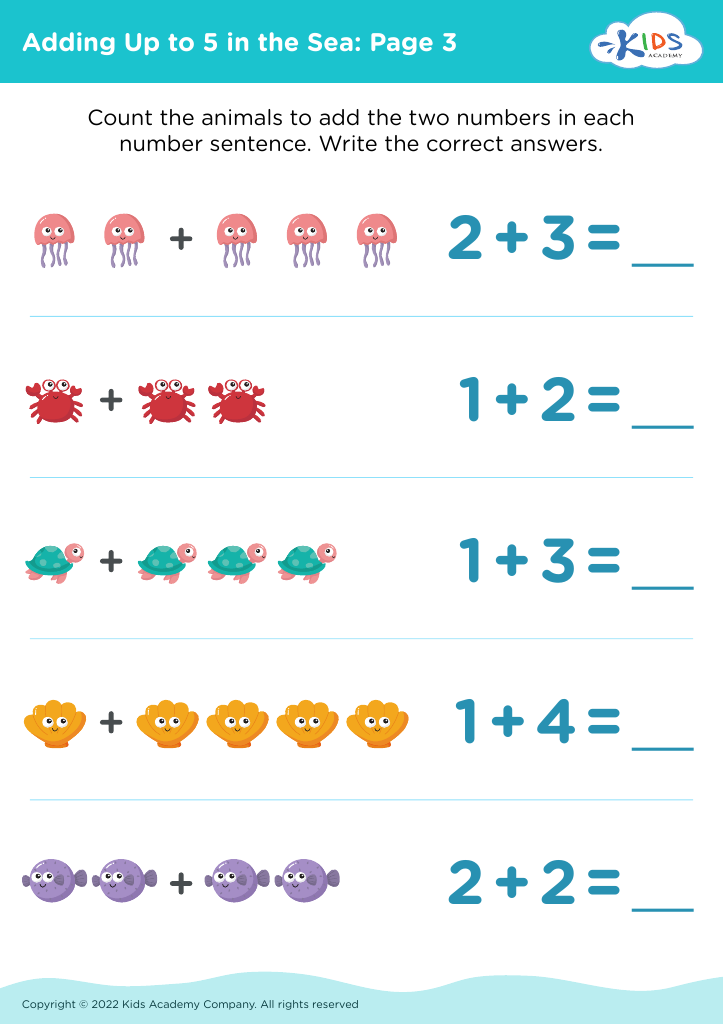
Adding Up to 5 in the Sea: Page 3

Adding Up to 5 in the Sea: Page 3

Adding Up to 5 in the Sea: Page 3
Worksheet
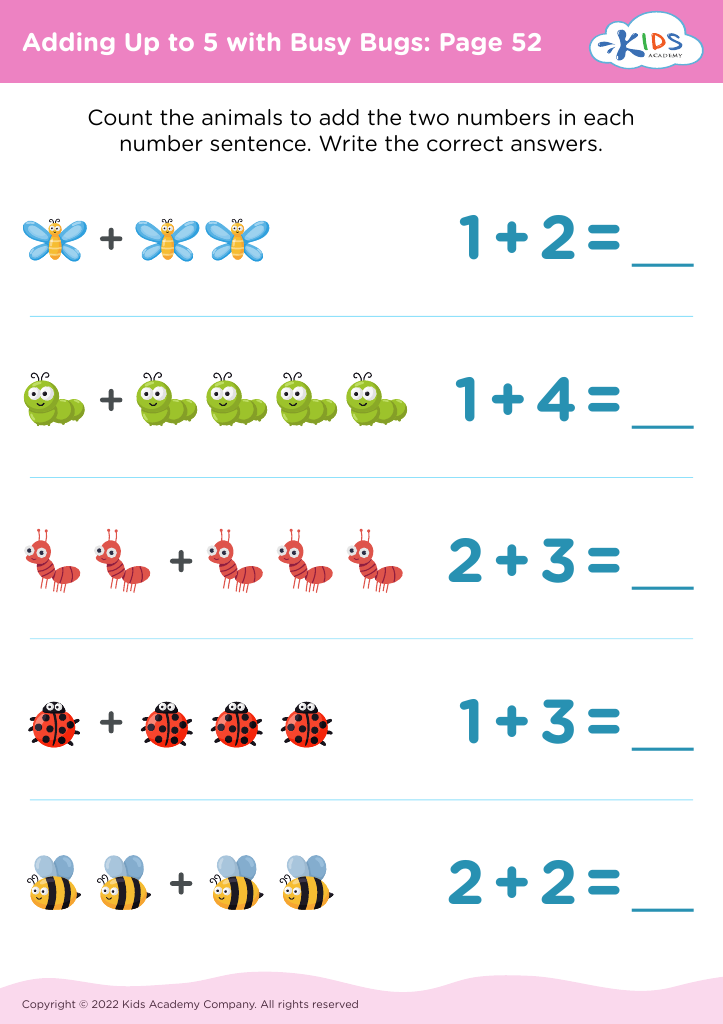
Adding Up to 5 with Busy Bugs: Page 52
Worksheet
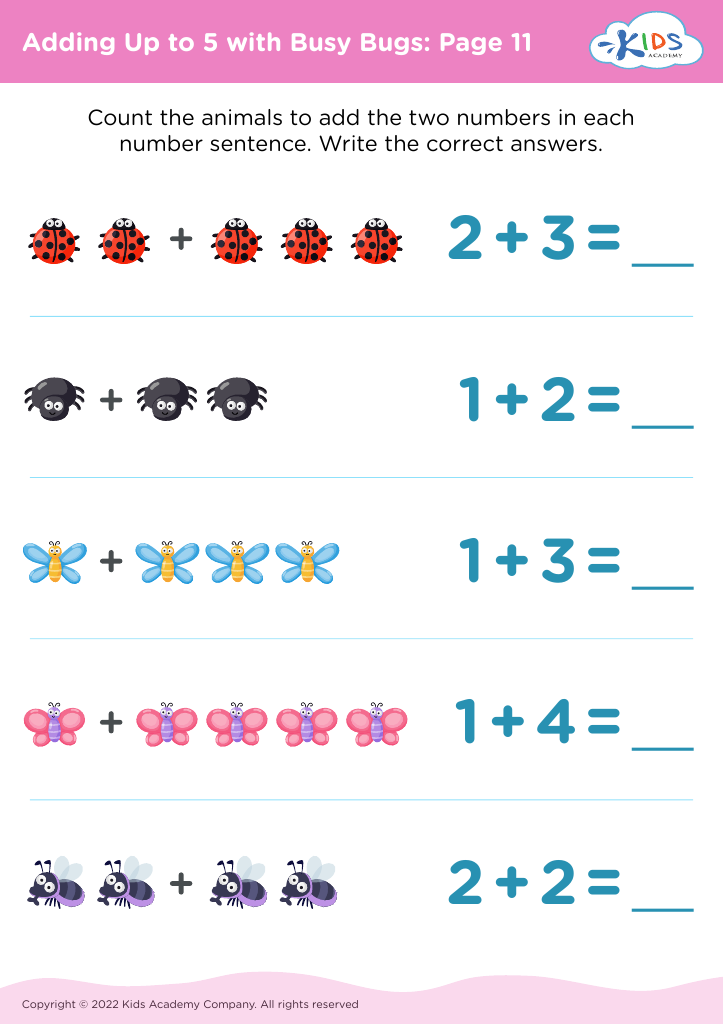
Adding Up to 5 with Busy Bugs: Page 11
Worksheet
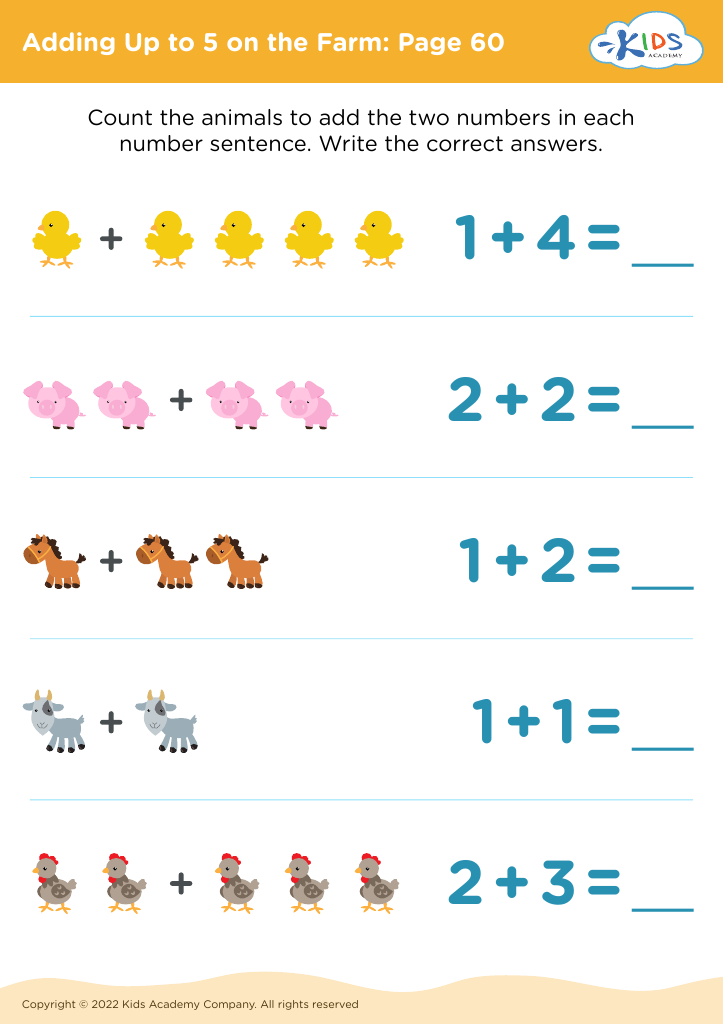
Adding Up to 5 on the Farm: Page 60
Worksheet
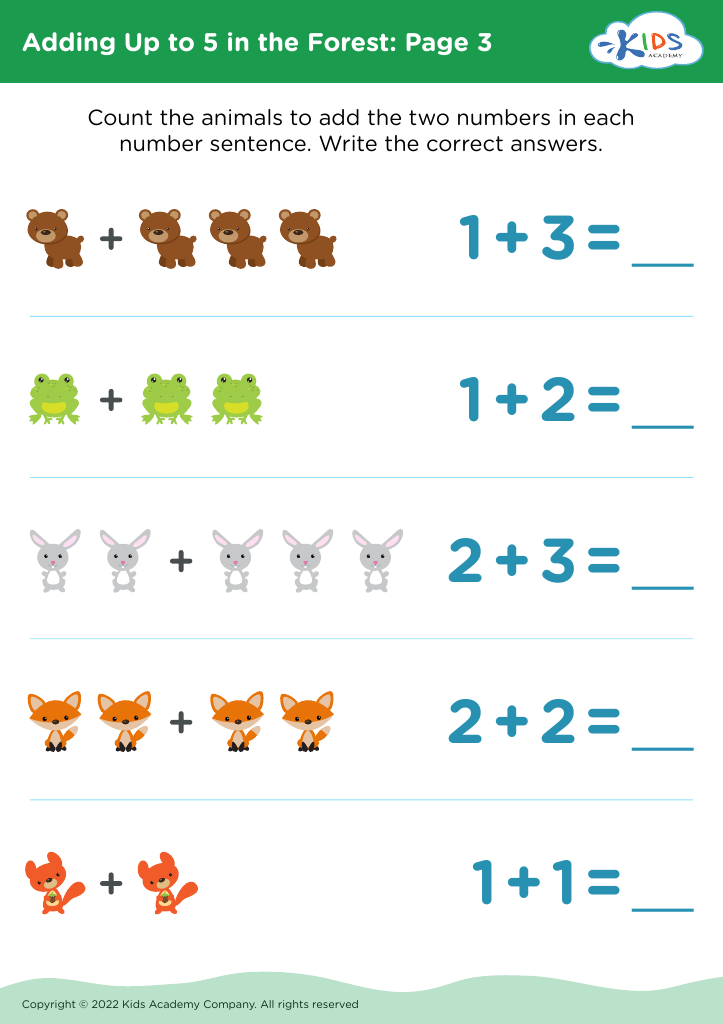
Adding Up to 5 in the Forest: Page 3
Worksheet


Basic addition skills, particularly the ability to add numbers up to 5, are foundational for young learners. Parents and teachers should be concerned about these skills because they are crucial for a child’s overall mathematical development and confidence. Mastering addition within this range builds a strong base for future mathematical concepts such as subtraction, multiplication, and problem-solving.

Early introduction to addition helps children develop number sense and understand the relationships between quantities. It also enhances their logical thinking skills, enabling them to make connections between mathematics and real-world situations. Additionally, children who can confidently perform basic addition often experience greater self-esteem in their academic abilities, making them more likely to engage in learning.

Moreover, mastering basic addition aids in the development of critical life skills like budgeting, time management, and resource allocation. By fostering these skills at a young age, parents and teachers pave the way for success in future learning and everyday challenges. Encouraging regular practice and integrating addition into fun activities at home and in the classroom can reinforce these skills and cultivate a lifelong love for mathematics. In short, nurturing these basic skills forms the foundation for future academic success and daily life competency.