Fine Motor Skills (coloring) Adding Up to 5 Worksheets
3 filtered results
-
From - To
Boost your child's fine motor skills with our engaging "Fine Motor Skills (Coloring) Adding Up to 5 Worksheets"! These interactive worksheets seamlessly combine math practice with creative coloring activities. Designed for young learners, these worksheets not only help children grasp basic addition concepts involving numbers up to 5 but also enhance hand-eye coordination and dexterity. As kids color their way through fun designs and illustrations, they reinforce their understanding of numbers while developing essential fine motor abilities. Perfect for at-home learning or classroom use, our worksheets make math both educational and enjoyable. Get started today and watch your little ones thrive!
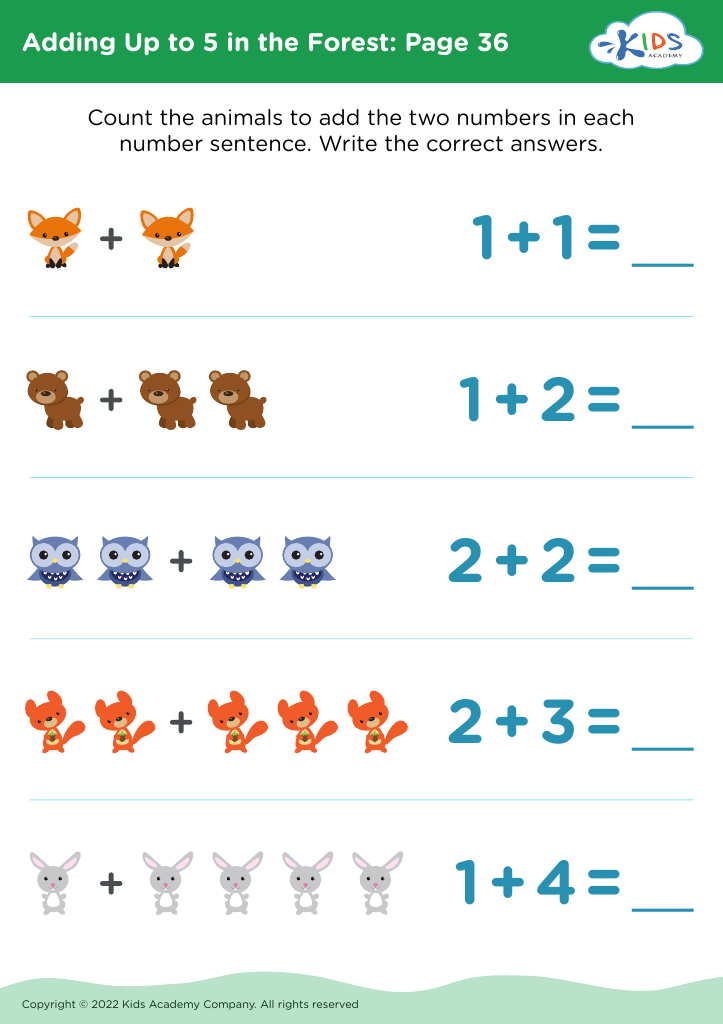
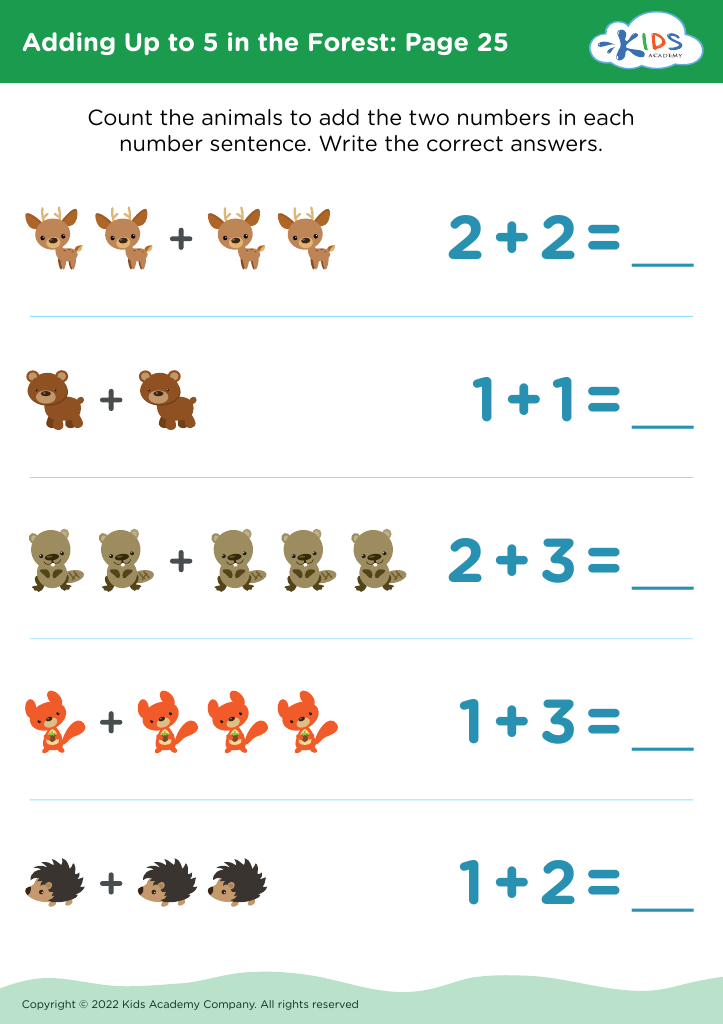
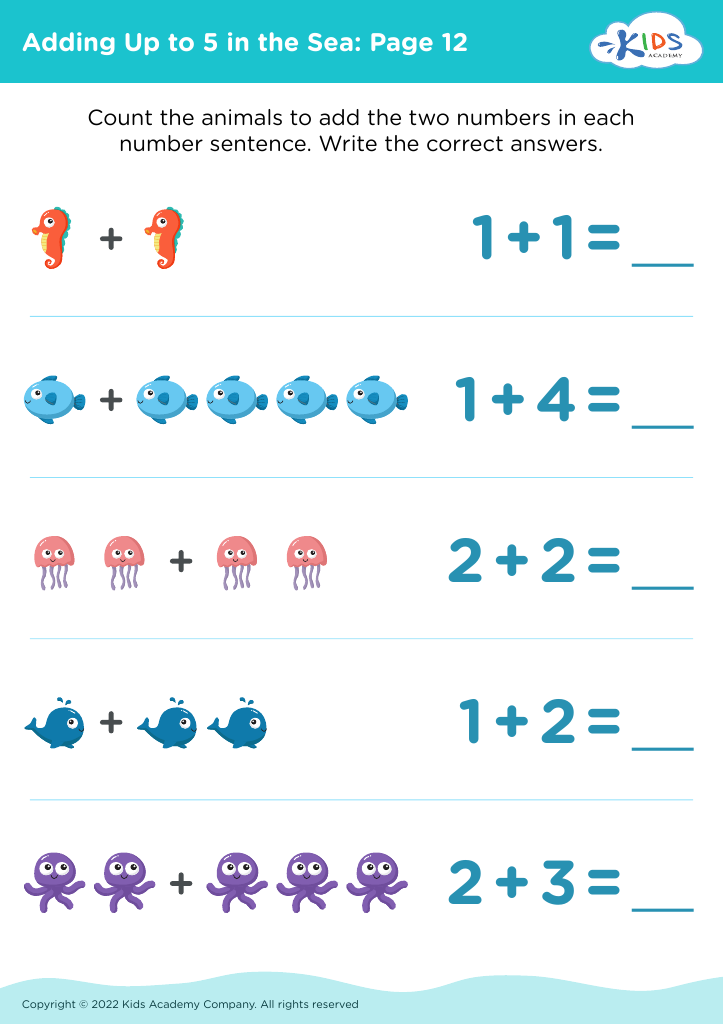







.jpg)
Fine motor skills, such as coloring, are crucial for young children as they lay the foundation for various academic and self-care tasks. Engaging in activities like coloring helps children develop hand-eye coordination, dexterity, and control over their hand movements. These skills enhance their ability to hold and manipulate writing tools, which is essential for effective handwriting and later academic success.
Moreover, coloring fosters creativity and self-expression while providing opportunities to practice following instructions, recognizing patterns, and using colors effectively. These activities also improve focus and concentration, essential traits for learning in an organized school setting.
Understanding how to add up to 5 is another critical concept for young learners. It forms the basis for fundamental mathematics and problem-solving skills. By introducing simple addition through engaging activities, children can relate math to everyday scenarios, making learning more meaningful and enjoyable.
By supporting the development of both fine motor skills and basic arithmetic, parents and teachers create a well-rounded educational experience that supports cognitive and physical growth. Together, these skills prepare children for future challenges in academic settings and daily life, fostering confident learners who are eager to engage with new concepts.








