Sea creatures identification Adding Up to 5 Worksheets
3 filtered results
-
From - To
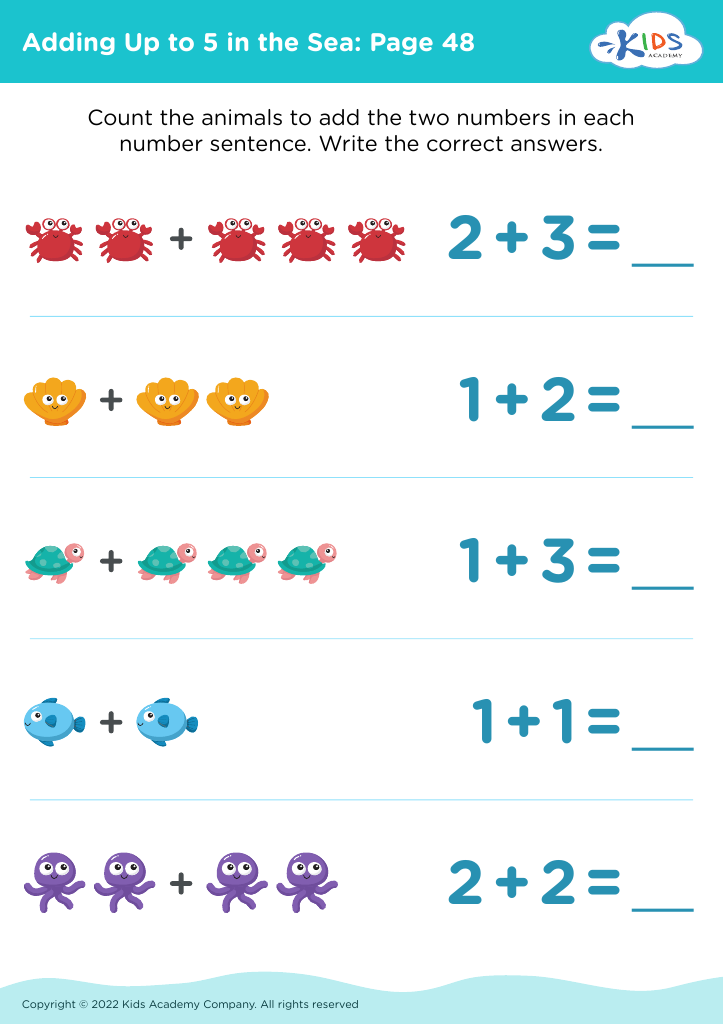
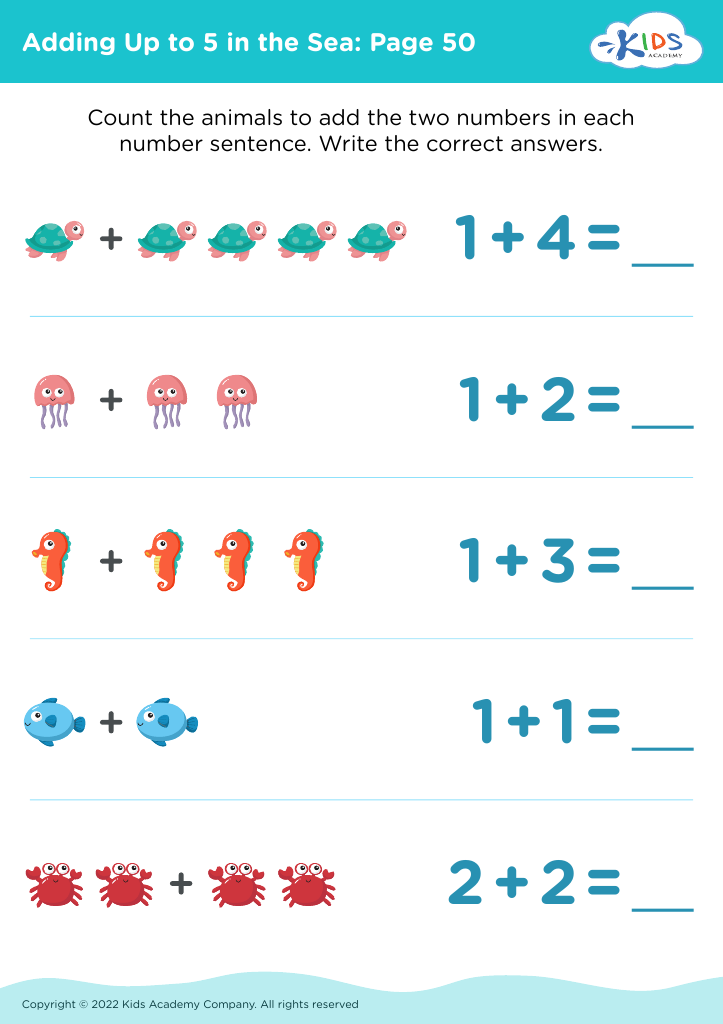
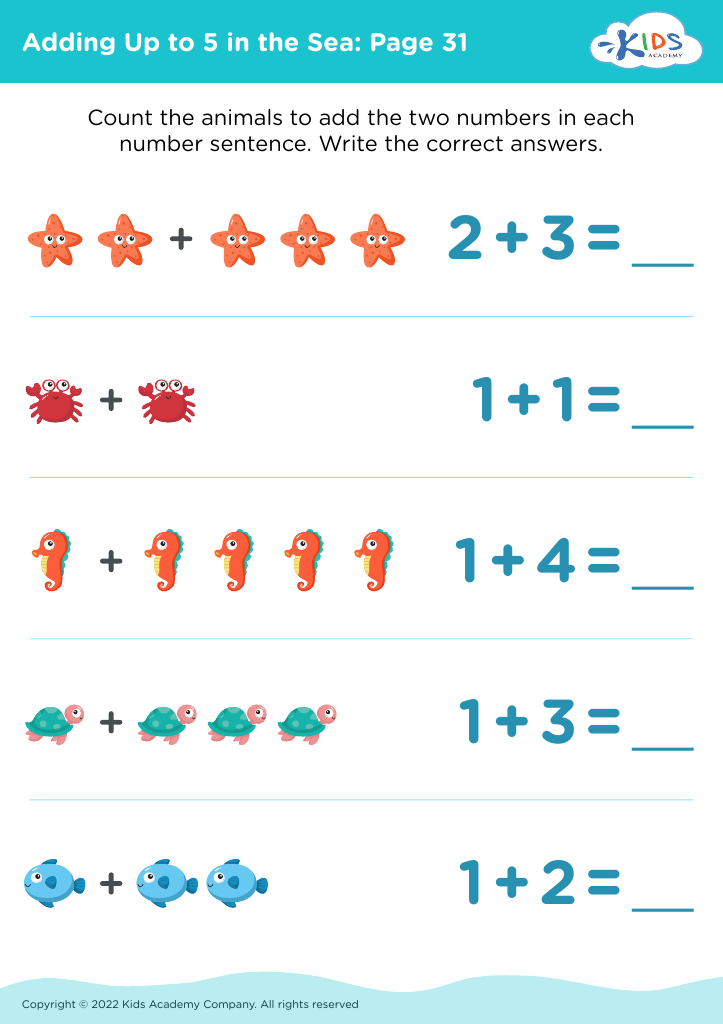
Welcome to our engaging "Sea Creatures Identification Adding Up to 5 Worksheets!" This set of interactive worksheets combines learning and fun, helping young learners identify various sea animals while practicing their addition skills. Each worksheet features vibrant illustrations of marine life, from fish to starfish, guiding children in recognizing and counting different sea creatures. Designed for early grade students, these activities promote visual learning and critical thinking. Perfect for the classroom or at home, our worksheets offer an exciting way to explore the ocean’s wonders while reinforcing essential math concepts. Dive in and make learning something to celebrate!








Parents and teachers should prioritize sea creature identification for several compelling reasons. Firstly, it fosters curiosity and awareness about our environment, instilling a sense of responsibility towards ocean conservation in young learners. Understanding marine life promotes respect for biodiversity and encourages children to appreciate the complex ecosystems that exist beneath the waves.
Secondly, engaging in the identification of sea creatures enhances critical thinking and observational skills. It encourages students to sift through information, note details, and draw conclusions, all of which are valuable skills in their overall education.
Thirdly, learning about marine creatures can significantly enrich science education. It provides a real-world context for concepts taught in the classroom, such as ecosystems, food chains, and biological classifications, making these topics more relatable and memorable.
Fourthly, familiarity with local marine life can help children develop a connection to their community and surroundings. This connection can spark interest in marine biology or environmental studies as career paths.
Lastly, sea creature identification can foster teamwork and social skills when conducted in group settings, encouraging collaboration and communication among peers while making the learning process enjoyable. Giving children the tools to identify and understand marine life is crucial for nurturing future generations of environmentally conscious citizens.








