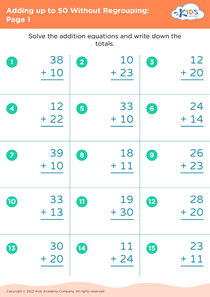
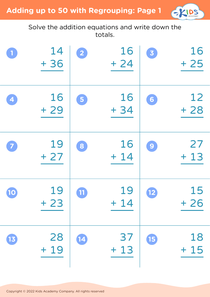
Addition skills Adding up to 50 Misc Worksheets
3 filtered results
-
From - To
Enhance your child's mathematical abilities with our "Addition Skills: Adding Up to 50 Misc Worksheets." Designed for early learners, these engaging worksheets provide a diverse array of exercises to make learning addition fun and interactive. Students will explore various addition problems, reinforcing their understanding of numbers while improving their problem-solving skills. Each worksheet is crafted to foster critical thinking and boost confidence as children practice addition strategies. Perfect for homework or classroom use, our resources cater to different learning styles and abilities. Help your child build a strong mathematical foundation with these carefully curated addition practice materials today!
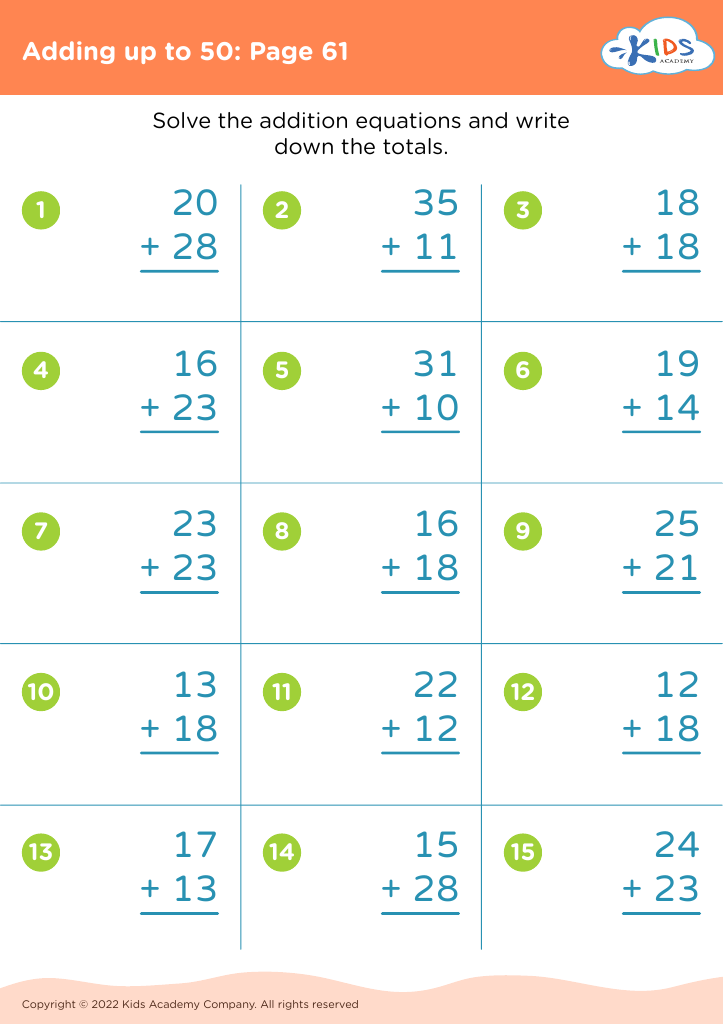
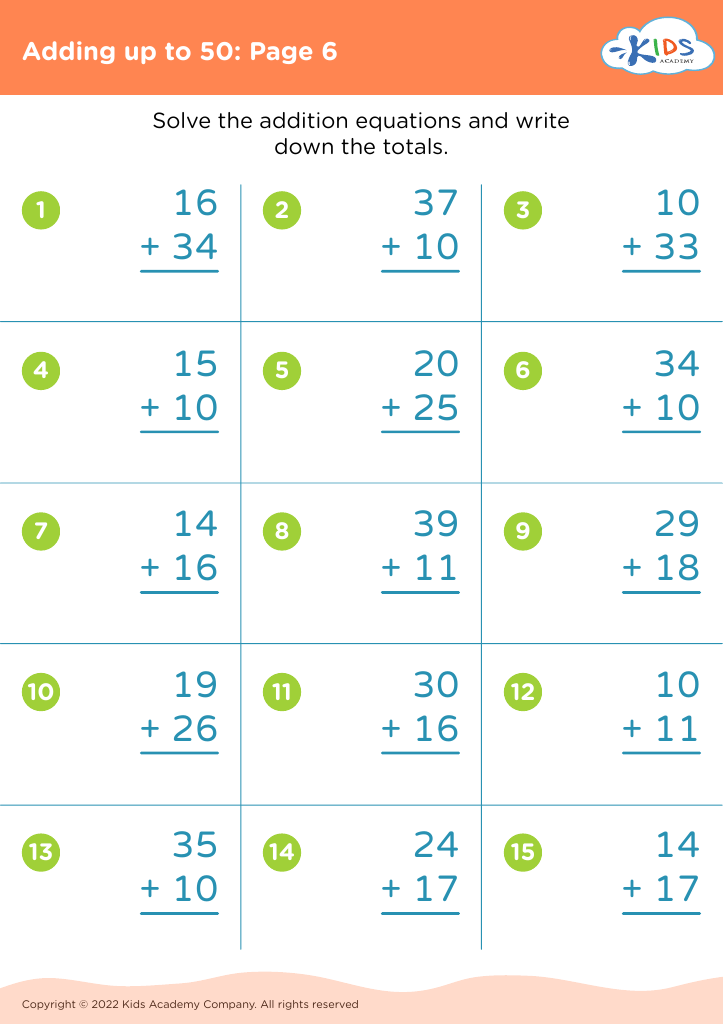
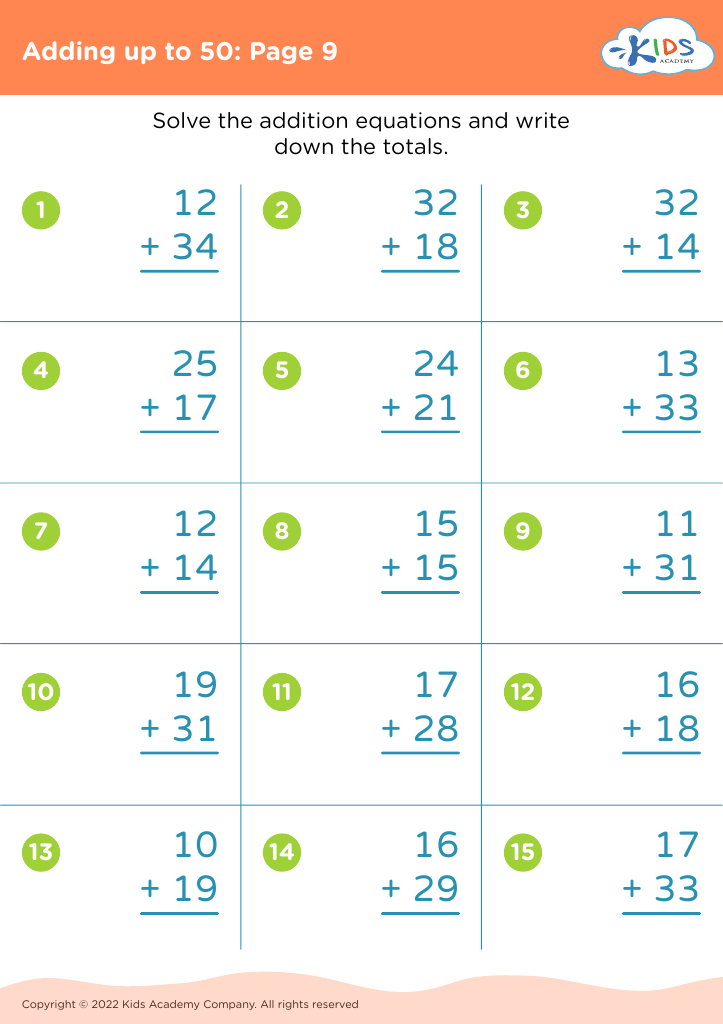


Parents and teachers should prioritize teaching addition skills up to 50 as they lay the foundational framework for a child's mathematical development and everyday problem-solving abilities. Mastery of addition is crucial; it not only aids in understanding more complex mathematical concepts but also enhances critical thinking and cognitive skills.
Learning to add numbers up to 50 helps children develop number sense, allowing them to recognize patterns and relationships between numbers. Such skills are vital for daily tasks like managing money, measuring ingredients while cooking, or calculating time. For young learners, engaging with addition reinforces confidence in math, reducing anxiety around numerical tasks.
Additionally, addition skills support various academic subjects—whether in science (calculating totals), social studies (analyzing data), or art (applying symmetry). A solid grasp of addition is also necessary for standardized test preparations, which can influence future educational opportunities.
By fostering these skills, parents and teachers empower children with tools they will use throughout their lives. Encouraging practice through interactive games, stories, or real-life applications can make learning engaging and effective, paving the way for a positive attitude towards math and future learning. Such skills are crucial in nurturing self-sufficient and capable learners.