Comparing Fractions Adding up to 50 Misc Worksheets
11 filtered results
-
From - To
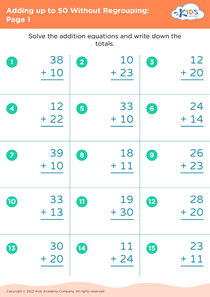
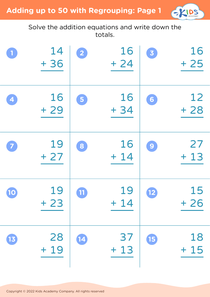
Explore our extensive collection of worksheets designed to help children master the skill of comparing fractions that sum up to 50. These engaging and educational printables provide a variety of exercises to reinforce students' understanding of fractional values and their relationships. Interactive activities, visual aids, and step-by-step problems make learning fun and effective. Perfect for classroom use or at-home practice, our worksheets cater to different learning styles and skill levels. Unlock your child's mathematical potential and enhance their problem-solving skills with our "Comparing Fractions Adding up to 50" misc worksheets today!
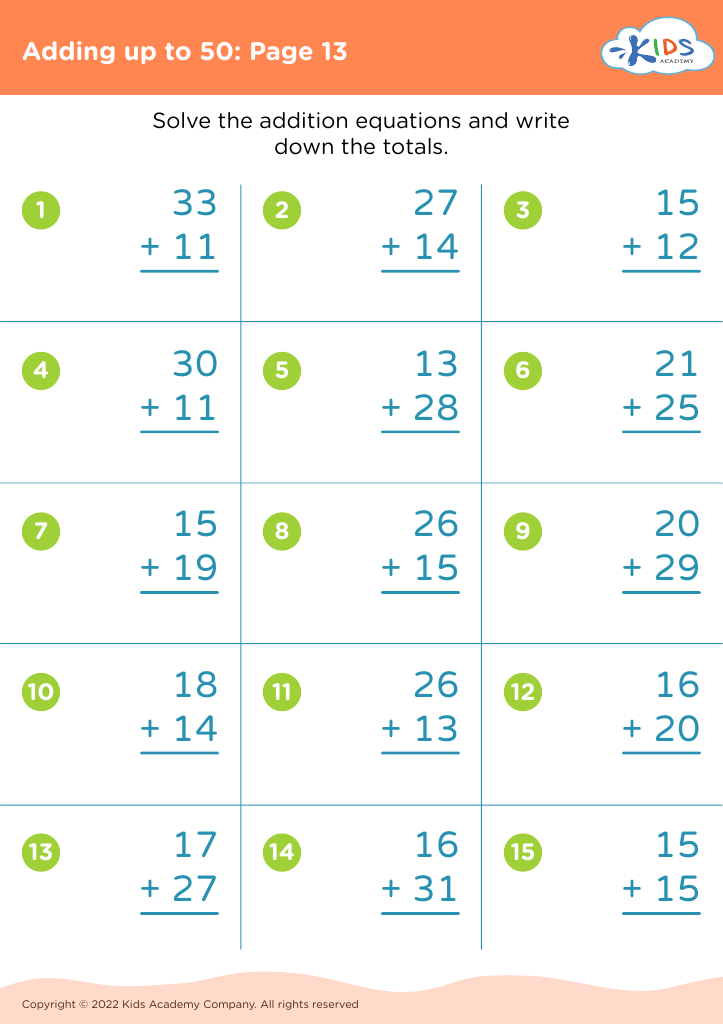
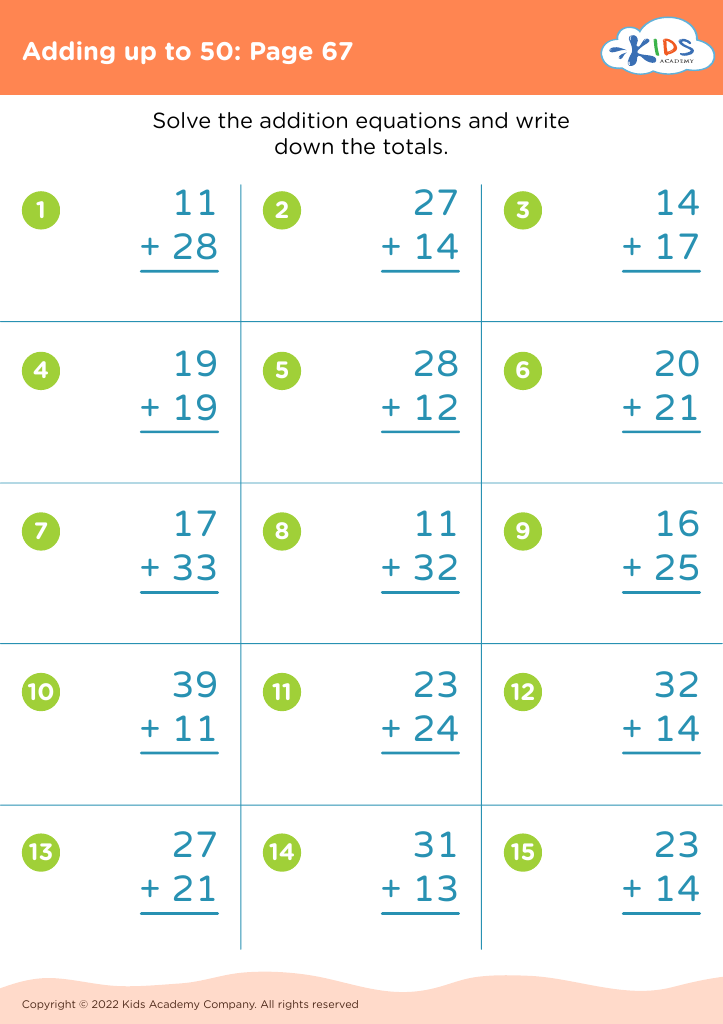
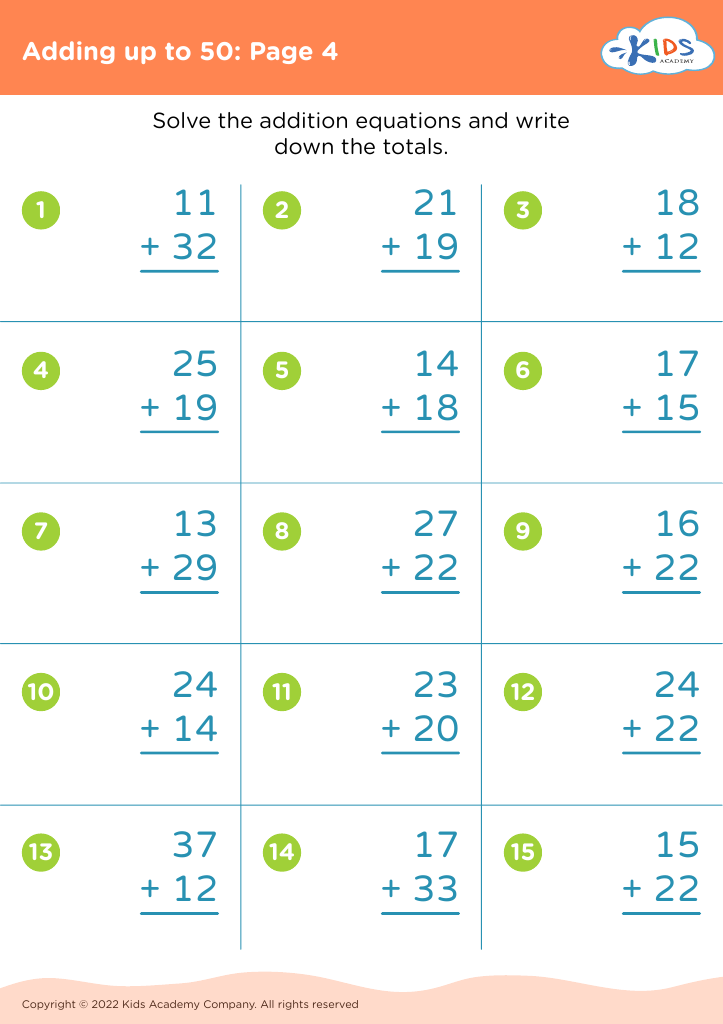
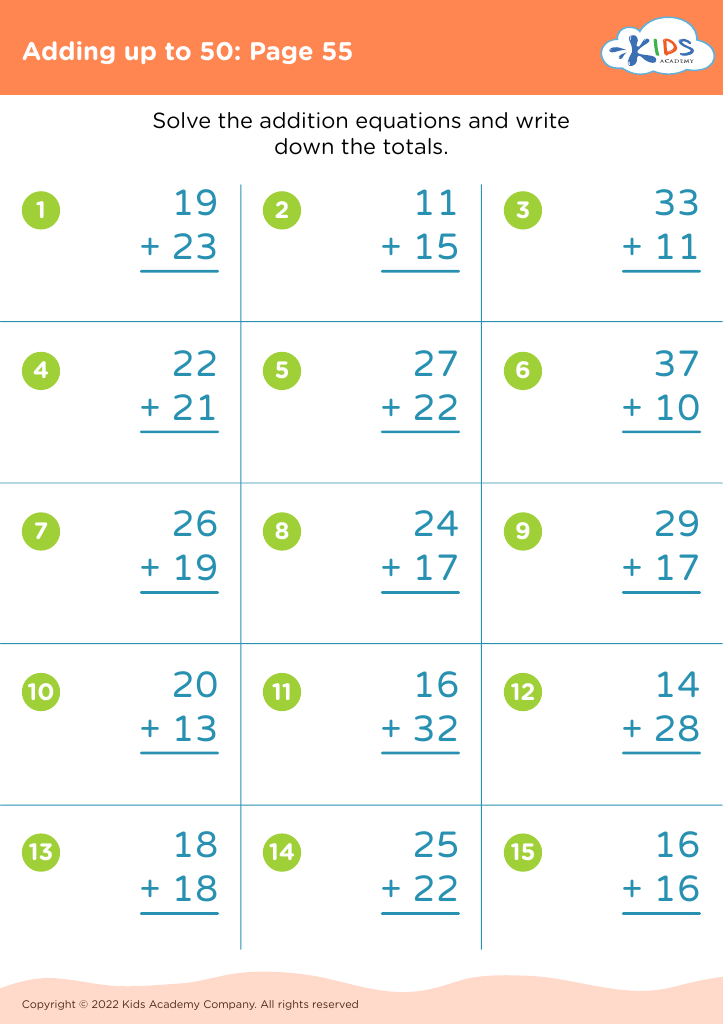
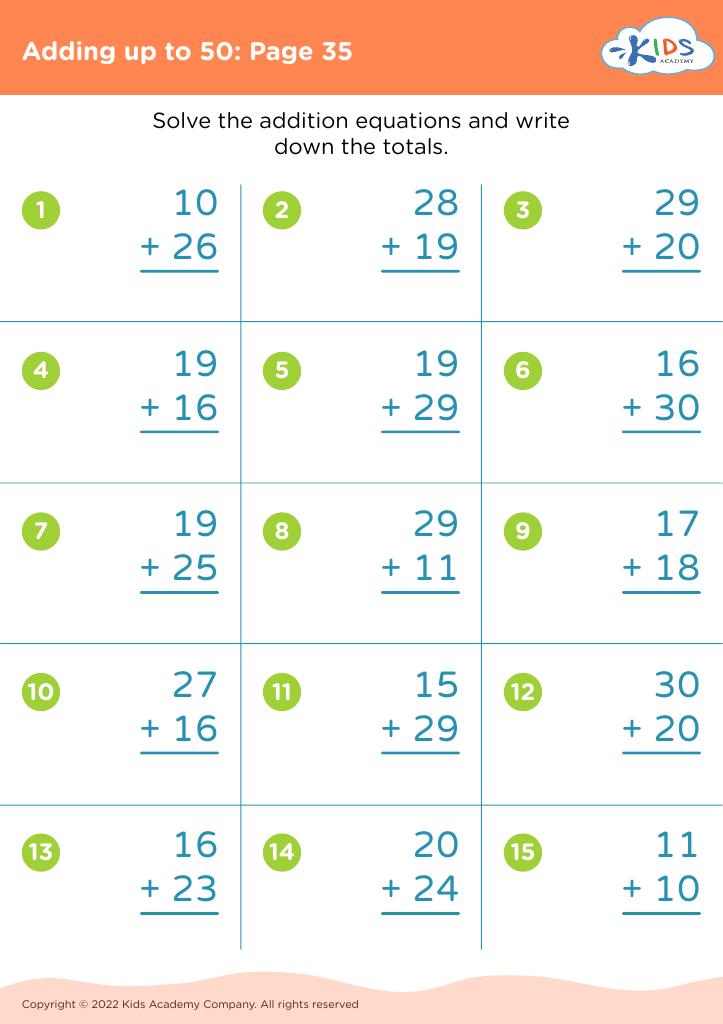
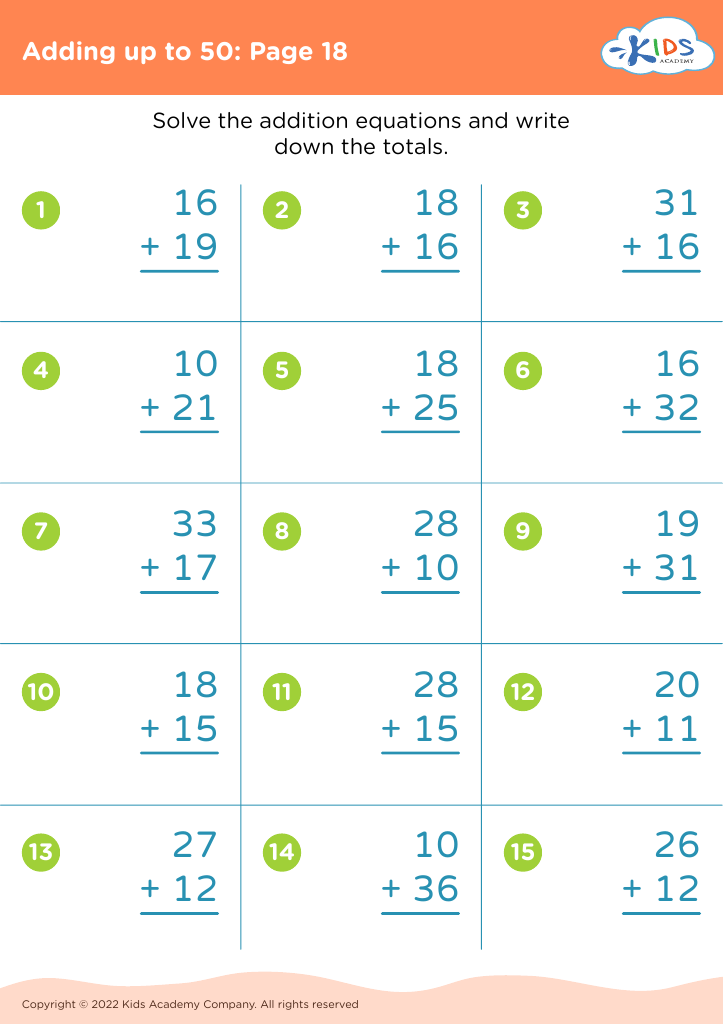
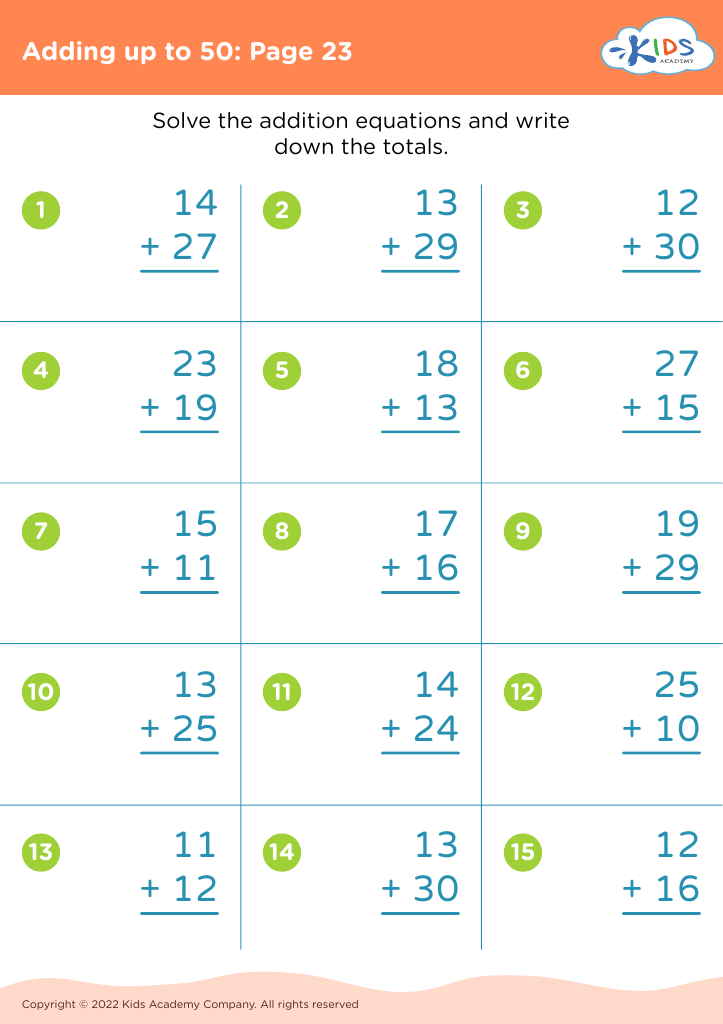
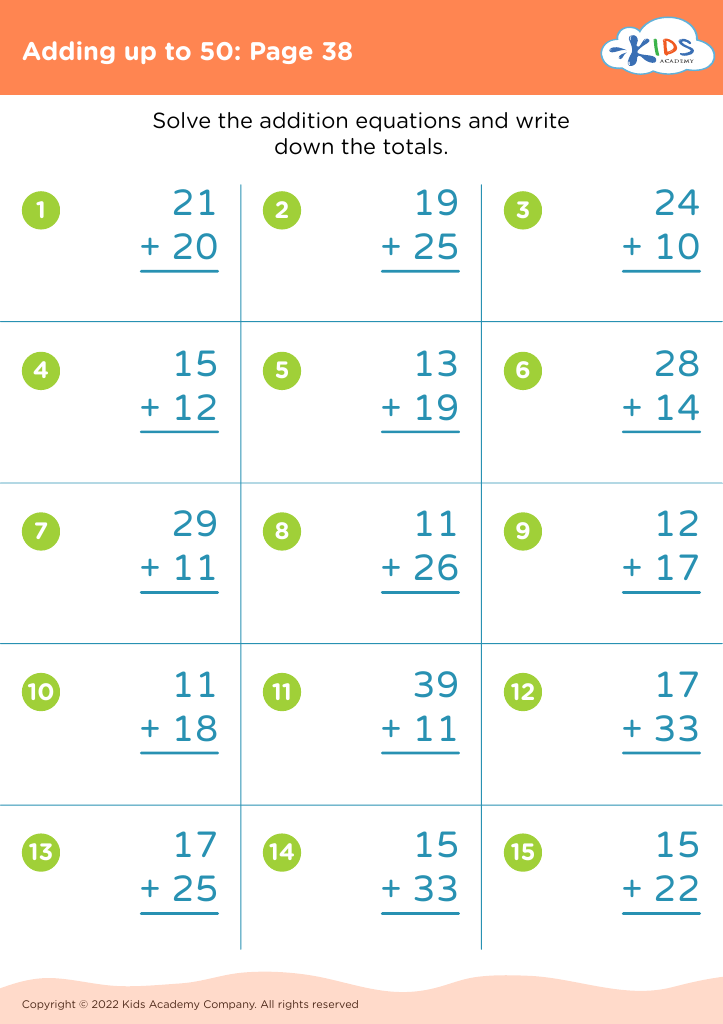
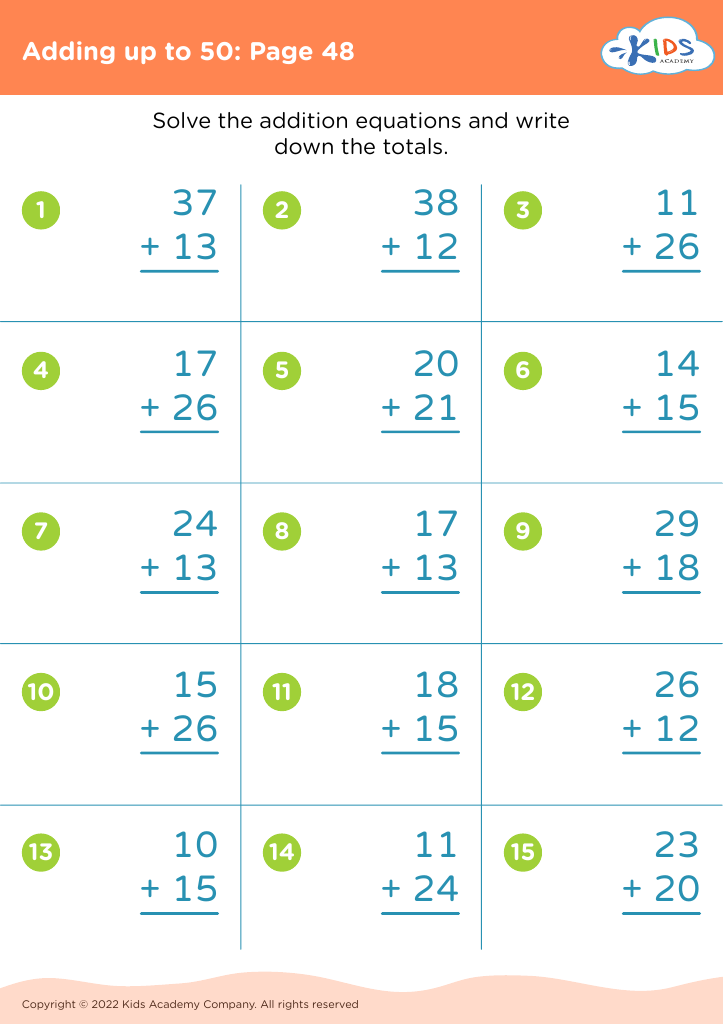
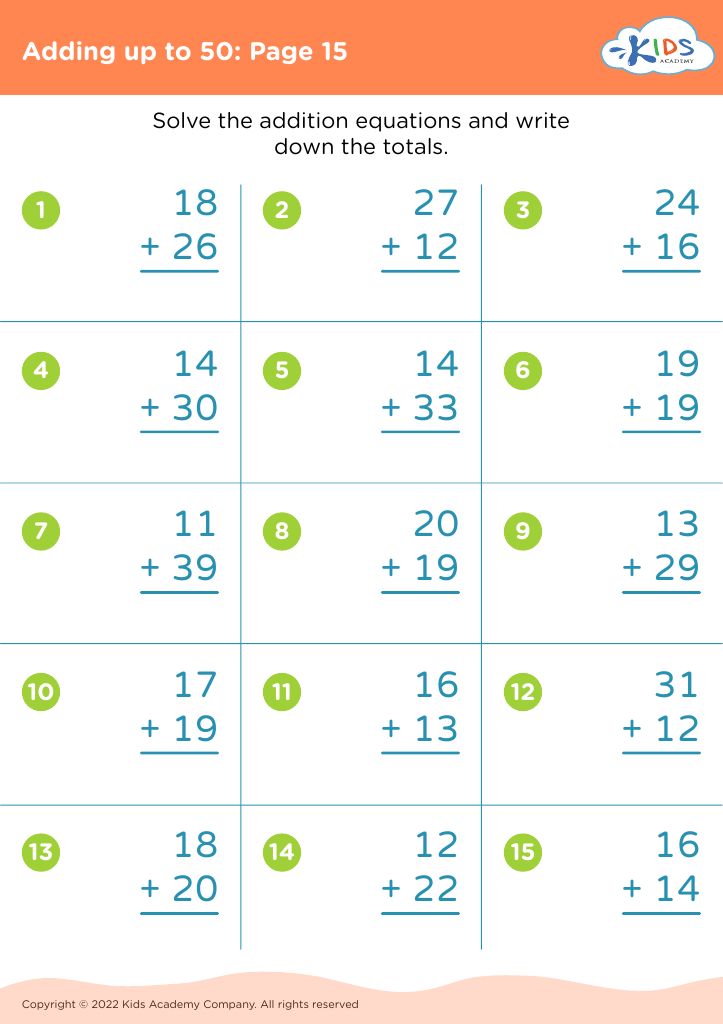
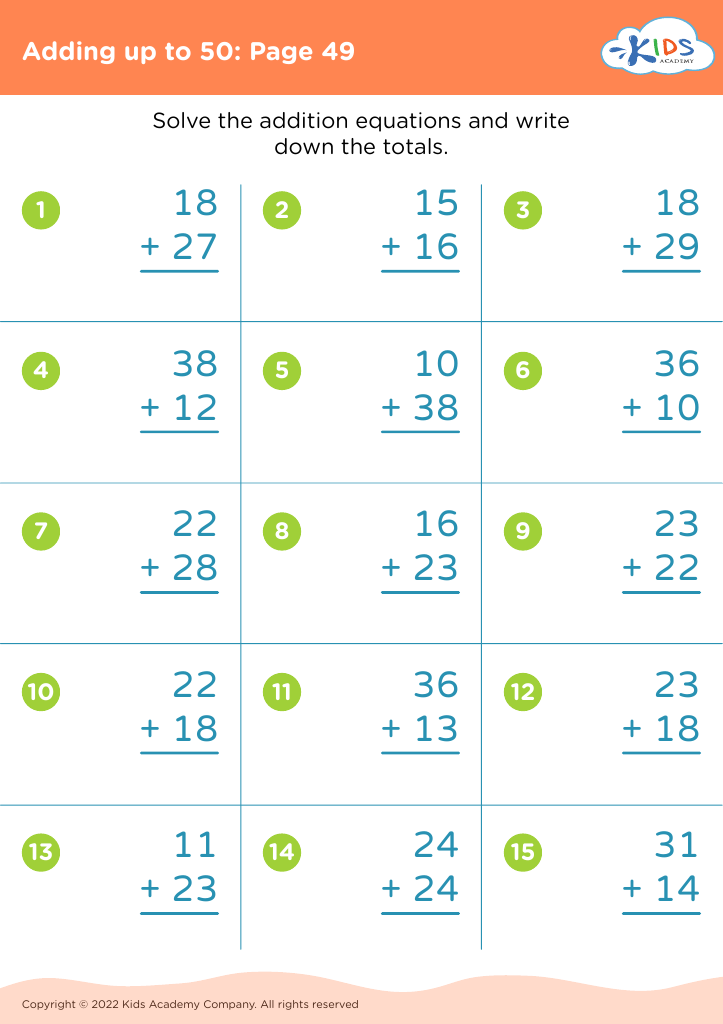


Comparing fractions and summing them to familiar benchmarks, such as 50, is critical for early mathematical development. Firstly, understanding fractions fosters essential numerical literacy, crucial for advanced math concepts such as ratios, proportions, and algebra. Comparing fractions helps children grasp relative quantities, which is foundational for number sense — the ability to understand, relate, and connect numbers.
Integrating fractions into exercises aiming to sum up to 50 serves several educational purposes. It’s a stepping stone to addition and subtraction involving higher numbers and mixed numbers, helping students see how smaller parts can create a whole. Additionally, working with the number 50 offers a comprehensible, tangible goal. If children generally understand the number 50 and how it relates to contexts like a 50-piece puzzle, they better assimilate abstract math operations.
Caring about these principles as a parent or teacher morphs abstract ideas into engaging challenges. It strengthens problem-solving skills and mathematical reasoning beyond worksheets to real-life scenarios. Furthermore, regularly practicing these skills builds a child's confidence and enjoyment of math, often translating to better academic performance. By prioritizing these concepts early on, parents and teachers lay a robust foundation for lifelong mathematical competence and positive attitudes towards learning.