Fraction comparison Adding up to 50 Misc Worksheets
4 filtered results
-
From - To
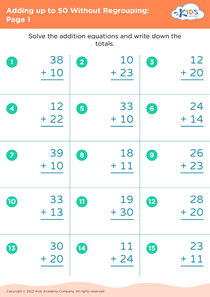
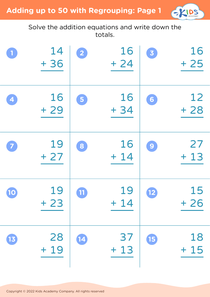
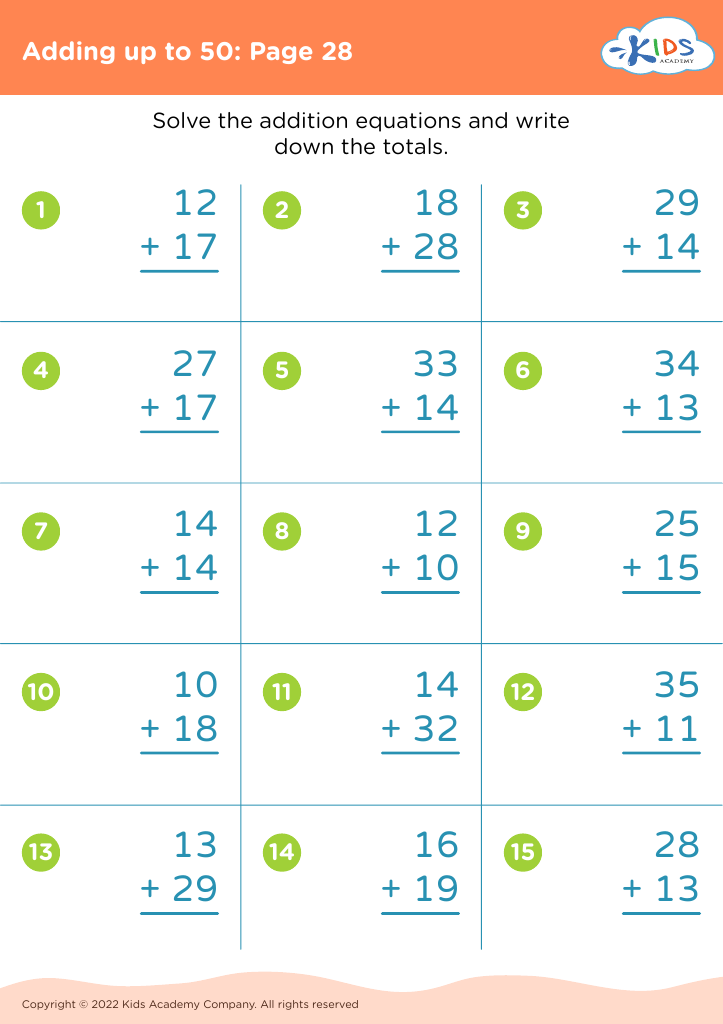
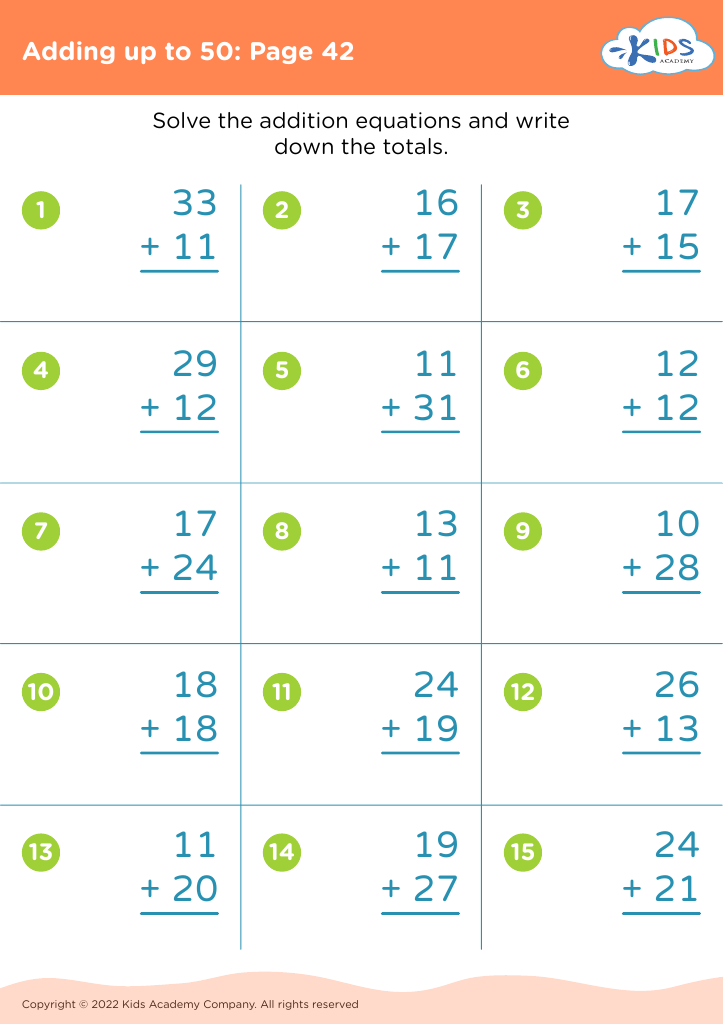
Explore our engaging "Fraction Comparison Adding Up to 50 Misc Worksheets" designed to enhance your child's math skills! These worksheets focus on helping students understand and compare fractions while integrating the concept of adding numbers up to 50. Ideal for early grade learners, our resources promote critical thinking and boost confidence in math through fun and interactive exercises. Each worksheet includes clear instructions and varied activities to make learning enjoyable. Perfect for classroom use or at-home practice, these worksheets support fundamental math skills essential for future success. Download now and watch your child's mathematical abilities flourish!
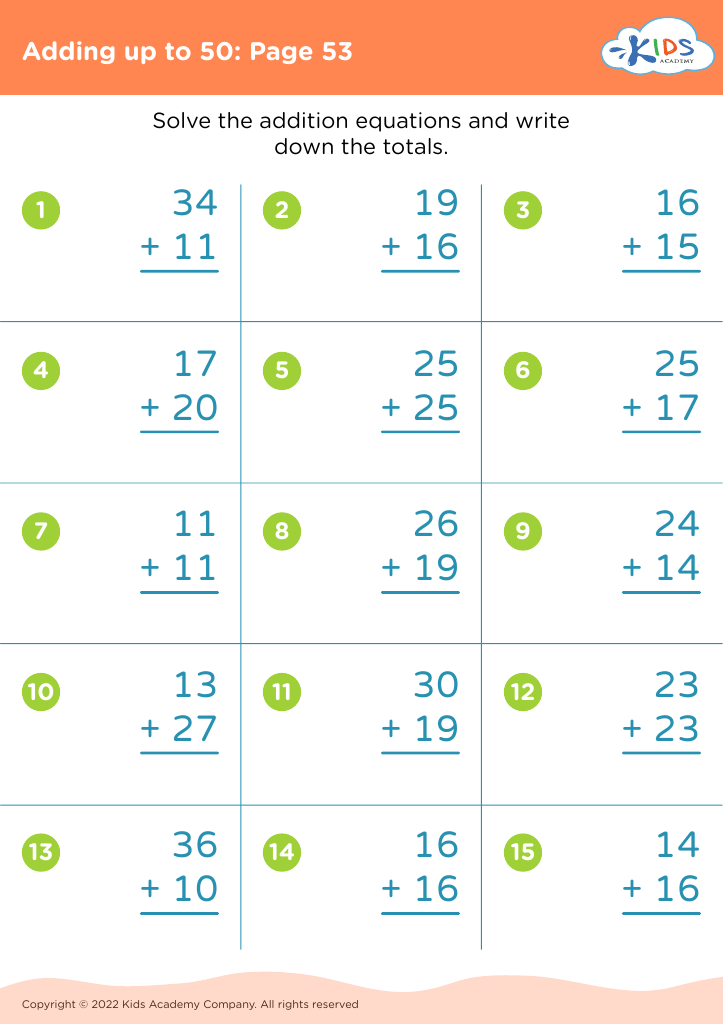
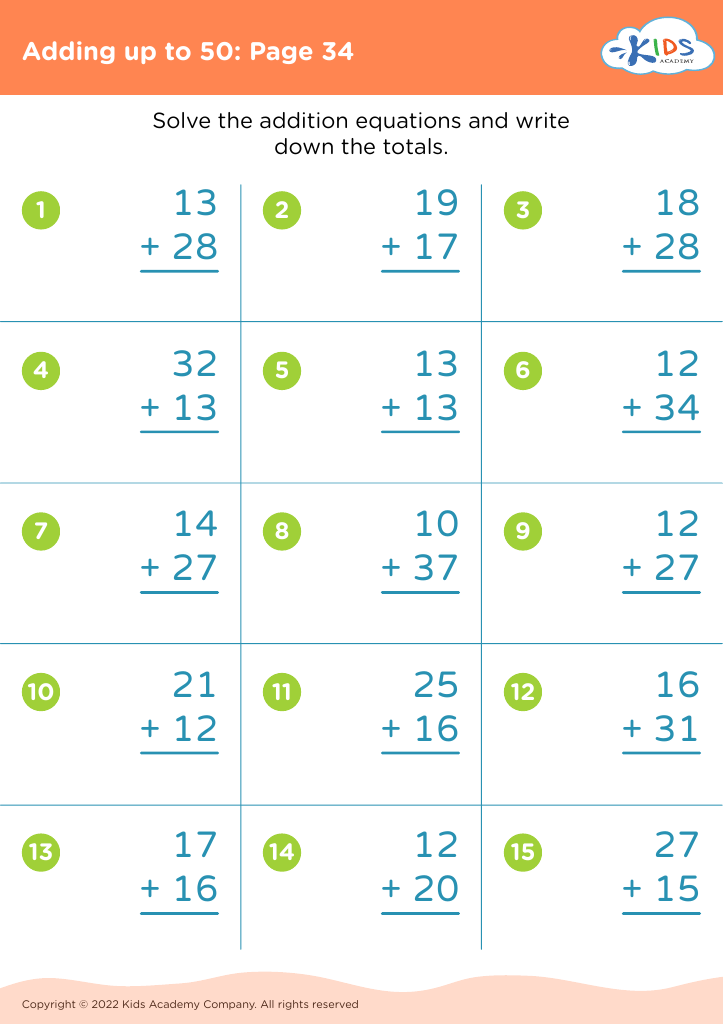


Understanding how to compare fractions is crucial for students as it forms a foundational element of their mathematical education. Parents and teachers should prioritize this topic for several reasons.
First, comparing fractions fosters critical thinking. Students learn to analyze and evaluate the value of different quantities, improving their logical reasoning skills. This enhances not only their mathematics proficiency but also their overall cognitive development.
Moreover, mastering fraction comparison is essential for more advanced mathematical concepts. Fractions are prevalent in daily life situations, such as cooking, shopping, and measurements. A solid understanding of fractions enables students to make informed decisions in real-world scenarios.
Additionally, when students engage in activities, like adding fractions that sum to 50, they develop their problem-solving skills. This innate ability to reason through mathematical problems is something students will be able to take into other subjects and everyday life situations.
Supporting early mastery in fraction comparison issues can boost students’ confidence and performance in math, positively impacting their academic trajectory. Ensuring they have a firm grasp of these concepts can help demystify mathematics for them and encourage greater interest and achievement in the subject overall.