Fraction simplification Adding up to 50 Misc Worksheets
5 filtered results
-
From - To
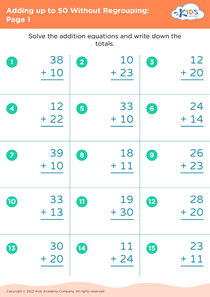
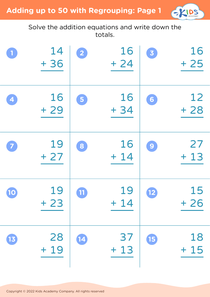
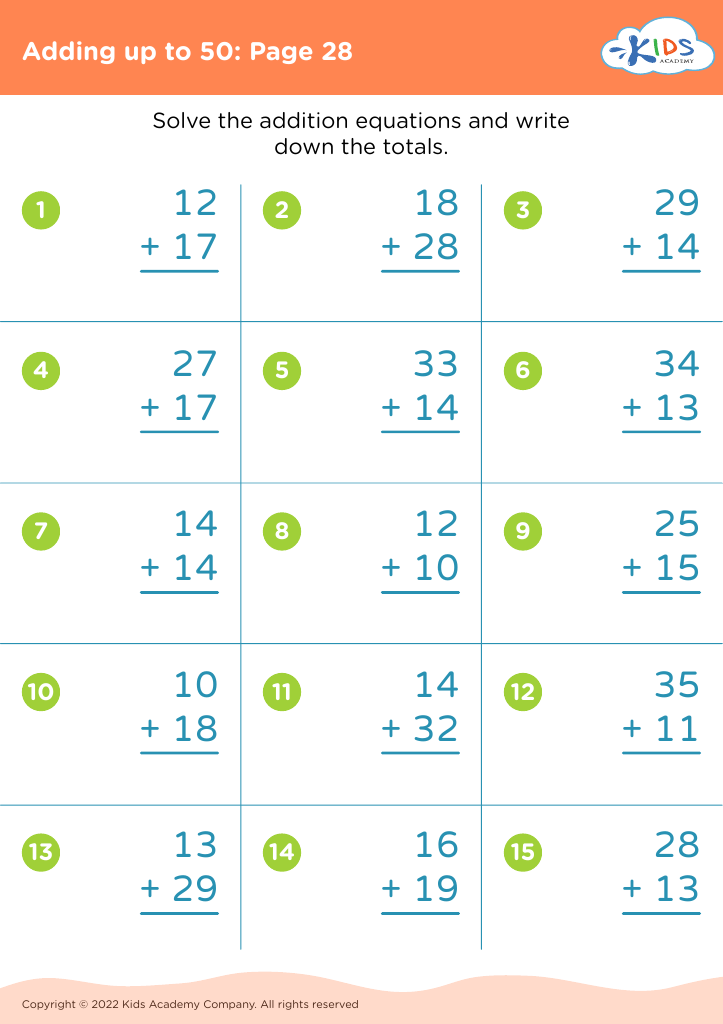
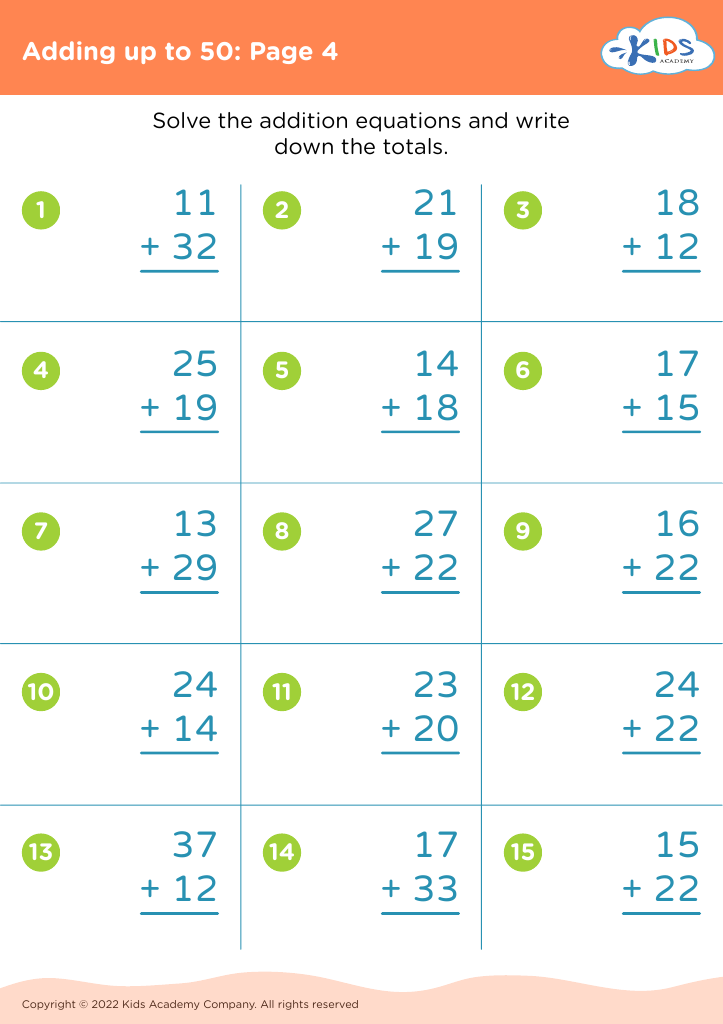
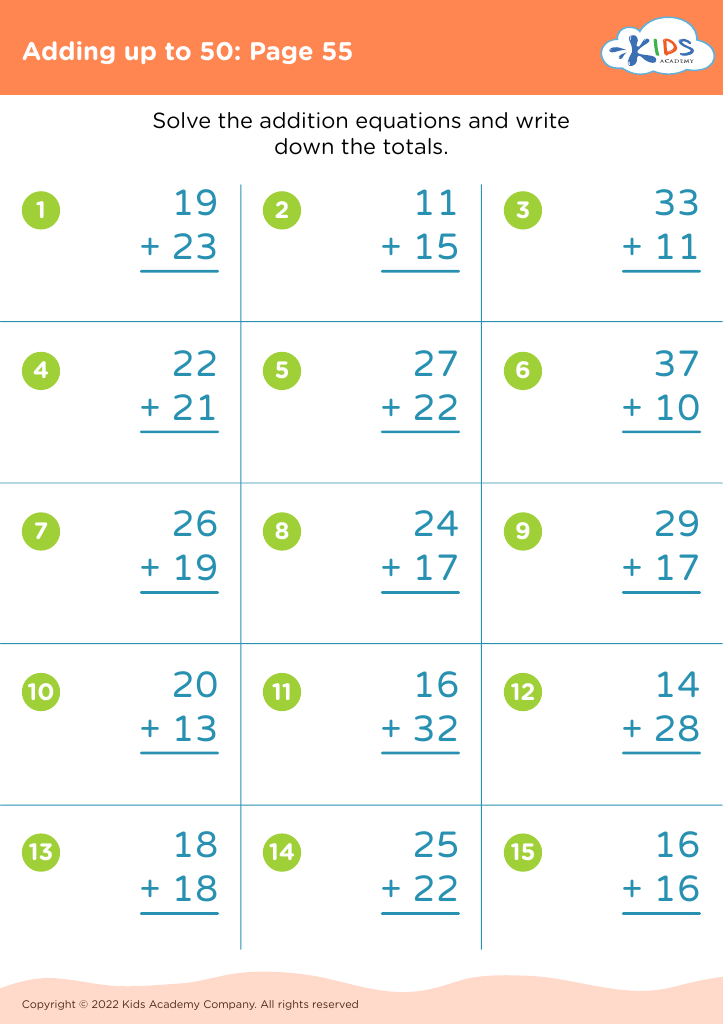
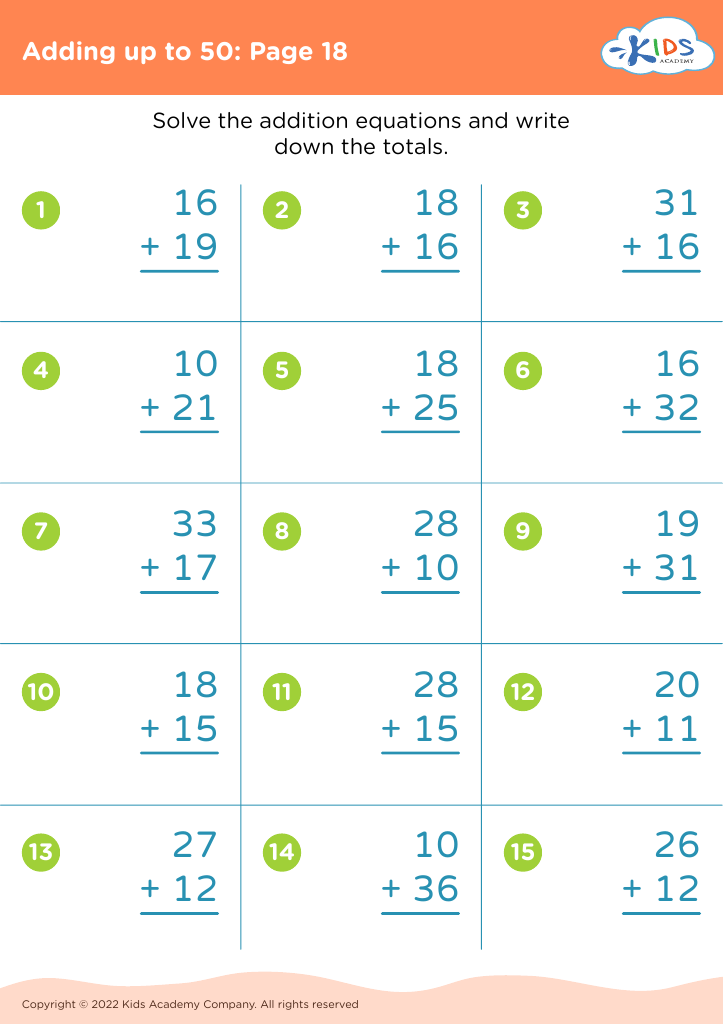
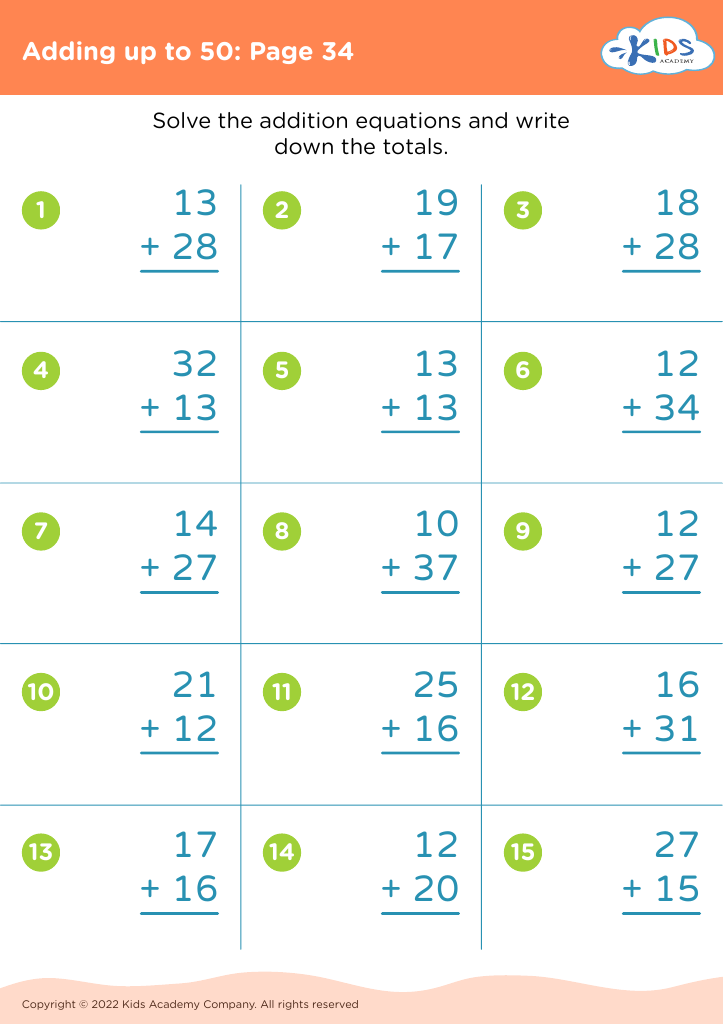
Discover a fun and engaging way to master fraction simplification with our "Adding Up to 50 Misc Worksheets." Designed for early learners, these printable worksheets help students strengthen their math skills by simplifying fractions while keeping addition under 50 at the forefront. With various exercises and real-world applications, children will build confidence as they tackle each problem. Ideal for both classroom and home use, our worksheets cater to different learning styles, making math enjoyable! Encourage critical thinking and reinforce math fundamentals with this comprehensive resource, ensuring students grasp the concept of fractions and achieve their academic goals effectively. Start simplifying today!


Understanding fraction simplification is crucial for both parents and teachers as it lays the groundwork for essential mathematical skills in young learners. Simplifying fractions helps students grasp concepts of equivalence and proportionality, which extend beyond just fractions into other areas of mathematics and everyday life. As children learn to recognize that different fractions can represent the same value, they develop critical thinking and problem-solving skills.
Moreover, mastering fraction simplification promotes numerical fluency. When students can simplify fractions quickly, they become more confident in their ability to handle complex mathematical problems, leading to greater overall achievement. This skill is especially important when they progress to higher-level math, where fractions play a critical role in algebra and geometry.
Furthermore, making connections between fractions and real-world applications fosters a practical understanding of mathematics. For instance, when baking or measuring, using simplified fractions can be more practical and intuitive.
Parents and teachers should prioritize teaching fraction simplification, as it equips students with vital skills that prepare them for future academic success and practical challenges. By doing so, they not only boost students’ mathematical abilities but also instill a sense of confidence and competence in handling everyday mathematical tasks.