Understanding fractions Adding up to 50 Misc Worksheets
17 filtered results
-
From - To
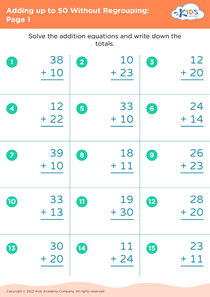
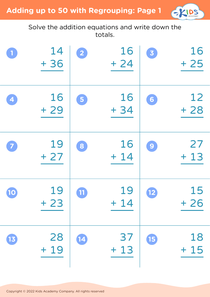
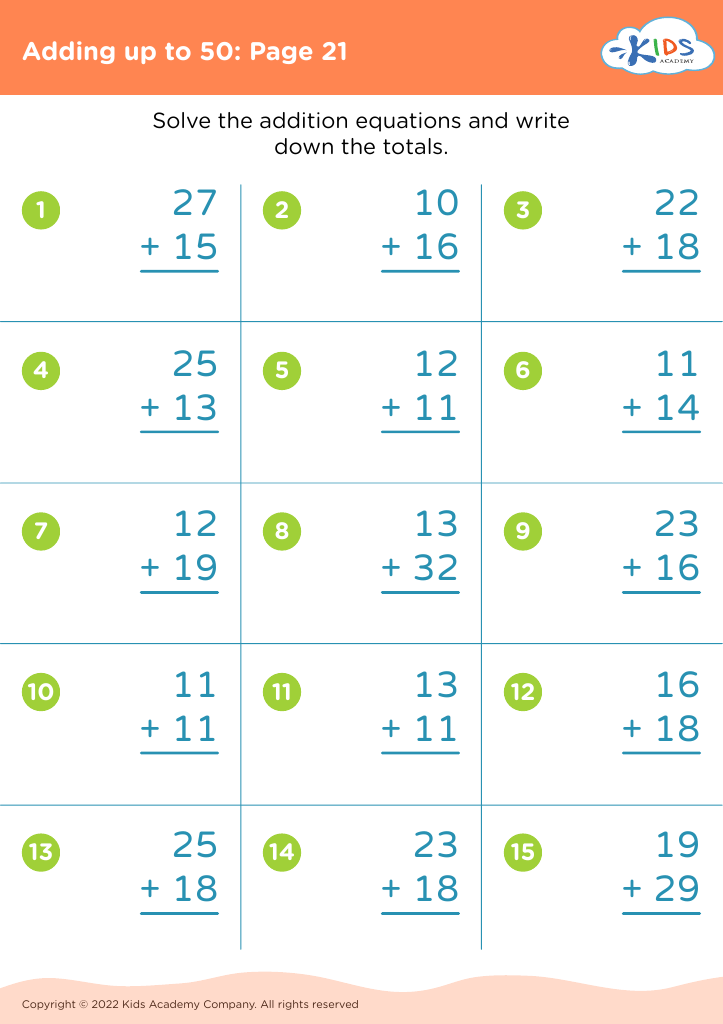
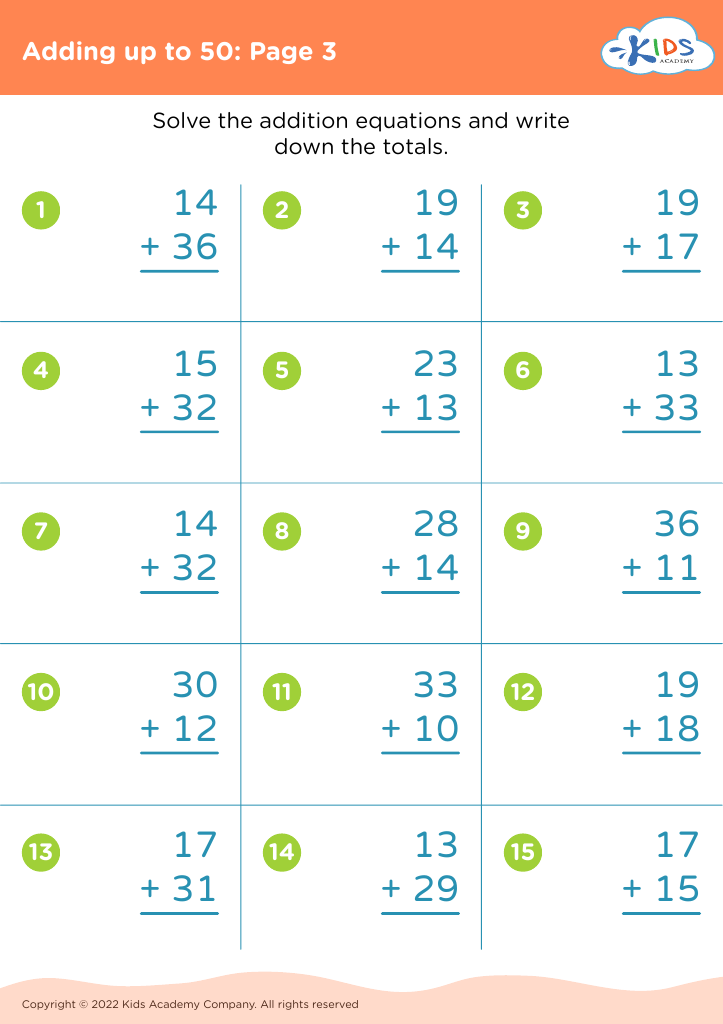
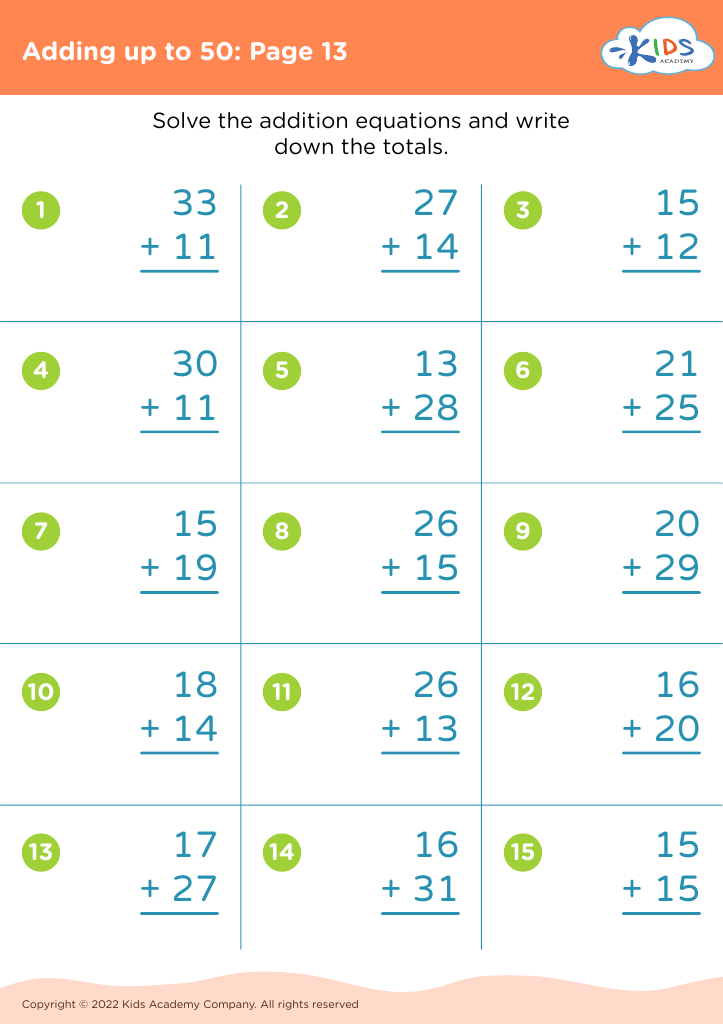
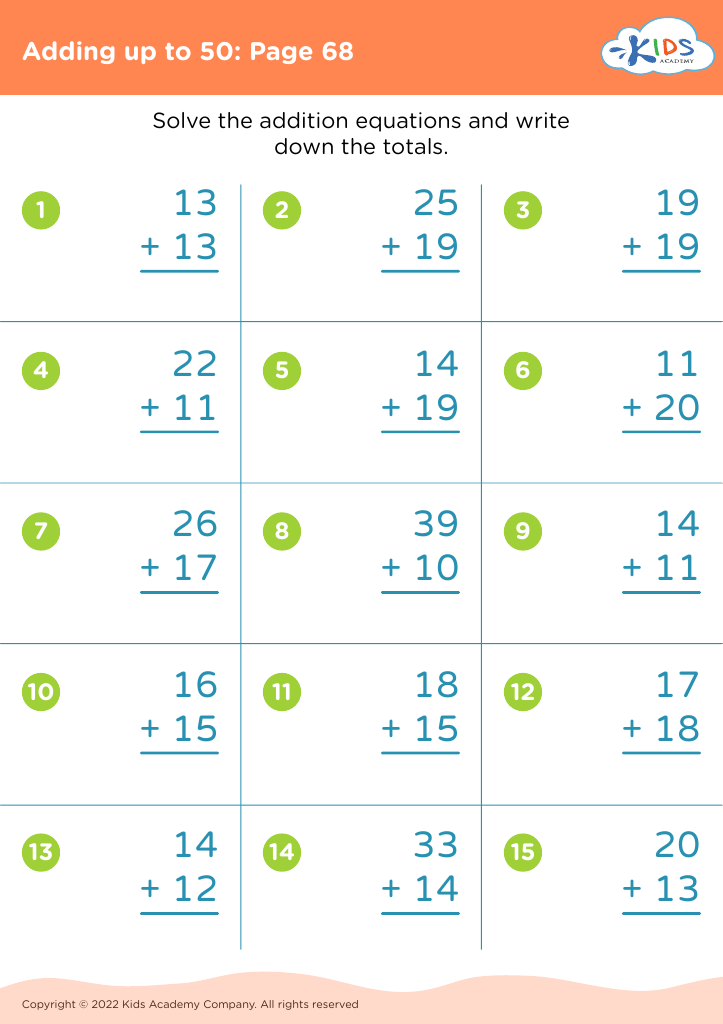
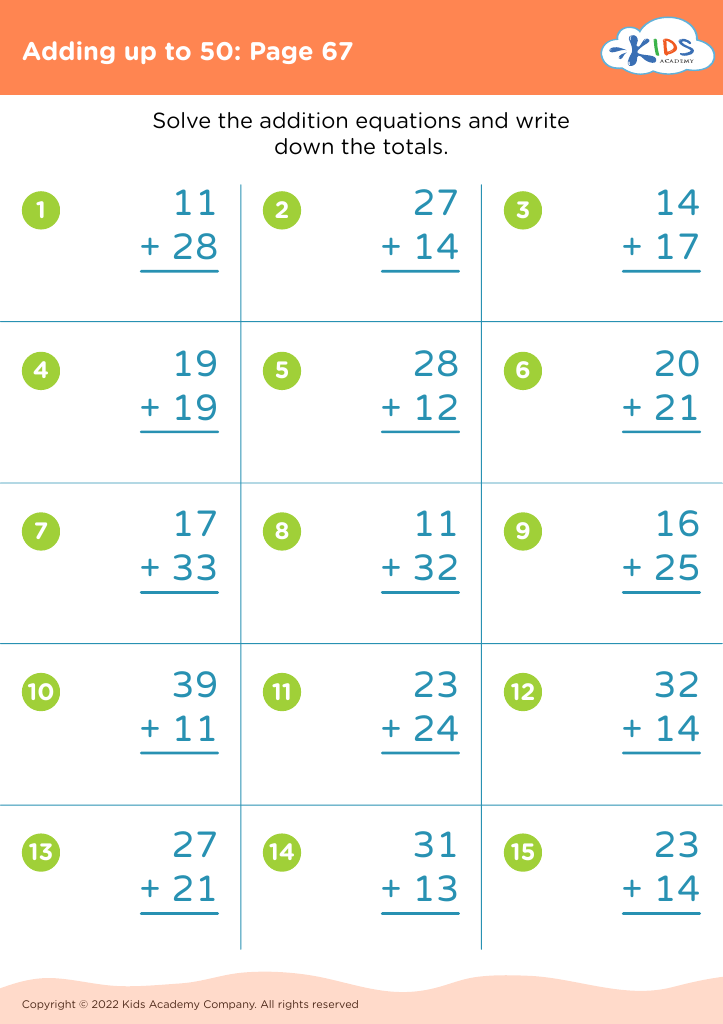
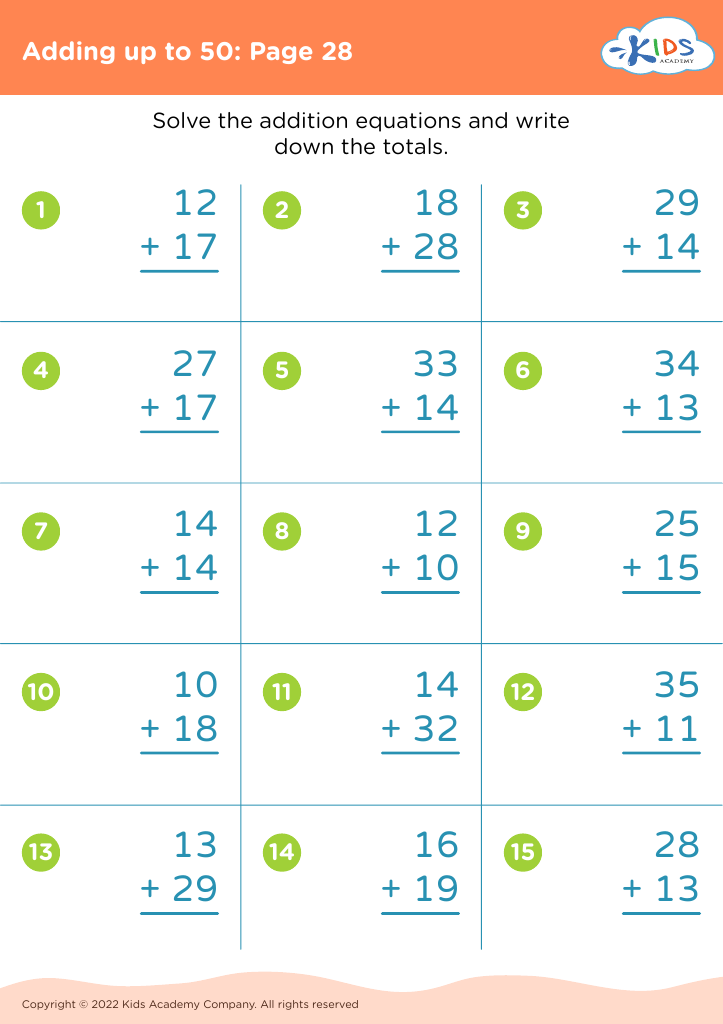
Discover our engaging "Understanding Fractions Adding up to 50" worksheets, specifically designed to enhance your child's math skills. Curated for early grade students, these fun and informative worksheets guide young learners through the basics of fractions and integer addition, supporting Common Core standards. By combining vibrant visuals with clear instructions, each worksheet facilitates a deeper understanding of fractions and their practical applications in addition to 50. Ideal for classroom use or home practice, our well-organized activities ensure foundational math skills development through progressive learning. Spark your child's mathematical journey today with our expertly crafted resources.
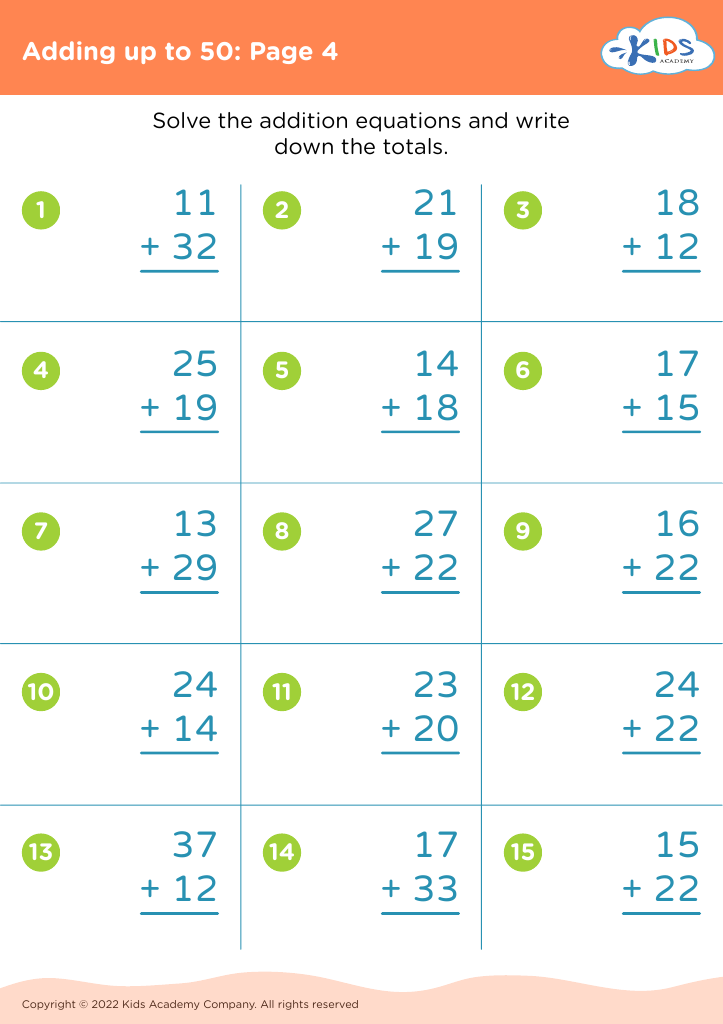
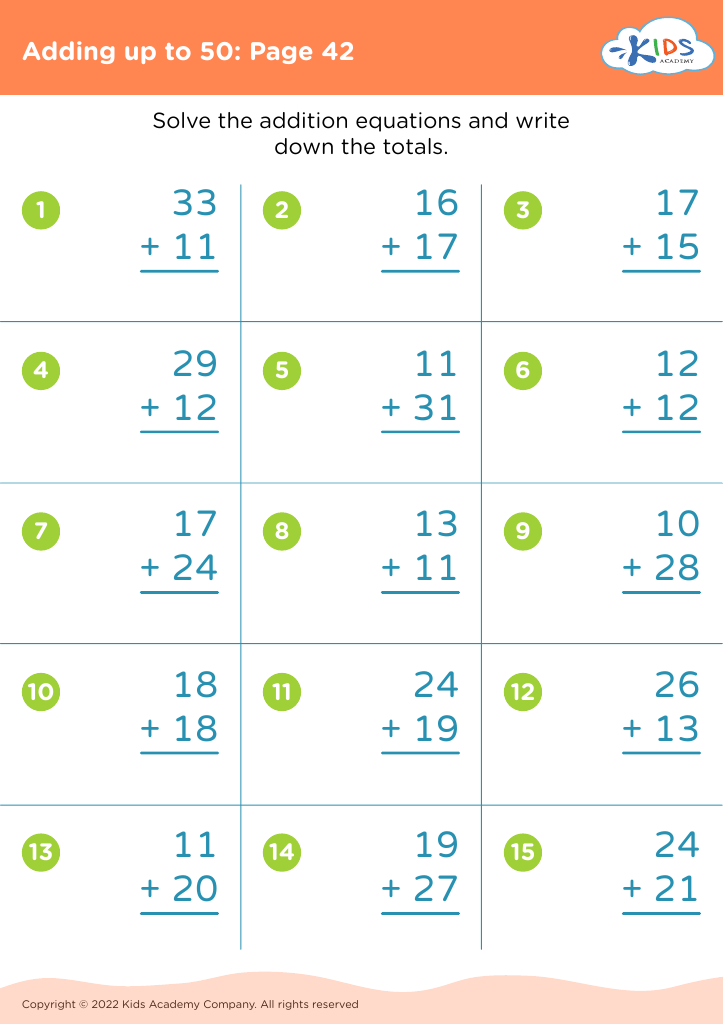
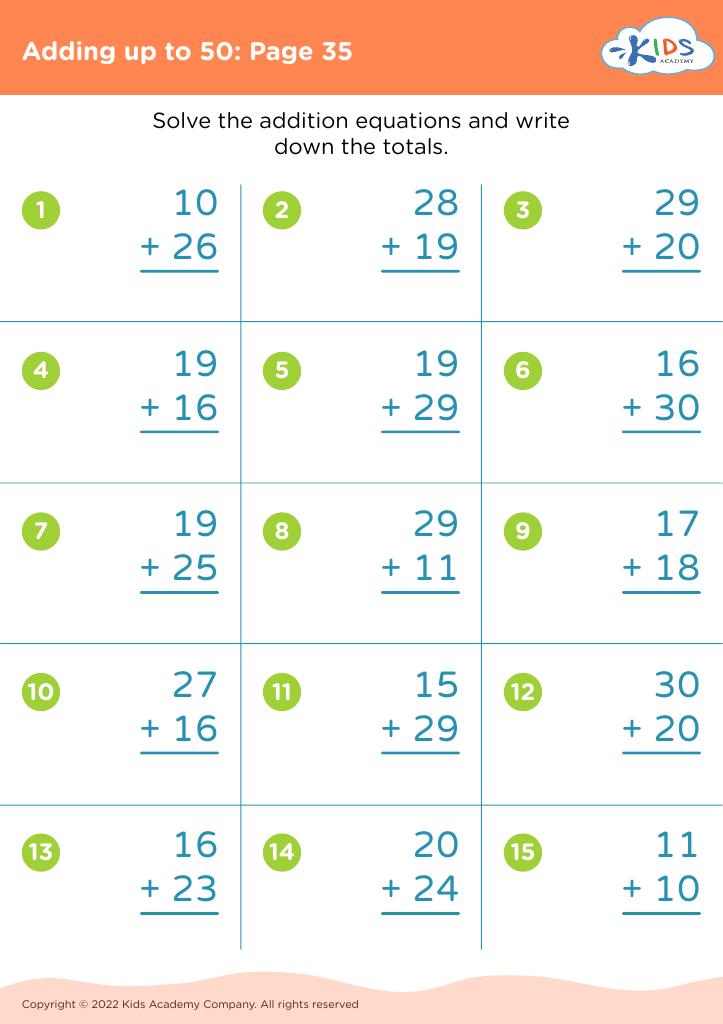
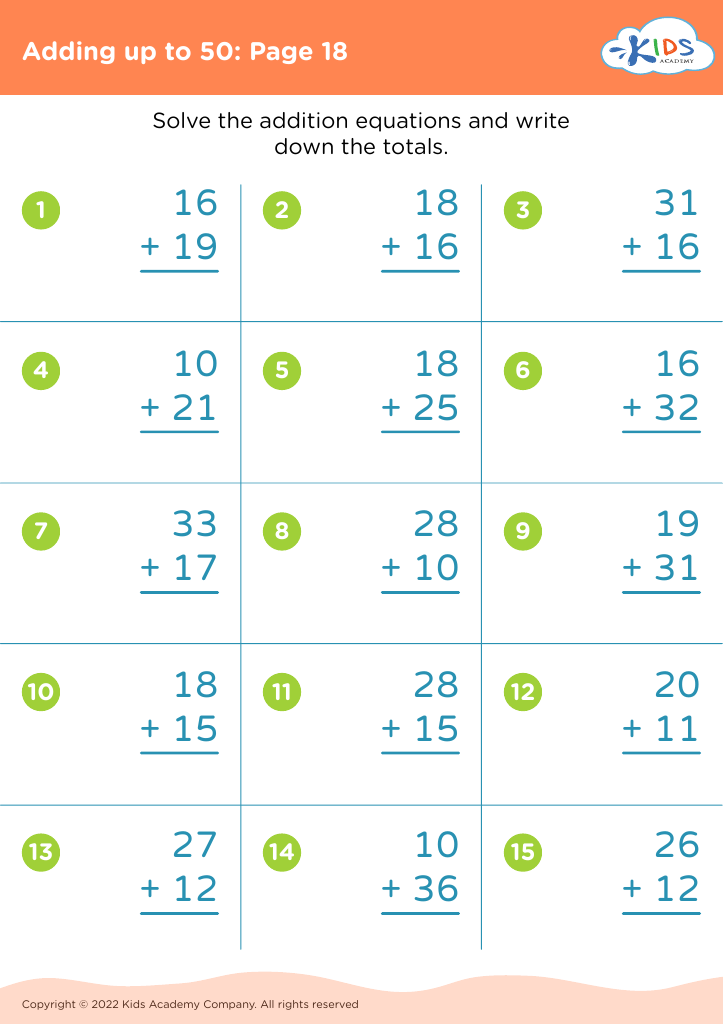
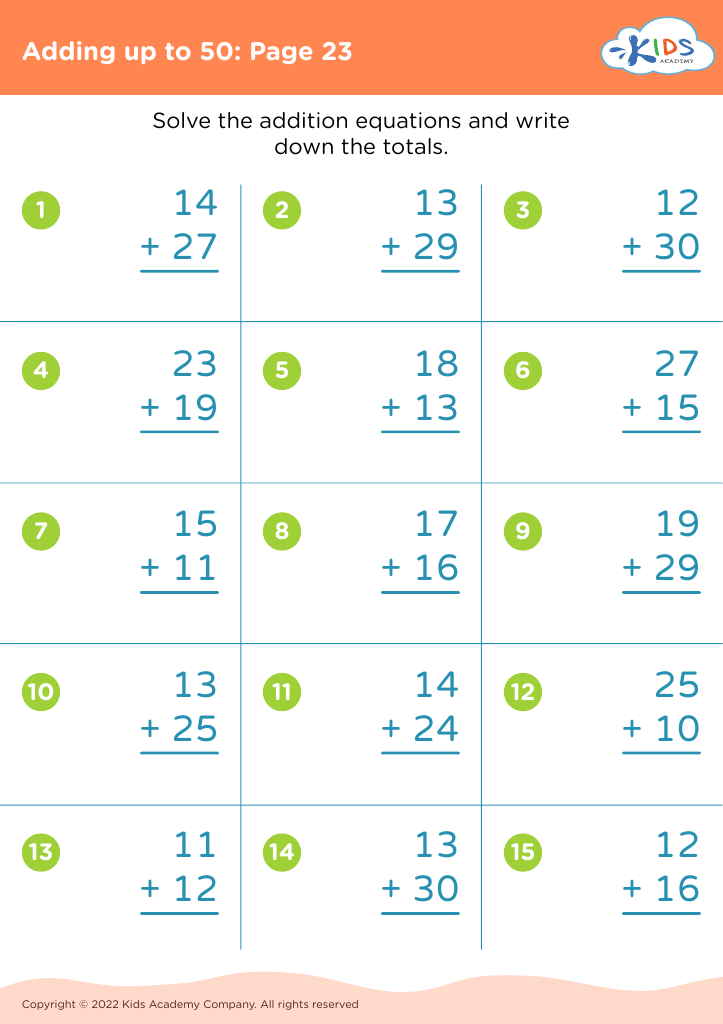
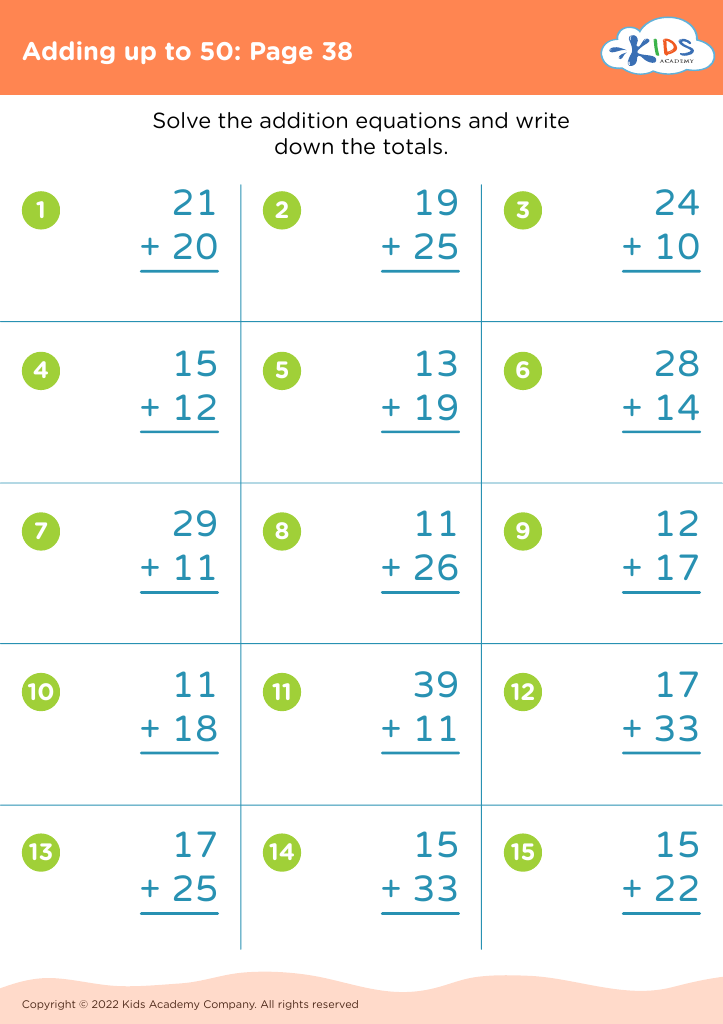
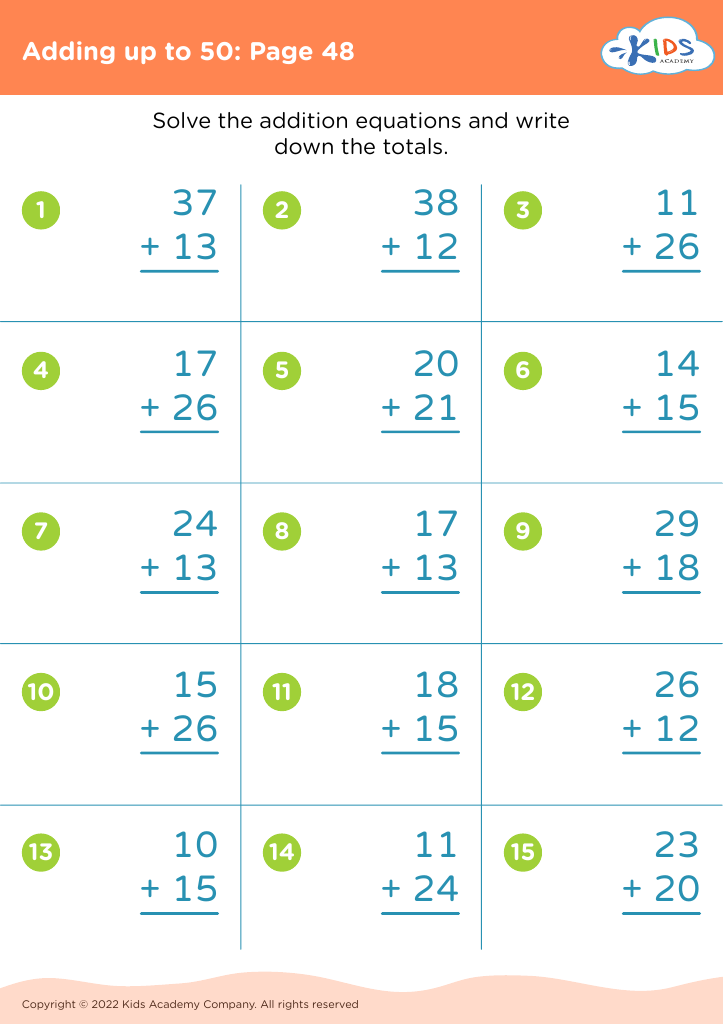
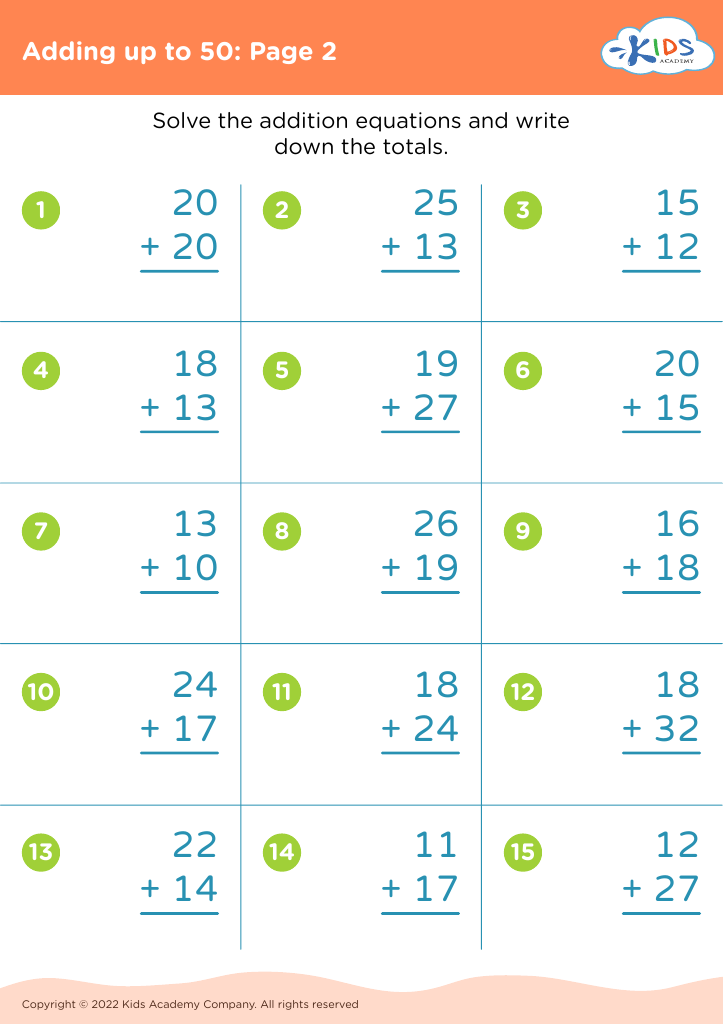
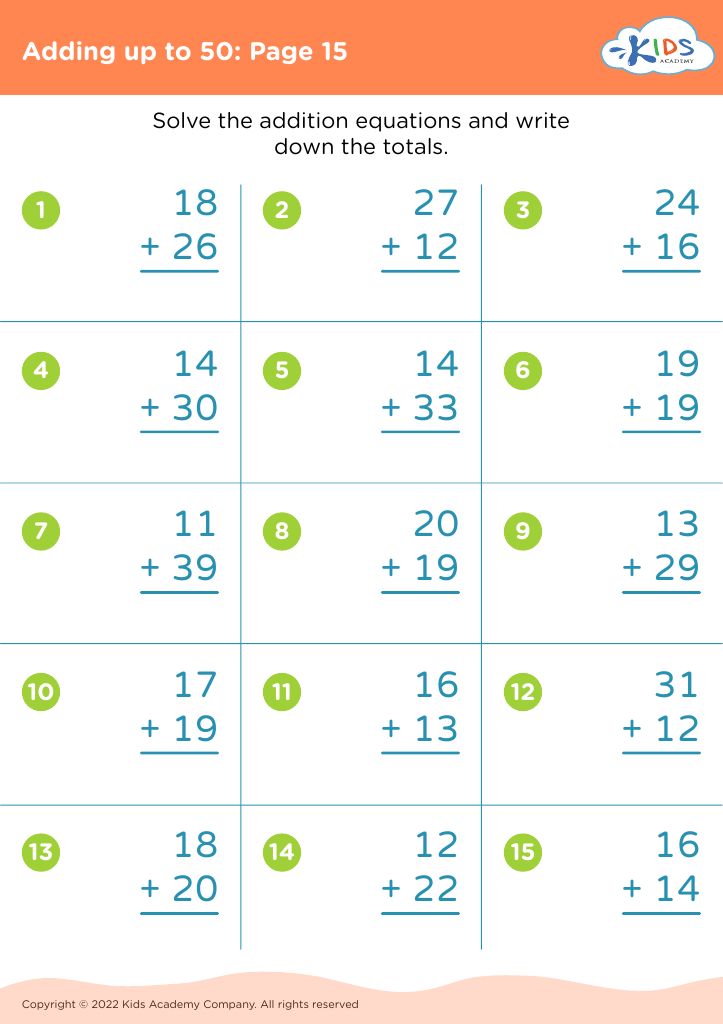
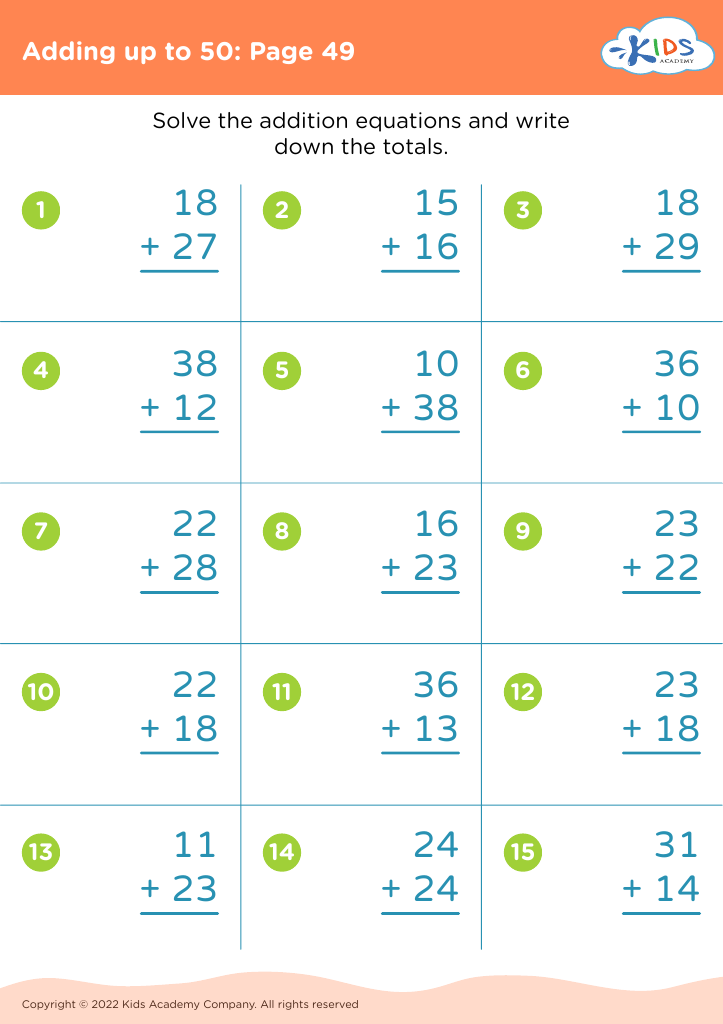
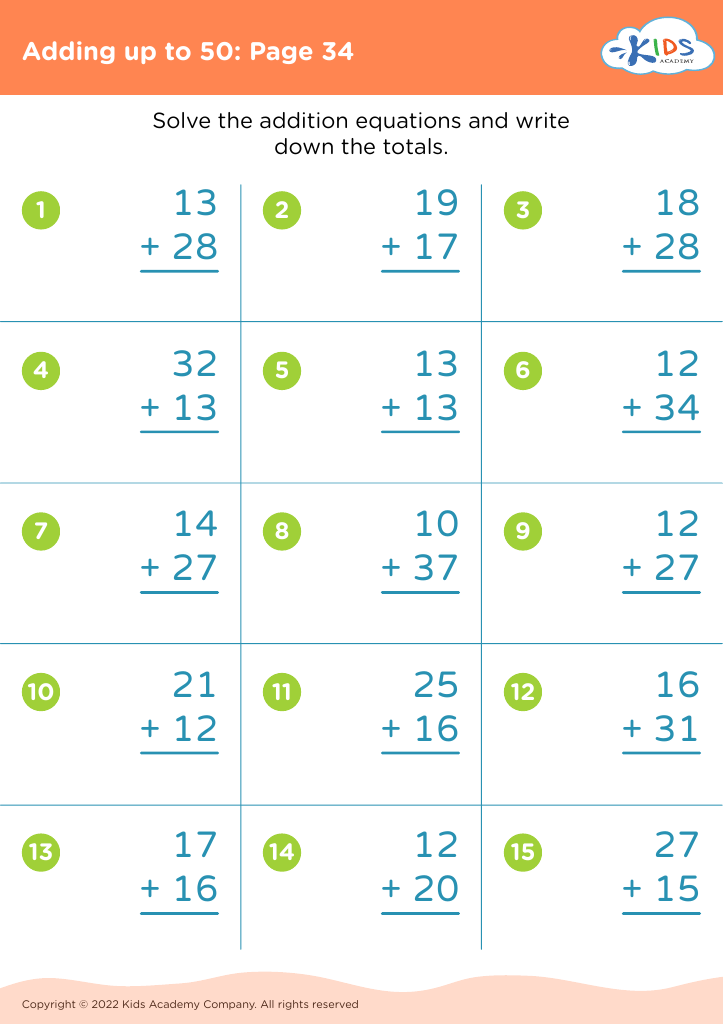


Understanding fractions is crucial for young learners because it forms the foundation for many mathematical concepts they will encounter later in their education, such as decimals, percentages, and different areas of algebra and geometry. For example, when a child understands that 1/2 is the same as 50%, they are better prepared to handle problems involving ratios and proportions.
Parents and teachers should care about this aspect of mathematics because it enhances a child's critical thinking and problem-solving skills. Fractions help children learn the value of breaking down a whole into parts and are essential for real-world applications like cooking, budgeting, and even telling time.
In addition to fractions, learning to add up to 50 is a foundational arithmetic skill. It aids in developing a student's number sense, including comprehension of basic operations like addition and subtraction. A strong grasp on these skills can boost a student’s confidence in math and make more advanced topics easier to tackle.
Overall, solid mathematical understanding in early education sets the stage for future academic success, fosters logical thinking, and equips children with essential life skills. Therefore, both parents and teachers should emphasize the importance of mastering fractions and arithmetic in foundational learning.