Color Identification Adding up to 50 with Regrouping Worksheets
5 filtered results
-
From - To
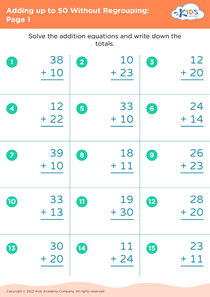
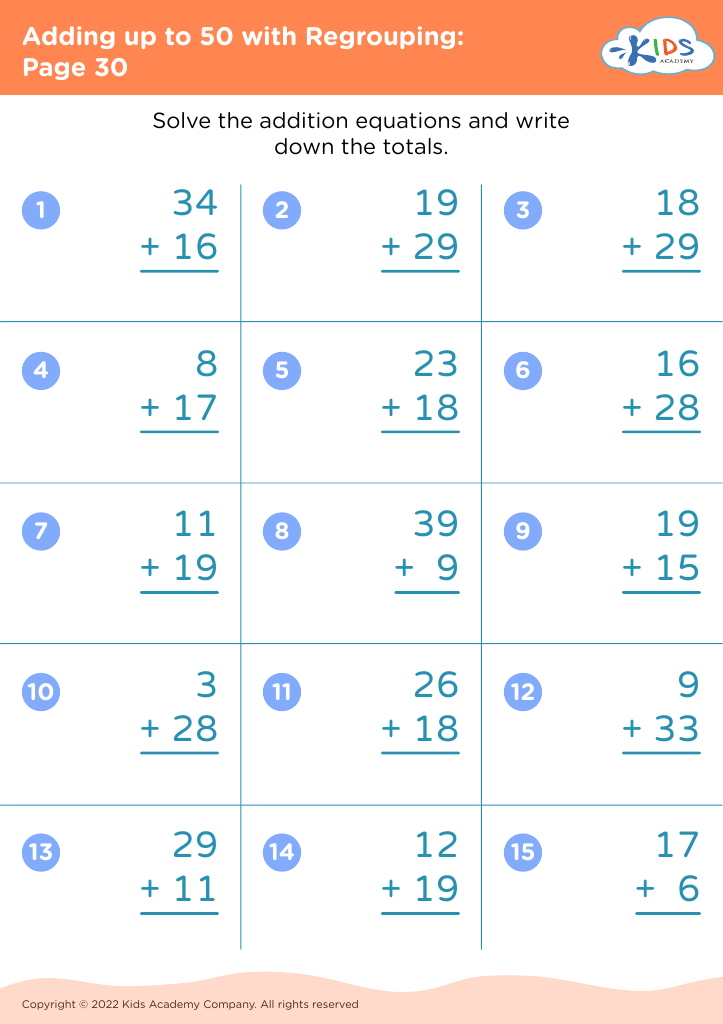
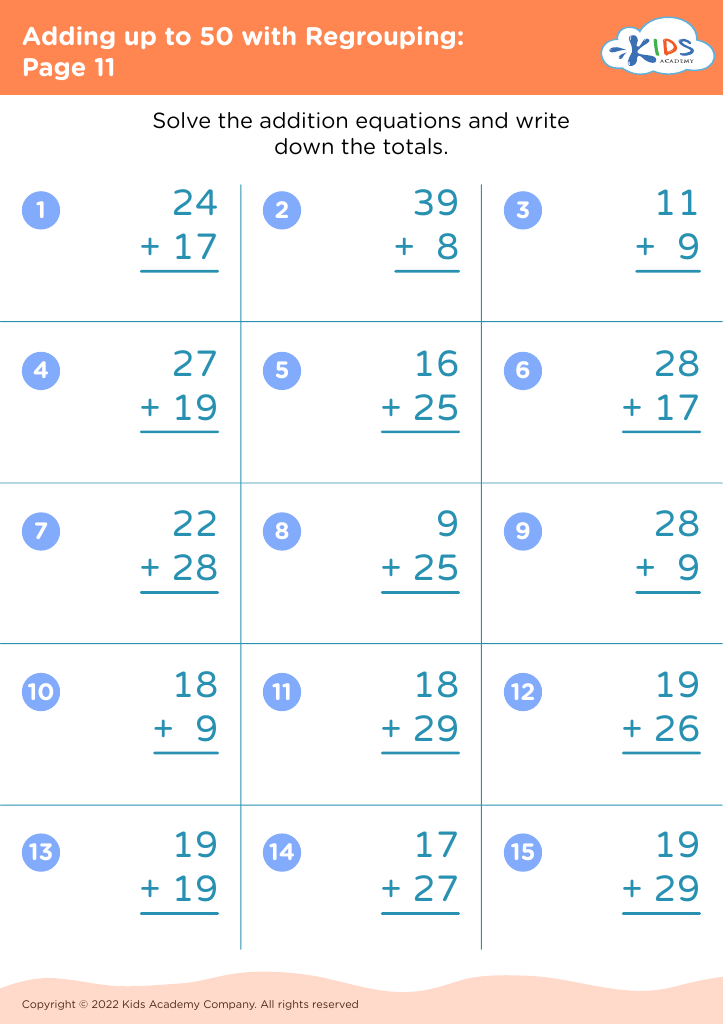
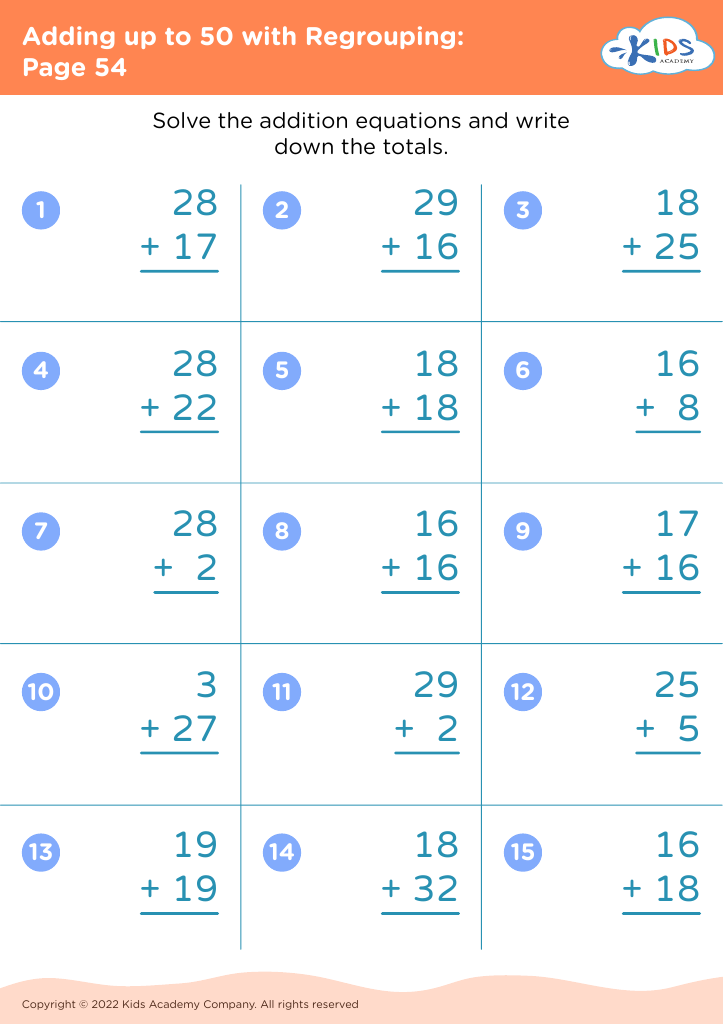
Explore our engaging "Color Identification Adding up to 50 with Regrouping Worksheets!" This resource combines colorful visuals with math practice, helping early learners master addition while enhancing their color recognition skills. Designed for young students, these worksheets encourage hands-on learning as children identify various colors while solving addition problems that require regrouping. Besides improving math proficiency in adding up to 50, the activities foster creativity and visual awareness, making learning fun and interactive. Perfect for classroom use or at-home practice, these worksheets help build a strong foundation in both mathematics and color identification skills in a playful, supporting environment.
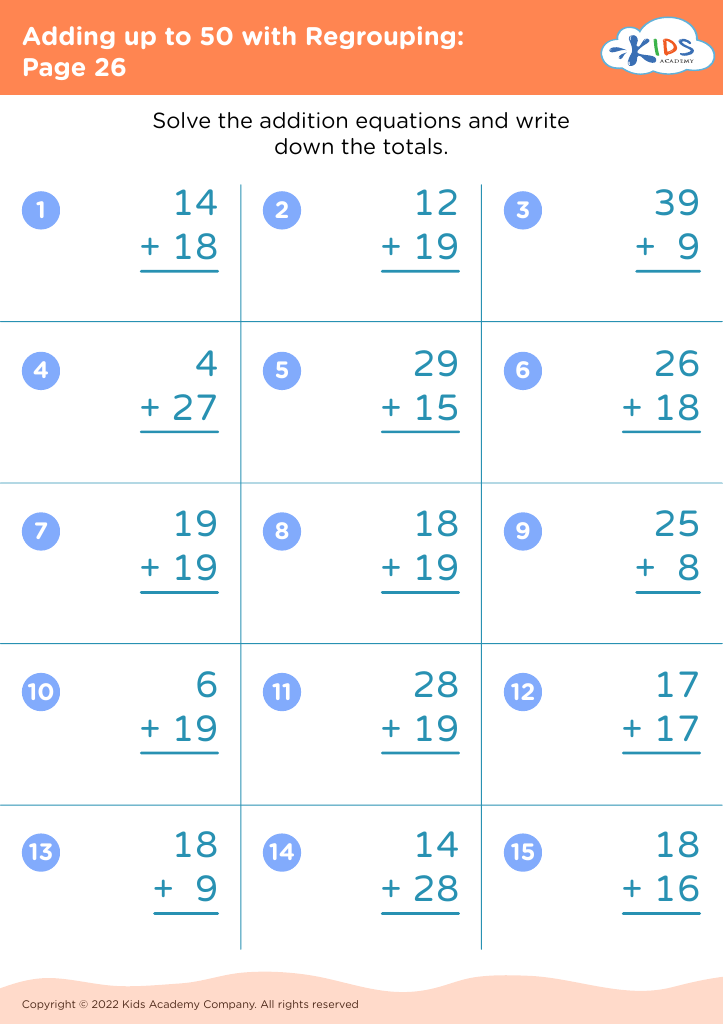
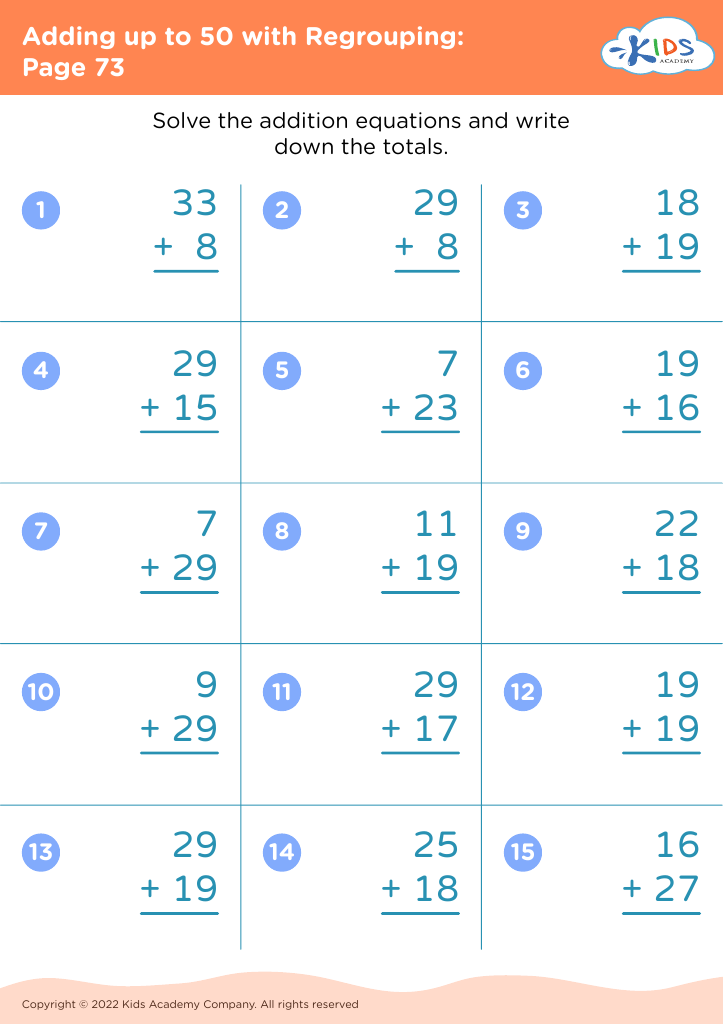


Color identification and adding up to 50 with regrouping are crucial skills for early learners, and both serve as foundational elements in developing a child's cognitive abilities. Parents and teachers should prioritize these skills for several reasons.
Firstly, color identification enhances visual perception and cognitive development. Understanding colors fosters creativity and critical thinking, preparing children for complex problem-solving in later math and science subjects. Recognizing and naming colors also helps in communication and social interactions, as children use these skills to express themselves.
Secondly, learning to add up to 50 with regrouping builds essential numerical understanding. It lays the groundwork for more advanced math concepts such as place value, addition, and subtraction. Mastery of this skill enables students to approach math with confidence, reducing anxiety associated with more challenging topics as they progress in their education.
Moreover, combining these two areas promotes a multi-sensory learning experience, engaging children more effectively. When parents and teachers incorporate colorful visuals and interactive games into math lessons, they capture students' attention and make learning enjoyable.
Ultimately, fostering these skills not only enriches early education but also equips children with a solid foundation for future academic and life success.