Shape Recognition Adding up to 50 with Regrouping Worksheets
6 filtered results
-
From - To
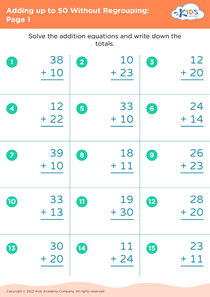
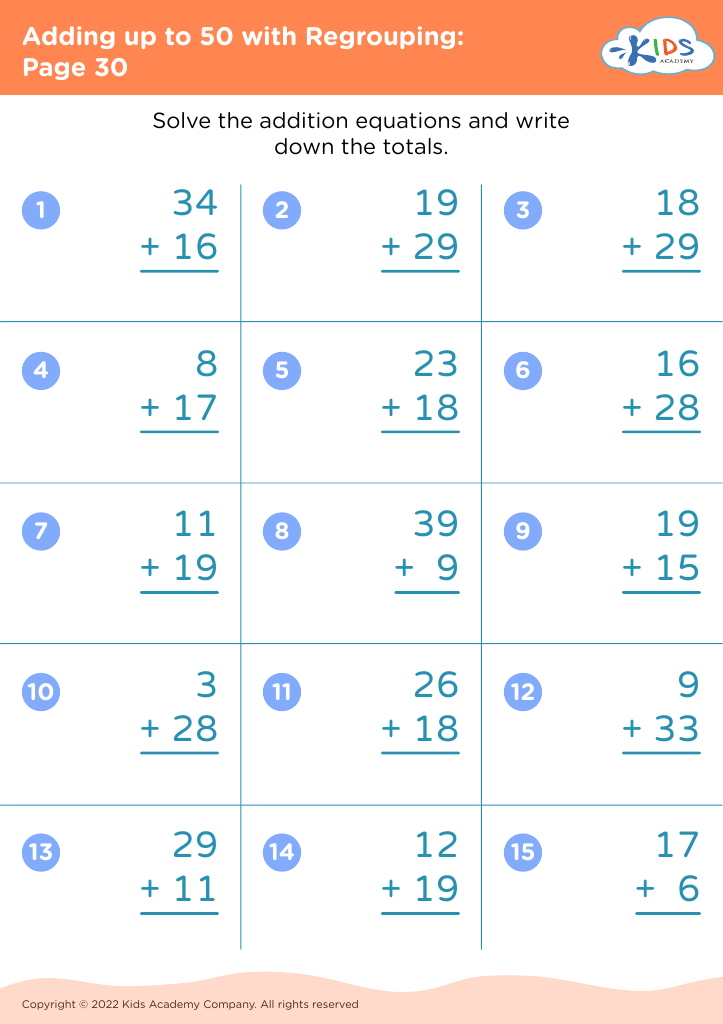
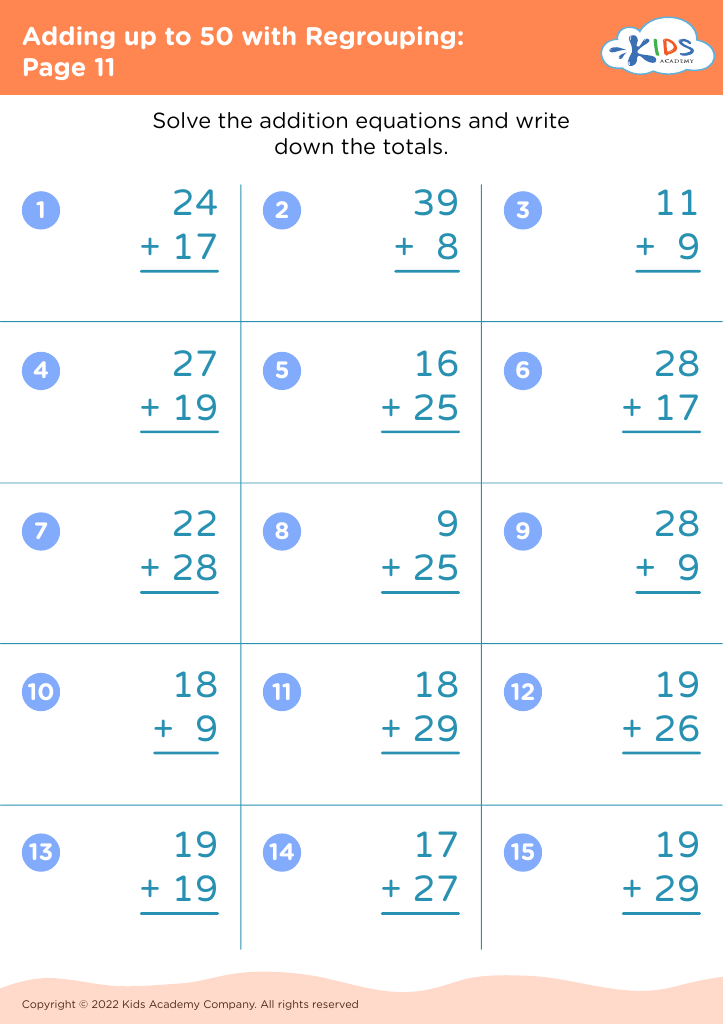
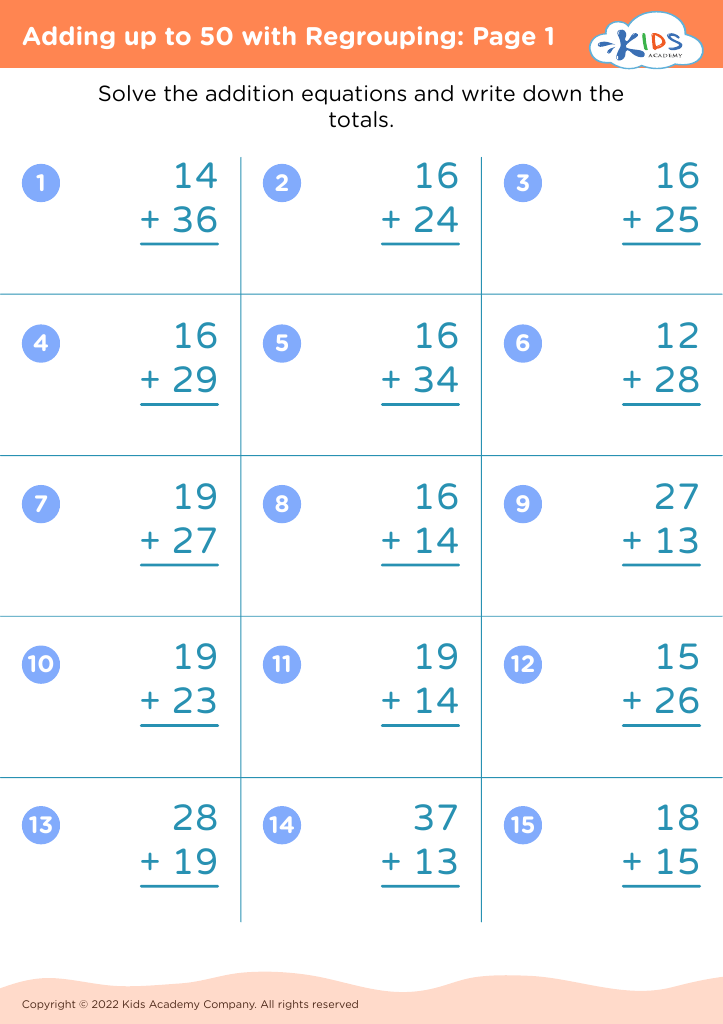
Discover our engaging "Shape Recognition Adding up to 50 with Regrouping Worksheets," designed to enhance young learners' mathematical skills while fostering shape recognition. These worksheets combine fun and education, allowing students to explore geometric shapes as they tackle addition problems involving regrouping. Children will practice identifying shapes, handling numbers up to 50, and understanding the concepts of carrying over in addition. Ideal for early grade classrooms, these printable resources aid in developing critical thinking and problem-solving skills. Equip your students with the tools they need to master addition in an enjoyable way while reinforcing their geometry knowledge!
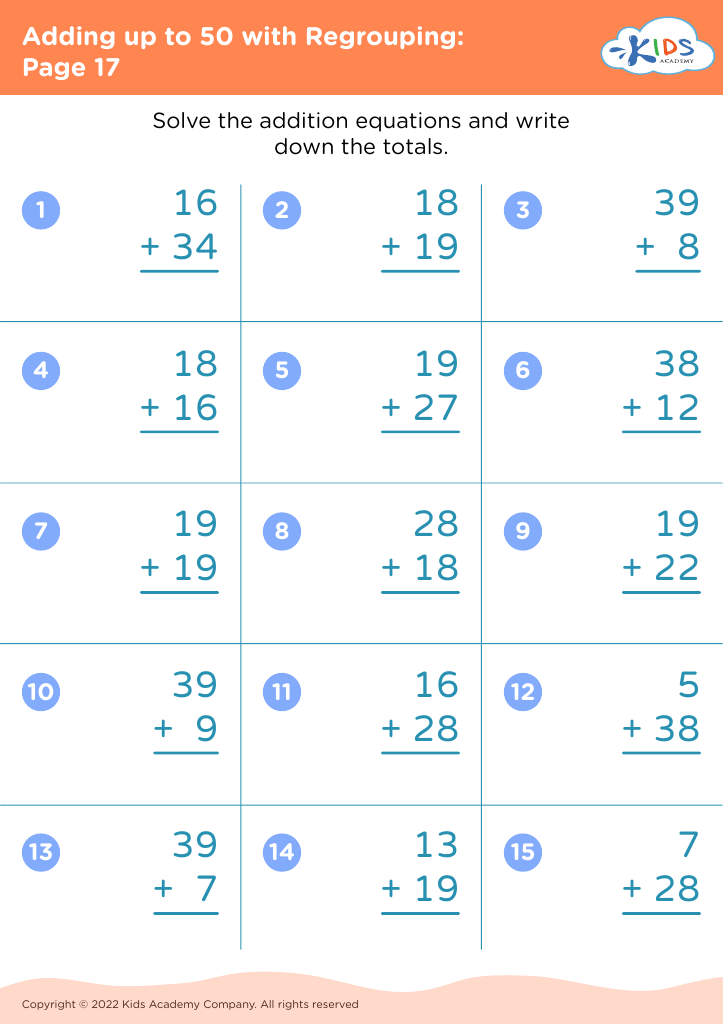
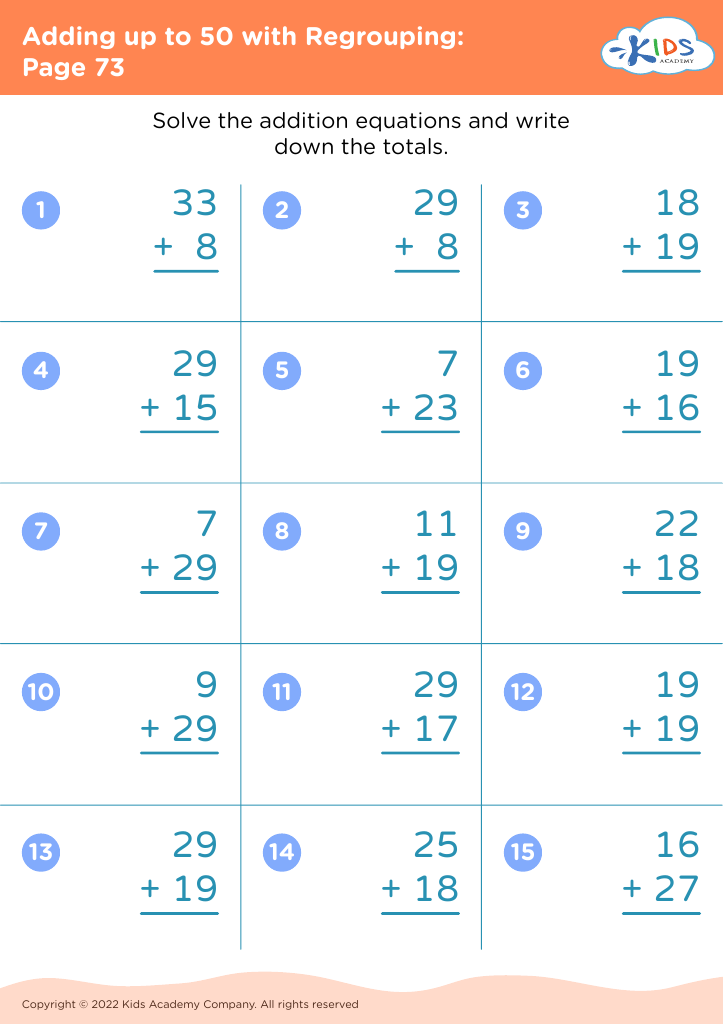
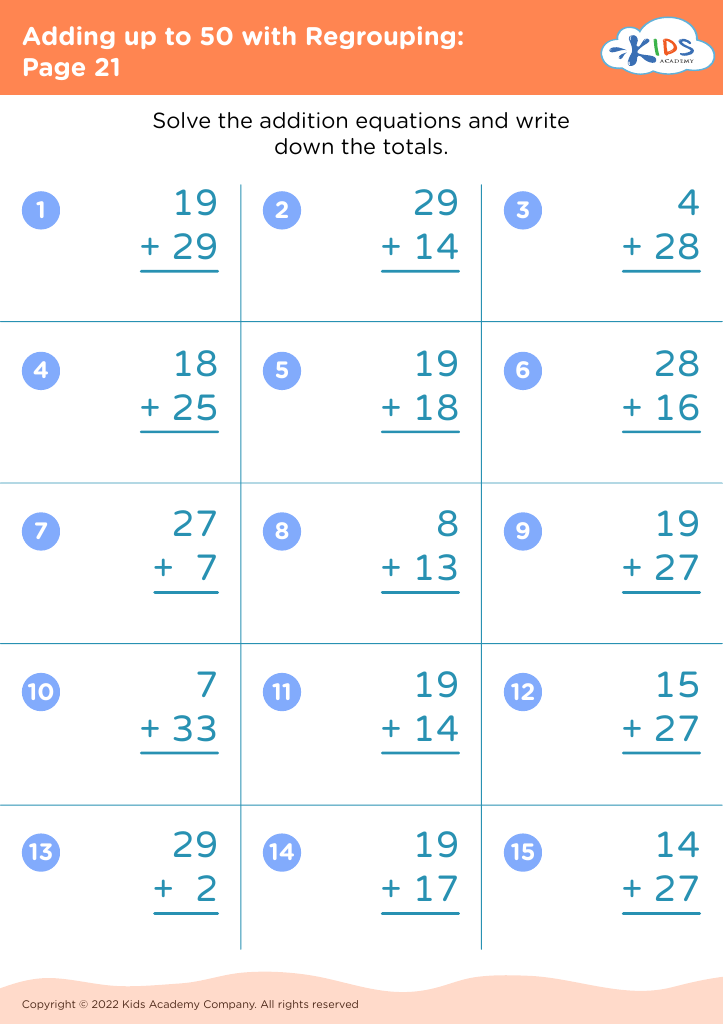


Shape recognition and the ability to add numbers up to 50 with regrouping are essential skills for young learners, laying a strong foundation for their future mathematical development. Understanding shapes not only helps children identify everyday objects but also forms the basis for geometry and spatial awareness. This foundational knowledge fosters critical thinking, problem-solving abilities, and creativity, enabling children to approach complex concepts in later grades with confidence.
On the other hand, mastering addition up to 50 with regrouping strengthens numerical fluency and insight into place value, which are key elements of mathematics. This skill is more than just performing operations; it encourages children to understand the composition of numbers and how they can be manipulated, reinforcing logical reasoning skills.
Parents and teachers should care about these areas because they significantly contribute to overall academic success. Early intervention in these subjects can identify areas where a child might struggle, allowing for targeted support. Encouraging proficiency in shape recognition and multidigit addition not only boosts self-esteem but also establishes a positive attitude towards mathematics, ensuring that children are well-equipped to tackle future challenges in school and beyond. Engaging in these areas prepares students for a life filled with opportunities in an increasingly mathematical world.