Comparing Fractions Adding up to 50 Without Regrouping Worksheets
7 filtered results
-
From - To
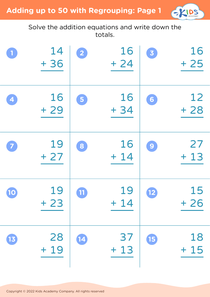
Unlock your child's potential in math with our "Comparing Fractions Adding up to 50 Without Regrouping Worksheets." Designed for young learners, these worksheets focus on building a strong understanding of fractions by engaging students in comparing fractions. By emphasizing skills that fall within the addition up to 50, children will enhance their mathematical confidence without the complexity of regrouping. Ideal for elementary students, these worksheets make learning fractions simple and fun, paving the way for future math success. Equip your child with essential math skills using our expertly crafted worksheets. Download now and watch your child’s numeracy skills soar!
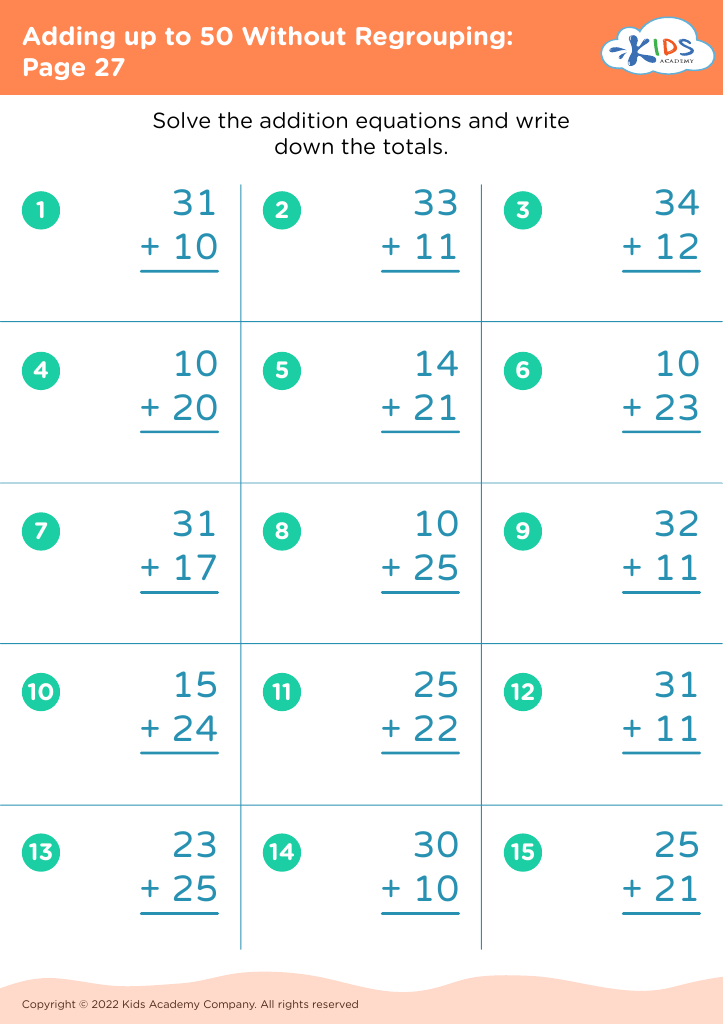
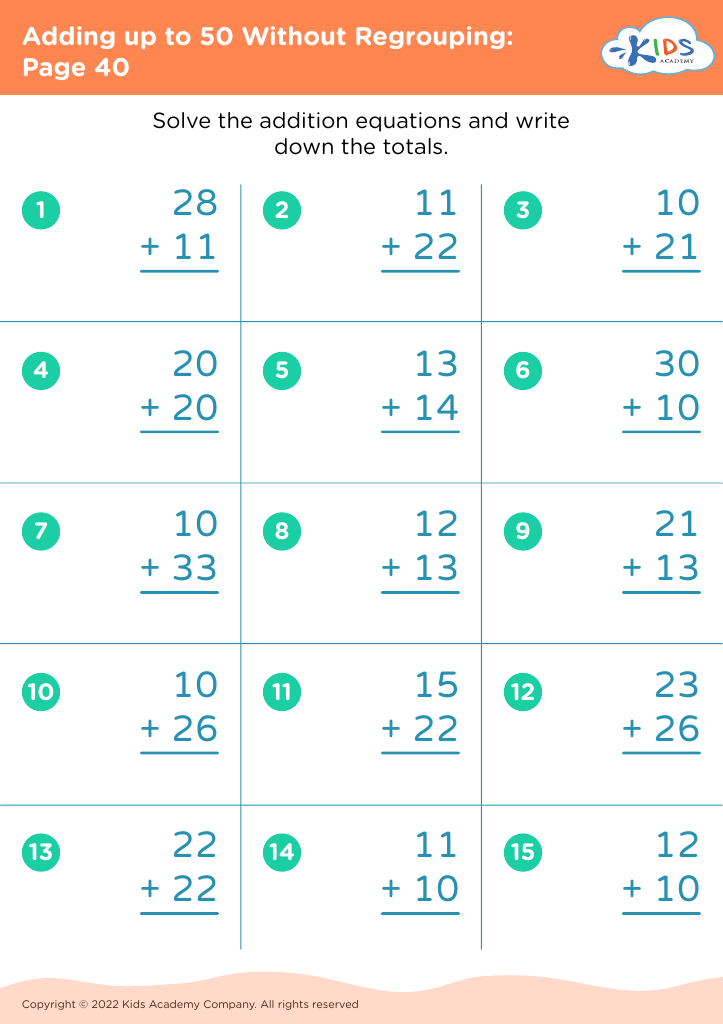
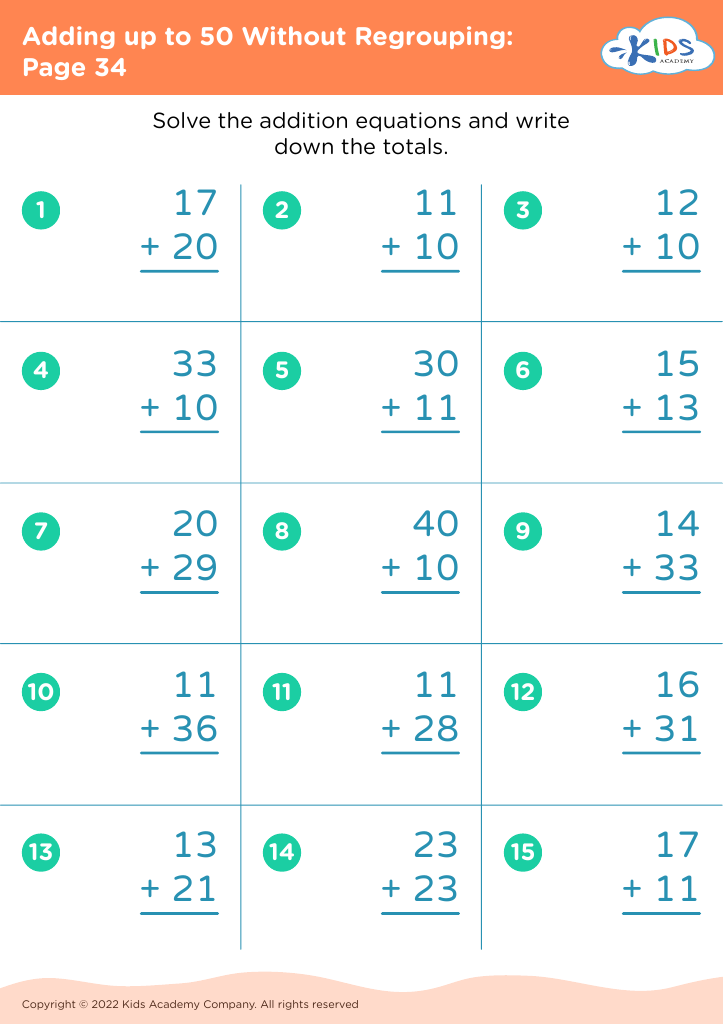
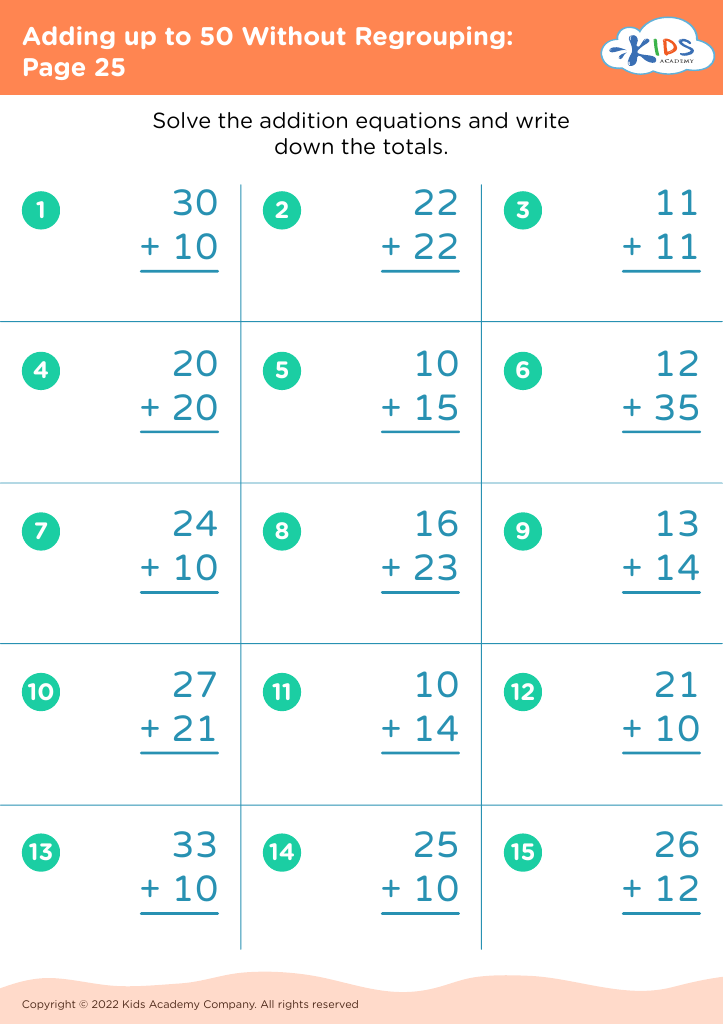
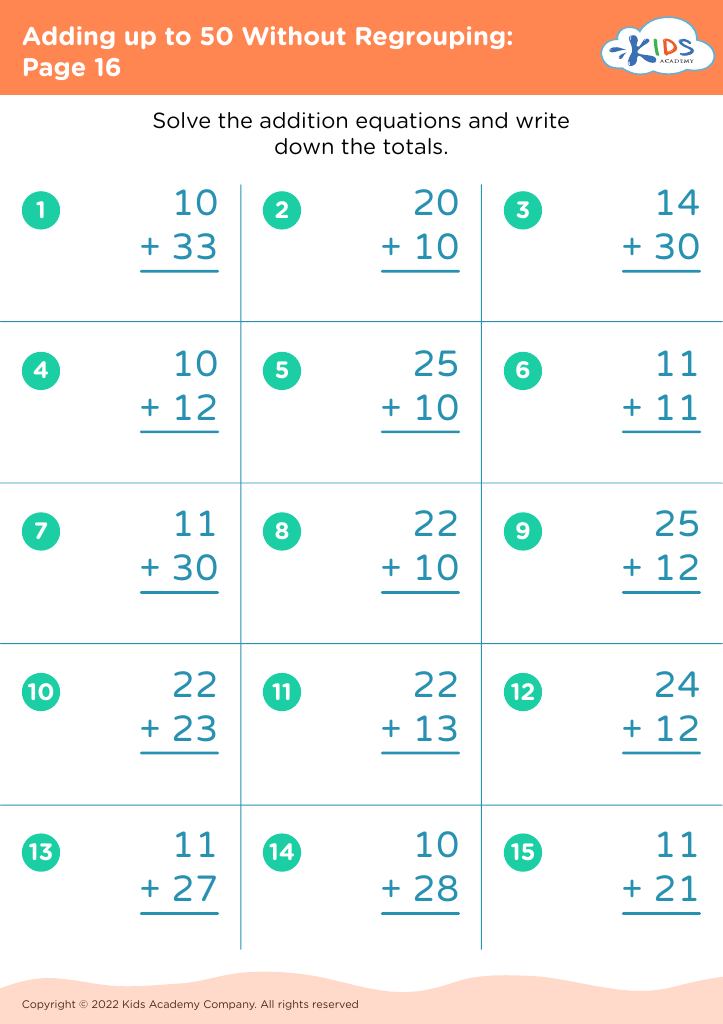
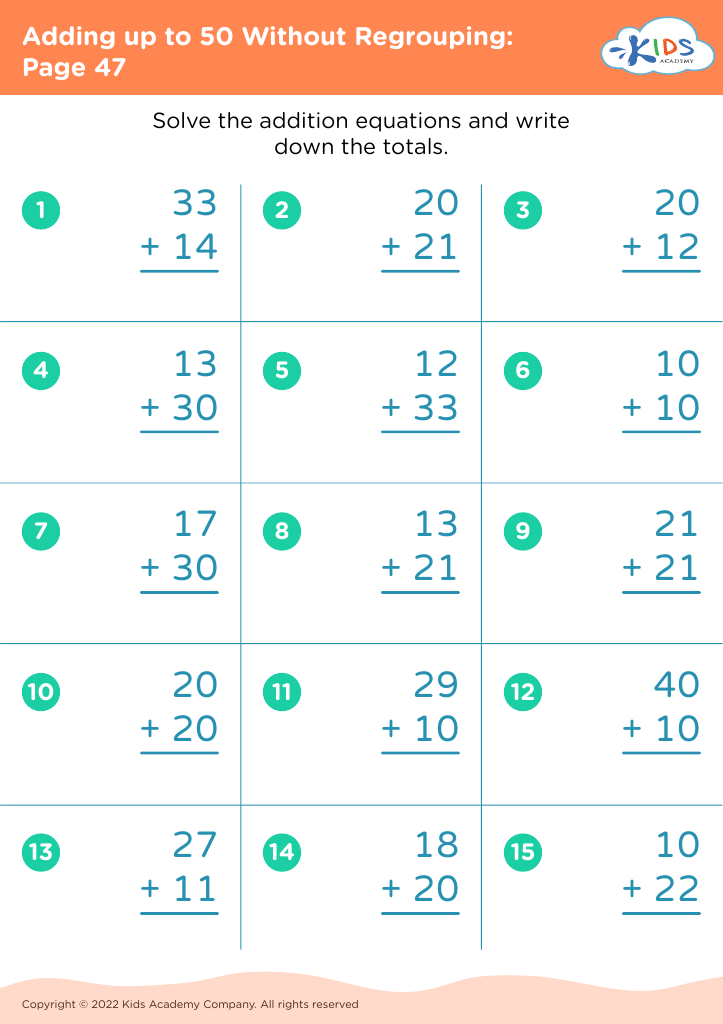
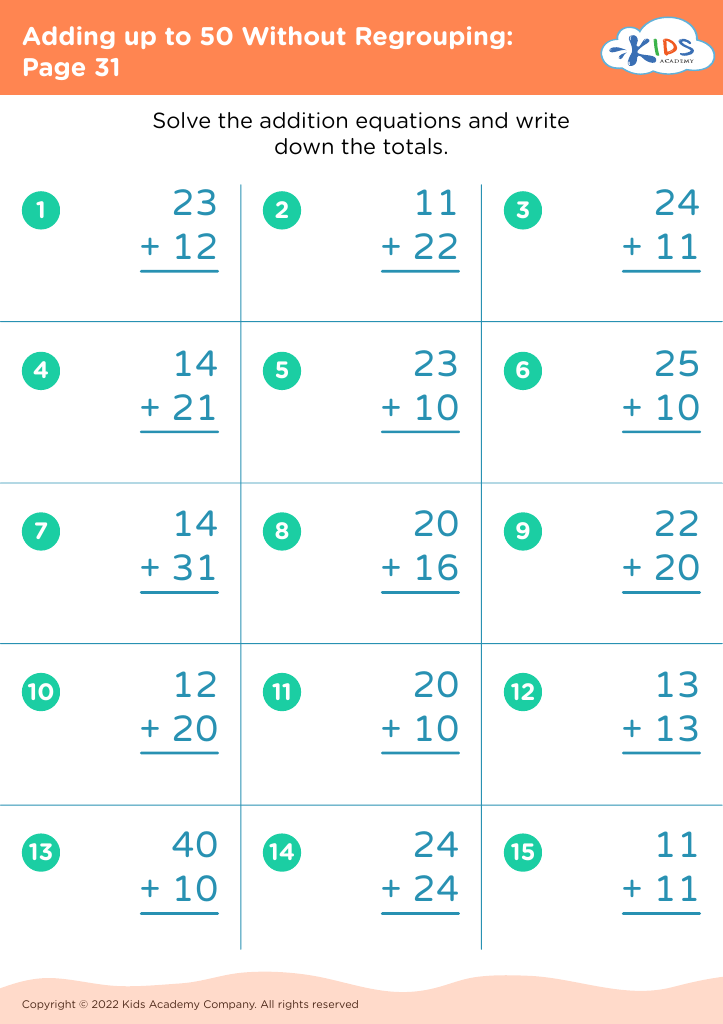


Comparing fractions and performing arithmetic without regrouping are fundamental skills essential for early math development, offering multiple educational benefits that lay a strong foundation for future learning.
Firstly, comparing fractions helps children understand proportionality and equivalence, which are crucial for grasping more advanced math topics like algebra, geometry, and statistics. It builds critical thinking and analytical skills as students discern which fractions are larger or smaller and why. Doing this real-world-relevant makes math feel useful and less abstract, aiding in better retention and understanding.
Adding up to 50 without regrouping is invaluable as an introductory operation for young learners. It simplifies the complex steps involved in regrouping, focusing instead on solidifying basic addition skills. This includes recognizing number bonds, improving number sense, and reinforcing accuracy in simple arithmetic—building confidence and fluency. Mastery of this level ensures that more complex operations involving larger numbers or regrouping do not overwhelm the student later on.
For teachers and parents, fostering these skills early enables a smoother transition to more complicated math concepts. It aids in identifying any learning gaps, ensuring children are on track with their grade-level expectations. In short, comparing fractions and performing non-regrouping addition are foundational stepping stones that prepare students for future academic success and everyday numeracy.