Identifying shapes Adding up to 50 Without Regrouping Worksheets
6 filtered results
-
From - To
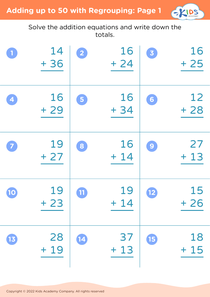
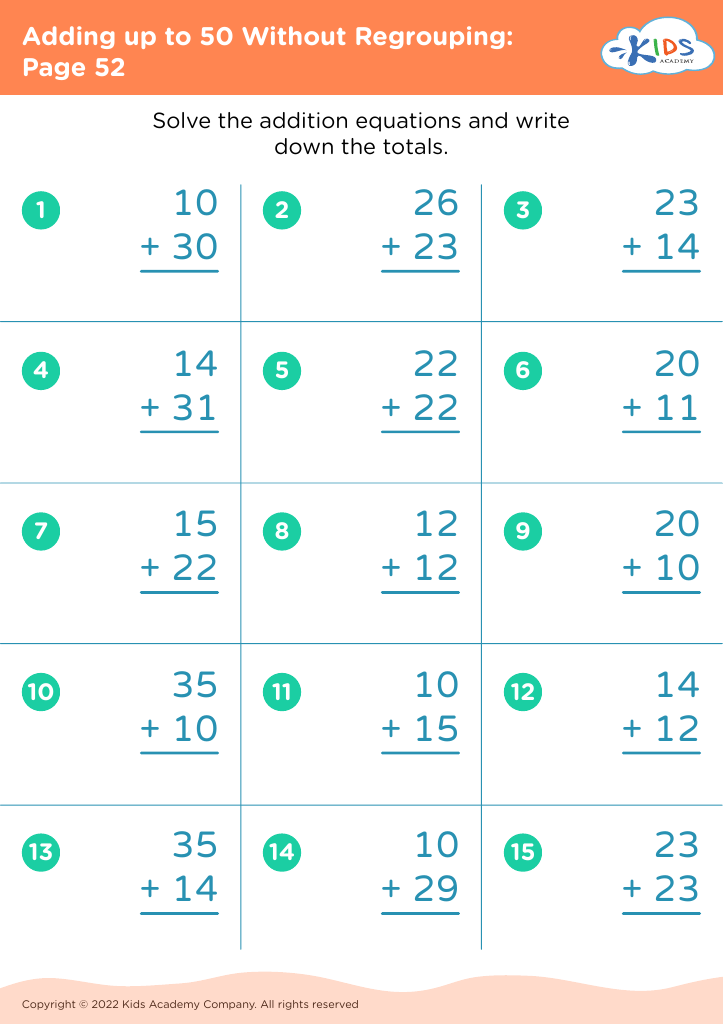
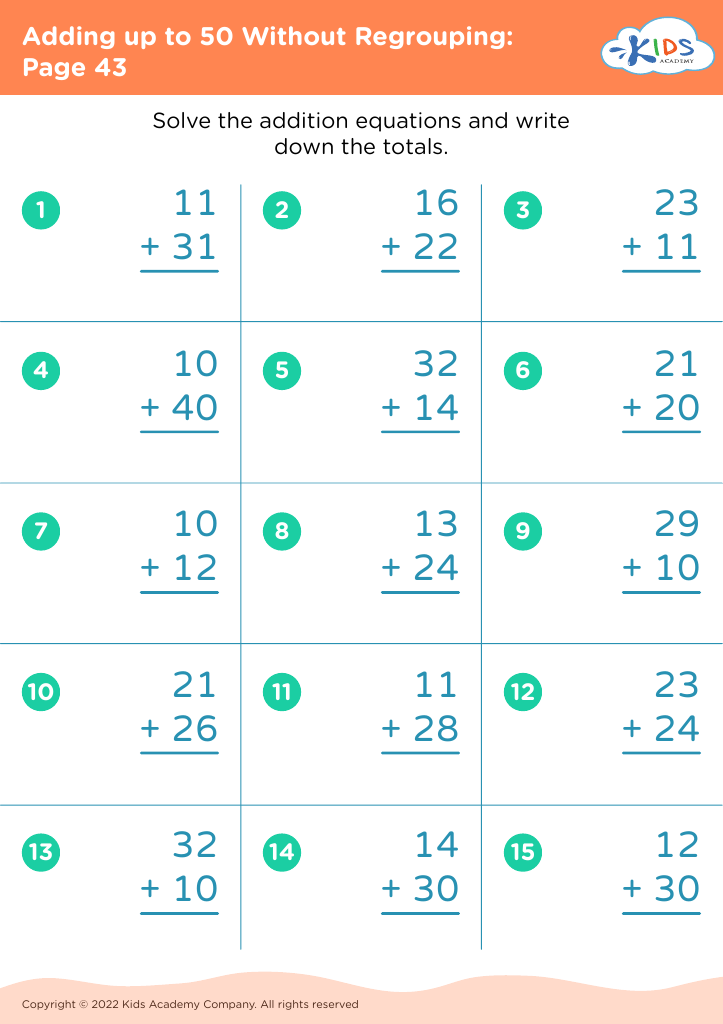
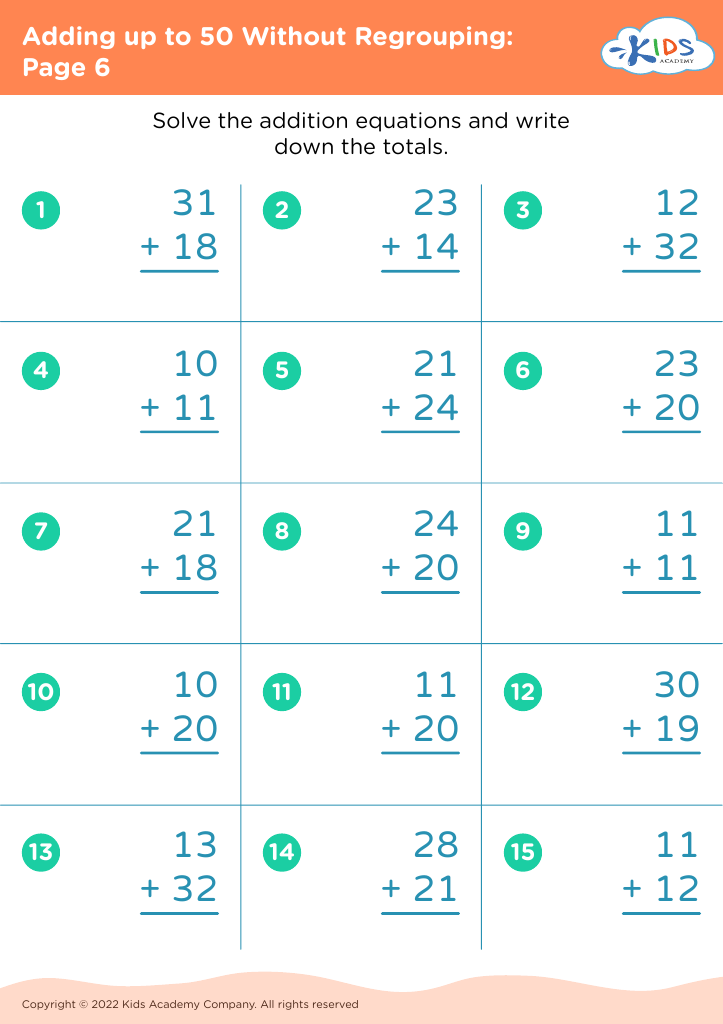
Enhance your students' math skills with our "Identifying Shapes Adding up to 50 Without Regrouping Worksheets." These engaging worksheets combine geometry and addition, helping young learners identify various shapes while practicing their addition skills up to 50, all without regrouping. Through fun and colorful exercises, children will develop their understanding of shapes and improve their ability to solve addition problems, fostering both critical thinking and mathematical fluency. Perfect for early grade classrooms, these worksheets provide a great opportunity for kids to learn through play, making math fun and approachable. Download your worksheets today and watch your students excel in both geometry and addition!
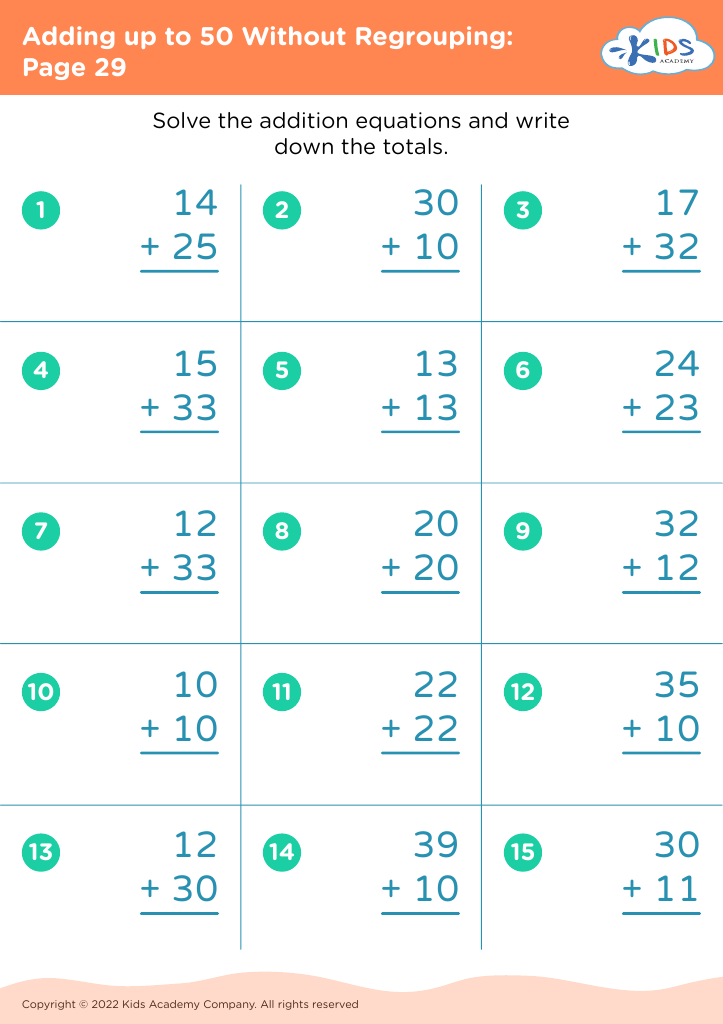
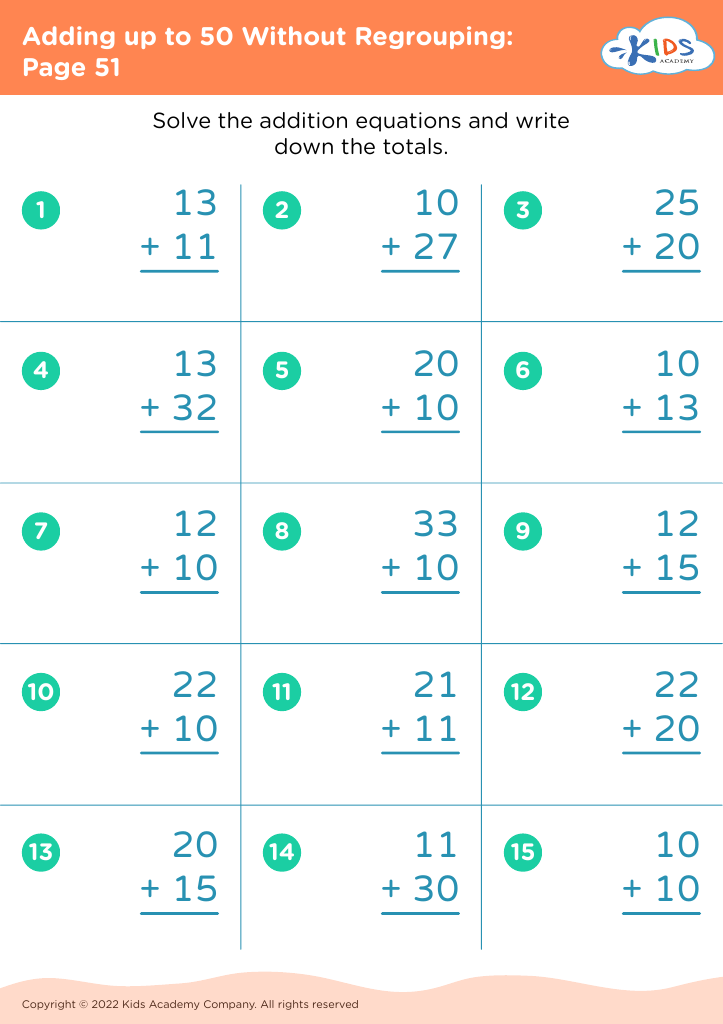
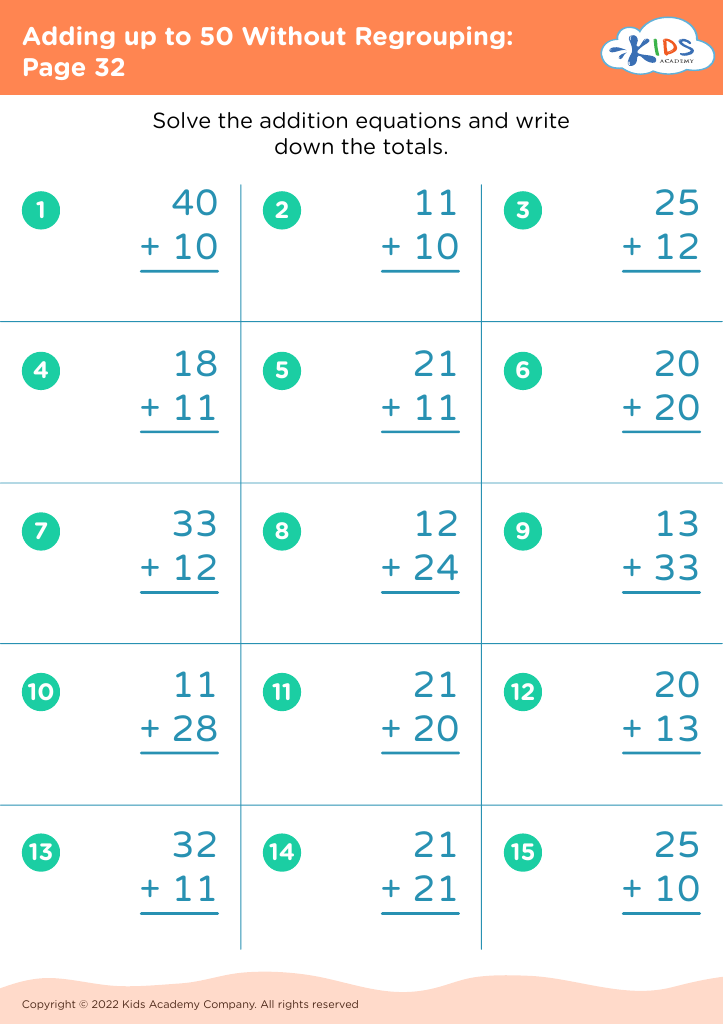


Identifying shapes and understanding basic mathematical concepts, like adding numbers up to 50 without regrouping, are essential skills for early learners. For parents and teachers, fostering these skills helps children develop critical thinking and problem-solving abilities that form the foundation for advanced learning.
Shape identification enhances spatial awareness and recognition, enabling children to understand their surroundings better. It supports their ability to categorize and organize information, which is vital not only in math but also in subjects like art and science. By learning about shapes, children also build language skills as they learn to describe and discuss their geometric discoveries.
Adding up to 50 without regrouping strengthens a child’s number sense and computational fluency. This skill helps build confidence in their mathematical abilities and reduces anxiety when encountering more complex math in the future. It paves the way for understanding addition and subtraction, as well as concepts related to patterns and relationships among numbers.
Together, these skills lay the groundwork for higher-order thinking and encourage a love for learning. By prioritizing shape identification and basic addition, parents and teachers invest in a child's educational journey, promoting lifelong skills that are essential for success in academics and everyday life.