Reading comprehension Adding up to 50 Without Regrouping Worksheets
3 filtered results
-
From - To
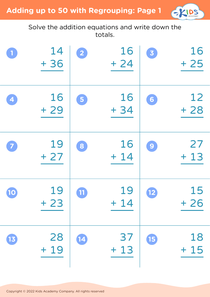
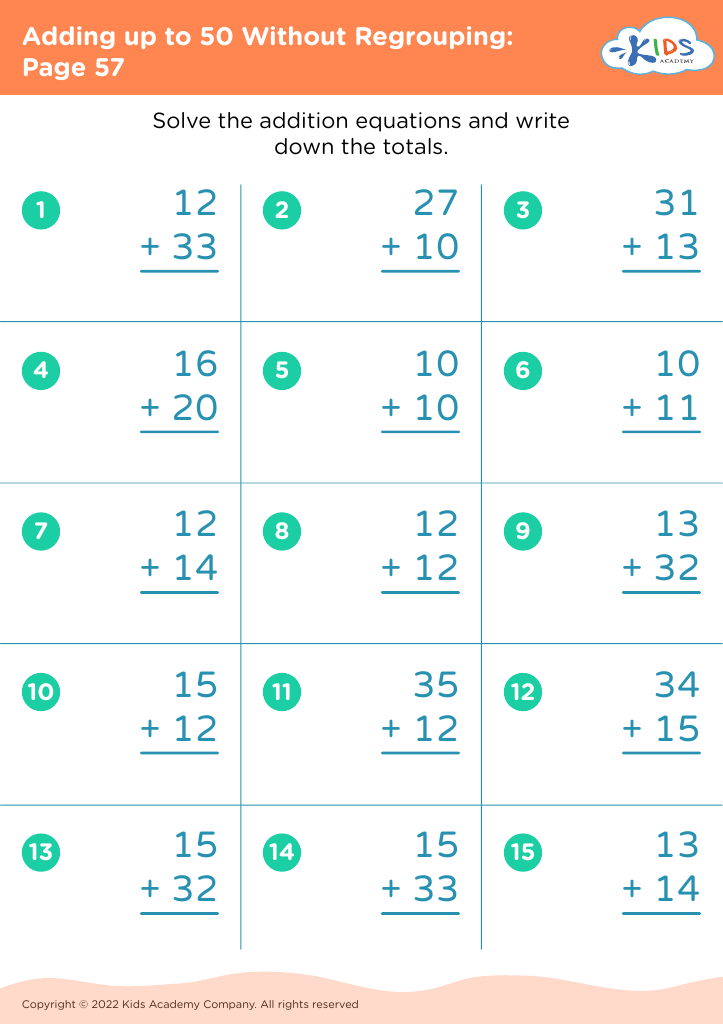
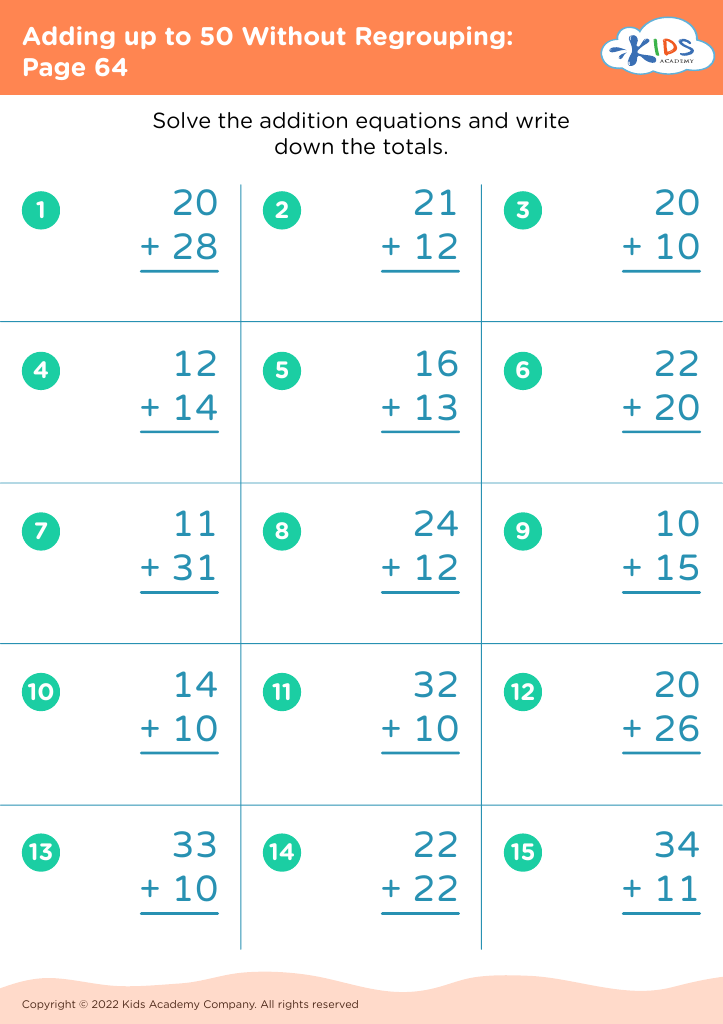
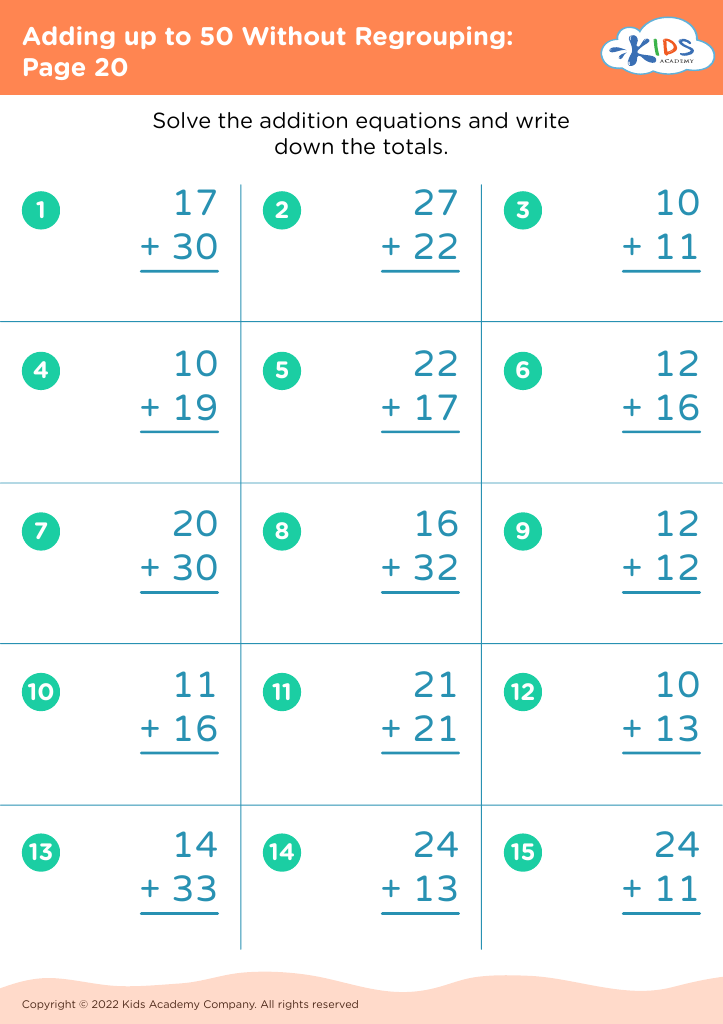
Enhance your students' learning experience with our "Reading Comprehension Adding up to 50 Without Regrouping Worksheets." These engaging worksheets are designed to boost students' math skills while simultaneously developing their reading comprehension abilities. Tailored for early learners, each worksheet combines fun mathematical challenges with grade-level reading passages that improve critical thinking and textual analysis. Kids will enjoy solving addition problems up to 50, reinforcing their understanding without the need for regrouping. Perfect for classroom use or home practice, these worksheets make mathematics enjoyable and help build essential comprehension skills necessary for future success. Explore these interactive resources today!


Reading comprehension and strong mathematical skills, such as adding up to 50 without regrouping, are fundamental components of early education that lay the groundwork for lifelong learning. Parents and teachers should prioritize reading comprehension because it enables children to understand instructions, follow directions, and engage with a wide array of subjects. This skill is essential for everyday tasks, from understanding a story to grasping scientific concepts.
Similarly, mastering addition without regrouping fosters early mathematics skills, building confidence and a solid foundation for more complex mathematical operations in the future. Understanding how to group numbers effectively creates a strong number sense, which is vital for problem-solving and analytical thinking.
Moreover, the connection between reading and math should not be overlooked; strong comprehension skills enhance a learner’s ability to tackle word problems and understand mathematical concepts. When both areas are emphasized, children develop critical thinking abilities that translate into all areas of study.
By ensuring that children become proficient in reading comprehension and addition, parents and teachers increase their overall competence, helping them reach their full potential, excel in school, and become confident, lifelong learners.