Recognizing shapes Adding up to 50 Without Regrouping Worksheets
5 filtered results
-
From - To
Discover our engaging "Recognizing Shapes Adding up to 50 Without Regrouping Worksheets" designed for early learners! These interactive worksheets combine essential math skills with shape recognition, creating a fun and educational experience. Kids will practice their addition, adding up to 50 without regrouping, while also identifying and naming various shapes. Each worksheet fosters critical thinking and enhances visual recognition, making math enjoyable and accessible. Ideal for classroom learning or at-home practice, our worksheets support young learners in developing foundational math skills alongside shape awareness. Empower your child’s learning today with these innovative worksheets! Explore the joy of math and shapes together!
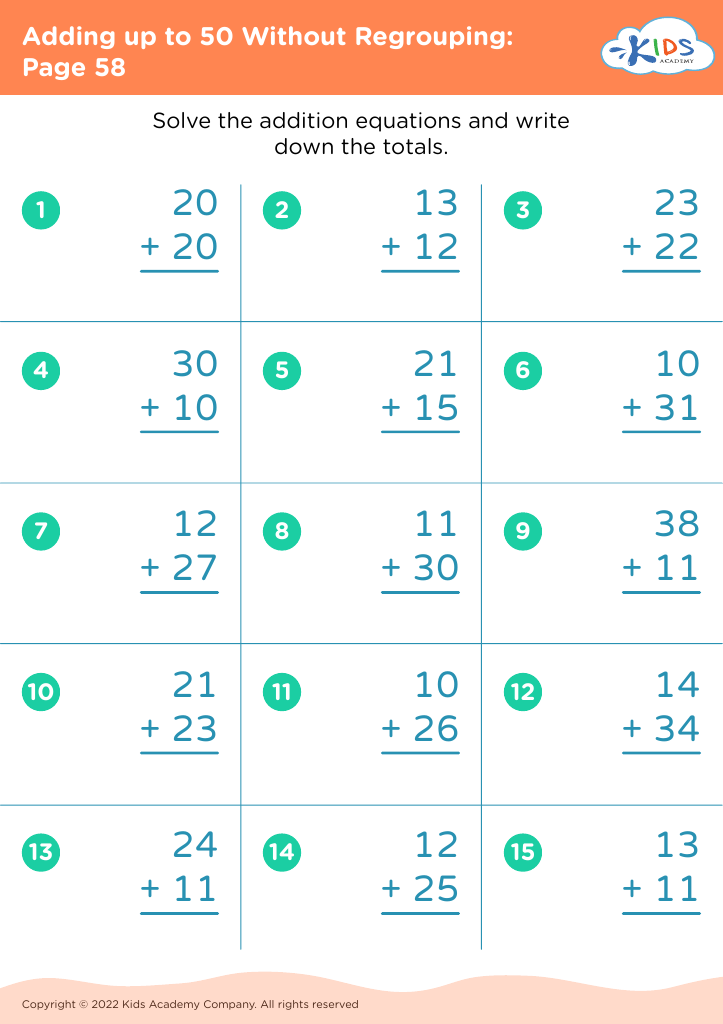
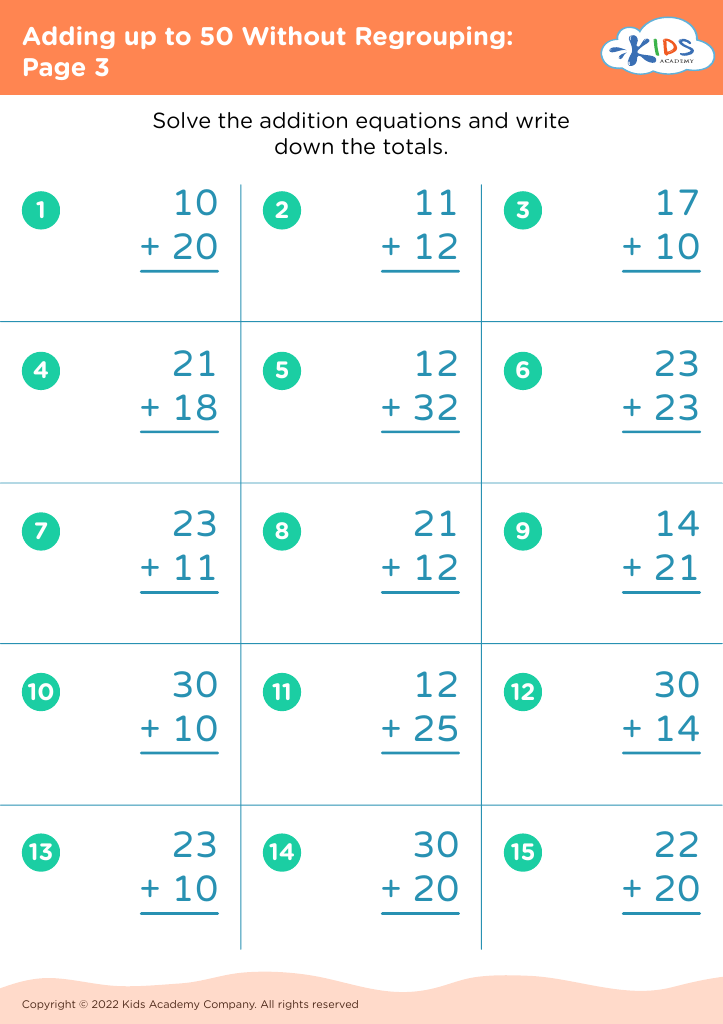
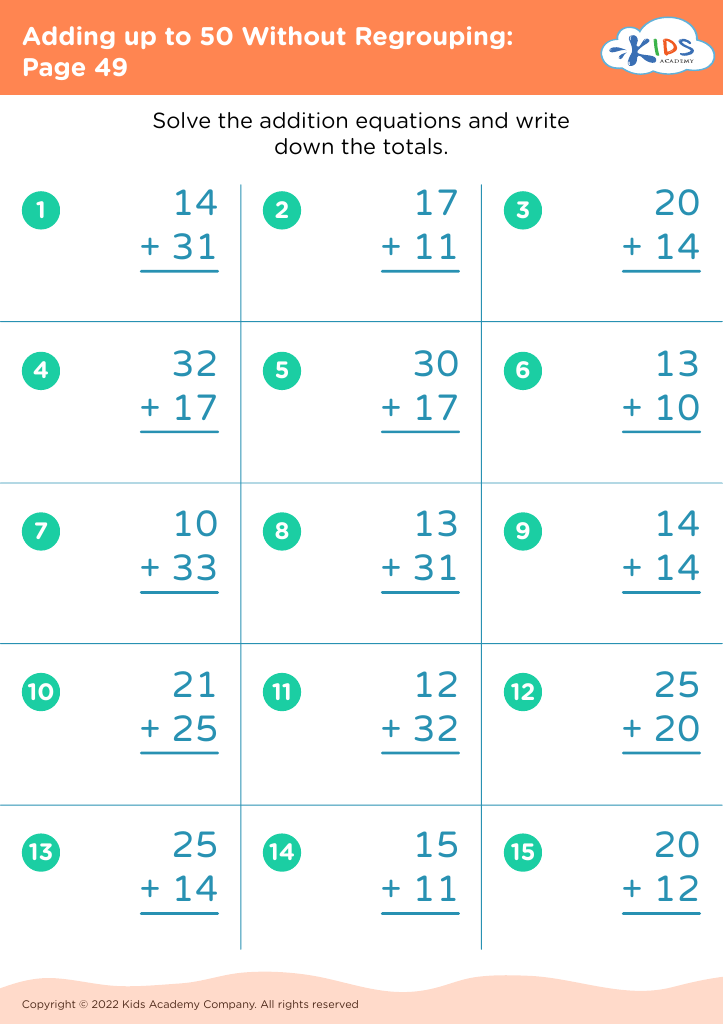
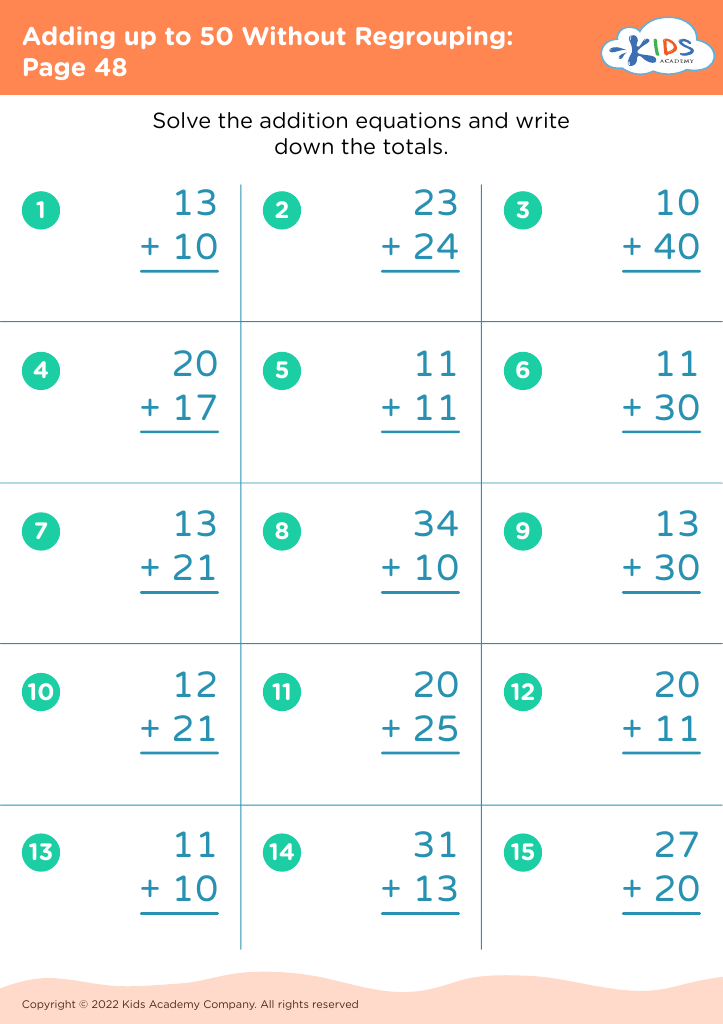
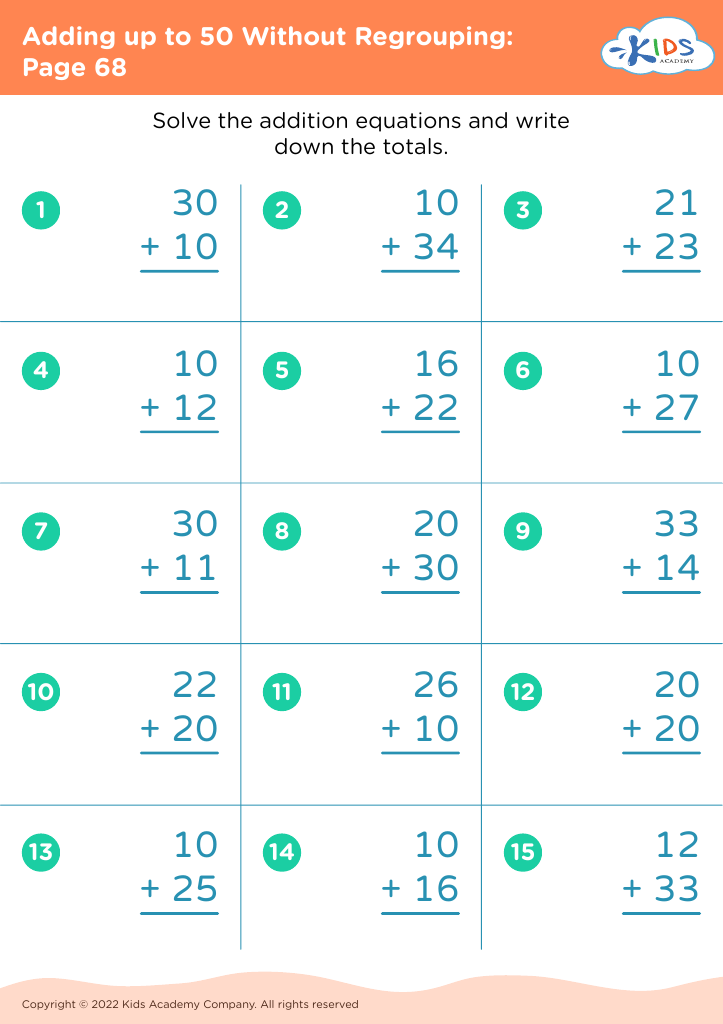


Recognizing shapes and mastering addition up to 50 without regrouping are essential skills that significantly contribute to a child's cognitive development and mathematical foundation.
Firstly, understanding shapes fosters geometric awareness. As children learn to identify and categorize shapes, they enhance their spatial reasoning, which is crucial for problem-solving in higher math and real-world situations. This foundational skill also supports subjects like art and engineering, promoting creativity and critical thinking.
Secondly, addition skills—particularly the ability to add numbers up to 50 without regrouping—are foundational for later mathematical concepts. Mastering this skill allows children to build confidence in their arithmetic abilities and serves as a springboard for more complex calculations in future studies. Without the need for regrouping, children can focus on improving their mental math and developing strategies for efficient calculation.
Moreover, these skills cultivate a positive attitude towards learning and math in particular, leading children to view challenges as manageable. Consequently, when parents and teachers prioritize these competencies, they set the stage for their children to achieve academic success, encouraging lifelong learners equipped with the skills to navigate an increasingly complex world. Investing in these areas ultimately fosters a well-rounded education crucial for their future.