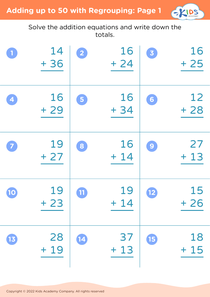
Understanding fractions Adding up to 50 Without Regrouping Worksheets
13 filtered results
-
From - To
Introducing our "Understanding Fractions: Adding Up to 50 Without Regrouping Worksheets"! Designed for early grade learners, these engaging worksheets help students master the concept of adding fractions while emphasizing numbers that total up to 50. Each activity encourages hands-on practice, enabling young minds to grasp fractional relationships without the complexity of regrouping. Clear instructions and visual aids make learning fun and accessible, ensuring students build a solid foundation in math. Perfect for classroom use or at-home learning, these worksheets offer an effective way to develop confidence in addition and foster a love for mathematics. Start your child’s journey into fractions today!
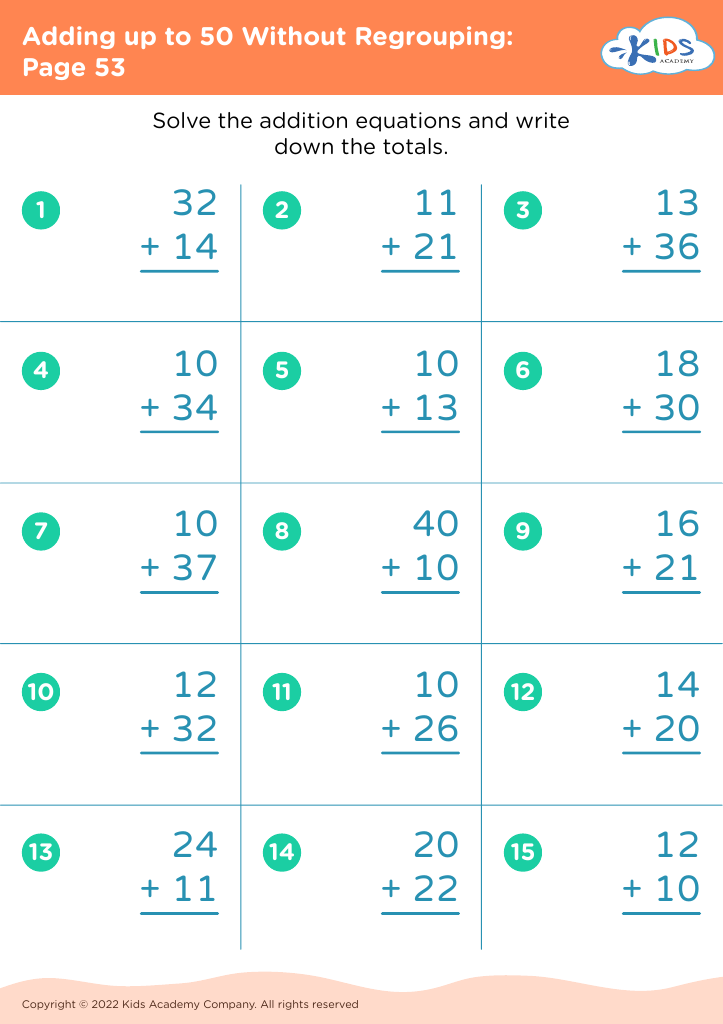
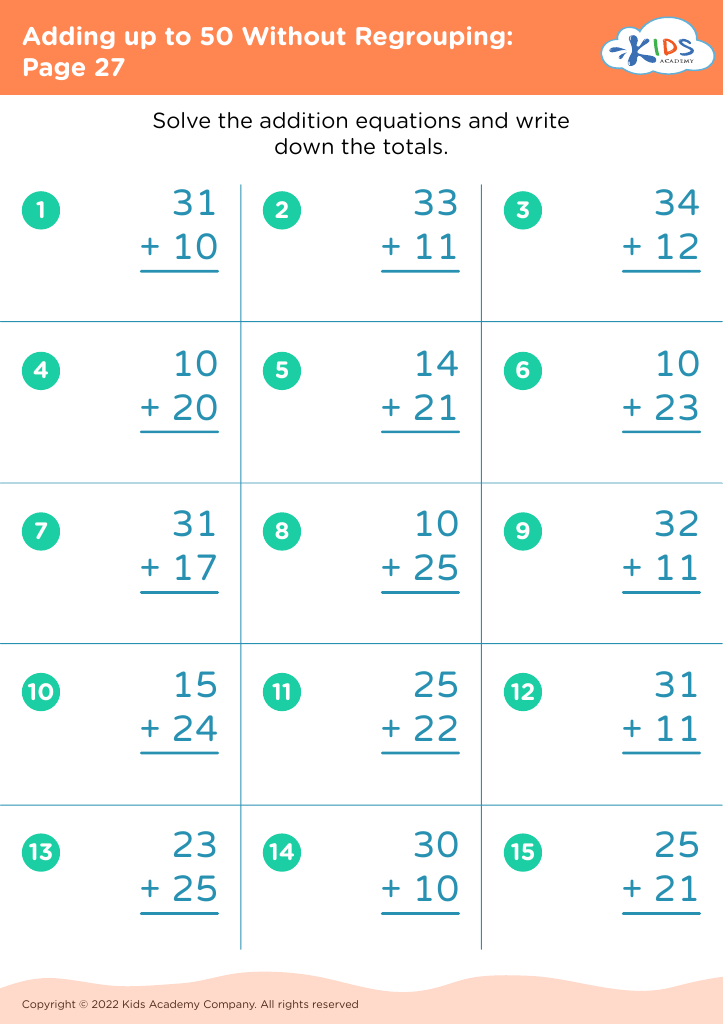
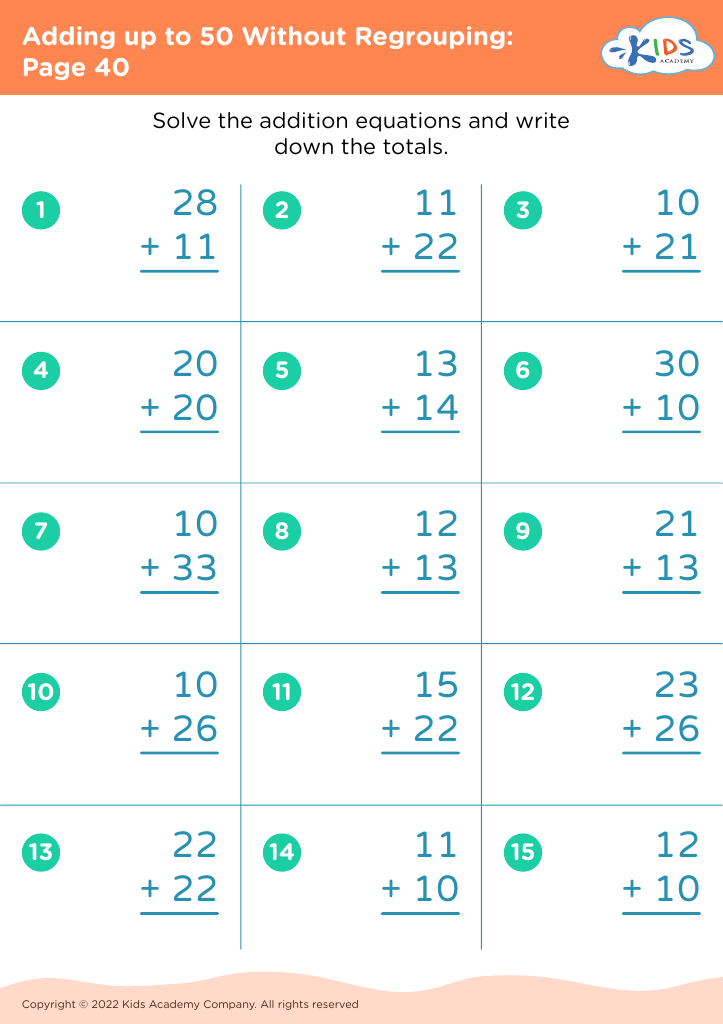
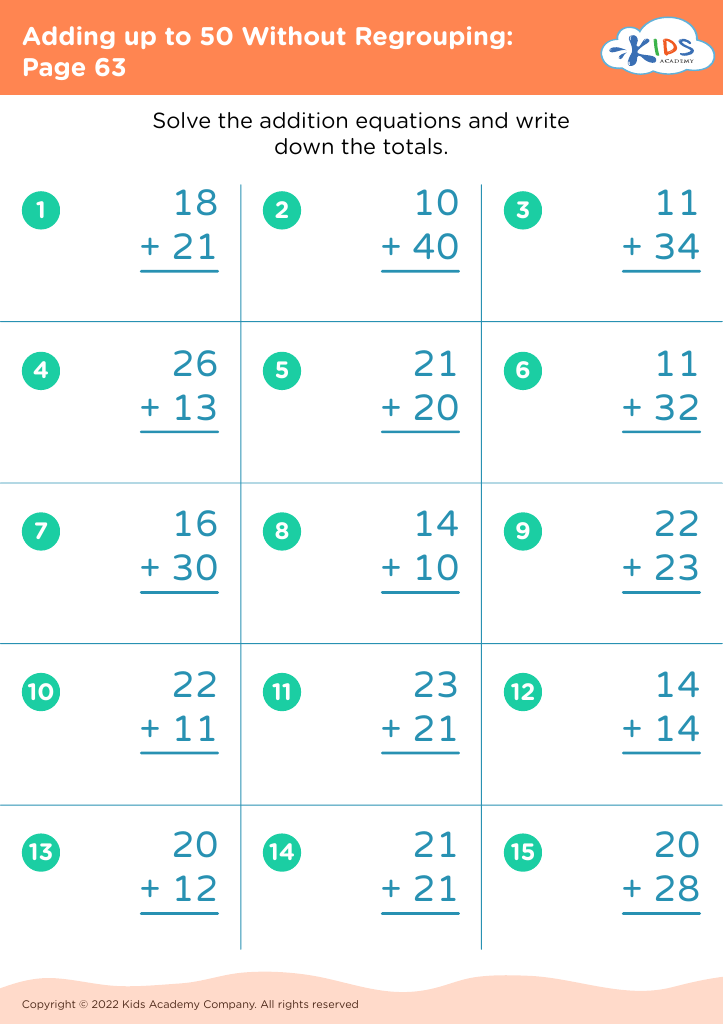
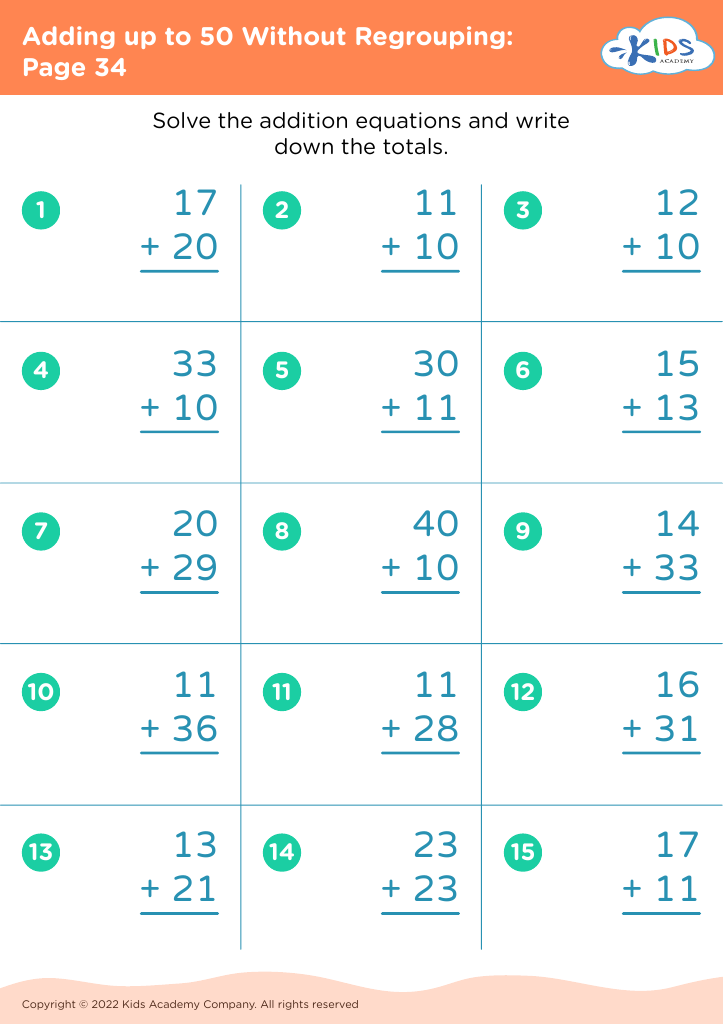
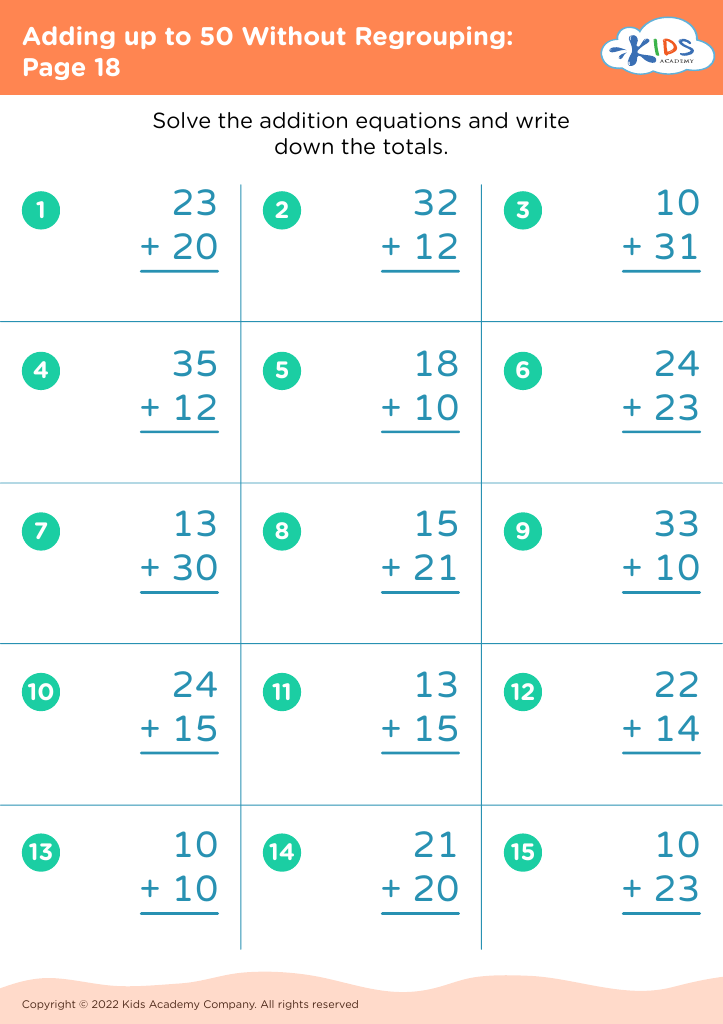
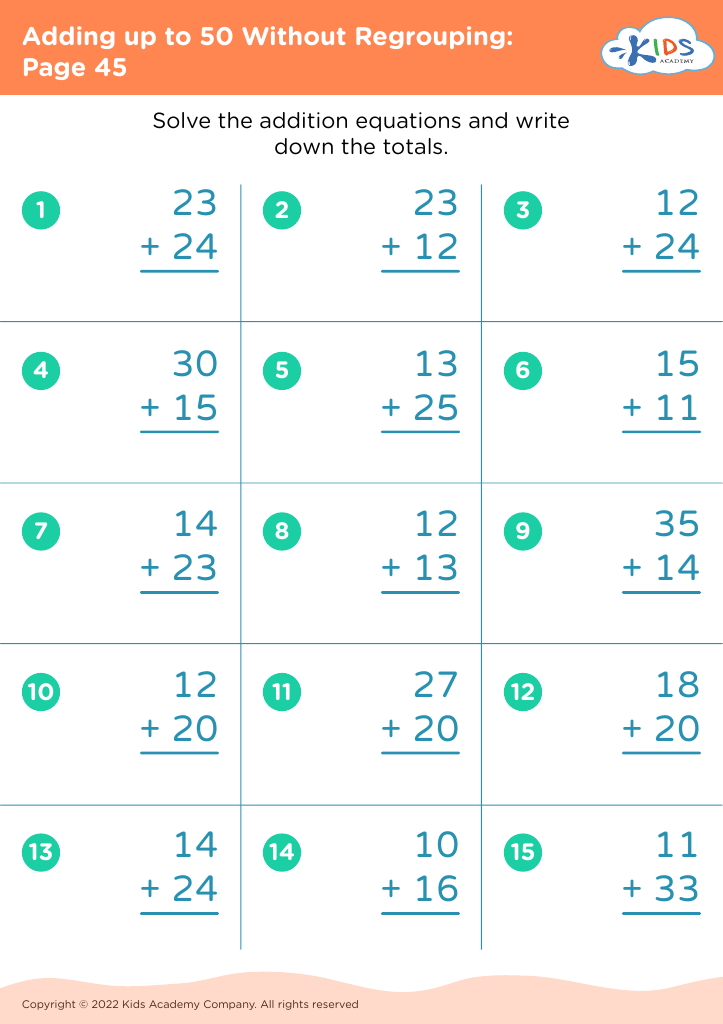
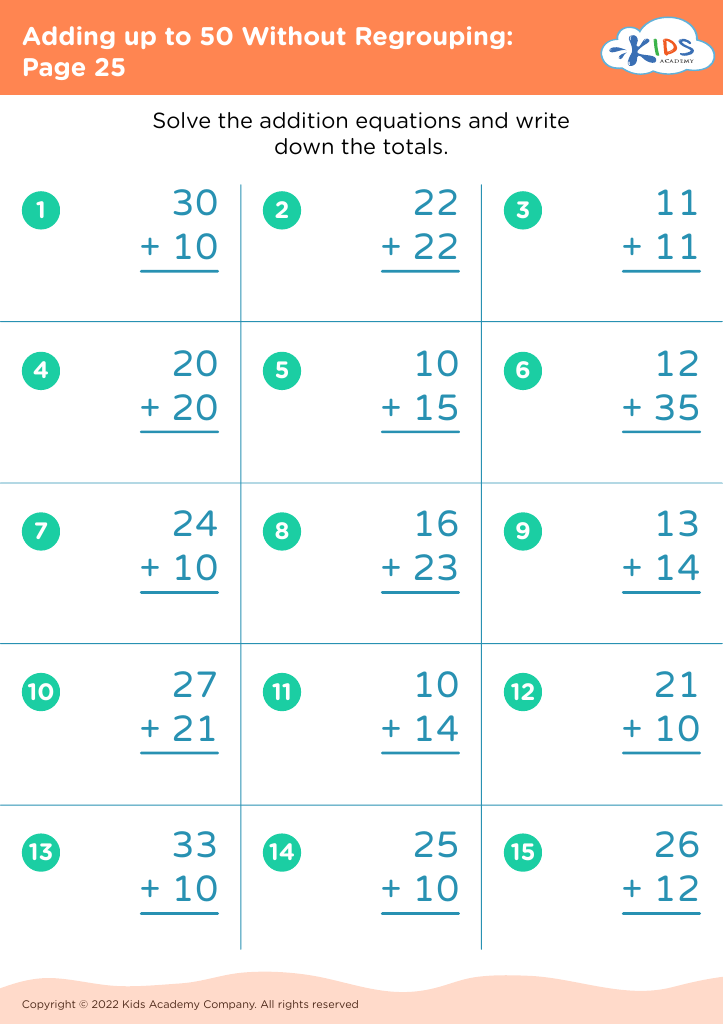
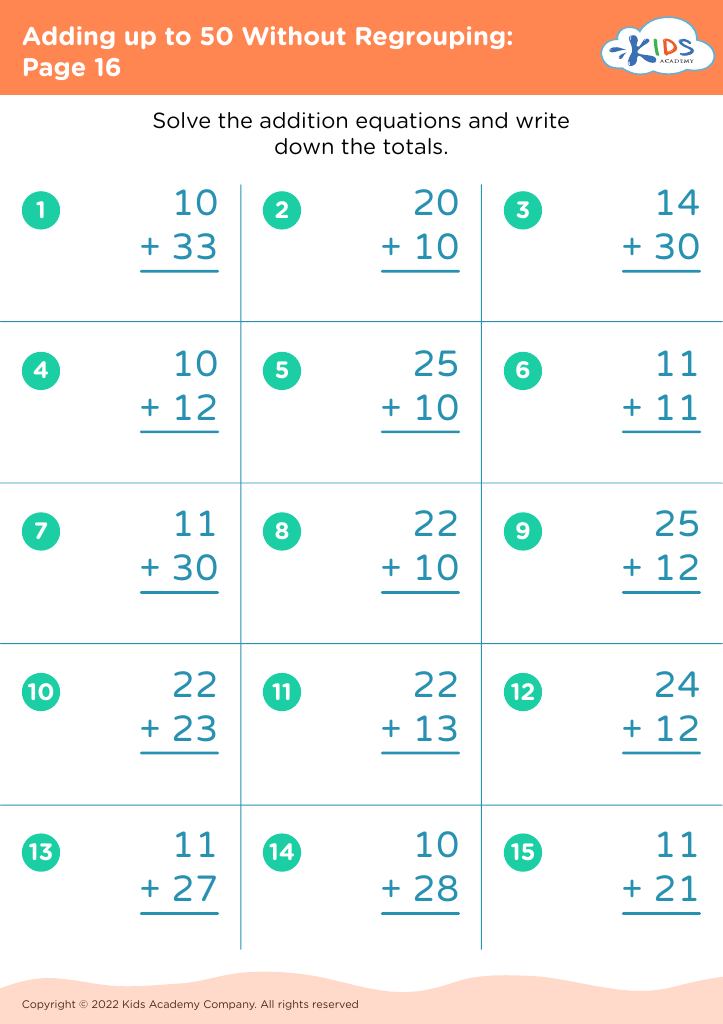
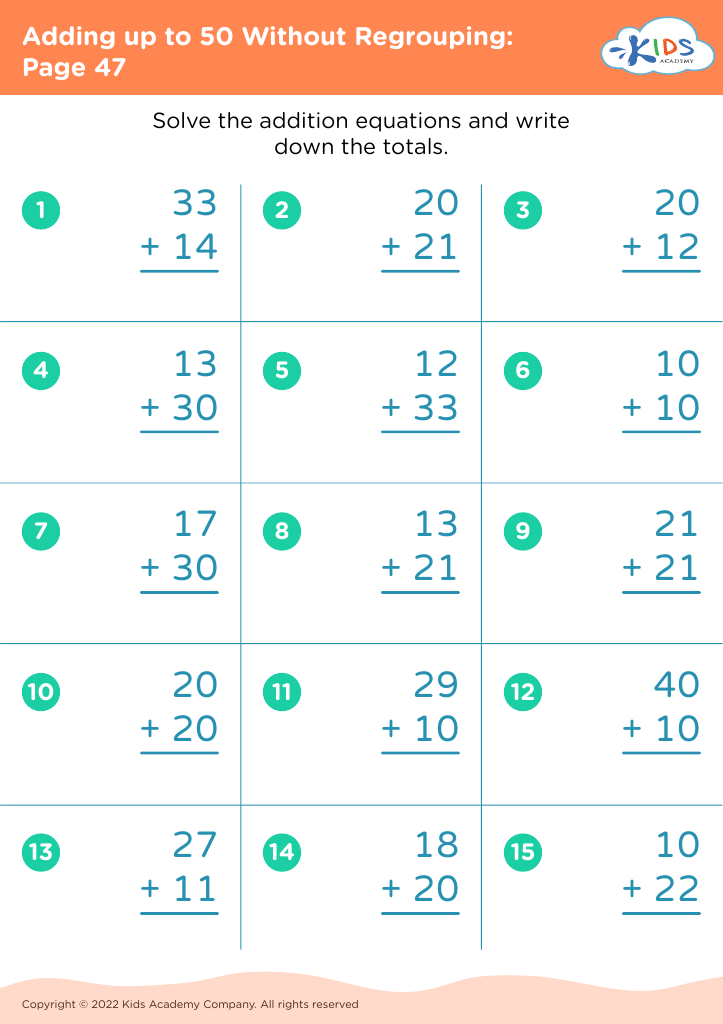
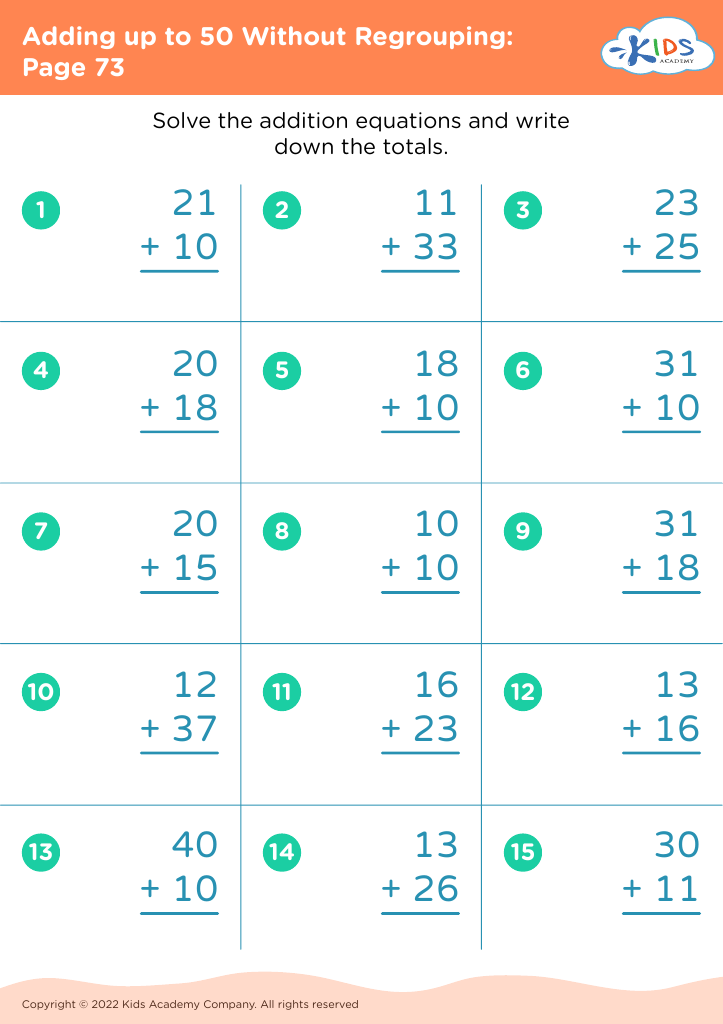
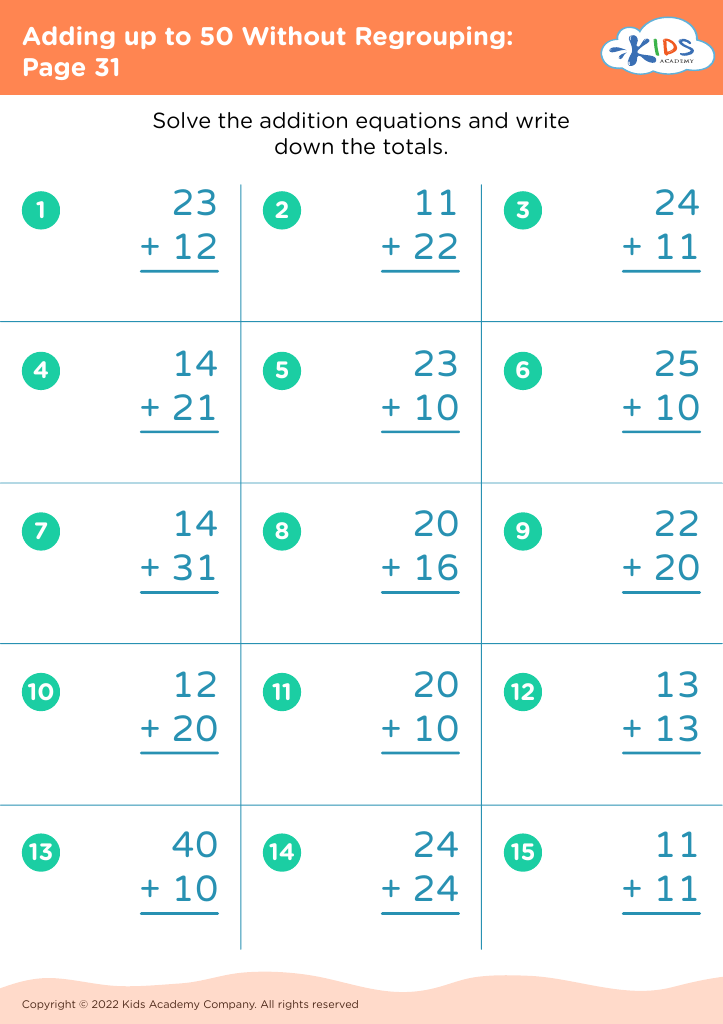
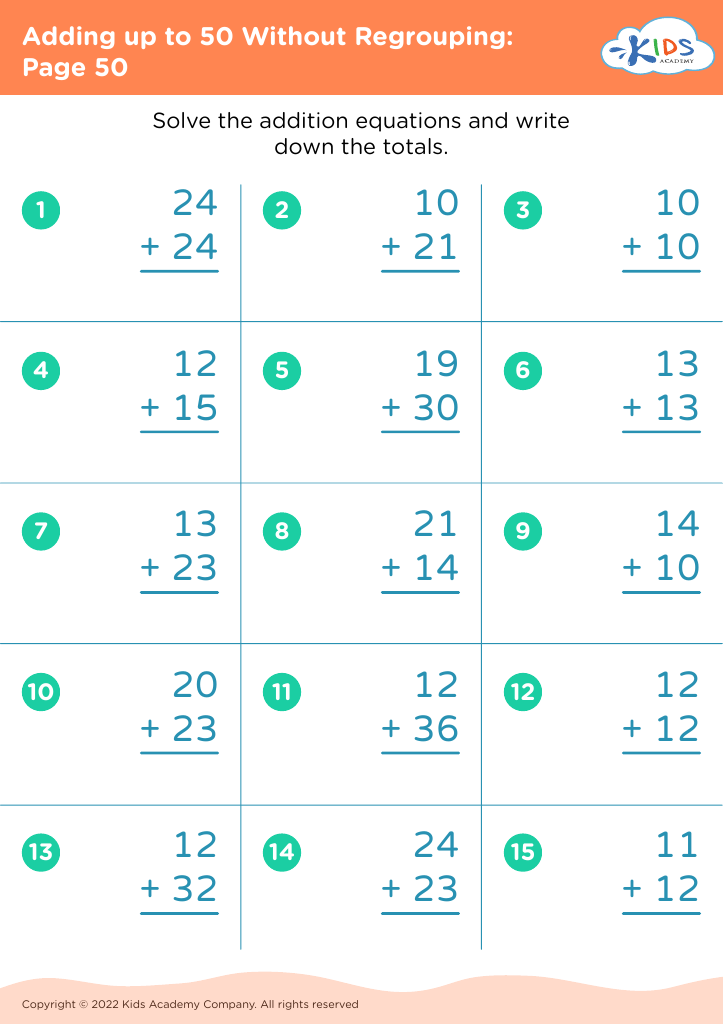


Understanding fractions and their operations, like adding fractions to total 50 without regrouping, is crucial for both parents and teachers for several reasons.
Firstly, foundational skills in mathematics, such as fractions, are vital for developing problem-solving abilities and critical thinking in children. By mastering fractions, students gain confidence which translates into more complex mathematical concepts in the future.
Moreover, the ability to add fractions helps students understand proportions, ratios, and percentages, integral skills in everyday life. Whether it's cooking, budgeting, or even dividing resources, these skills are frequently used, so a solid grasp of fractions can enhance a child's practical math proficiency.
For teachers, focusing on this topic fosters differentiated learning and individualized instruction, catering to varying levels of understanding within a classroom. Teachers are better equipped to scaffold lessons that connect with real-life applications, making math engaging.
Lastly, parental support in understanding fractions demonstrates the importance of math education, reinforcing a positive attitude towards learning. This collaboration creates a supportive environment, where students feel encouraged to practice and explore mathematics beyond the classroom. Thus, understanding fractions and adding them without regrouping lays a significant foundation for future academic success.