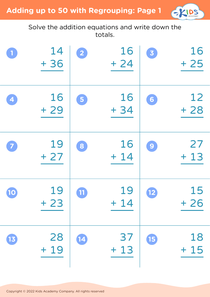
Understanding patterns Adding up to 50 Without Regrouping Worksheets
5 filtered results
-
From - To
Unlock your child's potential with "Understanding Patterns Adding up to 50 Without Regrouping Worksheets". Designed for early learners, these engaging worksheets help students grasp basic math concepts by recognizing and understanding number patterns. Focusing on sums up to 50, they offer a solid foundation in addition without the need for regrouping. Your child will develop essential arithmetic skills while enjoying interactive, fun-filled exercises. Perfect for building confidence and ensuring a smooth transition to more complex math problems. Check out our collection of expertly crafted worksheets to give your child the head start they need in mathematics!
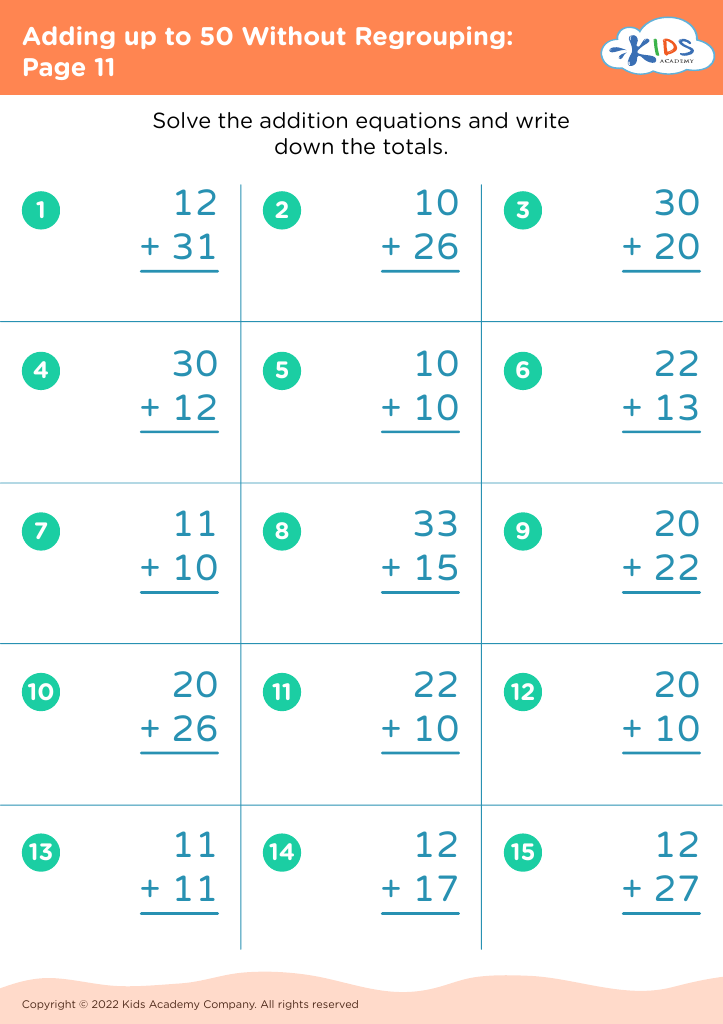
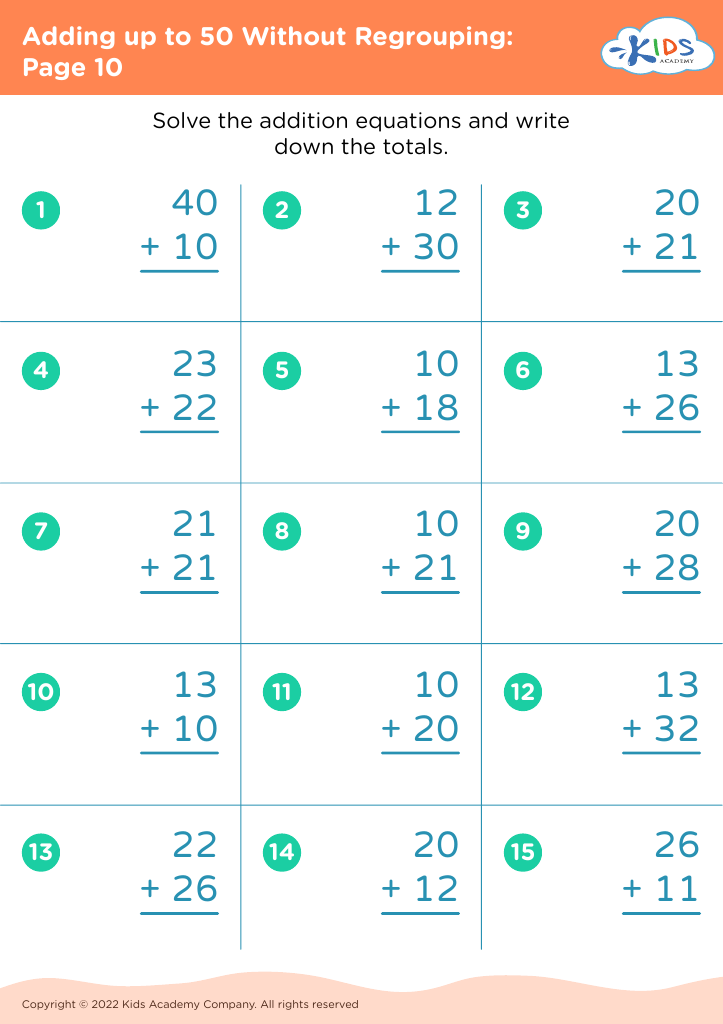
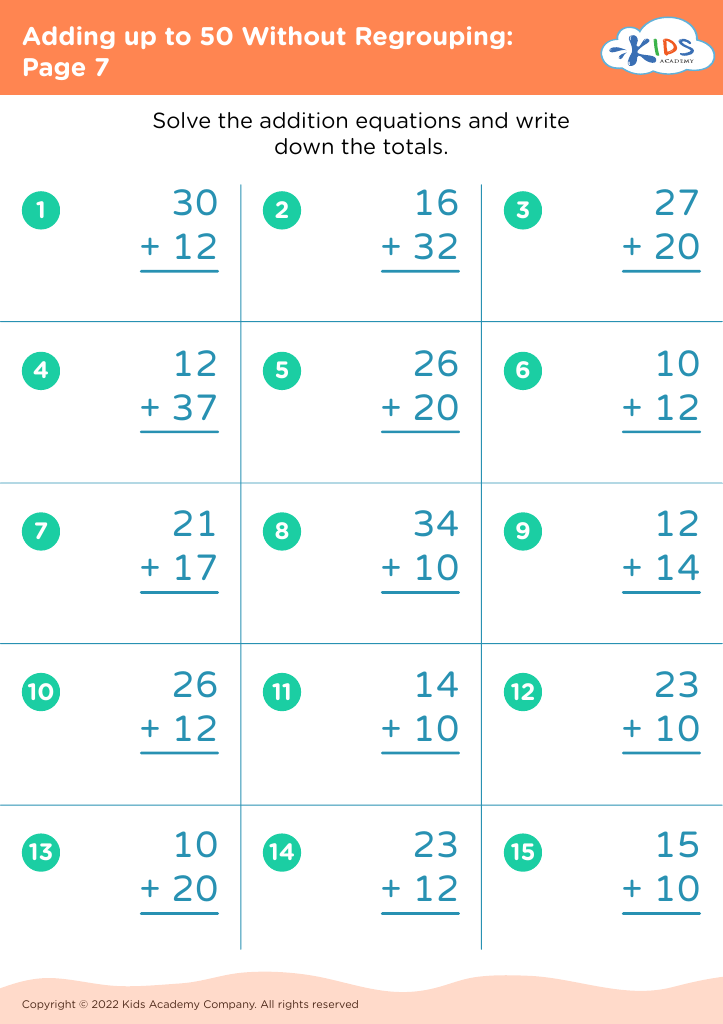
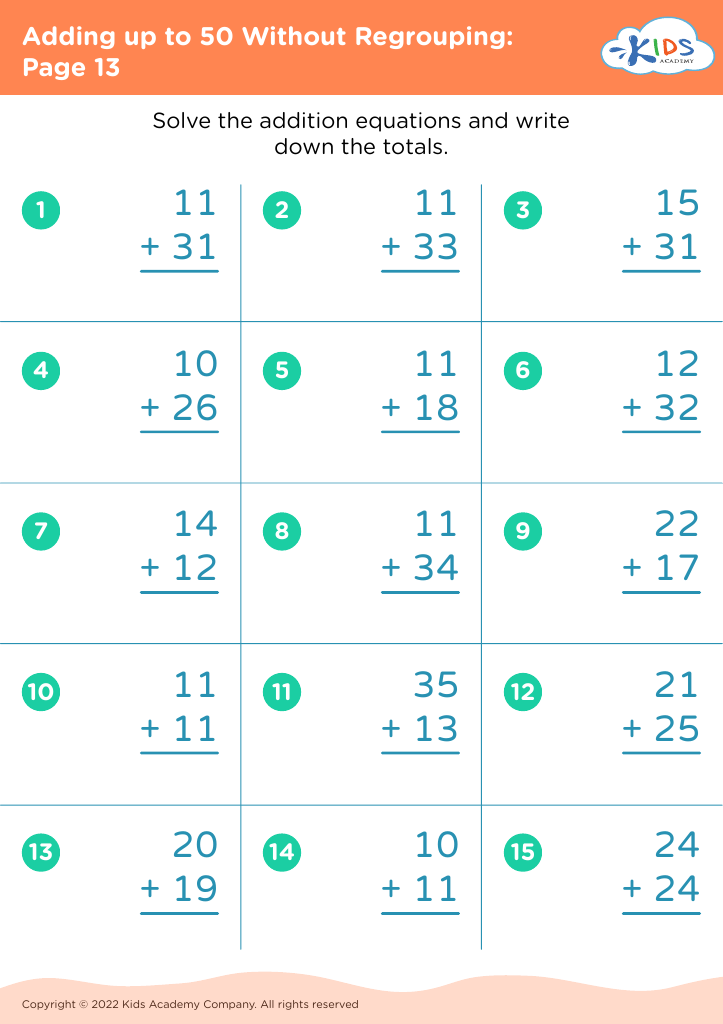
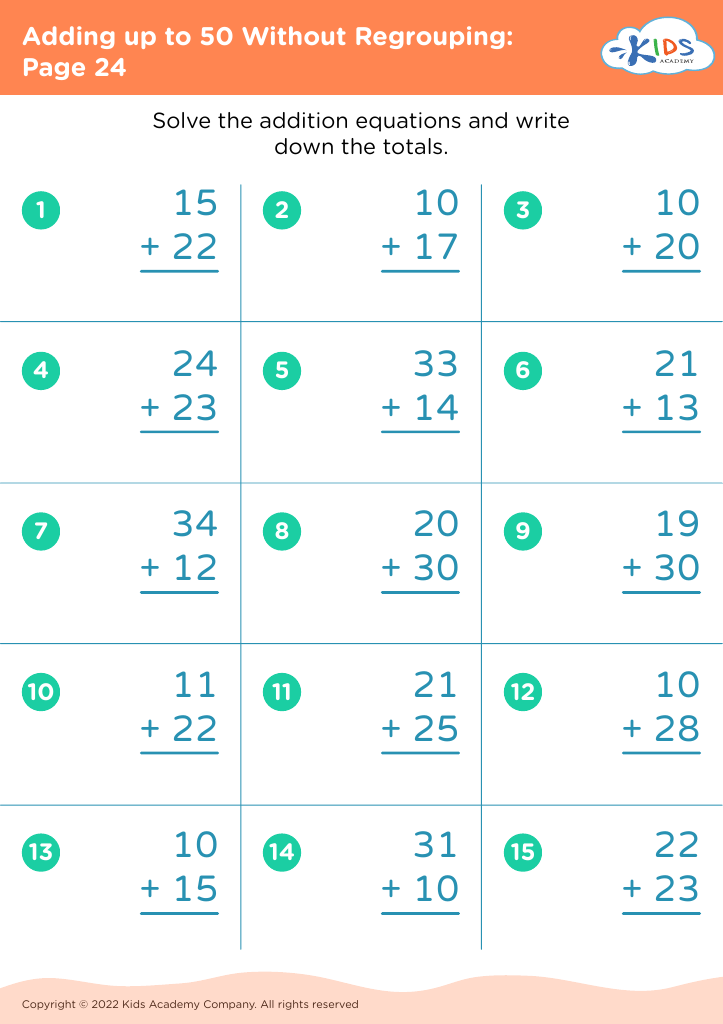


Understanding patterns and adding up to 50 without regrouping is an essential skill for young learners that has foundational importance for several reasons. Firstly, recognizing patterns allows children to predict, analyze, and solve problems more efficiently. These skills are fundamental not only in math but across various subjects, contributing widely to logical thinking and reasoning abilities.
Adding up to 50 without regrouping, also known as carrying or borrowing, helps cement students' understanding of basic addition principles in a comprehensible and less complex setting. It builds confidence and accuracy in performing arithmetic operations, setting the stage for handling more advanced math problems involving larger numbers and regrouping later on. When children comprehend the connections and consistencies in numbers through patterns and simpler addition processes, their number sense strengthens significantly.
For parents and teachers, fostering these skills enhances overall cognitive development and academic performance, and helps in developing persistence and attention to detail. Monitoring and guiding children through these foundational math skills can prevent future learning difficulties, creating a smooth transition as mathematics increasingly involves more abstract and complex concepts. Prioritizing these skills prepares students for lifelong learning and practical problem-solving experiences, essential both inside and outside the classroom.