Cognitive Development Addition Facts Worksheets
3 filtered results
-
From - To
Explore our "Cognitive Development Addition Facts Worksheets" designed to make math learning fun and engaging for young minds. Our thoughtfully crafted worksheets focus on enhancing cognitive skills while teaching basic addition facts. Each worksheet is tailored to develop critical thinking, improve problem-solving abilities, and foster a strong mathematical foundation. Ideal for early learners, these activities combine interactive and visual elements to promote retention and understanding of addition facts. Perfect for educators and parents alike, these resources are your partner in nurturing a child’s cognitive growth, all while making math exciting and accessible. Download now and watch your child thrive!
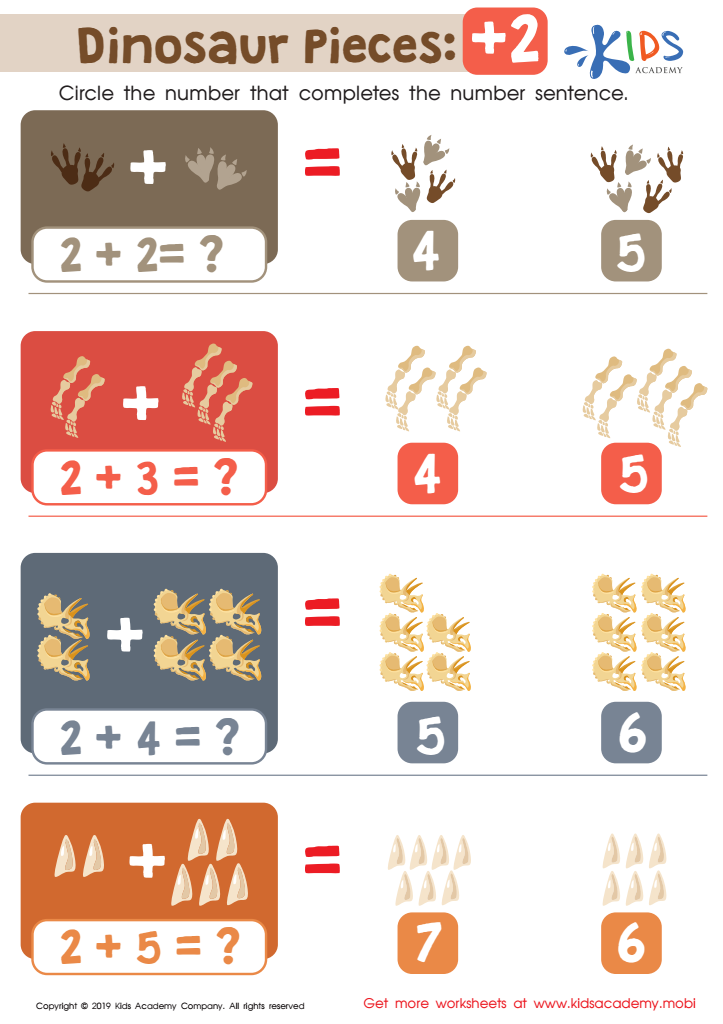
Dinosaur Pieces: +2 Worksheet
 Assign to My Students




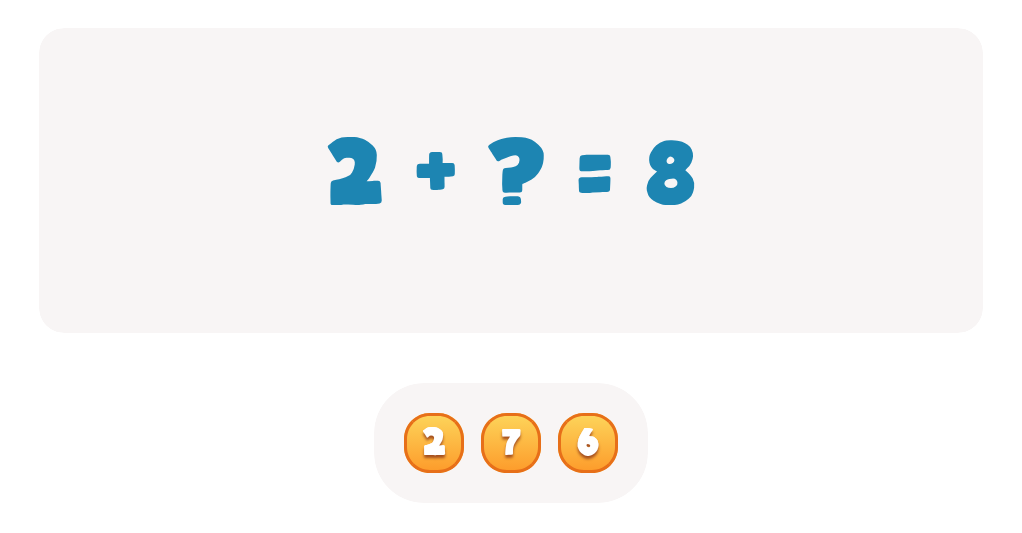




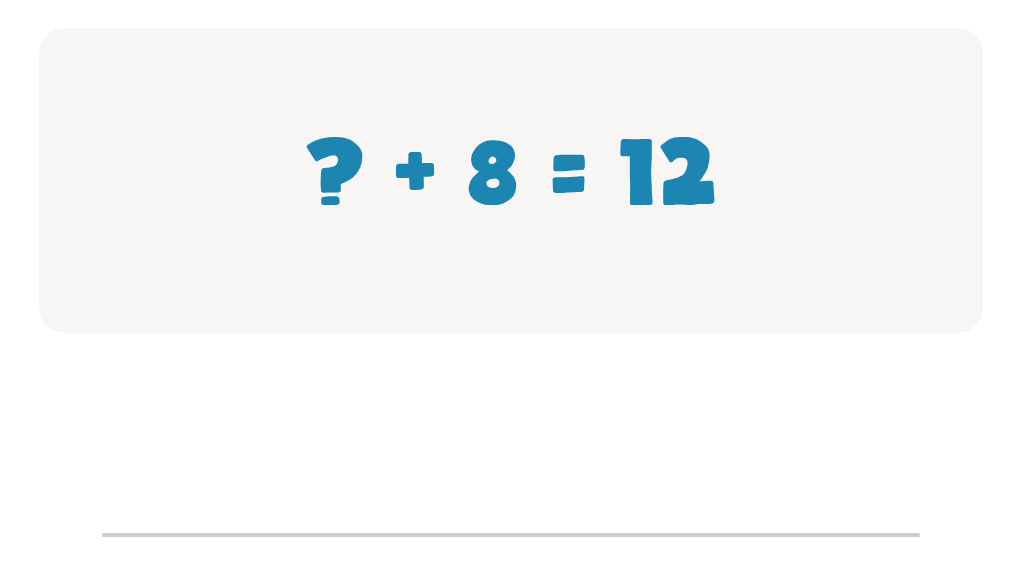
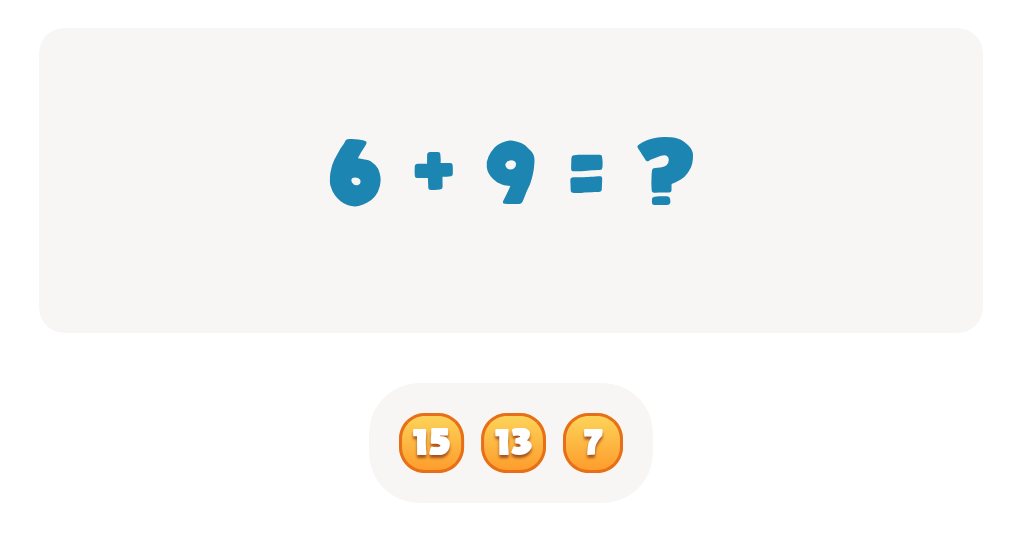
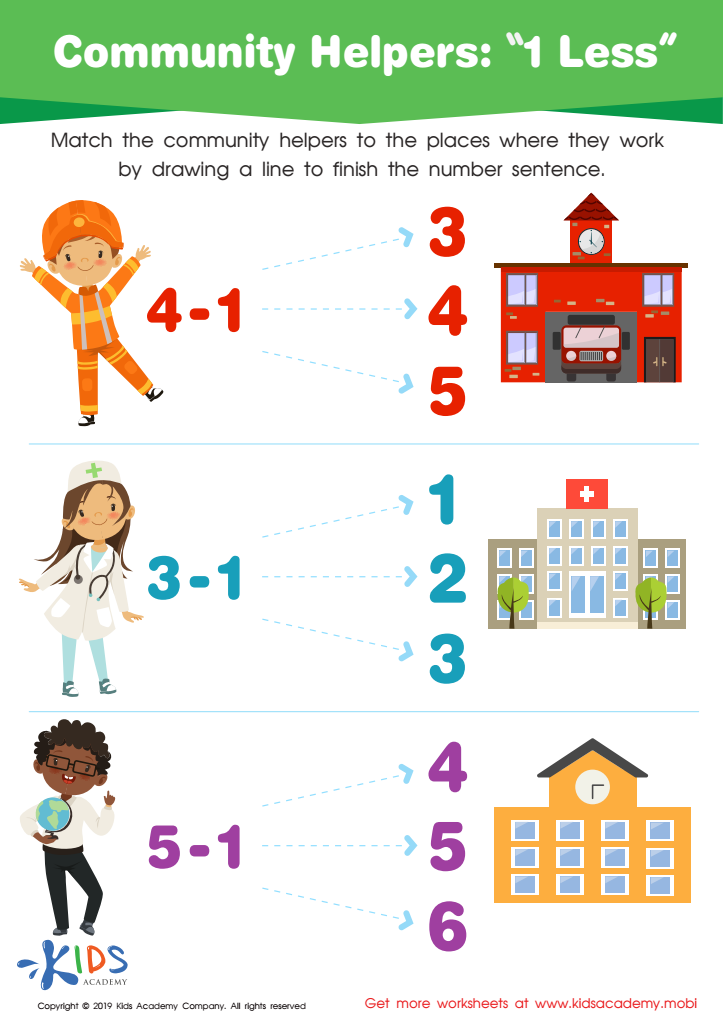
Community Helpers: 1 less Worksheet
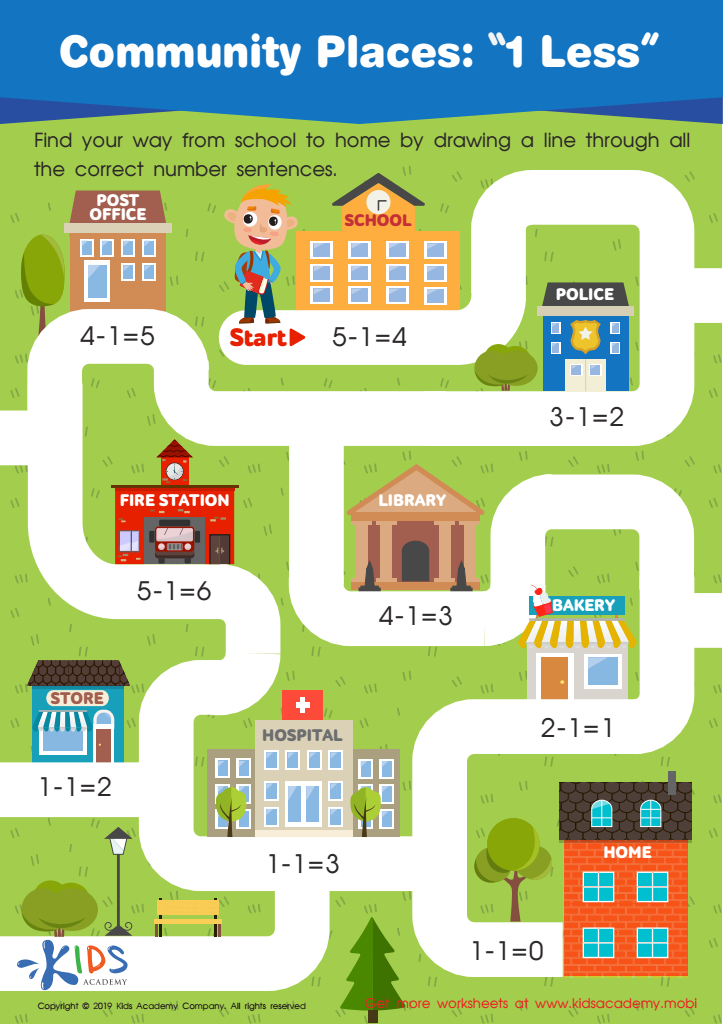
Community Places: 1 Less Worksheet



.jpg)




Cognitive development in early childhood sets the foundation for future learning, and mastering basic addition facts plays a crucial role in this process. Parents and teachers should prioritize early arithmetic skills for several reasons.
Firstly, understanding addition enhances neural pathways associated with logical thinking, problem-solving, and memory. These cognitive skills are critical across all areas of learning and day-to-day activities. Grasping basic math functions early helps children develop confidence and reduces math anxiety, which can be a significant barrier in later academic stages.
Secondly, addition is a gateway to more complex mathematical concepts, such as subtraction, multiplication, and division. By ensuring that children have a strong grip on initial addition facts, parents and teachers prepare them for future success not just in math but in subjects requiring analytical skills.
Lastly, proficiency in early math is closely linked to better literacy and general academic performance. Research shows that early numerical skills are predictive of later achievement. Children who can quickly recall addition facts spend less cognitive effort on calculations and more on understanding multifaceted problems.
In conclusion, early cognitive development through mastering addition is vital because it builds the foundational skills needed for lifelong learning, fosters confidence, and paves the way for advanced academic achievement. Focusing on these basics sets children on a path to success.








