Learn addition Addition & Subtraction Worksheets
3 filtered results
-
From - To
Welcome to our "Learn Addition & Subtraction Worksheets" page! Designed for young learners, these engaging worksheets provide a fun and effective way for children to master essential math skills. Covering topics from basic addition to simple subtraction, our resources help build a strong foundation in numeracy. Each worksheet is crafted to encourage interaction, enhance problem-solving skills, and build confidence in math abilities. With colorful designs and age-appropriate prompts, your child will enjoy practicing while learning at their own pace. Explore our collection today and watch your child's math skills flourish with these educational tools!
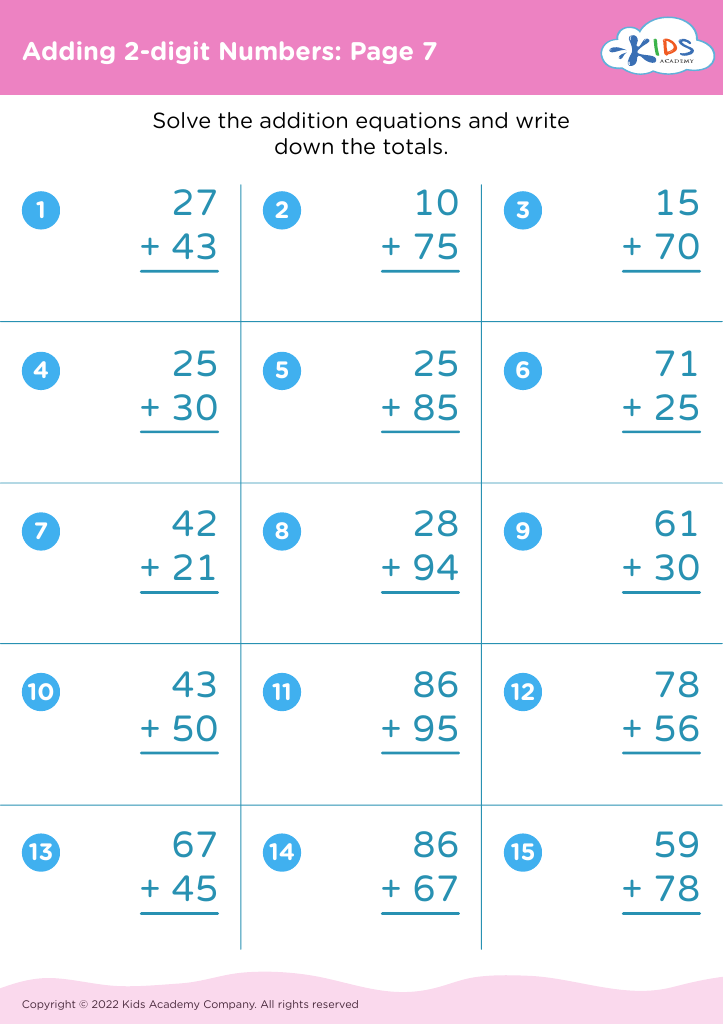
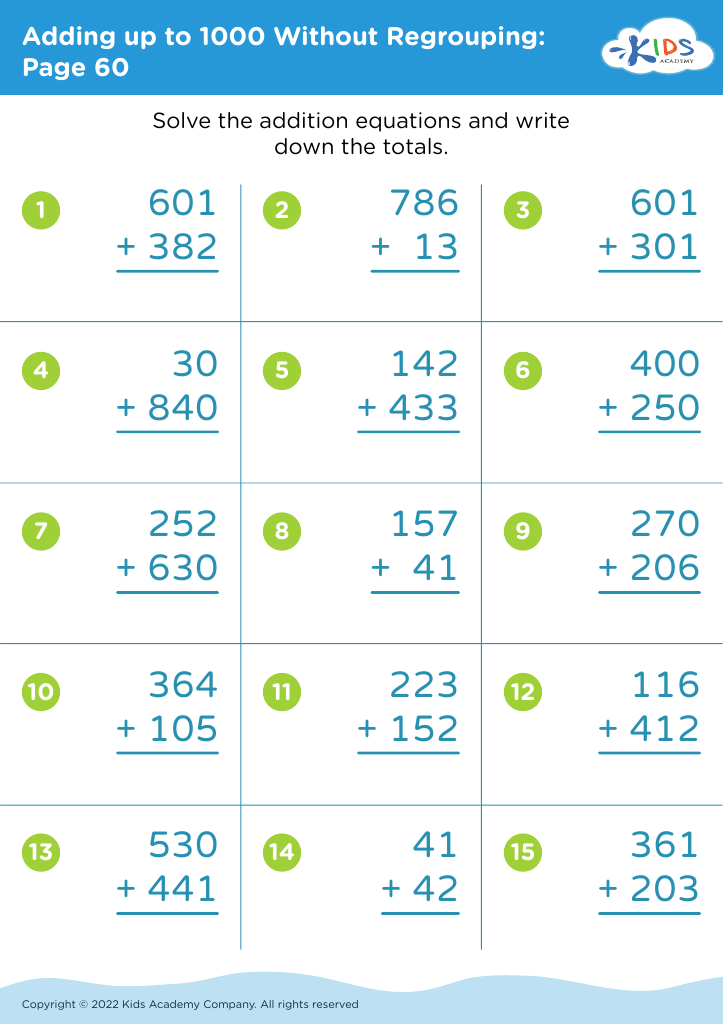
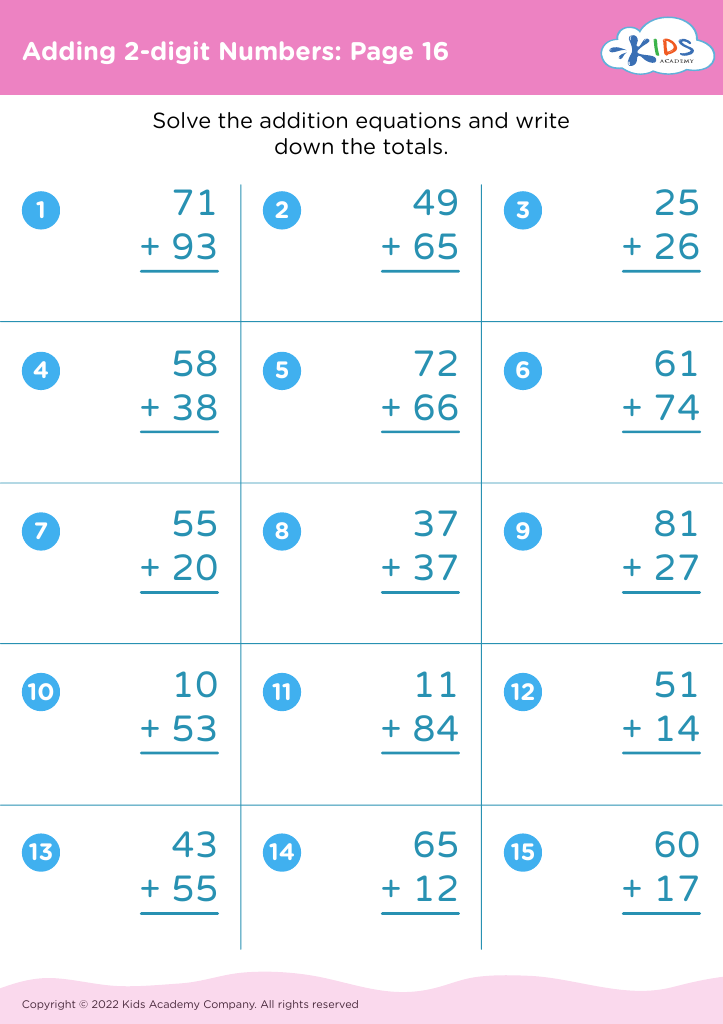








Understanding addition and subtraction is fundamental for children as it lays the groundwork for their mathematical skills and overall cognitive development. Parents and teachers should synthesize their efforts to ensure children master these basic operations because they are the building blocks of more complex mathematical concepts, such as multiplication, division, and fractions.
Fostering a strong understanding of addition and subtraction promotes problem-solving skills and logical thinking. When children can confidently perform these calculations, they gain the ability to tackle real-world problems like budgeting, measuring, and time management. This competence not only supports academic success but also instills confidence in young learners.
Additionally, early mastery of these skills enhances a child’s ability to engage with daily tasks, nurturing their independence. In social contexts, understanding such basics fosters cooperative play and sharing, as children learn to distinguish between more and less.
Investing time in teaching addition and subtraction empowers children to apply their knowledge across different subjects, contributes to better performance in mathematics in later years, and paves the way for lifelong learning. Therefore, it is crucial for both parents and teachers to create an encouraging environment that makes learning these essential skills enjoyable and meaningful.








