Learn subtraction Addition & Subtraction Worksheets
4 filtered results
-
From - To
Welcome to our "Learn Subtraction & Addition Worksheets" page! Here, you’ll discover a diverse collection of engaging worksheets designed to help young learners master the essential skills of addition and subtraction. Our thoughtfully crafted activities cater to various learning styles, ensuring that every child can grasp these fundamental math concepts with ease and confidence. From basic exercises to interactive challenges, our worksheets provide the perfect balance of fun and education, fostering a love for math. Dive in and provide your child with the tools they need to succeed—download our printable worksheets today and watch their math skills flourish!
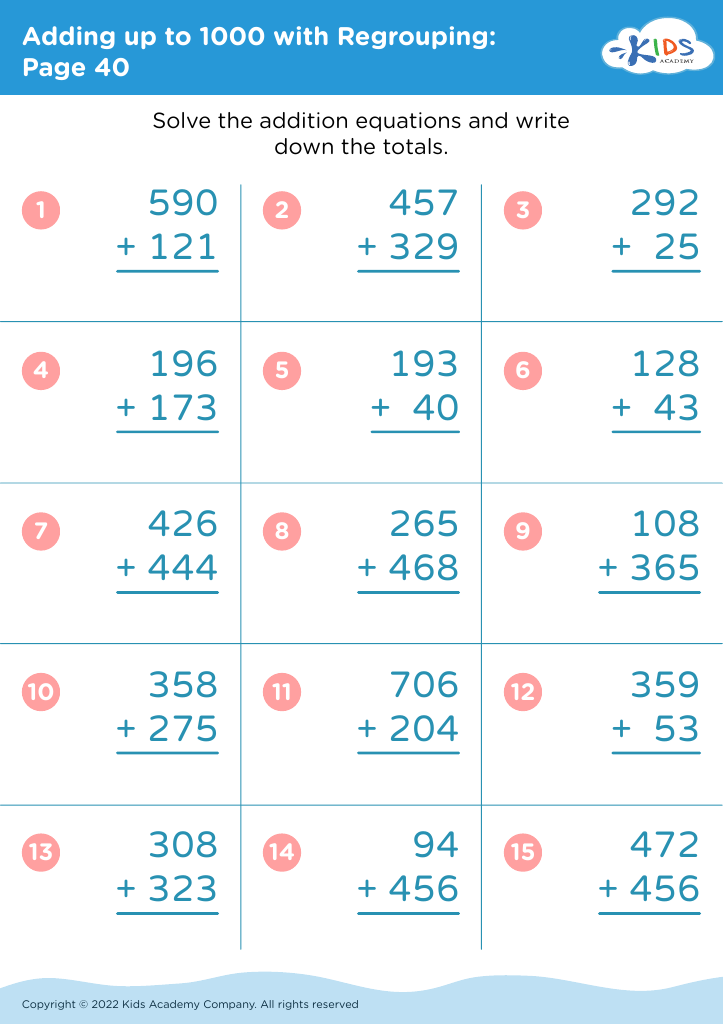
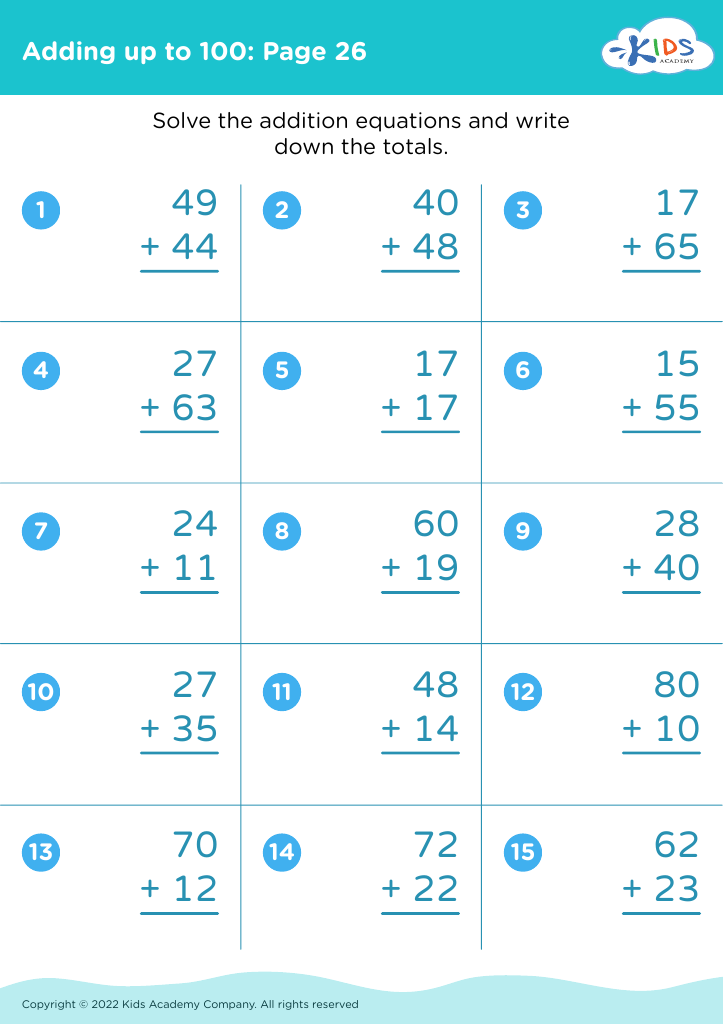
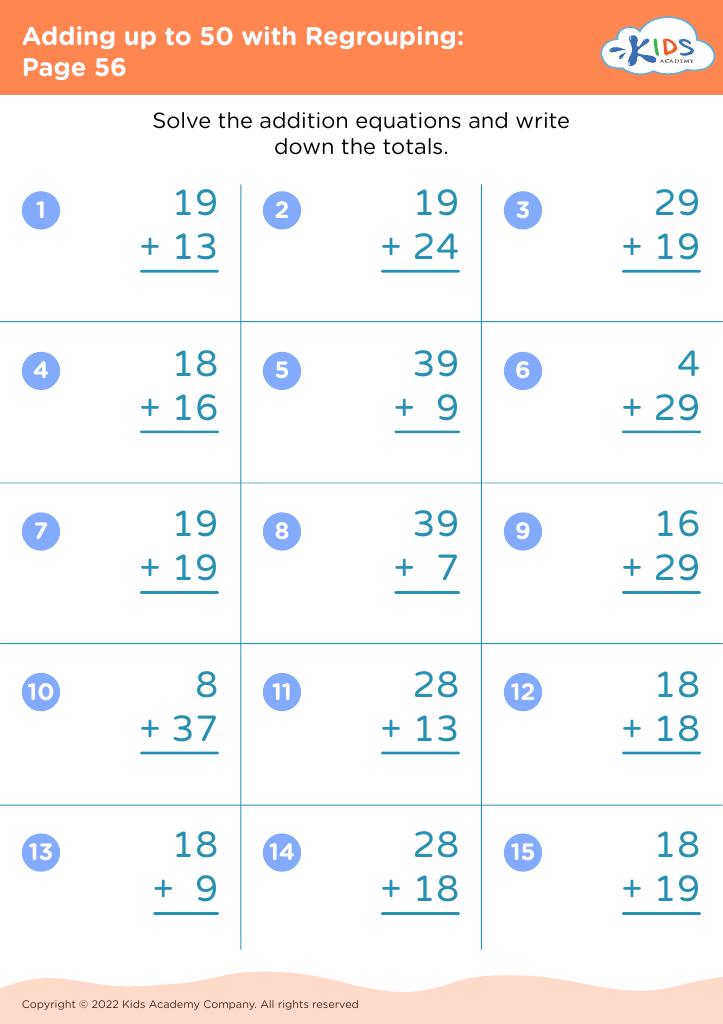
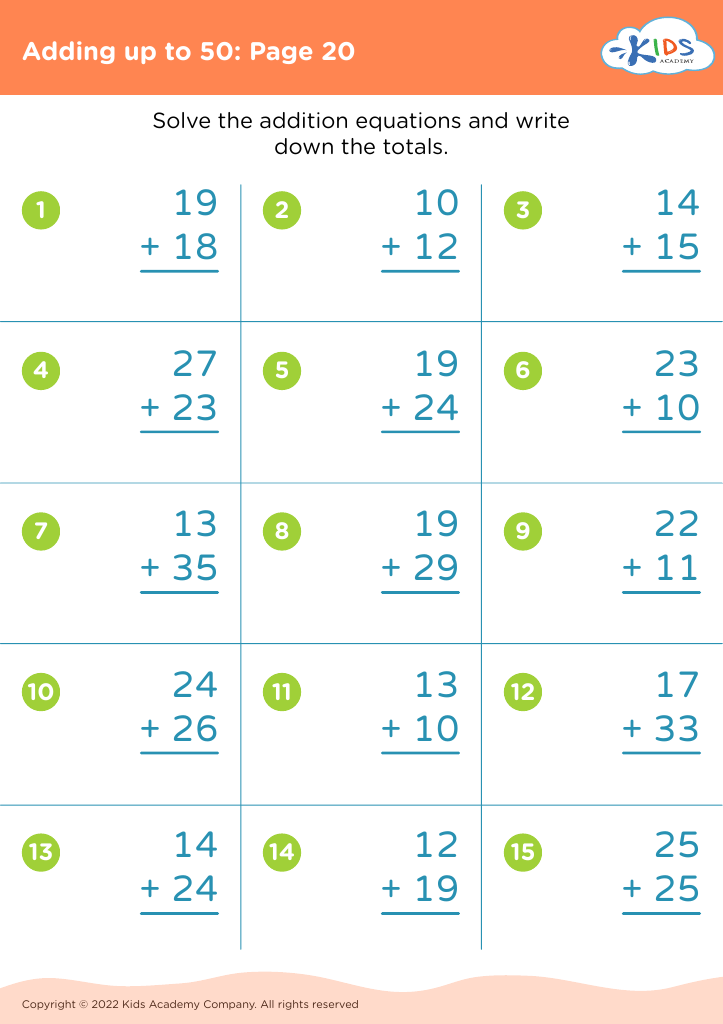








Parents and teachers should prioritize the acquisition of addition and subtraction skills in young learners because these foundational concepts are essential for overall mathematical literacy. Mastery of these operations not only supports children's early math development but also prepares them for more complex mathematical concepts in later grades. Engaging with addition and subtraction helps children develop critical thinking and problem-solving skills, which are transferable across various subjects and real-life situations.
Furthermore, understanding these basic skills builds confidence in students, empowering them to tackle more challenging concepts as they progress in their education. Early proficiency in addition and subtraction fosters a sense of accomplishment, helping to cultivate a positive attitude towards mathematics.
Additionally, these skills lay the groundwork for important everyday tasks such as budgeting, telling time, and managing quantities in cooking or shopping scenarios. For parents and teachers, actively supporting children in mastering these operations fosters a collaborative learning environment and reinforces the importance of math in everyday life.
Ultimately, caring about the learning of addition and subtraction is not just about numbers; it’s about equipping children with the tools they need for academic success, life skills, and a lifelong appreciation for learning.








